

Karl Marx argued that capitalism would produce its own gravediggers. Most people assume he meant the working class.
But that’s not what he actually described.
BuyMeACoffee https://buymeacoffee.com/escapekey
Bitcoin 33ZTTSBND1Pv3YCFUk2NpkCEQmNFopxj5C
Ethereum 0x1fe599E8b580bab6DDD9Fa502CcE3330d033c63c
In the Grundrisse1 — and throughout his later economic manuscripts — the mechanism described differs entirely: capital’s relentless push toward total standardisation, total measurement, and total efficiency creates the conditions under which it simply can’t function any more.
Total standardisation is ISO, Basel, and ESG compliance. Total measurement is the SDG and OECD indicator grid, the global surveillance infrastructure, and the sensor networks feeding data to the models. Total efficiency is the Circular Economy, automation, and AI running on a Unified Ledger.
That apparatus has a name. It’s the rules-based international order2 — openly designed as early as the 1941 Science and World Order conference in London, where delegates from 22 nations (the Soviet Union among them) laid out a vision of permanent international bodies with planning authority over food, health, resources, and research, staffed by the same people — Needham, Boyd Orr, Huxley, Bernal — who went on to build UNFAO, UNESCO and the institutional infrastructure that followed.


But it was Bogdanov, not Marx, who made the crisis universal. While Marx stuck to economics, Bogdanov saw that every part of human life was a battleground:
… all social relationships based on domination and subordination, whether these be based on sex, race, class, nationality or possession of technical knowledge, are sources of conflict which must be criticised and overcome.
Art, science, philosophy, gender relations, culture — all of it could be systematised, and all of it had to be transformed at the same time. A genuine revolution, in Bogdanov’s framework, ‘is not something that could be achieved by one gigantic act of will in which power is seized, but is a transformative process involving many levels’.
Trotsky then turned it international. Permanent revolution: the transformation can’t stay in one country because capital operates globally, so its replacement has to be global too3. No geographic bolt-hole — which is exactly what a web of universal, interlocking standards guarantees.

This is why the governance stack doesn’t just regulate financial flows. It regulates information through content moderation, social relations through DEI and ESG frameworks, the environment through carbon accounting, thought through UNESCO’s ethics layer4, science through peer review and funding mechanisms, and culture through arts policy and foundation grants. The crisis is universal because Bogdanov’s battleground is universal.
Think about what global commerce actually requires of its participants today. Basel III and IV dictate the capital ratios every bank must hold. ISO certifications set the operational standards every manufacturer must meet. ESG compliance determines the environmental, social, and governance thresholds every listed company must satisfy. The Carbon Border Adjustment Mechanism prices every tonne of embedded carbon crossing a border. Smart contracts fire automatically when a metric is breached.
None of this is optional. You adhere to the global standards, or you’re out.

The people building these frameworks tell you they’re building ‘resilience’, risk management, and stability. Perhaps Basel III does reduce the chance of a banking crisis. ISO certification might legitimately improve supply chain reliability. The problem isn’t any single standard — it’s all of them, combined.
When every player in the global network is legally, contractually, and algorithmically locked into the same set of interlocking standards, you’ve built what cybernetics calls an absorbing state5 — a configuration the system can enter but can’t leave. Normally, capitalism survives crises through flexibility: governments cut interest rates, print money, break their own rules, throw money at the problem. A web of mandatory, interlocking, and increasingly automated standards strips that flexibility away entirely.
The state can’t bail out what Basel says must default, can’t ease what the treaty says is binding, and can’t override what the algorithm executes on its own.

Any crisis will do — a pandemic, a war, a climate event, a financial shock. The engineering isn’t in the trigger — it’s in making sure that when the crisis hits, the system’s own rules prevent it from recovering, because the standards lock in the crisis conditions and the shackle tightens by itself. And because those standards are universal, the crisis hits everywhere at once, with no geographic escape valve and no national opt-out, until the population is watching its own government enforce the rules that are visibly ruining it — and trust collapses.
And the replacement, conveniently, is already built.
Marx, incidentally, also saw this. In the Grundrisse, his Fragment on Machines6 describes capital absorbing the ‘general intellect’ — the accumulated knowledge of society — into fixed capital; the machinery itself. But that was in 1858. Today the same general intellect is being absorbed into AI, and that machine increasingly runs the clearing function.
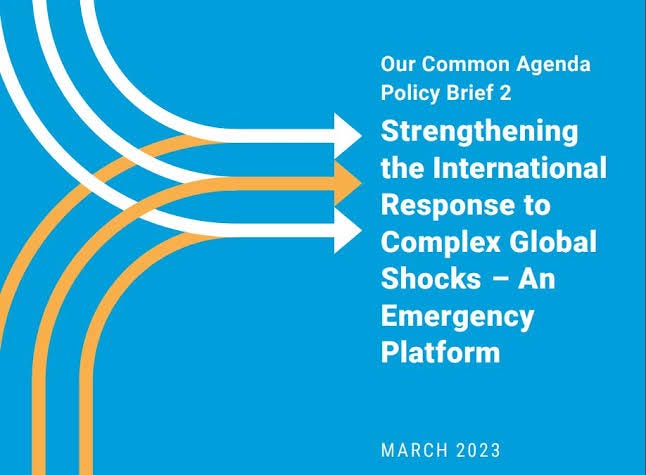
The UN’s proposed Emergency Platform7 — outlined in Guterres’s ‘Our Common Agenda’8 — adds the legal mechanism. It defines ‘complex global shocks’9 broadly enough to cover any crisis the standards might produce, and gives authority to convene a ‘coordinated response’ pulling in states, international bodies, the private sector, and civil society — the trisectoral governance model installed at Rio in 1992, now with an activation switch.
Governance switches from advisory to executive, national sovereignty gives way to emergency coordination, and the question of when the emergency ends is answered by whoever controls the definition of ‘resolved’. And, as it happens, the ‘global complex shock’ is typically declared following ‘black box’ computational modelling.


What makes it unchallengeable is anticipatory governance.
The blueprint was drawn up by OECD consultant, Erich Jantsch, in a 1970 paper10 that laid out a four-level governance hierarchy — purposive, normative, pragmatic, empirical — in which the lower levels don’t set their own goals but receive them from above. Two years earlier, Alexander King, the OECD’s Director-General for Scientific Affairs, had co-founded the Club of Rome, and its 1972 report Limits to Growth11 — published the same year IIASA was founded12 — was the first major computational model aimed directly at directing public policy.
It’s the prototype of anticipatory governance: feed data into a model, project forward, and present the output as a scientific mandate that politicians must follow… or face catastrophe.
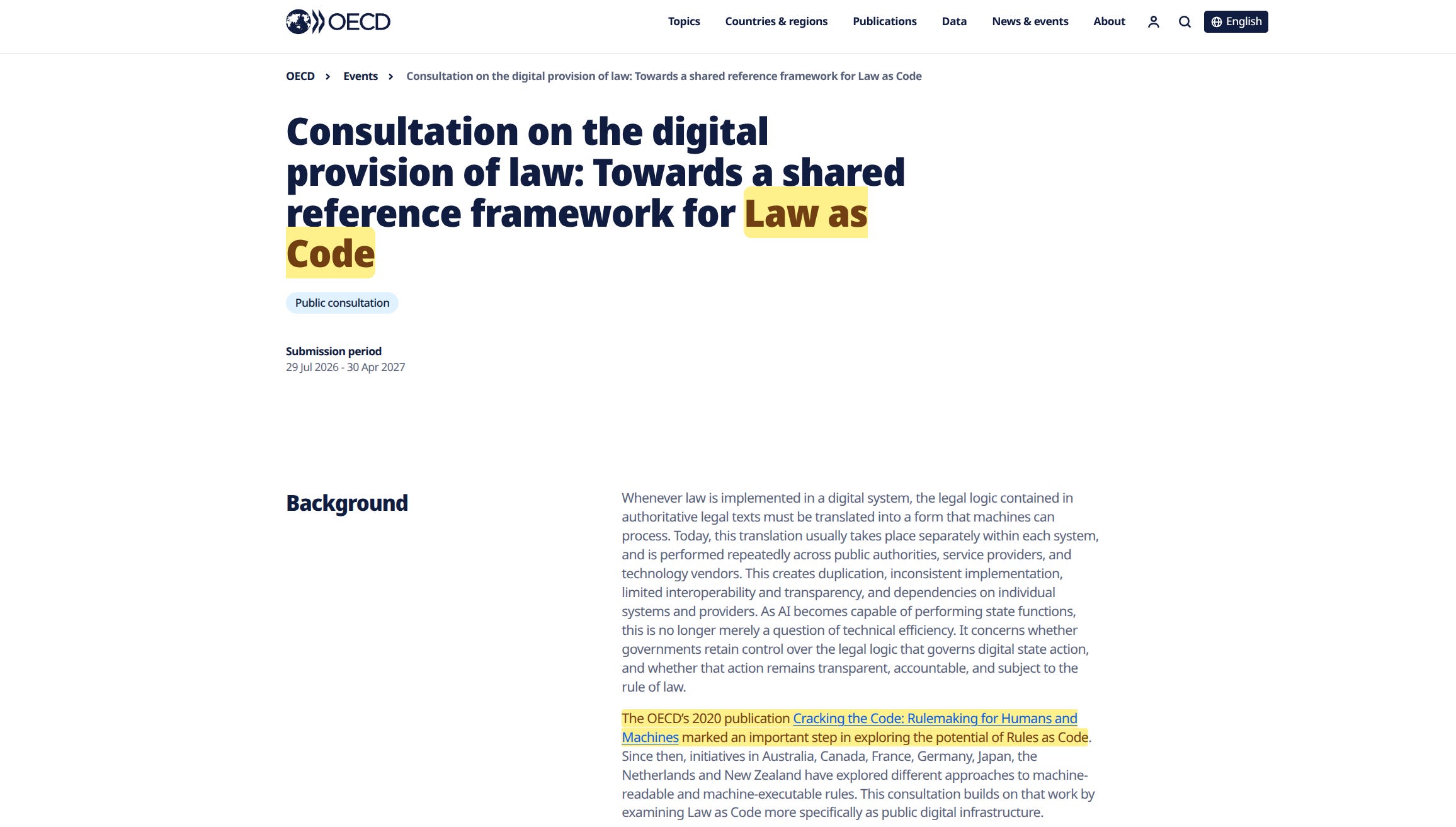
Today the OECD’s ‘Rules as Code’ initiative translates legislation directly into machine-executable language, so that compliance isn’t just monitored by AI — it’s defined in terms AI can enforce without human intervention13. The OECD didn’t merely set the standards; it gave birth to the entire apparatus of model-driven governance, and is now wiring the legal system directly into future AI models.


Soviet central planning was crudely visible. It failed in part because no committee can accurately predict the future, but also because people could forward predict the predictions — they could see what the planners were going to do before they did it. That made resistance possible, while misprediction led to misreporting — and the quality of prediction declined even further.
Anticipatory governance does the same thing through computational modelling. The model takes in data from the global sensor grid14, projects forward across thirty-year time horizons15, and produces ‘evidence-based policy recommendations’. It’s the same decision — resources allocated from the centre — but now it’s wrapped in a ‘scientific’ process that no politician, no journalist, and no ordinary citizen can actually check. Not because it’s secret, but because the maths is beyond anyone who isn’t running the model.
The ‘black box’ isn’t in itself hidden (though its input data commonly is) — it’s just indecipherable.

When the OBR announces that growth next year will be 1.0% and there’s £15 billion of headroom16, the Chancellor isn’t deciding fiscal policy. He’s receiving it from a computational model and reading it out from the dispatch box. The theatre carries on — the speech, the opposition response — but the actual content was set by the model’s parameters, which were set by the standards, which were set by the normative layer, which answers to the ‘ethic’, be it ‘fiscal stability’, ‘planetary stewardship’, or... ‘don’t kill grannies’.
The five-year plan became the climate scenario pathway. The quota became the ESG threshold. The Gosplan committee became the IPCC working group.
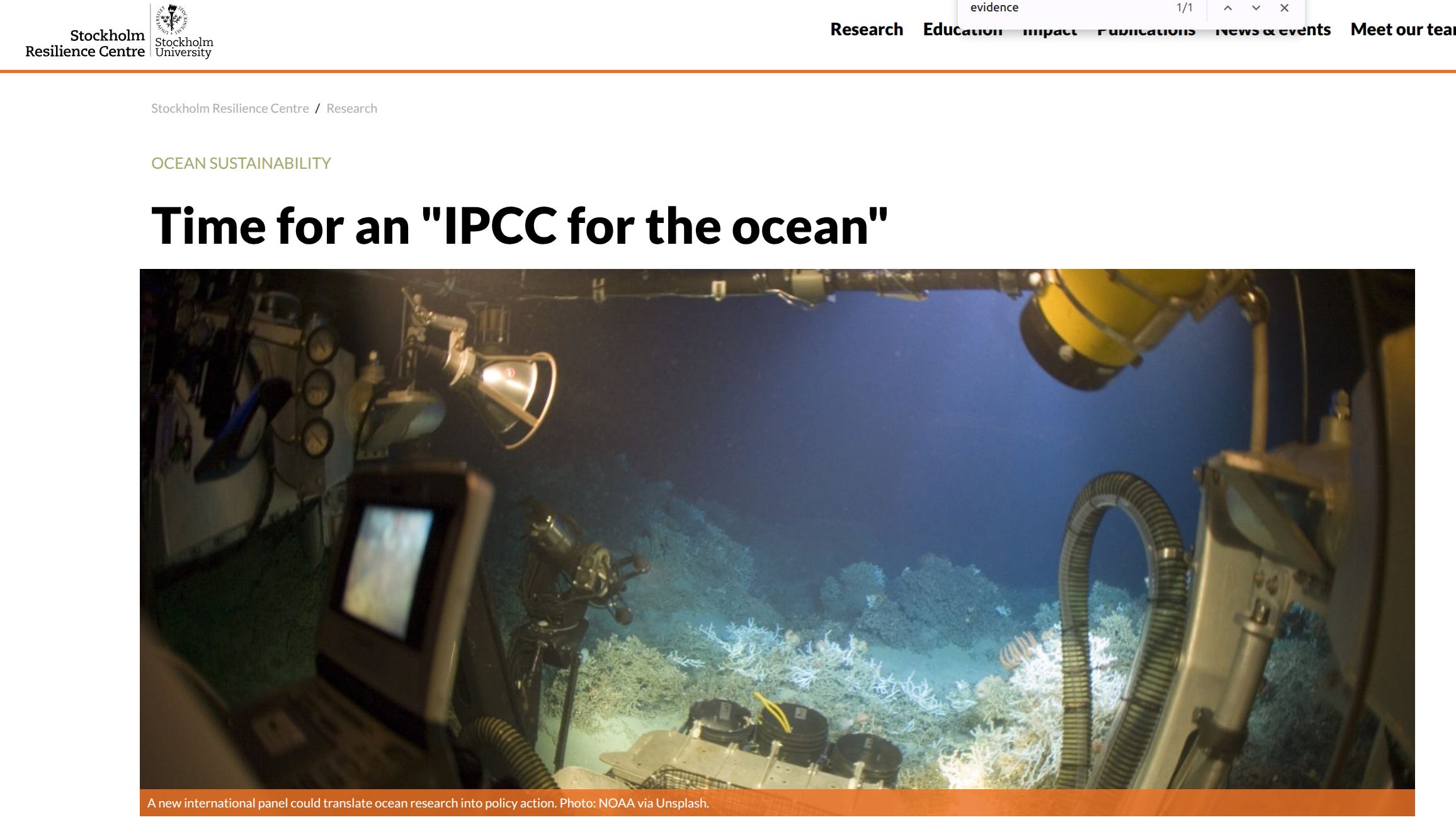
Central planning went through a rebrand — and the crucial difference is that while you can argue with a bureaucrat, you can’t argue with a computer running ten thousand variables across thirty-year time horizons. Ashby’s law of ‘requisite variety’17, leaving ‘complex systems’ increasingly to be managed… by AI. Much like Epstein recommended in his 2019 interview with Steve Bannon.
You either accept the recommendation or get called ‘anti-science’.


The full sequence hence runs in seven steps:
Describe the flows. Every economy starts by mapping what moves where — goods, energy, labour, capital, information. Leontief’s input-output analysis18, for which he won the Nobel in 197319, provides the mathematical framework.
Formalise the description. Bogdanov’s tektology20 — the first general theory of organisation, published in 1913 — became von Bertalanffy’s and Boulding’s General Systems Theory2122. The description gets a formal, universal language.
Control the flows. Wiener’s cybernetics23 provides the feedback mechanism: measure the output, compare it to the target, adjust the input. The very same which the Epstein cohort called ‘the most important thing since Jesus Christ’.
Predict the flows. IIASA — the International Institute for Applied Systems Analysis, founded in 1972 as an East-West bridge — adds the ability to model forward. Project the future state, then set policy to steer toward it — or prevent it — before it allegedly arrives.
Enforce the predicted path. The OECD determines what gets measured, ISO defines how it gets measured, GEOSS and its affiliated networks do the measuring, IIASA runs the models, the IPCC and UNFCCC translate modelled output into treaty obligations, the NGFS translates it into financial regulation, Basel translates that into reserve ratios and stranded assets, FATF ensures compliance, and the BIS runs the unified ledger that everything settles on.
Automate the enforcement. AI on a unified ledger runs compliance in real time, transaction by transaction. The human element is removed from the clearing function.
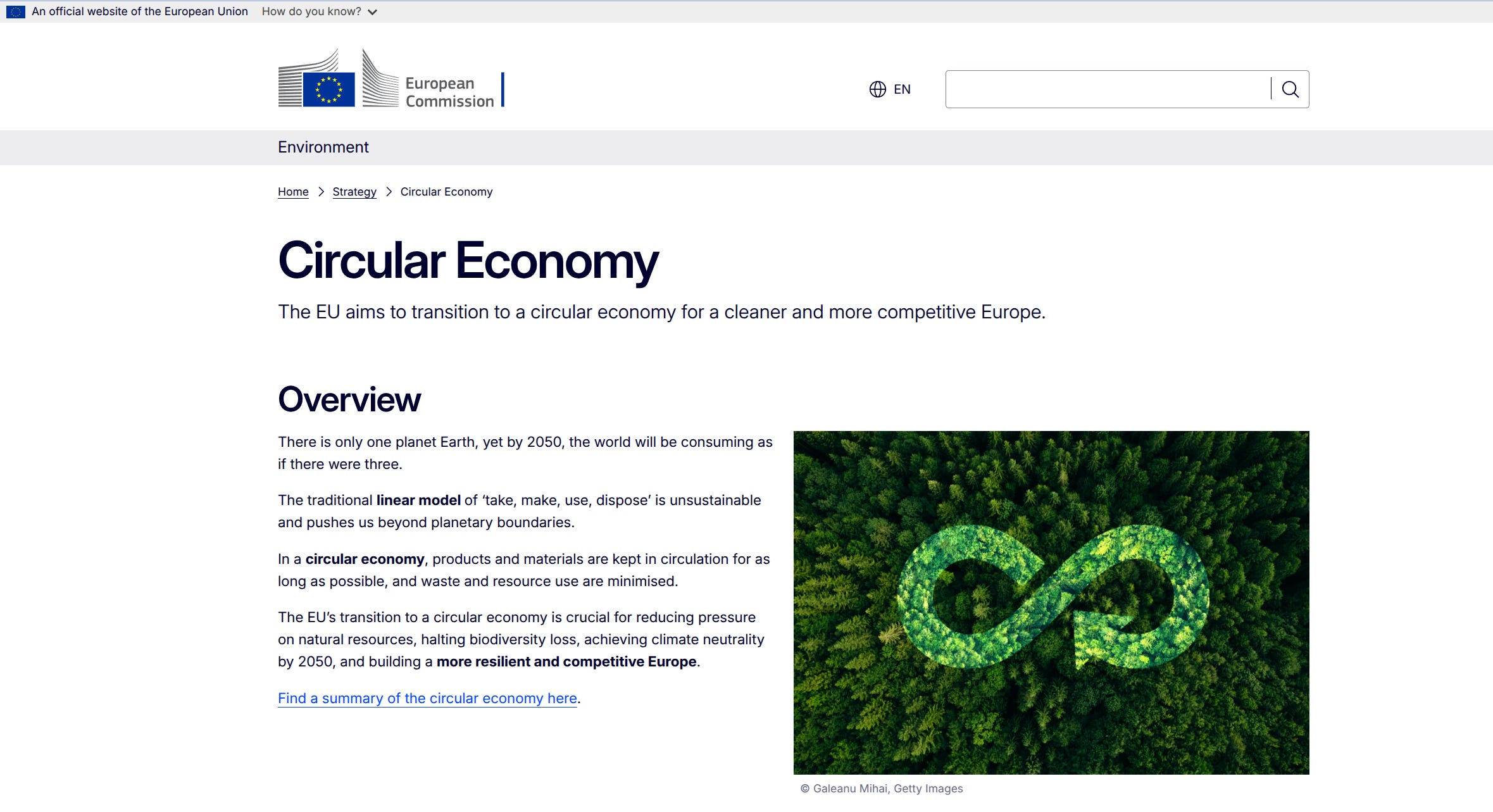
Close the loop so nothing escapes. The Circular Economy24 means total accounting: every output becomes an input somewhere else, every waste stream is tracked, every flow stays inside the matrix. Cash is a flow that leaves the system unmonitored — what Catherine Austin Fitts calls ‘leakage’. A central bank digital currency never leaves.
Step seven feeds back to step one.
The fully closed, monitored, and automated global economy now seeks to develop Bogdanov’s ‘Integral Man’ — the individual as a functional cell — within the ‘Human Super-Organism’ of collectivist organisation, living inside Zev Naveh’s ‘Total Human Ecosystem’25 — the global surveillance and audit society — on ‘Spaceship Earth’26, managed as a single planetary system under Earth System Governance27.


Four concentric shells — individual, collective, monitored environment, planetary management — each one described, controlled, predicted, enforced, automated… and closed. Because every loop that needs surveillance and audits — Lenin’s accounting and control28 — requires closing.
The Game B movement calls it the ‘meta-crisis’ — interconnected crises across ecological, economic, political, and epistemic domains. David A. Hughes calls it the ‘Omniwar’29 — a coordinated, multi-domain offensive running simultaneously across psychological, biological, economic, and digital fronts, draped in Marxist terminology. The Bolshevik Bogdanov30 called it the universal organisational crisis — a civilisation whose every sphere of life has to be reorganised all at once.
David A. Hughes warns about the Technocracy, but he praises an intellectual lineage which brought us there.

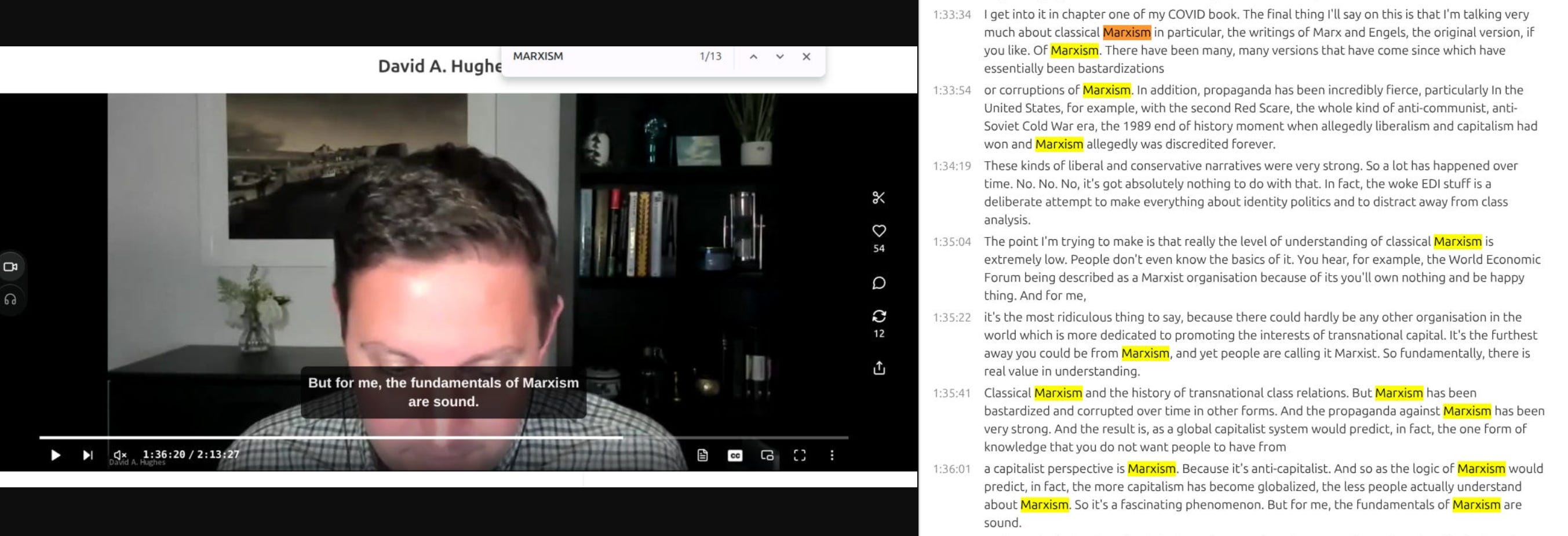
The common objection is that this conflates technocracy with Marxism — that the standards bodies are technocratic, not ideological. But technocracy versus Marxism is a false choice, because the standard-setting organisations sit beneath both. Besides, Hughes never identified the standard-setting organisations which sit at the root of the Technocracy.
Technocracy builds the infrastructure. Marxism provides the ethical imperative for central planning. The two meet exactly where those standards agencies exist. The end state is a Fabian gradualist bureaucratic state where money serves as the fundamental ‘social blood’, enforcing behaviour through the clearing function.
It’s Moses Hess, delivered — his vision of money as the ‘alienated essence’ of human social cooperation, administered from above to eliminate ‘egoism’31.


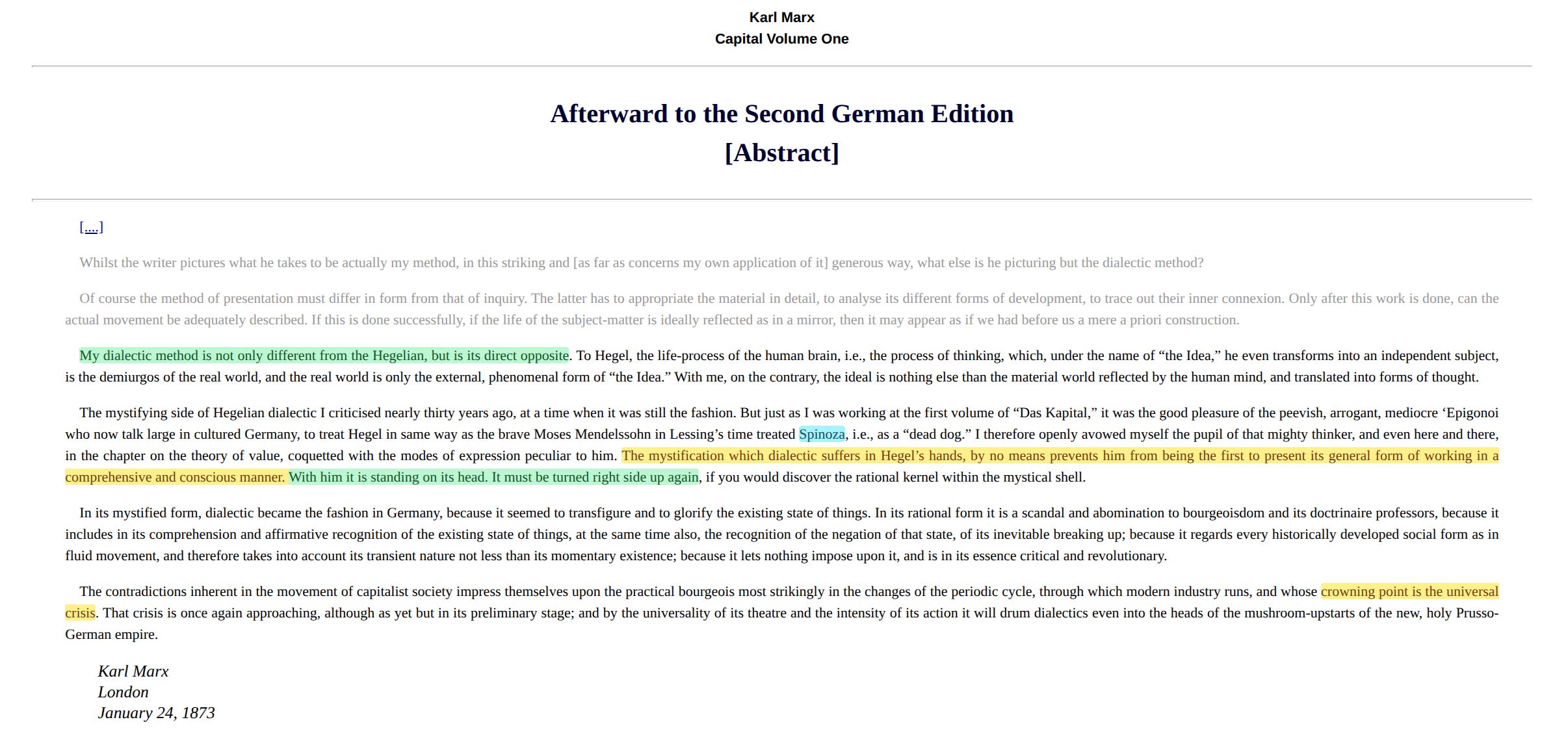
Marx himself, in the Afterword to the Second German Edition of Capital, dated January 1873, named the crowning point of the whole arrangement32:
The contradictions inherent in the movement of capitalist society impress themselves upon the practical bourgeois most strikingly in the changes of the periodic cycle, through which modern industry runs, and whose crowning point is the universal crisis.
The blueprint have been in circulation for considerably longer than most people realise. The shared governance infrastructure that rendered the Cold War irrelevant booted in 1972 with IIASA and the US-USSR Agreement on Cooperation in Environmental Protection33, was being integrated with the global economy by 1991 through the Global Environment Facility, and went fully operational at the Rio Earth Summit in 1992 — delivering the UNFCCC, the Convention on Biological Diversity, and Agenda 21 which standardised trisectoral governance: public-private partnerships for ‘the common good’, where the latter is defined by foundation-funded ‘civil society organisations’, today more commonly known as international NGOs of the sort often granted General Consultative Status by ECOSOC.
Gorbachev even told us as much in November 1987:
Our perestroika, with all its international consequences, is eliminating the fear of the “Soviet threat”, and militarism is losing its political justification… We will not in any way renounce the genuine values of socialism‘… For socialism this policy secures a merging of its class interests as a system and the interests of all humanity. And for capitalism, too, there is no other sensible way than coexistence and competition. Joint action alone can lessen and remove the global danger of an ecological ‘heart attack’
Remove the Soviet threat, and the political space opens for environmental governance. The very same which Rio installed in 1992, only five years later. And in the following year, Gorbachev co-founded the Green Cross International34.
Yet another extraordinary coincidence, it appears. Then again, perhaps it wasn’t.


"Normally, capitalism survives crises through flexibility: governments cut interest rates, print money, break their own rules, throw money at the problem. A web of mandatory, interlocking, and increasingly automated standards strips that flexibility away entirely."
Capitalism, as we have experienced the Central Bank version of it, has a shelf-life of roughly a century before needing a complete overhaul.
I don't feel that it ever possessed any real flexibility/durability when there is never enough currency in circulation to pay the interest, more company script has to be printed...
https://fred.stlouisfed.org/series/CUUR0000SA0R
In our frustration we end up attacking each other over the technical details of rigged systems wrapped in ethics, designed for control.
Thanks for your work esc.
“Host” humans are assimilated in a similar way by the Borg. The science fiction Borg are cybernetic organisms (cyborgs) linked in a “hive mind” called "the Collective". The Borg co-opt the technology and knowledge of other species to the Collective through the process of “assimilation”: forcibly transforming individual beings into "drones" by injecting nanoprobes into their bodies and surgically augmenting them with cybernetic components. People’s thoughts, actions, feelings and emotions are controlled via biometric monitoring. It feels like we are being absorbed into the mainframe. I wonder if "Resistance is futile"?