
Trojan Horse

When the World Health Organisation approved its new Pandemic Agreement in May 2025, most headlines focused on familiar promises: faster outbreak response, improved prevention, and expanded emergency powers. Yet tucked inside the fine print is something more ambitious — a mechanism capable of steering human behavior by controlling access to the building blocks of modern life.
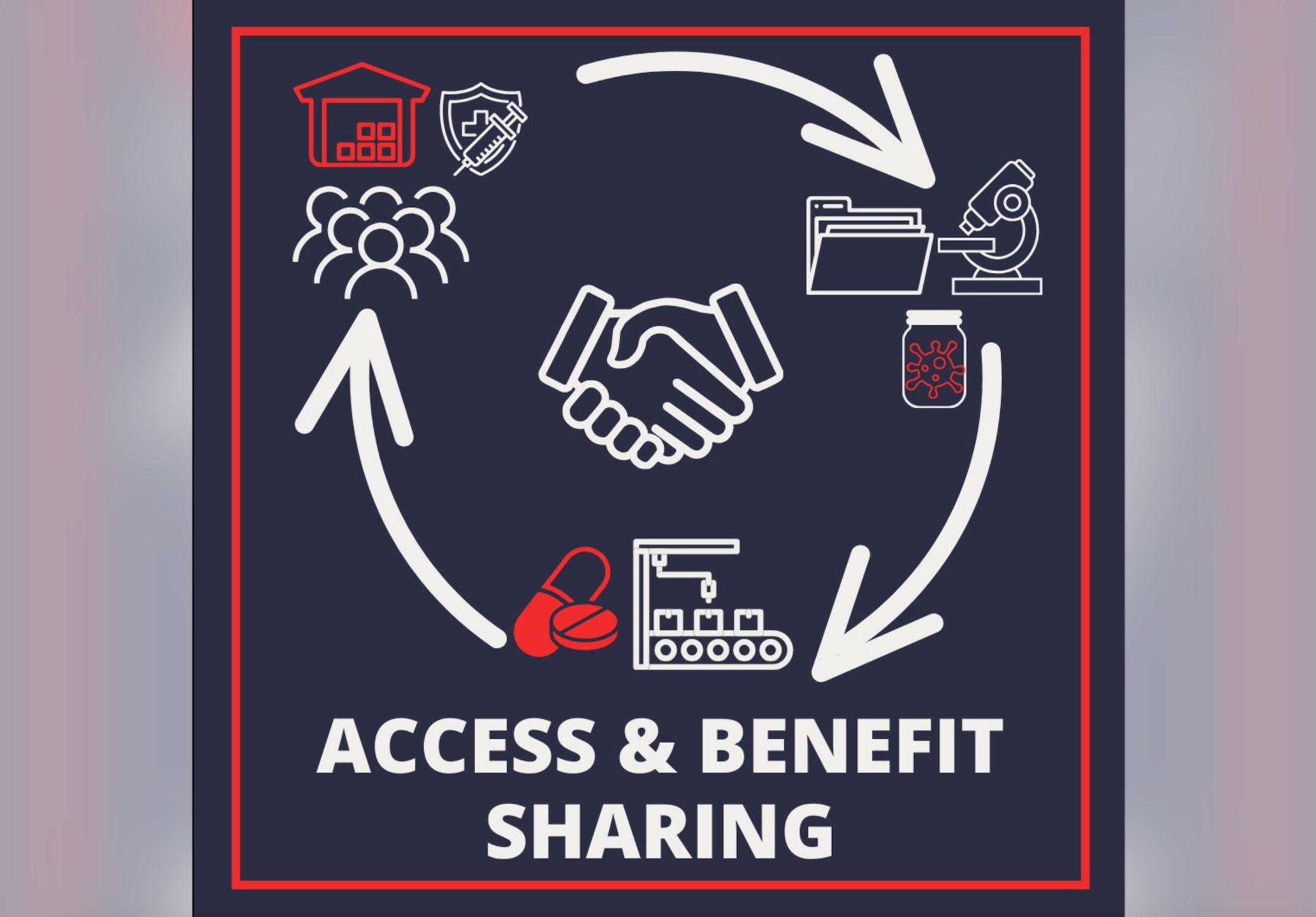
This is an accessible version of ‘Pathogen Access and Benefit Sharing‘

That mechanism is called Pathogen Access and Benefit-Sharing (PABS). Officially, it ensures a ‘fair exchange’ of virus samples and related data. In practice, it functions as an allocation system. It decides who receives medicines, technology, funding, and even preferential trade terms — and under what conditions. Compliance keeps you in the network; noncompliance locks you out.
Those conditions are elastic. Today, they concern how a country handles pathogens. Tomorrow, they could stretch to cover farming practices, climate policies, or digital identity programs — because under the WHO’s One Health doctrine, almost any human activity can be reframed as a public health issue. Food production, environmental regulation, and trade are all linked to ‘health system resilience’ in this logic.

Two Faces of the Same System
The concept is sold through a moral narrative. In policy forums, it appears in the language of Holistic Global Health Security (HGHS) — a vision of cooperative, justice-based governance that treats climate change, inequality, and social determinants as health concerns. This version is aspirational: equity, dignity, and shared responsibility.
It is light on enforcement details but rich in moral legitimacy.
PABS is the other face — the operational blueprint. It spells out binding agreements, centralised registries, unique digital identifiers, algorithmic allocation, and compliance-linked access to resources. It is the legal and technical apparatus that turns the humanitarian vision into enforceable reality.
If HGHS is the sales pitch, PABS is the machinery.
One wins consent; the other secures compliance.

How It Expands
The architecture is designed to grow:
Definitions widen — from rare pathogens to seasonal viruses, crop diseases, climate events, and eventually anything a ‘black box’ model predicts could impact public health.
Benefits broaden — from vaccines to infrastructure, tech transfers, trade preferences, and political concessions, all framed as ‘health cooperation’.
Data collection deepens — from lab samples to genetic databases, environmental DNA, and continuous biosurveillance.
Compliance metrics multiply — from reporting speed to vaccination rates, carbon outputs, digital ID adoption, and border policy alignment.
The logic is straightforward: if everything affects health, then everything falls under health governance.

From Blueprint to Reality
The groundwork for this approach was laid in 2004 with the ‘Manhattan Principles’, which called for permanent coordination among governments, health agencies, pharmaceutical companies, and environmental bodies. The same institutional actors — WHO, World Bank, GAVI — are now in charge of implementing PABS.
Its rollout follows a deliberate sequence: begin with…
Pandemic preparedness (politically unassailable), add…
Benefit-sharing (morally compelling), integrate…
Environmental factors (scientifically reasonable), link to…
Markets (economically efficient), and finally…
Automate decisions (administratively ‘objective’).
At each step, opposition becomes harder to defend without appearing anti-science, anti-equity, or anti-environment.

Endgame
PABS completes a long-sought control architecture. Finance already regulates economic behavior; environmental policy already shapes industrial practice. What remained was a mechanism to influence daily life — work, movement, association — without direct political confrontation. PABS achieves this by making social and economic participation conditional on algorithmic health scores.
The genius of the system is that it feels voluntary. Access is framed as a reward for cooperation, denial as a neutral consequence of failing to meet scientific benchmarks. The result is a governance framework where disagreement carries not prison sentences but exclusion from essential systems — banking, trade, travel — under rules most people believe are for the common good.
The infrastructure is being deployed. The agreements are signed. The institutional coordination is active. But will the public recognise the machinery behind the humanitarian language — before it becomes permanent?
Pathogen Access and Benefit Sharing

When the WHO's Pandemic Agreement was adopted in May 2025, headlines focused on legal powers and its One Health framing. Hidden inside is the true operating system of global governance — a mechanism that makes health, environment, and social behaviour programmable. Its name is PABS
Here’s a chilling example of, to use an automotive expression, “where the rubber hits the road” as part of the Trojan Horse mechanism that (initially) manifested in the public health sector during Covid
It epitomizes the culmination of the insidious — and brilliant, in a nefarious way — hijacking of ‘professional’ governance
A process where, as esc has described with such precision & depth, mystery interests of some type lurking in the backdrop:
* masquerade under guise of public-spirited action
* in effect take charge, &
* engineer a complete inversion of values (invoking ‘collective’ interests…)
In Canada, Dr. Kulvinder Kaur is one of the courageous MDs who, on solid ground, questioned the official Covid narrative
In this fresh video, posted on her new Substack account, @dockaurG describes how she has been, shall we say, subjected to the very pointy enforcement end of the operating system in the increasingly visible architecture of totalitarian control …
https://substack.com/@dockaurg/note/p-170927442?r=3llyy&utm_medium=ios&utm_source=notes-share-action
All that is needed is a trained goat to lead the sheep into the pen where the wolf locks the gate and keeps the key.