
Black Box Conditionality

Imagine your payment being declined not because of insufficient funds, but because a computer algorithm determined that economic inequality in your neighborhood increases ‘pandemic potential’.
This scenario shows how new systems are designed to turn computer predictions into economic consequences — before any actual emergency occurs.

Beyond Disease
Traditional pandemic preparedness focused on actual disease outbreaks. Today's approach uses computer models to predict ‘pandemic potential’ across a much broader range of factors. Under the ‘One Health approach’, pandemic risk assessment now includes:
Disease spillover: Traditional focus on zoonotic transmission from animals to humans
Climate-related risks: Temperature changes and environmental problems that could overwhelm health systems
Biodiversity breakdown: Ecosystem damage that might increase contact between humans and wildlife
Socio-economic factors: Inequality, poverty, and social problems that could make pandemics worse or reduce preparedness
This expansion means almost any social, economic, or environmental problem can be fed into computer models as contributing to ‘pandemic potential’. Economic inequality, environmental damage, or social unrest can all generate risk scores that trigger real-world consequences.
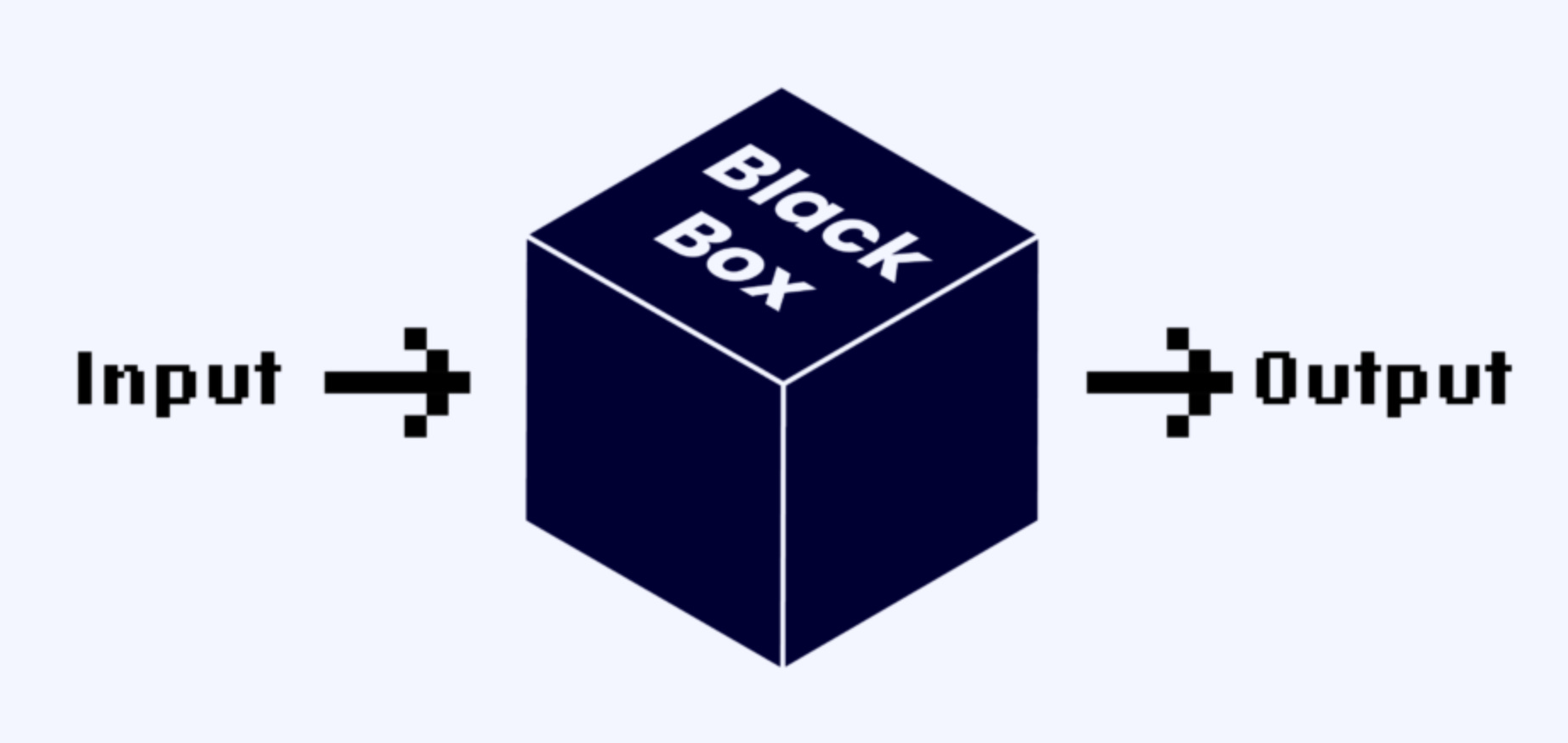
These ‘black box’ algorithms analyse huge amounts of data to make predictions, but how they actually work typically remains hidden. Citizens, businesses, and governments affected by these assessments may not understand how their risk scores are calculated or what they need to do to improve their ratings.
How Computer Predictions Become Moral Commands
The process of turning computer predictions into unquestionable moral demands follows a system established decades ago. The 1986 Venice Declaration formally connected scientific authority to ethical obligation, establishing that scientific consensus should drive moral decision-making in policy.
This builds on earlier developments in computer modeling for global governance. The Club of Rome's 1972 ‘Limits to Growth’ study used computer models to predict global disaster from population growth and resource depletion. Though the specific predictions proved wrong, the report showed how computer models claiming to predict future catastrophes could drive urgent policy demands. The same year, the International Institute for Applied Systems Analysis (IIASA) was created to develop global modeling capabilities that could guide international decision-making.
Today's science-to-ethics pipeline works through established steps:
Scientific Authority: Computer models are presented as objective, data-driven assessments representing ‘the best available science’. Questioning the models becomes the same as being ‘anti-science’.
Urgency Creation: Predictions are framed as urgent threats requiring immediate action. Any delay is portrayed as irresponsible and potentially catastrophic.
Moral Duty: Resistance to model recommendations is reframed as moral failure — endangering public health, environmental protection, or global stability. Compliance becomes an ethical obligation.
Collective Responsibility: The framework emphasizes that pandemic potential affects everyone, making individual or national resistance a threat to everyone's wellbeing.
This pipeline turns computer outputs into moral commands that seem beyond criticism or democratic debate.
Health ‘Equity’ as Behavioural Control
The Pathogen Access and Benefit-Sharing (PABS) protocol currently being negotiated shows how ‘equity’ changes from a moral principle into a behavioural management tool. Under PABS, countries that share disease surveillance data and comply with international monitoring requirements get preferential access to medicines, treatments, and resources during health emergencies.
This creates what works like a ‘health equity clearinghouse’ where equity distribution becomes conditional on behavioural compliance rather than actual need. Countries that demonstrate proper surveillance participation, data sharing, and adherence to recommended measures get rewards: preferential treatment, resource access, and financial benefits.
The system works like a Skinner box psychology experiment where desired behaviors get rewarded until compliance becomes automatic. During COVID-19, this approach was tested through vaccination incentives: free donuts, french fries, lottery tickets, and cash payments for getting vaccinated. These rewards trained people to connect compliance with immediate benefits.
PABS extends this conditioning to the international level. Nations that fully participate in surveillance systems and implement recommended policies get better pricing, faster delivery, and priority access to medical resources. Those that resist face higher costs, delayed access, and reduced availability of critical supplies during health emergencies.
The equity framework provides moral justification for what is essentially a reward system for compliance. Nations get ‘equitable’ treatment not based on need, but based on how well they follow internationally determined behavioural standards.
Digital Money and Automatic Control
Central Bank Digital Currencies (CBDCs) provide the technical infrastructure to implement this behavioural conditioning at the individual transaction level. Unlike regular payment systems, CBDCs can include programmable features that automatically adjust economic access based on compliance with predetermined criteria.
When connected to pandemic risk assessment systems, CBDCs could work as automatic behavioural modification tools. Citizens demonstrating approved behaviors — vaccination status, environmental compliance, social credit scores, or location compliance — could get automatic discounts, bonus payments, or access to restricted services and areas.
The conditioning works through both rewards and punishments. Compliance brings benefits that make economic participation more affordable and convenient. Non-compliance doesn't just face restrictions; it loses access to the reward structure that makes full economic participation affordable for most people.
The system transforms economic participation from a right into a privilege earned through demonstrated compliance with computer-determined behavioural standards. The technical infrastructure makes this conditioning automatic and continuous rather than requiring active enforcement.
Economic Control at Three Levels
The computer prediction framework connects with economic conditioning mechanisms operating at different levels simultaneously:
Individual Level: Digital payment systems restrict transactions based on pandemic risk assessments. Citizens might need to prove compliance with health, environmental, or social measures to maintain full economic access. Location restrictions, purchase limitations, or service exclusions could activate automatically based on computer risk scores.
Corporate Level: Companies operating in regions with high computer-generated risk scores face restricted access to capital markets, higher borrowing costs, or exclusion from global supply chains until they implement recommended measures. ESG scoring already shows how compliance with externally determined criteria affects access to the best financing.
National Level: Countries identified as having high pandemic potential face conditional financing where IMF, World Bank, and other international funding becomes tied to implementing computer recommendations — regardless of what their citizens want or local priorities. The emergency framework provides justification for overriding national sovereignty in the name of global health security.
Each level reinforces the others, creating layered dependencies where non-compliance at any level becomes economically punitive. The moral framing makes resistance appear not just economically costly, but ethically wrong.
The Complete Control System
When viewed as a whole, pandemic potential modeling represents a systematic approach to computer-controlled behavioural management that works through economic incentives rather than direct force. The framework combines:
Prediction infrastructure: Continuous computer assessment of pandemic potential across multiple areas
Moral justification: Science-to-ethics pipeline that turns computer outputs into ethical demands
Reward mechanisms: Preferential treatment for compliance through systems like PABS
Economic integration: Automatic conditioning through programmable payment systems
Multi-level enforcement: Simultaneous pressure at individual, corporate, and national levels
This represents the practical implementation of conditional economics. Economic access becomes contingent on maintaining acceptable computer scores across an expanding range of behavioural, environmental, and social metrics — all measured through computer surveillance systems justified by pandemic preparedness.
The technical infrastructure for comprehensive economic conditioning already exists. Pandemic preparedness provides the moral justification for using these capabilities. ‘Black box’ computer modeling provides the seemingly objective mechanism for determining who deserves economic access and who doesn't.
Understanding how pandemic potential modeling connects with economic conditioning reveals how emergency preparedness could become a pathway for implementing computer governance across all levels of economic participation. The next question becomes: what happens when these systems are enforced through international emergency powers that no nation can resist?


If I remember correctly, in ancient times a the priest would make it appear that their voice was the voice of their god from a statue. Now "the voice of god" is from a computer model, which is just the old lust for power in a scientistic toga. Plus la change...
I've described it for years as a global techno feudal buddhist hive . I'm glad people are becoming more aware of the implications. The thing is , will the organic natural hive mind of 'fairness' be any nicer ??
We only have so many options. I'm banking on organic answers but I'm aware they are unlikely to be pleasant either . Ho hum.