

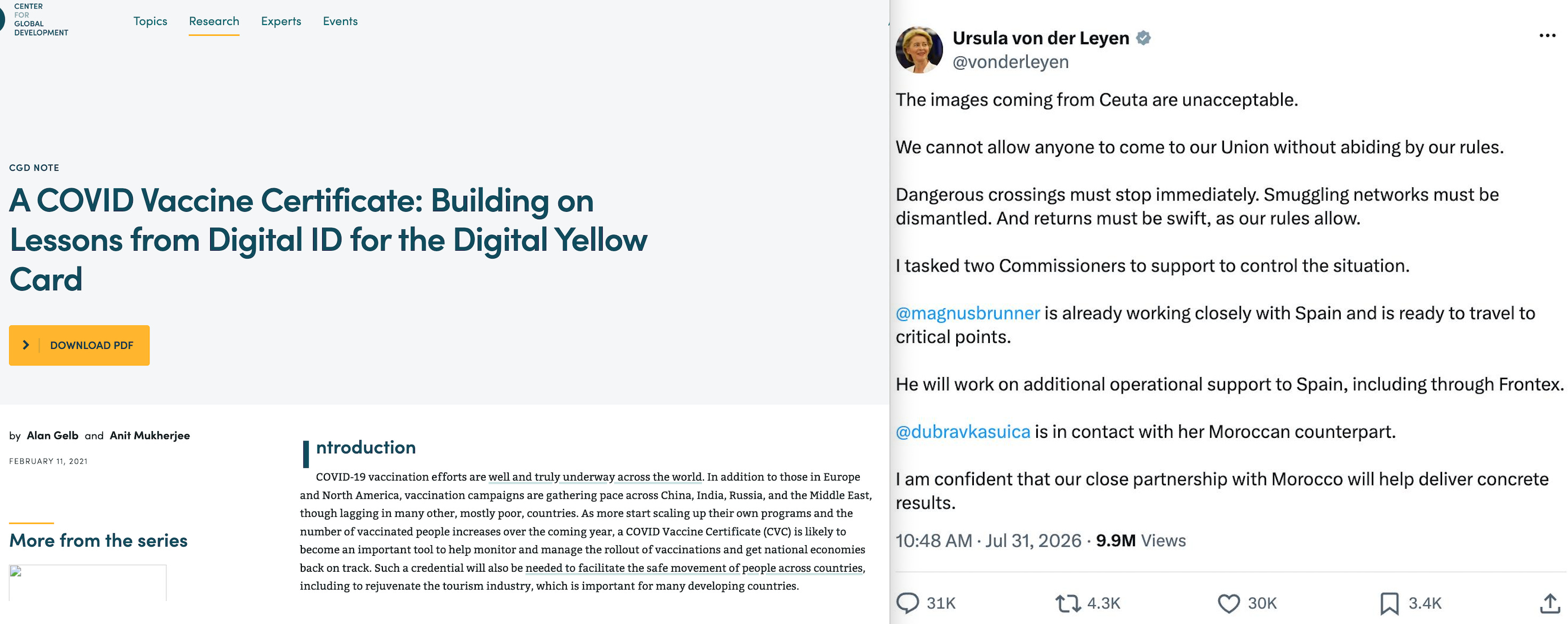
On July 30, 2026, roughly 60,000 people crossed from Morocco into Ceuta — a small Spanish enclave on the northern tip of Africa with a population of 83,000.
Something will be done. Something is always done. The question worth asking — and the one that never gets asked in the middle of a crisis — is whether that something makes the next crisis more likely, or less.
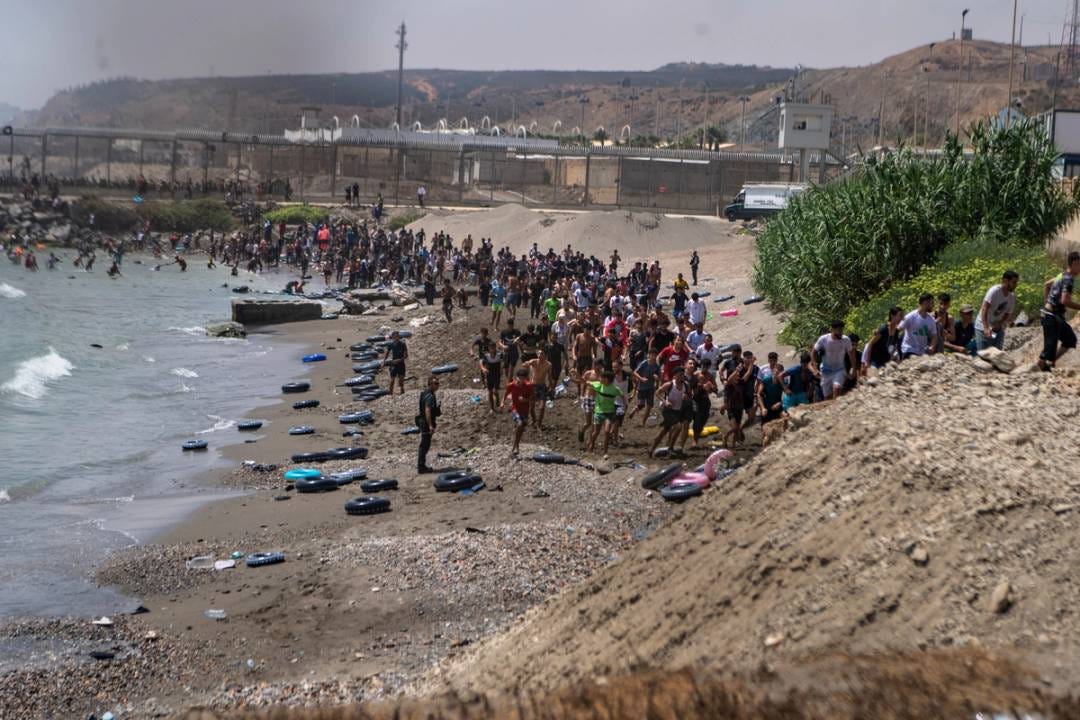
Morocco has done this before. In May 2021, around 8,000 people crossed into Ceuta over two days1 after Moroccan authorities appeared to loosen border controls. The 2026 surge is larger by an order of magnitude, but the mechanism is the same: Morocco controls the border and adjusts the flow when leverage is needed. Migration analysts noted that ‘these kinds of organised movements don’t happen without, at minimum, passive collaboration from Moroccan authorities’2.
The EU’s response to the 2021 crisis was to expand border infrastructure, increase Frontex funding, and accelerate the development of digital border management systems3. None of those measures reduced Morocco’s ability to open the tap again. If anything, they increased Morocco’s leverage — because each opening now produces a larger crisis, which produces a larger concession, which funds more infrastructure, which makes the next opening more consequential. The cycle feeds itself.
But three specific pieces of contemporary EU legislation illustrate how the ‘solution’ to this crisis will create the conditions for the next one.

The Entry/Exit System
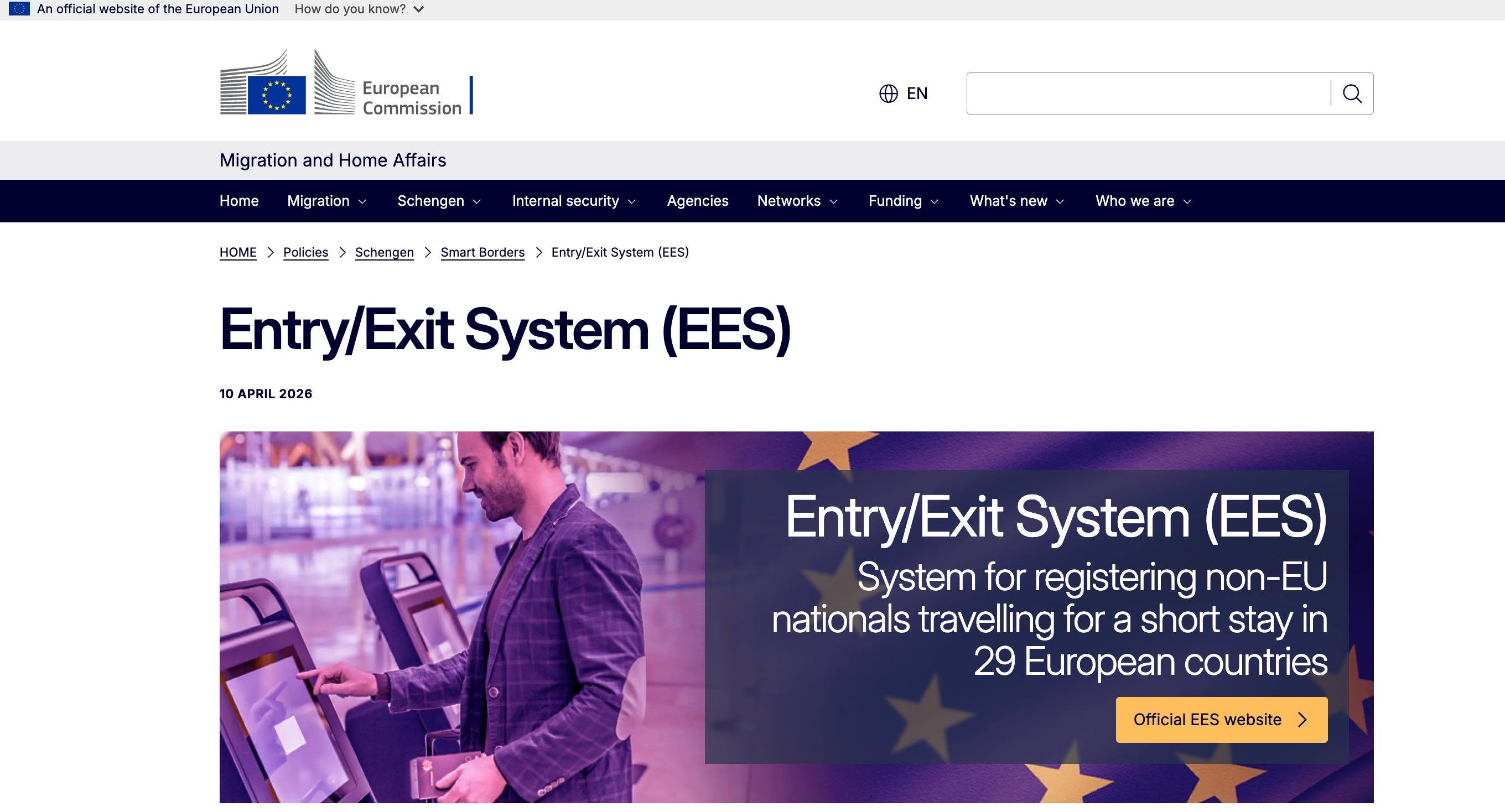
The EU’s Entry/Exit System became fully operational on April 10, 20264 — less than four months before the Ceuta crisis. It replaces passport stamping with biometric data collection across 29 European countries: facial images, fingerprints, and personal data registered in a centralised EU database every time a non-EU national crosses an external border. Over 45 million border crossings have already been recorded.
The system is presented as a way to detect overstayers and prevent identity fraud, and on those terms it works. But what it creates is a centralised biometric identity database covering every non-EU national who enters Europe. That database can be linked to the EU’s digital identity wallet framework, eIDAS 2.05, which every member state is required to offer by late 2026. Or it could be connected to financial compliance systems through interoperability rules that already exist6. The border tool becomes an identity layer — but once built, that won’t necessarily stay at the border.
A crisis like Ceuta makes the argument for accelerating it. Sixty thousand people overwhelming physical border controls in 24 hours is a compelling case for automated biometric processing. ‘Stamps couldn’t cope’, the argument will go. ‘Biometrics could have’. The infrastructure that was built to manage orderly travel gets repurposed — and the emergency justification ensures that nobody asks what else it might be used for once the emergency passes.

ETIAS
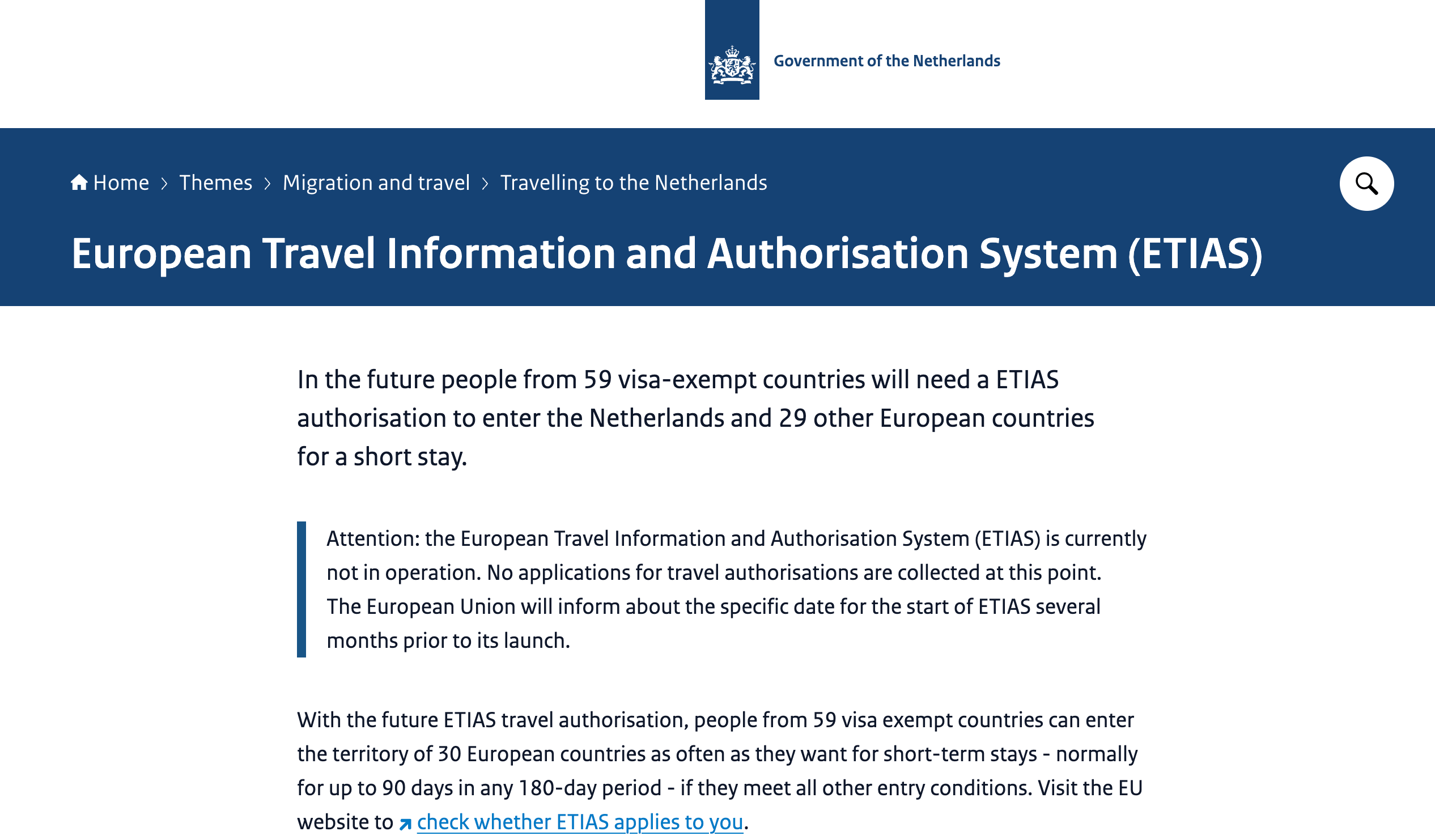
The European Travel Information and Authorisation System is scheduled to go live in the second half of 20267. It will require travellers from 59 visa-exempt countries8 to obtain digital authorisation before entering Europe. You’ll fill out an online form, pay a fee, and receive approval or denial before you board your flight. Input constraint applied to… you!
Combined with the Entry/Exit System’s biometrics and the eIDAS 2.0 digital wallet, ETIAS completes a three-layer identity stack: you’re screened before you travel, biometrically registered when you arrive, and digitally tracked throughout your stay. The judgment comes before the action, and entry is conditional upon meeting certain criteria — and if the system says no, you can’t board the plane. There’s no border official to appeal to, no stamp to argue over, no human discretion in the loop.
ETIAS is presented as a security measure. What it creates is pre-emptive border enforcement — evaluation before arrival, automated and conditional. The Ceuta crisis will be cited as evidence that pre-screening is essential. The argument perhaps appears reasonable, but the infrastructure it justifies will be permanent.

The Migration and Asylum Pact
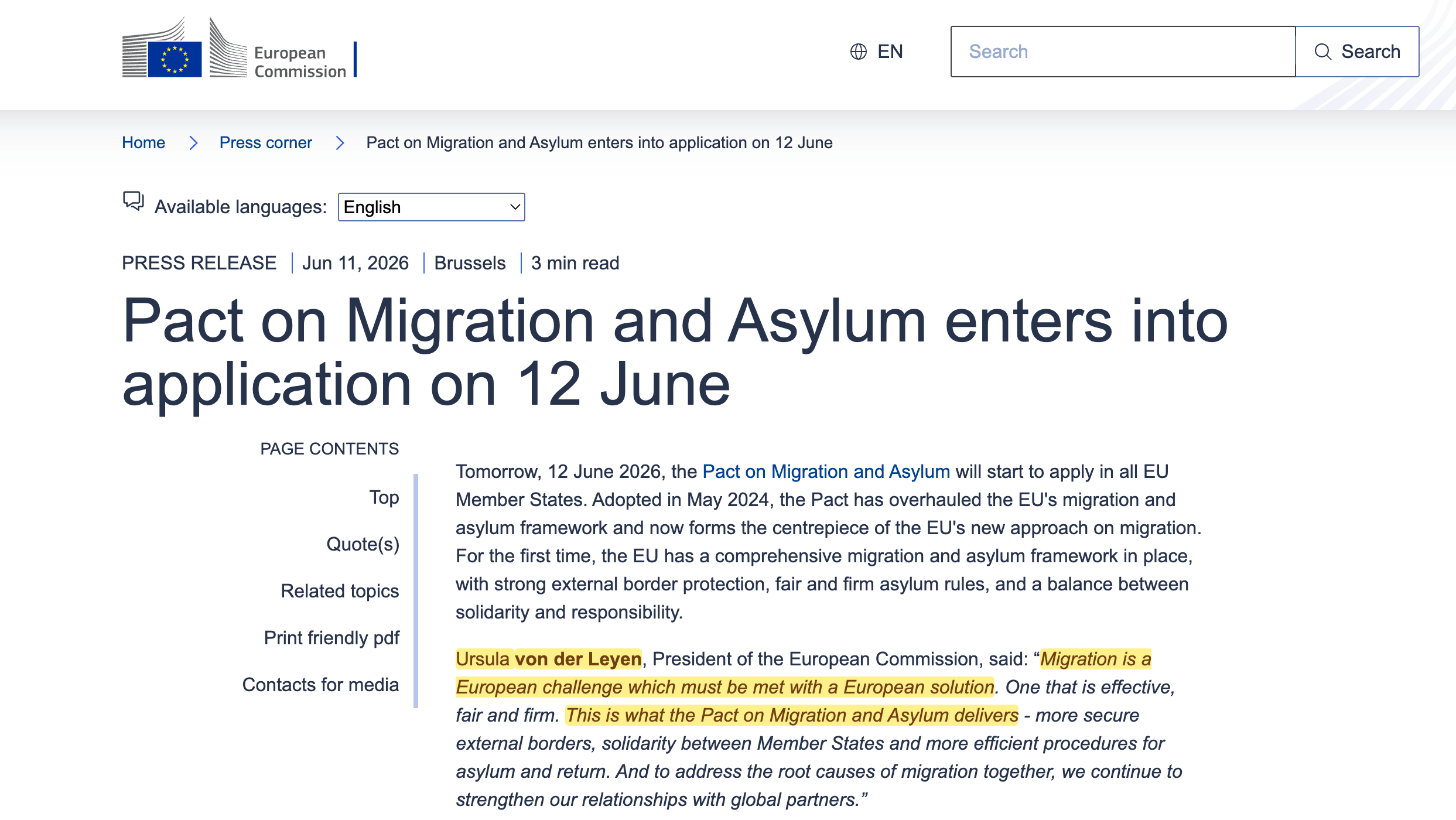
The EU’s Migration and Asylum Pact entered force on June 12, 20269 — seven weeks before the Ceuta crisis. It introduces accelerated border procedures, mandatory biometric registration through the upgraded Eurodac database10, and the ‘instrumentalisation’ clause11.
Under the Pact, EU countries can suspend normal asylum procedures when a third country is deemed to be deliberately weaponising migration flows for political leverage. This is exactly what Morocco has done — in 2021 and again in 2026. The Pact gives the EU the legal authority to declare that migration is being ‘instrumentalised’ and to activate emergency powers in response.
This again perhaps sounds like a solution. But what it does is hand the trigger to the country causing the problem. Morocco doesn’t just control the flow of people across the border — it now controls the activation of EU emergency powers. Each time Morocco opens the tap, the EU activates the instrumentalisation clause, suspends normal procedures, and expands the emergency infrastructure. Morocco might receive funding and concessions, but the EU gets a permanent expansion of its border and surveillance apparatus. All the EU has to do is ask Morocco to accelerate the flow.

The Ratchet
The pattern across all three measures is identical. A crisis occurs. Emergency measures are introduced. The emergency measures become permanent infrastructure. The permanent infrastructure doesn’t reduce the likelihood of the next crisis — in some cases it increases it — but it never gets reversed. The Entry/Exit System, ETIAS, and the Migration Pact were all designed, legislated, and deployed before the Ceuta crisis occurred. The crisis didn’t create the legislative acts. It justifies them — retroactively, publicly, and permanently.
What makes the strategy so effective is that the population will demand it. Europeans see 60,000 people pouring into a city of 83,000, and call for politicians to respond. When the EU introduces biometric databases, digital pre-screening, and emergency powers that suspend normal asylum rules, the public doesn’t resist — they celebrate.
But what they’ve just celebrated is a biometric identity database covering every non-EU national who crosses a border, a pre-screening system that evaluates travellers before they board a plane, and an emergency clause that suspends fundamental rights whenever a third country decides to open a border. The infrastructure was allegedly built to control migrants, but once the database, the pre-screening, and the emergency powers exist — they exist for everyone.
COVID showed the template. The QR codes, vaccine certificates, gated access to supermarkets were all presented as public health measures. The population celebrated it and shamed those who objected. Within months, hundreds of millions of people had been trained to accept presenting digital credentials as the condition for entering a restaurant, boarding a flight, or keeping a job.
During COVID, the EU attempted to install the digital identity layer through the vaccine certificate12. The migration crisis will be weaponised to install the border and surveillance layer. And both will, no doubt, be celebrated by the people. At least it will appear that way, should you listen to the mainstream media. Anyone who objects will be claimed to ‘endanger our collective future’. The script is as old as time, but it’s packaging has become ever more cynical.
Morocco controls the spigot of people. The EU controls the spigot of legislation. Both spigots are operated by the same crisis, and the population standing between them applauds — because they think the control won’t apply to them. But once operational, the difference between migrant and citizen is a mere parameter in the system. And parameters often change without a vote, nor a hint of accountability.

Morocco didn't "decide" anything. Israel stirring up shit once again.
Problem, reaction, solution. All created by the same people.