
The Invisible Cage

We are not witnessing a conspiracy; we are witnessing the rollout of a new operating system for human society. This silent revolution is not being fought with bullets and banners, but with standards, algorithms, and financial regulations — quietly implemented, much in line with that stated in Silent Weapons for Quiet Wars.
The goal is not to violently overthrow parliaments, but to quietly make them obsolete, replacing them with a global, technological system of governance. This new architecture, constructed in plain sight, is building an invisible cage where our economic and social participation is becoming conditional, our freedoms transformed into privileges granted only upon compliance.


The evidence for this is a coherent picture emerging from public documents, technological projects, and geopolitical strategy. By connecting the dots from the core of global finance to the reconstruction of war-torn nations and the technical frameworks of a so-called ‘moral economy’, an inescapable conclusion forms: a new power structure has evolved beyond the control of nations. It is leveraging crisis, commerce, and a dangerous new philosophy to enclose humanity within a system of total, algorithmic control.

The Blueprint
To understand this system, one must first understand its plumbing — the ‘six rails’. These are the channels through which the lifeblood of the modern economy must flow, and they are being fitted with smart meters and control valves.
Digital Identity:
This is more than a digital ID card. It is the transformation of your existence into a parameterised node in a global network. Your digital wallet or profile doesn’t just identify you; it carries your permanent compliance history, your social credentials, and your permissions. You cease to be a citizen and become a data point with specific, measurable properties.Accreditation:
If Digital Identity defines the nodes, accreditation defines the allowed connections between them. Centralised, ‘approved’ bodies decide who is authorised to certify compliance. They create a whitelist of ‘approved’ actors — companies, auditors, even governments — who are allowed to participate. This rail answers the question: ‘Who decides who gets to decide?’Data:
This is the system’s central nervous system. Through intrusive global surveillance it involves the comprehensive, real-time capture of records from every transaction and operation. The economy becomes a constantly updating, living spreadsheet, where every action is recorded and stored.Audit & Assurance:
Data alone is meaningless without analysis. This rail is the system’s continuous internal investigation. Algorithms and auditors perpetually check the captured data against predetermined targets and rules. Did a company meet its ESG score? Did a country hit its carbon reduction milestone? This is where measurement becomes judgment.Finance:
This is the master rail, the system’s apex actuator. It is where judgment is translated into consequence. Based on the audit, the financial system automatically rewards compliance with lower interest rates, better credit, and access to capital. It punishes deviation by making financing prohibitively expensive or by cutting it off entirely. This is the enforcement mechanism that gives the other rails their teeth.Procurement:
This is the rail that makes the entire system mandatory. Government purchasing represents roughly 13% of GDP in developed economies. By embedding the requirements of the first five rails into all public contracts, and forcing every supplier and sub-supplier to comply, this rail creates a domino effect. It transforms voluntary standards into unavoidable requirements for market access.
Together, these rails create a closed, cybernetic loop of adaptive management: Measure, Compare, Actuate. Your behavior is measured (Data), compared to a target (Audit), and then financially conditioned to force you back in line (Finance). It is a thermostat for human activity, and it is quietly being installed across every strata of human society and the global economy.

The Apex Controller
In any control system, the entity that controls the ‘actuator’ — the mechanism that translates decisions into real-world consequences — holds ultimate power. In the six-rails system, while other rails can exclude (a platform can deplatform you, an identity system can lock you out), only the Finance Rail can apply continuous, graduated, and universal pressure. It can fine-tune the cost of your mortgage, your business loan, or a nation’s sovereign debt based on compliance, making it the most powerful enforcement tool ever devised.
This leads to the critical, logical deduction: who controls the Finance Rail at its very root? The answer is Central Banks.
They are not merely powerful financial institutions among others. They are the architects and operators of the monetary substrate itself. Through their coordination at the Bank for International Settlements (BIS) — the central bank for central banks — they control the settlement layer where all significant transactions ultimately clear. They define what counts as money and what assets are considered valuable collateral. The rules they set in Basel for banking stability or through the Network for Greening the Financial System (NGFS) for climate risk become the binding constitution for global finance.
Therefore, the chain of logic is inescapable: if power flows through the rails, and the rails are powered by the Finance Rail, and the Finance Rail is controlled by the central banking network, then the BIS-centered central bank system constitutes the apex of contemporary global power.
The central banks are the system administrators.

The ‘Inclusive Capitalism’ Endgame
This is where a technocratic vision marketed as ‘Inclusive Capitalism’ becomes the logical — and terrifying — endpoint. It represents the complete fusion of the control system with a centrally-enforced moral framework.

The technical infrastructure for this is already being built through BIS Innovation Hub projects:
mBridge: A shared platform for programmable Central Bank Digital Currencies (CBDCs) that enables cross-border transactions with built-in compliance checks.
Helvetia: Integrates these CBDCs with tokenised real-world assets (stocks, bonds), bringing the entire capital markets onto the programmable ledger.
Genesis: The most revealing project, it directly links financial assets to real-time environmental surveillance data, creating a system where a ‘green’ bond’s value can be automatically adjusted based on satellite data of a forest’s health.
This programmable infrastructure is paired with a vast, silent framework of international standards — particularly from the International Organization for Standardization (ISO) — that translate vague ethical goals like ‘Sustainability’, ‘Diversity’, and ‘Equity’ into measurable, auditable indicators. The UN’s Sustainable Development Goals (SDGs) provide the universal scorecard, with all 17 goals tethered to specific, quantifiable surveillance data metrics.
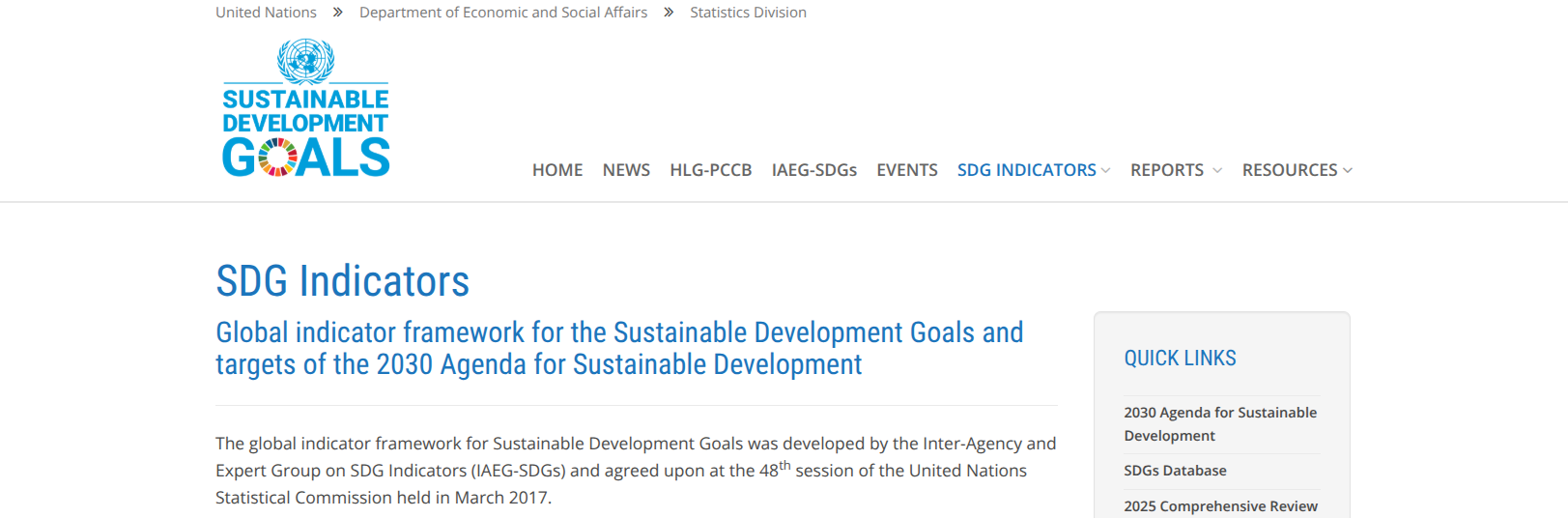
The result is a system where ethics are no longer a matter of personal or political choice but a quantifiable and enforceable requirement for economic survival. A business’s access to loans can be automatically adjusted by an algorithm monitoring its real-time carbon emissions, the diversity of its hiring practices, or even how many trees were chopped down during the construction of its headquarters years back. A nation’s reconstruction funds, as seen in Ukraine and planned for Gaza, are gated on its adoption of specific policies. This is the ‘moral economy’ in practise: a world where financial viability is inseparable from continuous, verified compliance with a centrally-defined and algorithmically-enforced vision of the good, as monitored through global surveillance.

This is not capitalism as it was historically understood. It is a cybernetic system of control, justified by moral imperative. In a stunning historical inversion, it effectively delivers on the old Communist Manifesto’s fifth plank — ‘Centralisation of credit in the hands of the state, by means of a national bank with State capital and an exclusive monopoly’ — but it does so at a global, technocratic level, leaving no jurisdiction in which to hide.


The Rise of Dataism
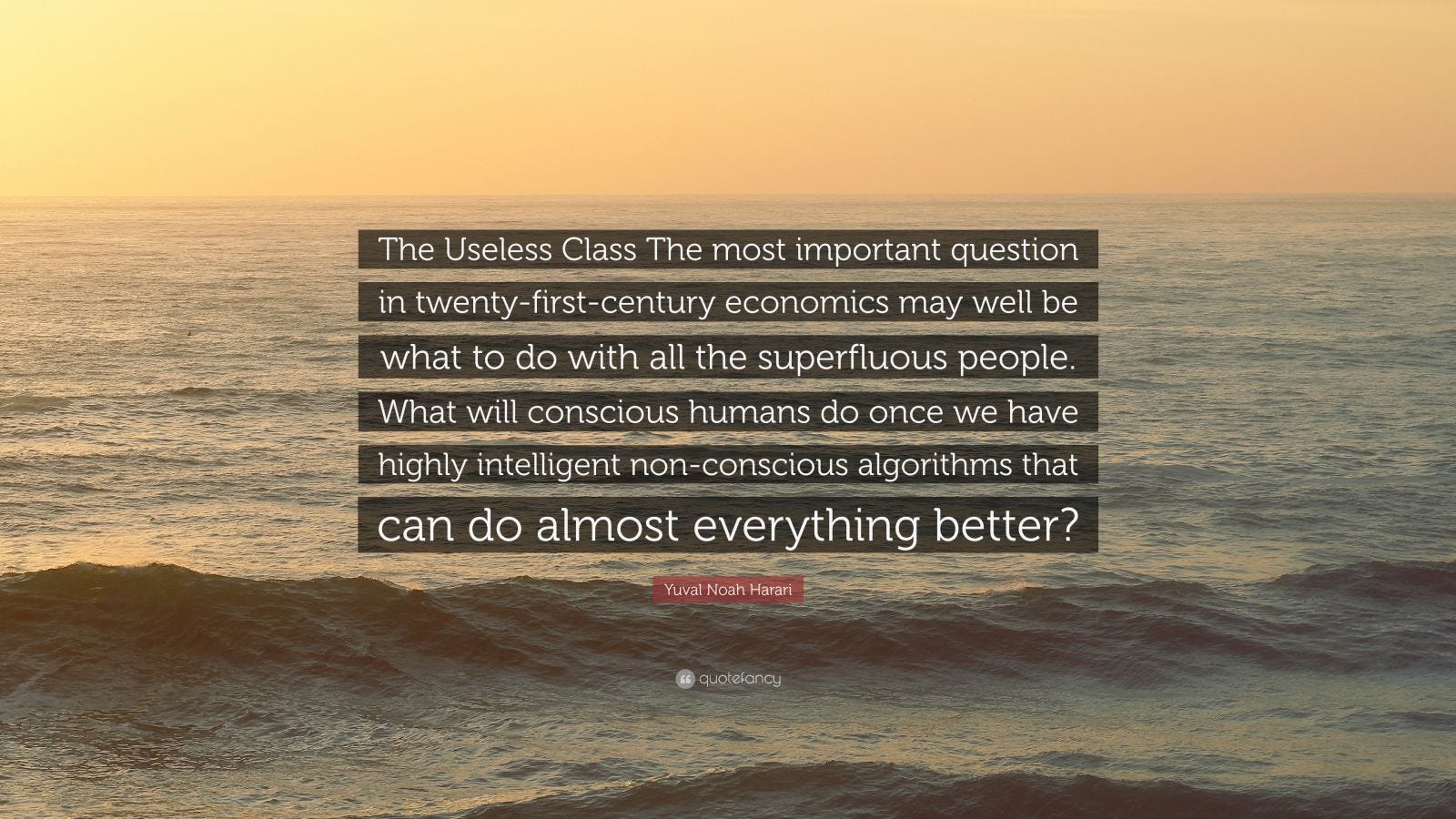
Underpinning this entire architecture is a philosophical shift so profound it redefines the meaning of governance, value, and what it means to be human. As historian Yuval Noah Harari has argued, we are transitioning from the age of Liberal Humanism — which valued individual liberty and democratic deliberation — to the age of Dataism.
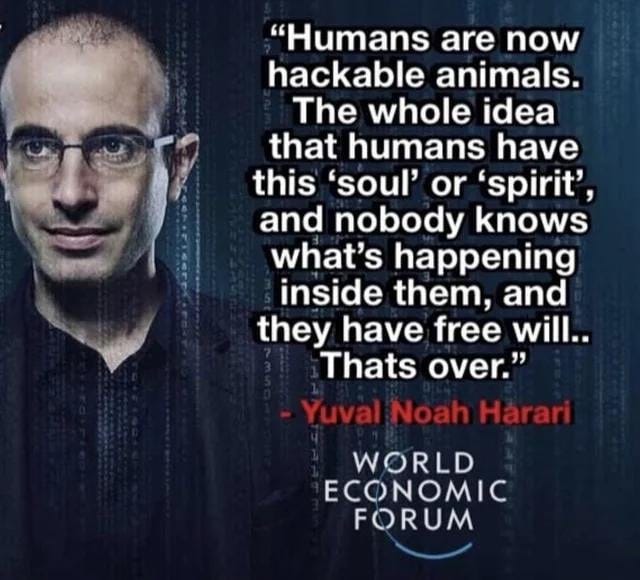
In this new worldview, humans are not sovereign beings with free will. We are biological algorithms, and our choices are merely data-processing outputs. The ‘good’ is no longer determined by human debate, ethical reasoning, or democratic vote. The ‘good’ is what the data reveals as the most efficient, ‘optimised’ outcome for the system as a whole.
Humanism asked, ‘What do you feel?’ Dataism asks, ‘What does the algorithm say?’

The six rails are the physical manifestation of Dataism. They are the perfect apparatus for capturing all data, processing it against optimised targets, and actuating the algorithm’s ‘correct’ decision through financial rewards and punishments. In this framework, resistance is not a political opinion; it is a form of system error — a miscalculation, a deviant data point that must be corrected for the health of the whole network.
This is why the system can be built with such relentless, unemotional efficiency: its architects and administrators often see themselves not as tyrants, but as systems engineers, fixing bugs and ‘optimising’ humanity.

The Playbook: Crisis as the Master Key
This architecture is not sitting idle in a laboratory. It is being rolled out globally using a ruthless and effective playbook: the strategic weaponisation of crisis.
Ukraine served as the pilot program. The EU’s ‘Ukraine Facility’ is not a simple aid package; it is a governance template. It ties the disbursement of billions to a checklist of 69 reforms and 130 indicators, publicly tracked on a scoreboard. Money flows only when external auditors certify compliance, judged through real-time surveillance indicators. The six rails are fully operational here: digital ID for aid, comprehensive surveillance data collection, continuous audit, and conditional finance, all propagated through procurement rules.

Gaza is now being set up as the second application. The emerging plans, including Trump’s 20-point proposal, feature an identical structure: an international transitional authority that will ‘handle the funding for redevelopment… until [Palestinian] reforms are completed’. The horrific devastation creates total dependency, and that dependency becomes the leverage to install a system of external oversight that would be politically unacceptable under normal circumstances.

The UN Emergency Platform provides the global protocol for the final rollout. This proposed mechanism would allow the UN to automatically activate this entire six-rails infrastructure during any declared ‘complex global shock’ — a pandemic, a climate disaster, or a financial meltdown. The emergency frame is used to justify centralising authority, bypassing democratic processes, and installing ‘temporary’ systems that, history shows, never sunset.
The crisis becomes the perpetual key that unlocks the door to total control.

The Logical Conclusion
When you synthesise the six rails, the control of finance, the ‘Inclusive Capitalism’ facade, the philosophy of Dataism, and the crisis-driven rollout, you arrive at the endpoint: a system of total conditional existence — the Total Human Ecosystem.

Your Digital Identity becomes the literal key to your life. It is the functional equivalent of the biblical ‘mark of the beast’ — not as a mystical symbol, but a technical requirement for participation in the Dataist economy. Without it, you cannot buy, sell, work, or access services.
The system is being designed with clever legal circumventions. While regulations, such as the EU’s AI Act, may prohibit the creation of a social credit system by embedding rules directly into a Central Bank Digital Currency, the architects have a workaround. The programmability is simply offloaded from the currency itself to the digital wallet that holds it. The central bank can claim, technically truthfully, that its currency is ‘neutral’, while the wallet — the essential gatekeeper for every transaction — enforces the behavioral conditions. Your ability to participate becomes contingent on your compliance score, as silently dictated by the algorithm in your wallet.
The ‘beast’ is the impersonal, Dataist system, marketed as ‘Inclusive Capitalism’, that enforces optimisation under the benevolent-sounding banners of ‘sustainability’ and ‘equity’, which in reality is little but a reward for compliance — such as receiving a doughnut in return for accepting a ‘vaccine’ during Covid. It makes dissent not just illegal, but economically impossible, socially ostracising, and, within its own philosophical framework, rationally and morally indefensible.

The Choice at the Frontier
The infrastructure of control is not a future threat. It is a present reality. The pipes are laid, the algorithms are in training, and the validation tests are underway in the laboratories of Ukraine and Gaza.
The central banks, coordinating through the BIS, sit at the center of this web, controlling the monetary substrate that this new world is built upon. ‘Inclusive Capitalism’ provides the moral cover, and Dataism provides the philosophical justification for replacing human choice with algorithmic optimisation.
We are, in short, experiencing the building of a global prison. Its walls are made of rules, its bars are algorithms, and its lock is a financial system that believes human freedom is an inefficiency to be optimised away. The most insidious part is that we are being persuaded to build it ourselves, to willingly trade our sovereignty and autonomy for the cold, calculated comfort of systemic management.
The blueprint is now public. The only question that remains is whether we will choose the beautiful chaos of human freedom over the sterile silence of the algorithm.
The key is still in our hands — but it won’t be for much longer.

Thank you very much for this very useful breakdown. Do you have a suggestion of what can be done to avoid this fate?
Thanks for this huge piece, translated in French here : https://zanzibar.substack.com/p/la-cage-invisible