
Conspiracy Theory

Contemporary CBDCs have a history which traces back generations. However, before we get to that, let’s take a look at what these specifically enable.

the cbdc
When you engage in a financial transaction — buy a cup of coffee in your favourite coffee shop, do your weekly shopping, or pay for your car insurance — this transaction will in the future come with metadata describing the point of sale (location, shop, type of establishment, …) along with a wealth of data describing the individual transaction (date and time, amount, carbon footprint, type of transaction: food, energy, travel, …). While contemporary claims circle around the CBDCs not being programmable, this is in fact somewhat misleading, as the programmability resides in your wallet/application layer and scheme rulebook (not the ‘atoms’ of money), such as that implemented through wallets alongside the EU Digital Identity Wallet.
Upon receiving a transaction request (you attempting to buy something), the technology implemented in the wallet will have access to all the information encoded in the metadata, and it’s exactly this which allows it to block transactions should you be unable to afford the transaction, have insufficient carbon credits to your name, or even — given an emergency situation, such as the alleged recent pandemic — block expenditure further than (say) 3 miles away from your home. The wallet, consequently, becomes technology enabling fine-grained control of your transactions right down to the individual transaction — even if you were just trying to buy apples in the local shop when visiting your elderly parents.

programmable constraints
However, these programmable constraints could easily be applied to the individual transaction under somewhat more questionable circumstances just as well — consequently, if you’ve left your future 15-minute city more than the approved quantity of times for the month, then it could even automatically inform the authorities and fine you accordingly.
Costs can even be applied on a per-wallet basis — meaning the amount of carbon credit you pay for a given individual transaction could be higher due to claims of ‘intergenerational equity’; a contemporary implementation of original sin where you’re penalised simply because your grandparents had the nerve to develop early technology which allowed the central banks to now hold this power.
Because ultimately, the power rests somewhere, and that location is the central banks. It’s the central banks which hold control of the technology that can reject your individual transactions in the future world of tomorrow. Governments — sure, they probably are allowed to issue requests to penalise or discriminate against you. We most notably saw this take place in Canada during the convoy protests, which ended as Trudeau invoked an emergency order (later ruled unlawful by a federal court, currently under appeal), for which he obviously didn’t have to face repercussions, because the two-track justice society only works against you, not them.
Yet the question arises, how did the central banks gradually seize this power over the individual transaction — technology which can be directed not just against you as an individual, but against every business from the local artisan coffee shop to corporate giants down the road like Starbucks? Because each and every single shop as well as individual is under this same thumb, ultimately controlled by central banks — even the large corporate giants which contribute through creating this colossal infringement on individual liberty. To answer that question, we need to return to 1844.

the london bank clearinghouse
When the London bank clearinghouse came to be from the late 18th century into the mid-19th (informal pub clearings leading to a purpose-built Clearing House in 1833), it created a hierarchical structure placing a currency-issuing bank at the very top of the hierarchy. At this stage not one, but many note-issuing banks existed (issuing notes redeemable in gold) — not wholly unlike currencies like Bitcoin, Solana, or Ethereum, though these are backed by nothing. Drawing on David Ricardo’s ideas and the Currency School, the 1844 Bank Charter Act put a stop to that, and granted the Bank of England primacy over currency issuance — the British Pound Sterling. Until this point, the BoE had been a bank of major importance, serving the government and the Royal Family. But this act granted them an exclusive monopoly on currency issuance in England and Wales, to be gradually phased in with time, with the eventual monopoly a realisation by 1921.
The London bank clearinghouse is important, because it was a solution to a long-standing problem — when customers of two competing banks back then wished to transact with one another, this would typically take place through cheques issued from one bank, and cashed by another. Of course, there’s not just one cheque, but many; consequently, if you have two cheques going the opposite ways, there’s no need for the banks to send the full amounts, rather, they would determine the difference and merely settle this amount. Now scale up to thousands of cheques, and every day these banks would, pre-clearinghouse, be faced with having to settle relative to every other bank they might have transacted with. And given the sheer quantity of competing banks, this quickly would become an issue of almost insurmountable complexity.
The solution to this problem was simple. At the end of every trading day, the representatives of around 30 of the major banks would meet up in a pub, and would settle their accounts relative the another in one location. Smaller banks would then repeat this pattern with the clearinghouse bank they were formally associated with, and the net result would be a hierarchical structure, where for each currency, the issuing bank of that bank would sit at the apex. Local banks would settle with clearinghouse banks, who in turn would settle with the issuer of the underlying currency.

the 1844 bank charter act
What the 1844 Bank Charter Act did was to eliminate all competitors at the apex, with only the Bank of England’s Pound Sterling resting on top. The Bank of England, thus, became the sole organisation at the apex of this structure, and the 30 (roughly) clearinghouse banks would represent the first ring, which in turn would settle relative to every local bank in Great Britain.
In 1907, a panic took place in the United States. There are a number of accounts of this event, but what matters is that it led to the 1913 Federal Reserve Act, which — through its dealers in government securities (the term ‘primary dealers’ became official later) — in essence recreated the same clearinghouse model in the United States. This was followed by the First World War, then the Versailles treaty which called for German reparations, which — through an episode of hyperinflation — was stabilised through the Dawes Plan, and in 1929 developed into the Young Plan, which spoke of an international organisation to act as a settlement layer for German war reparations.

the bis
This organisation became the Bank for International Settlements, which replicated the same structure as that visible through the Bank of England and the Federal Reserve — the very organisations which were in a dominant position to negotiate through the BIS. However, during negotiations, American financiers pushed for a BIS that functioned as a ‘central bank for central banks’ with strong independence from governments, a design that was reflected in its statutes and governance. The BIS’s original reparations function rapidly diminished amid the Hoover Moratorium (1931) and the Lausanne Agreement (1932).
The BIS in short became a central bank of central banks, initially operating in the context of the interwar gold standard, which had provided fixed exchange rates in gold terms; once members left the gold standard (UK 1931), the BIS pivoted toward broader central bank cooperation rather than gold-based settlements.
The gold mechanism it worked on basis of was anticipated in a proposal by Julius Wolf, who suggested that instead of physically transporting gold, members would hold reserves with designated custodians and settle via gold-backed claims/receipts issued by a neutral joint institution — effectively a clearing system in gold claims.

the gold certificate
Julius Wolf’s system, proposed in 1892, was similar in spirit to that practiced in Great Britain, where clearing placed the Bank of England at the apex. It was, in essence, the same logic scaled internationally. And the year is further of note, as this was the year of the Brussels International Monetary Conference, at which Alfred de Rothschild (a former director of the Bank of England) pressed the British clearinghouse mechanism, praising its effectiveness to the skies. His remarks drew on material he had set out in 1886 while he was closely connected to Threadneedle Street.
The BIS, thus, was established with an early operating focus that relied heavily on gold and foreign-exchange dealings between central banks, where settlement often took place via earmarked gold/claims rather than physical shipments — a model echoing London’s long practice of clearing by claims rather than carting specie.
However, when a model where physical metal is used to settle outstanding claims is replaced by the equivalent in receipts for the metal, this creates the opportunity for intermediaries to run ledgered accounts; depending on the account structure (earmarked vs unallocated/pool), the aggregate of claims can — at least temporarily — exceed immediately deliverable metal in the vaults. Another key aspect comes into play: while the gold used for trading is owned by the nations (via their central banks), the model allowed the BIS to charge commissions/interest margins on assets it did not own, with a portion remitted to the central banks holding the gold. The BIS, thus, earned fee and interest income on sovereign assets while bearing virtually no risk, as ultimate performance of the claims related to the nations and the particular chains of gold lending/swaps involved.
The BIS would stand as the mediator, the expert panel, facilitating trades, collecting interest on gold lending where they didn’t actually own the asset being traded. And this lending could, depending on account structure (earmarked vs unallocated) and the use of swaps, exceed the immediately deliverable metal in the vaults. It was, in effect, a mechanism which facilitated running fractional reserve banking on the gold they didn’t even own.

keynes’s general theory
However, with the Great Depression quickly dawning on the members of the newly founded BIS (1930), the Bank of England suspended gold convertibility in September 1931. Around this same time, the Royal Institute of International Affairs (Chatham House) began a series of studies on international monetary problems — Monetary Policy and the Depression (1933) and The Future of Monetary Policy (1935) — that analysed the roles and separation of monetary and fiscal policy, helping to frame the policy architecture into which Keynes’s General Theory (1936) arrived.
What Keynes’s General Theory (1936) accomplished was to politicise the economy. The functional claim was that the government should seek to run counter-cyclical fiscal policy — during good times it should save for the bad — but this in practice often failed to materialise, as governments would commonly find reasons not to save during the good times. Economics, then, became a political football game: deficit-friendly parties could cite Keynes to justify programmes, while parties aiming to honour the discipline of saving in booms risked punishment at the ballot box. Yet, with the separation of fiscal policy (spending and taxation) and monetary policy (monetary base and interest rates) — a framing explored in interwar RIIA/Chatham House studies and later embedded in post-war institutions — this developed into a system where governments became increasingly dependent upon accommodative central-bank policy whenever fiscal consolidation proved politically or economically difficult.

the imf
Yet, other BIS-connected central banks followed suit, suspending gold convertibility. This, however, presented a problem — with currencies off gold and exchange arrangements in flux, and with monetary policy coordinated only informally via the BIS, a space opened where official and private cross-border lending could be used to stabilise national economies and their exchange rates. In response to the interwar breakdown, the IMF was created at Bretton Woods (1944) to promote monetary cooperation, oversee a fixed-but-adjustable exchange-rate system, and provide short-term balance-of-payments support. The IMF would facilitate cross-border lending, but generally with policy conditionality attached. The claim that these conditions reliably fix borrower nations is contested — a point to which we will return.
What’s of importance here, however, is that this installed a supranational layer of ‘expert’ bureaucrats — the BIS facilitated central-bank cooperation on monetary/financial stability, while the IMF operated on the balance-of-payments side with policy conditionality (often including fiscal measures). The stated intent was currency and macro stabilisation: to prevent sharp exchange-rate downswings and keep movements within a more tolerable range, hence the claims of ‘stabilisation’. Yet IMF loans are, in effect, pooled resources from member states (quota subscriptions/SDRs) — ultimately taxpayer-backed — and on-lent under IMF programs. This superficially replicates the hierarchy described above, though with an important distinction: the IMF, not the BIS, lends to countries; the BIS primarily banks for central banks and provides liquidity/market services to them, earning fees/interest on assets it does not ultimately own.

bretton woods
The Bretton Woods conference also established the World Bank. But before we get to that, it’s important to understand what else developed up until then. In 1899 and 1907 two Peace Conferences were held in The Hague, with the latter producing humanitarian-law conventions on the laws of war (including the treatment of prisoners of war), neutrality, and arbitration. Meanwhile, the Fabian Society — through Arthur Penty, GDH Cole, and Leonard S. Woolf — developed and debated guild socialism and its governance logic, with important differences between them. Where Penty saw the interests of workers represented at local level, Cole scaled the idea to national guilds (unions and allied bodies representing workers even locally). Woolf took the functional/administrative logic and scaled it internationally, applying it beyond labour to transnational issues. In that view, claims between nations should be settled through international organisations/administrative unions — such as the Universal Postal Union coordinating postal matters — each competent over its domain. Ergo, international organisations would gradually come to handle matters of transnational importance and, in practice, state sovereignty would be constrained by functional cooperation — a programme Woolf set out in his 1916 Fabian Research Department report, International Government.

the cambridge apostles
Leonard S. Woolf did not operate alone; he was part of a secretive Cambridge intellectual circle (the Cambridge Apostles) which among others also included the Fabian Bertrand Russell, Lytton Strachey, John Maynard Keynes, and Victor Rothschild — incidentally a member in the early 1930s when — as recorded by an internal MI5 file — ‘nearly all its members had been communists’. Waitson also ‘recalled ROTHSCHILD as one of its members’. Victor Rothschild, employed with MI6 at the time, lived in a London flat that the same file identified as a hotspot for left-wing activists, including individuals later exposed as members of the Cambridge Five who spied for the Soviet Union. Keynes, similarly a member, began his membership of the group by eliminating anyone who could be deemed a threat to his area of expertise, mirroring the strategy previously practised by Marx and Engels in 1846–48.

the league of nations
Alfred Zimmern drew on Woolf’s report as a blueprint for the League of Nations’ design, in 1919 — a year that saw a proliferation of international organisations, not least the International Labour Organization (ILO) (with its International Labour Office secretariat) representing workers internationally, and the International Research Council (IRC), a coordinating body for national academies and emerging scientific unions.
Yet science proved a problem, because governments were insisting upon holding influence. Thus, the IRC evolved into the International Council of Scientific Unions (ICSU) in 1931. The ICSU aimed to coordinate the global scientific community, much as the ILO coordinated labour standards internationally. Yet both these types of organisations — and others similarly set up in their respective fields — operated largely in a transnational capacity, removed from domestic electoral accountability, while still influencing national policy, thus gradually constraining state sovereignty.
The way this would be achieved was through a remarkably simple mechanism outlined by Woolf in 1916 — freer movement of workers and tariff-free trading; what you’d today consider ‘neoliberalism’. See, should you implement these two in practice it would in effect lead to conditions where neighbouring nations, out of economic necessity, would become pressured to harmonise policy in practice. Sweden, for instance, could not justify a 20% tax rate if Norway next door ran with 5% given tariff-free trading and free movement of labour — it would mean all enterprise and workers would immediately flow to Norway. Consequently, this logically with time leads to both nations implicitly agreeing harmonised standards for economic policy (not automatic, but a common convergence dynamic).
And this is of importance, as the IMF’s conditions typically relate to trade liberalisation (tariff reductions and market-opening measures) and other structural policies — overlapping with elements Woolf described which would gradually siphon off sovereignty and transfer power to transnational international organisations — the forerunners of many contemporary NGOs and standard-setting bodies — exactly as Leonard S Woolf envisaged.
But the World Bank’s model is of somewhat different character. They don’t seek to stabilise exchange rates between nations; rather, they seek to finance development projects — through policy operations which ultimately use funds raised by member capital subscriptions. But to understand what the world bank is about, we need to return to 1848.

marx
Karl Marx is commonly known as the father of communism. Yet, two other pivotal characters are of note — Friedrich Engels and Moses Hess. The popular myth is that when Marx and Engels together wrote the Communist Manifesto in 1848 it was a somewhat independent operation, work which in effect stood up for the interests of the common, working man. Reality, however, markedly differs. The document came to be through playing practically every manipulative trick in the book. First, the provision of information was monopolised through a Brussels Correspondence Committee which consisted primarily of the bourgeoisie they supposedly opposed; then the major dissenters to Marx and Engels’ direction were eliminated from the party, and even then, there was disapproval of the document ultimately published. And Marx and Engels were even reportedly sponsored by wealthy backers — as Wilhelm Weitling wrote to Moses Hess on 31 March 1846: ‘Rich men made him editor, voila tout’, adding that influence flowed through moneyed men.
However, communism in general is severely flawed. For starters, the transition to communism should take place through two stages, with the dictatorship of the proletariat being the first which through the 10 planks promised to centralise control over practically everything, even going as far as to institute a single (central) bank in control of all credit.
The transition from the dictatorship to the end state, Marx and Engels never clearly laid out in practice. It’s a remarkable detail going missing, given how crucial this later development would be. However, what was stated was that it would ‘naturally wither away’ (Engels’s phrase), a statement which makes sense in light of a few further developments.

das kapital
Marx also published other material of key interest. The Grundrisse anticipates a future where automation reduces necessary labour (the ‘Fragment on Machines’ especially stands out), while Das Kapital through three volumes discusses money. Volume I distinguishes the simple commodity circuit C–M–C (the worker sells labour for money to buy what he needs) from the capitalist circuit M–C–M′ (money advanced to buy commodities so as to return with more money).
But there are several problems with this approach. Most if not all of us save for a rainy day, and thus already hold M when we go shopping in the supermarket. In Marx’s scheme, C–M–C holds for purchase of common items to maintain life, whereas M–C–M′ characterises capital’s accumulation circuit; but it was precisely this that Hayek later attacked as a ‘pretence of knowledge’: what the individual buys for his money cannot be easily classified or planned for, because it presumes the intent behind every purchase is already known in advance, which is clearly nonsense.
Volume II discusses the producer–consumer relation, where each transaction is broken in two — those who sell the product, and those who purchase. These then can be laid out as chains, where the output of one process can be used as input for the next, an idea picked up later by Alexander Bogdanov through organisational/supply-chain analysis, before Wassily Leontief later developed that into input–output analysis. But what would later become of interest is how each transaction through CBDCs can in effect become conditional, as noted above.
Volume III discusses the role of money in planning society, developing the concept of money itself into a quasi-planning mechanism. When Marx later suggested the abolition of money, he suggested replacing it with labour certificates denominated in ‘socially necessary labour time’ (SNLT) that do not circulate, thus in effect turning money into consumption vouchers, while eliminating its use as a store of value, and confining exchange to pre-approved transactions — an idea later developed by Technocracy, Inc. in 1936 through their energy certificates, and now technically feasible within contemporary CBDC architectures.

the concept of money
Marx’s later Critique of the Gotha Programme picks up on this SNLT idea, treating money as a reduced-function concept, but what’s of importance here is the necessary environment this describes. See, under normal circumstances, money flows through society, setting prices and continuously reprioritising the movement of goods through the economy. If goods become scarce, enterprising businesses will immediately step up to see if they can command larger profits by addressing said gap. Yet, with money in its now largely decapitated state, this role will have to be taken up by the state, which then also demands that the state keeps track of practically every material that conceivably could be in short supply. Ergo, by abolishing money (while not actually abolishing but rather replacing it with a poor voucher variant), the state not only has to measure and estimate the SNLT allocations distributed to all people in the nation, but it also has to keep track of all fundamental materials flowing through the economy. Failure to do so means that any process in the economy could come to a halt, and Marx and Bogdanov’s promises of a communist nation of abundance would come screeching to an immediate halt.

lenin
For this to be even remotely possible, it requires systematic surveillance of all key materials. That’s right — abolishing money as a concept leads to a situation where, in order to coordinate enterprise and outputs, every major material must be fully traced through the economy. And this isn’t an alarmist view — Lenin stated as much in his 1918 speech ‘The Immediate Tasks of the Soviet Government’. What he called for, through ‘accounting and control’, was universal bookkeeping of essential goods, including grains. What Lenin thus called for was, in effect, what Marx logically implies through the abolishing of the function of money — comprehensive state accounting (total surveillance of essential material flows).
That flow of information is exactly what facilitates Leontief’s input–output analysis — high visibility of macroflows through the economy. But where Leontief initially used it to analyse the American economy, it was through McNamara’s 1961 Defense Department that related methods were implemented in practice. PPBS, drawing on systems analysis (and input–output style resource mapping), did not merely describe budgetary requirements, but also sought to outline requirements in terms of resources and measurable outputs.

the withering away of the dictatorship
Yet, what’s still not explained is how this with time will lead to the withering away of the state/dictatorship. But Lenin, through the same speech, makes clear that only when everyone performs this same universal book-keeping — both enterprise and individuals — will the promised end state of communism materialise. Consequently, what Marx, Engels, and Lenin described in terms of end state could be facilitated through meticulous surveillance and enforcement of every economic relation in the nation — in net effect imposing conditionality on general transactions through the use of consumption vouchers with limited application. And that brings us to another Russian revolutionary; Alexander Bogdanov, a leading early Bolshevik, in 1903.
Bogdanov was an incredibly enterprising man, establishing not only Empiriomonism (which saw him booted from the Bolshevik faction in 1909 by Lenin), but he also was majorly influential in Proletkult, which sought to infuse ethical values into general culture through arts, books, education and media in general, an initiative which developed through UNESCO and today rests with, ie Tabara’s ‘cultural frameworks’. Bogdanov’s third major concept was that of Tektology, a universal organisational science which served as an early version of Ludwig von Bertalanffy’s General Systems Theory, later structured hierarchically in 1956 by Kenneth Boulding’s influential paper, ‘General Systems Theory — The Skeleton of Science’.

spaceship earth
By 1966, PPBS had been instituted through not only McNamara’s Defense Department, but similarly the entire American government through LBJ’s August 1965 directive. Kenneth Boulding added to the trajectory, though at the macro level, through his 1966 essay, ‘The Economics of the Coming Spaceship Earth’, which proposed seeing the world in perspective of a closed general systems theory model. And though these concepts can appear complex, they are easily understood through a simple metaphor:
General Systems Theory (GST) is the description of your veins through your body. As the circulatory system in your body is closed (or blood would continuously drain from your body), Spaceship Earth can be viewed as an artery system of the entire world, though obviously not circulating blood, per se.
Input–output analysis in this metaphor can be understood as a continuous surveillance of your blood flows through your body. Combine this with the GST model of your arteries, and you’re in a position where you can understand where blood logically flows, and where it more importantly loops through your body. These loops are important, as it’s what enables your body to self-adjust, and it’s precisely the adjustment of flows which in theory enables you moving your arms and such (obviously, this is a simplified example). And that’s essentially what cybernetics relates to — a manipulation of feedback effects (in this simplified example, blood flow). With the ability to manipulate the body in this way, you can use this control to balance life itself, which is what resilience in effect relates to. Again, these are simplified examples, but the pattern itself holds. GST is the model, IO analysis details the flows, cybernetics involves controlling the flows, and resilience means controlling the flows for a purpose.

the circular economy
As for Boulding, he explained that, when viewed as passengers on Spaceship Earth, it was our duty to keep track of all materials — a concept which, through Pearce/Turner (1990), developed into the circular economy. The concept is presently pushed especially by the European Union, with Marx og Bogdanov’s early work influential ancestors.
Yet, the issue of the Grundrisse’s automation of society is still outstanding. What Tektology later developed through GST establishes is a framework that enables precisely Lenin’s call for ‘accounting and control’ through automation. GST, via C. West Churchman, developed into the systems approach, which fused an ethical imperative into systems thinking — a teleological driver, a purpose behind its operation. This, together with Leontief’s input–output analysis, progressively developed into adaptive management, where cybernetic processes automatically tailor responses (via resilience concepts) to the surrounding environment, and this was then gradually phased into software, culminating in digital twins and artificial intelligence.
the digital twin
In order to function, digital twins take a continuous stream of data (global surveillance), typically gathered through satellites, social media, mobile phones, and city IoT sensors. This information is then processed and used to forecast a future trajectory — precisely the kind of systems modelling done by institutions like IIASA (founded in 1972). Advanced AI capability became prominent with the 2017 paper ‘Attention Is All You Need’, which introduced the transformer architecture that later underpinned ChatGPT’s breakout. However, these ultimately relate to forward prediction based on input signals (your prompt or sensor/surveillance feeds) to estimate what comes next. There’s no human-like ‘intelligence’ here; rather, these are large parametric models trained on vast historical datasets that learn statistical patterns and then predict the next output, be it a word or weather forecast.

the ethical imperative
Yet, academic modelling can’t be ‘sold’ to the public, so we need a reason, and that’s where the ethical imperative enters play. When Julius Wolf in 1892 published his influential paper anticipating mechanisms later reflected in the BIS, Eduard Bernstein developed this concept further. See, what Wolf outlined was a scaling of the Bank of England model internationally — a public–private model of cooperation, centred around a monetary unit of account. Bernstein thought that could be improved upon, and he developed precisely this into his Evolutionary Socialism (1899), proposing the use of public–private cooperation for the purpose of social reform/justice — a premise later echoed in New Labour/’Third Way’ arguments in the 1990s (Blair/Giddens; Blair wrote on these themes in a published article in Marxism Today in 1991).
Yet, the far larger impact was developed through Woolf’s International Government, used as a blueprint/influence by Alfred Zimmern, who in 1926, in The Third British Empire, argued that the empire should be retired and recast as a Commonwealth (associated with Lionel Curtis’s vision), functioning through international social justice pursued via economic cooperation.

indicator governance
What few understood was how international social justice was even possible, but when LBJ’s Great Society was launched in 1965 it was made clear — the war on poverty was to be addressed specifically through indicator data; administrative/survey information showing which regions performed comparatively better than others (reinforced by LBJ’s 1965 PPBS directive and data-driven targeting/evaluation).
And this was no lone swallow. In 1968, McNamara went to the World Bank, where he brought with him the template for development aid through Country Program Papers (CPPs) — with support increasingly conditioned on delivery of results — PPBS, in essence, adapted to global development finance. In practice, aid was often tied to agreed objectives and policy undertakings, with recipient nations frequently negotiating but rarely from a position of strength. Thus the macro-level template took shape: development aid in return for conditional objectives achieved. The World Bank thus became Zimmern’s most visible vehicle for the delivery of international social justice through conditional economics.

global surveillance
With time, the call for global surveillance grew. Moynihan’s call for NATO to run global surveillance in 1969 was continued through two pivotal reports by ICSU’s Scientific Committee on Problems of the Environment (SCOPE). These outlined the creation of the recently established UNEP Global Environment Monitoring System (GEMS), which immediately sought to monitor all flows of allegedly harmful materials throughout the world. This data was later gathered through UNEP/GRID — the Global Resource Information Database — in 1984, at a time when the IUCN reported that already 30 materials were being monitored by the world’s governments, including carbon dioxide and water.
CO2 especially is of importance, because despite any actual evidence, the 1979 First World Climate Conference issued a warning relating to an implicit carbon consensus, but more importantly, the event itself largely discussed the world of tomorrow on the basis of this assumption. The science at this stage didn’t even exist, yet they planned as though it was a foregone conclusion. What’s even more damning is that the issues discussed were similarly outlined through the 1973 SCOPE 3 report, which also detailed the monitoring of public health surveillance and socio-economic relations, a drive which would lead to the Canadian push that led to a 1974 forerunner of the social determinants of health. In 1975 followed the first pivotal paper on the pricing of carbon, along with UNESCO’s Belgrade Charter discussing how to fuse ‘a global ethic’ relating to environmental protection into children’s education — before the science was settled in any meaningful manner. This is best exemplified through Bert Bolin, the Swedish scientist who was probably the leading expert on global warming through the 1970s and 1980s, who in 1976, in front of the US Congress, admitted that they knew virtually nothing about the global carbon cycle. This was then repeated months before the crucial 1979 conference, as an IIASA working group on the matter established that they knew even less than they had believed a decade earlier. In spite thereof, 1979 ludicrously planned as though the science was settled.

the energy certificate
When Technocracy, Inc. in 1936 introduced the energy certificate, practical implementation would have been nigh on impossible. However, with time that capacity was installed, although in somewhat interesting fashion. See, while an energy certificate is very hard to measure in practice, what can be measured is the combustion of fuel, which is highly related to economic activity. Consequently, as the Technocracy study guide also makes clear, the overall carbon cycle is bidirectional (combustion produces CO₂; sequestration stores carbon), and this process relates largely to economic activity. Consequently, by tracing atmospheric concentration of carbon dioxide it was assumed one could estimate global use of energy, which could then be rationed (albeit only crudely, given other drivers of CO₂ levels).
So when Gilbert Plass in 1955 wrote the first highly alarmist paper on carbon dioxide, soon followed by Keeling’s experiments in 1957, it should have raised an eyebrow at the time — especially as M. King Hubbert in 1956 proposed the concept of ‘Peak Oil’, which discusses a simplified bell curve in terms of extraction of oil from a field. Hubbert went as far as to propose rationing and surveillance of oil in general, which appears highly convenient given that Hubbert also served as co-author of Technocracy, Inc.’s primary material — the Technocracy Study Course — which logically led to the energy certificates; which could, of course, be tracked should the atmospheric level of CO₂ be enshrined in practice. This, exactly, is what took place at the first climate conference in 1979, with an early formulation of the monetisation thereof through IIASA’s paper from 1975.

climate alarmism
The climate alarmism built through the 1980s, culminating with the 1992 Earth Summit, which produced three documents of pivotal importance: the UNFCCC (a framework for measuring/reporting and — via later protocols like Kyoto — setting limits to carbon emissions), the CBD (focused on biological diversity and ecosystems, including sequestration-related issues), and Agenda 21, which outlined the future model of global governance.
But environmentalism in general first had to be established. The 1969 Santa Barbara oil spill helped catalyse the first Earth Day (1970), yet in 1971 Richard A. Falk publicly questioned whether the environmental narrative was sufficiently strong to carry the agenda. See, Falk was a member of the World Order Models Project, which were planning the future of tomorrow. Yet the 1979 First World Climate Conference was followed by the 1979 Convention on Long-Range Transboundary Air Pollution (CLRTAP), which directly fed into the 1982 World Charter for Nature, calling for land use on the planet to be planned, and assigning responsibility for not indirectly polluting neighbouring nations — obviously more than hinting at global CO₂ levels.
The 1980s in general saw rapid growth of this narrative; the Conservation Foundation in 1980 published an extensive report on offsetting/emissions trading — the idea that we can trade pollution permits in practice. This concept was then accelerated via the ozone hole reported in 1985, which through the 1987 Montreal Protocol helped mainstream the idea of pollution/emissions trading, and fed into the first IPCC report (1990) — specifically Working Group III, which described carbon-emissions trading in detail, with help from the ever-industrious Tom Tietenberg, whose 1985 work had established much of the groundwork.

sustainable development
Brundtland’s 1987 report mainstreamed the concept of ‘Sustainable Development’, but this concept was actually outlined in detail through IUCN’s 1980 World Conservation Strategy, even tracing further back to IFDA reports from 1979. And this is important, as it was the IFDA who began discussing ‘The Third System’, which in essence posited future sustainable development in the context of public–private partnerships, centred around a common good typically stipulated by an NGO (or CSO in a more broadened description). The concept of a third system was then introduced through Earth Summit’s Agenda 21, which later granted ECOSOC–registered General Consultative Status NGOs full access across UN activity, around the same time Kofi Annan’s reforms were developed in 1997; reforms which gave birth to Reinicke’s trisectoral network frameworks, outlining in detail how partnership between the public, private, and NGO sectors would function. As for IFDA and the Third System — these were instituted during the New International Economic Order, which introduced the performance-based conditional finance along McNamara’s World Bank model.

the earth summit
When the UNFCCC was established at the Earth Summit, few noticed the crucial insertions of ‘carbon sink’ and ‘carbon source’ into the framework treaty. However, they certainly did at UNCTAD, where reports such as Combating Global Warming outlined in detail how a future carbon trading system would function — with one important caveat: this system would, in the future, also apply to air and water, in essence paving the road for later discussions on ‘ecosystem services’.
Meanwhile, the Convention on Biological Diversity (CBD) — politically championed in the 1990s by figures like Al Gore — developed its pivotal framework, the Ecosystem Approach, later in the decade (a fuller formulation by ~1997–2000). An earlier draft circulated in a 1995 US working group associated with Gore’s push for ecosystem management. What the Ecosystem Approach relates to is a global, top-down integrated landscape management strategy of exactly the sort called for by the World Charter for Nature, and UN-Habitat (1976) — urging the end of private property in land and the expansion of public control. What the EA in effect did was to recast land-use authority in terms of ‘stakeholders’, where ownership was not absolute but rather a shared decision right alongside those stakeholders who did not own the property.

a global ethic
Meanwhile, all of this still required justification. And this transpired first through the 1984–1993 Interfaith Declaration on Business Ethics, which saw the involvement of HRH The Duke of Edinburgh, HRH Crown Prince El Hassan of Jordan, and Sir Evelyn de Rothschild, developing on the business side into the Caux Round Table’s Principles for Responsible Business; then a more generalised call for ‘A Global Ethic’ by Hans Küng at the 1993 Parliament of the World’s Religions, before Küng in 1993 broadened this to ‘A Call to Our Guiding Institutions’, the year before the 2000 Earth Charter developed this into a call for a ‘Planetary Ethic’ relating to the environment. Meanwhile, the Enron collapse was portrayed as a failure of business ethics, thus driving ESG and CSR, while 9/11 justified global surveillance and security ethics; the anthrax attacks led to bioethics, which later developed through the sciences into climate-change ethics and the type of ‘ethics declaration’ which saw healthcare staff fired for ‘ethics violations’ during the alleged 2020 pandemic. Yet, the drive for ethics in sciences traces back to 1986.
The ethical imperative was to be established through science, as the 1986 Venice Declaration lays out. And this science was to be the kind of global modelling which was established through the 1972 establishment of IIASA, a creation only possible because the two superpowers both signed the questionable May 23, 1972 agreement on US–USSR Cooperation on Environmental Protection. See, what this treaty in effect does is lead to the exchange of information and science on all things environmental protection, which will be used for the establishment of common policy in order to protect mankind. In other words, if the global modelling says so, then the technocracy needs to override both models — capitalism and socialism.
And this is not mere speculation — when Moiseev in the ’70s attempted to forward-predict weather on the basis of input surveillance streams sent to IIASA, he realised it was nothing short of a fool’s errand. Yet, he persisted. No points for realising why. This was followed by extraordinarily dubious affairs behind the Iron Curtain of the sort which should have made anyone connected to the project realise that this was a complete scam.

the black box
The idea was simple — the gathered global surveillance data would be sent to computational ‘black-box’ modelling, used to predict impending disaster. And the predicted disasters kept coming, with one ludicrous report released after another, especially in the 1980s, where Al Gore, for instance, predicted a rise in temperatures of 5 degrees Celsius within the lifetime of his children. This narrative was readily amplified by a compliant mainstream media, while all those credible scientists who disagreed were gradually frozen out of funding and influence.
Agree with the narrative and you’re good, disagree with the narrative and you’re swiftly framed as an unethical, anti-science selfish bastard, who should be promptly isolated lest he endanger our collective society. This template, fundamentally collectivist in nature, has certainly surveived to this day, easily visible through especially the alleged pandemic in 2020.
Alarmist ‘black box’ modelled predictions curried through an ethical imperative would then be used to progressively influence policy-setting, culminating with the Earth Summit in 1992, after which the Kyoto Protocol followed in 1997, the first document instituting real targets in terms of carbon emissions. Then came the 2009 Copenhagen Accord, which was nothing short of a cash bonanza for large enterprise partners, enabled through Kofi Annan’s 1997 reforms. The Paris Agreement represents full circle, with even more requirements enshrined in policy, without the public having ever had a chance to be heard on the matter, or even be accurately and correctly informed, as the IPCC narrative was progressively treated as gospel and those who disagreed paid through outright censorship — in precisely the way legitimate science does not seek to do.

inclusive capitalism
What this progressively led to was indicators driven by surveillance data Indicators relating to pollution levels. Indicators relating to human development. Indicators relating to sustainable development, even, with these being floated into practice following Agenda 2030, published in 2015. What these indicators do is establish data streams through which policy can, over time, be driven automatically, without a single human being allowed to vote on the matter. It’s the recipe for the death of democracy, and that is no exaggeration.
These indicators, with time, can then be gradually fused into the unit of account — money — through CBDCs and their associated wallets, ensuring Lenin’s dream of universal bookkeeping through ‘accounting and control’ comes to be established. Yet this is all sold through a moral imperative, with especially Lynn Forester de Rothschild’s Inclusive Capitalism positioned well in this future endeavour, which is actually extremely simple to summarise: comply with the carbon regime, comply with intergenerational justice, comply with whatever is deemed ‘justice’, be it social, environmental or intergenerartional, and your transaction will clear. Should you refuse, then your transaction will not clear, and thus Marx’s producer–consumer pair, analysed at the individual level, can be blocked through CBDCs with those wallets we weren’t given a chance to vote on, either. And these of course rely on Digital ID technology which so many leaders are desperate to institute, but which you weren’t allowed to vote on, either.
Consequently, at this stage, we have Bernstein and Zimmern’s prescription of international social justice implemented through economics, where the base model is that of Julius Wolf, which in reality scaled the Bank of England’s clearinghouse model internationally — a model, incidentally, much praised by Alfred de Rothschild in 1892 — leading directly to Inclusive Capitalism, spearheaded by Lynn Forester de Rothschild and the central banks from 2014 onwards, with Mark Carney of particular interest in this regard, considering the 2017 founding of the Network for Greening the Financial System (NGFS), a coalition of central banks fusing environmentalism explicitly into the unit of account, whether you like it or not. Because — as per usual — you weren’t given an option to object.

blended finance
But back to the Convention on Biological Diversity, because in 1977, the World Wilderness Congress held their inaugural conference — of all places in South Africa — on a backdrop of protests and violence. At this event, Edmund de Rothschild delivered a paper which spoke about how the future world should be governed, even drawing in Teilhard in closing. This same Rothschild was again present along with David Rockefeller at the fourth event in 1987, at which Michael Sweatman’s World Conservation Bank was publicly floated. While the initiative is claimed to have come to nothing, World Bank papers detail that it helped give rise to the Global Environment Facility (GEF) in 1991, which was established as the financial mechanism for the 1992 conventions (CBD and UNFCCC).
The GEF enables public–private financing schemes, allegedly for the sake of conservation, through blended-finance structures. Yet it’s a hugely one-sided model which promises to practically insulate the much smaller private investors from any real risk, while at the same time rewarding them with far higher returns. And this model, finally codified in Addis Ababa in 2015, was first floated in the context of agroforestry through the Moringa Fund in 2011 — incidentally a fund of Edmond de Rothschild’s.

debt-for-nature swaps
But many, especially smaller nations, found themselves in economic difficulties, especially as Nixon cut the gold window in 1971. The Latin American debt crisis, triggered in 1982, led to Thomas Lovejoy in 1984 proposing debt-for-nature swaps of precisely the sort the World Conservation Bank should be involved in. In 1987 the first three debt-for-nature swaps took place, seeking to protect conserved lands in return for an annual yield. However, these are not actually meant to be repaid; rather, they’re meant to be continuously rolled into new debt instruments. The protected lands can then be added to the UNESCO Biosphere Reserves, through which the GEF stands ready to facilitate blended-finance deals for ecosystem services such as ‘carbon-emission credits’, water, or even ‘eco-tourism’, with many other examples of services to be leased from supposedly ‘protected’ lands. However, should the recipient nation go bankrupt, this is solved through the integration of the Cape Town Convention’s MAC Protocol, which will see to it that the GEF-facilitated ‘conserved’ lands are put under transnational jurisdiction, thus ensuring a stable supply of ‘ecosystem services’ from ‘protected’ lands — even if the host nation defaults.
And this is of particular importance as these ‘ecosystem services’ leases will be placed in Natural Asset Companies and floated on stock exchanges when you least expect them. All it takes is another “emergency” distraction.

the international resources office
Monetising ecosystem services through integrated landscape management — employing the landscape approach, which is the Ecosystem Approach with a spatial definition — is expressly what they discuss at the Global Landscapes Forum, where Ariane de Rothschild is an avid participant. This, of course, runs in the family, as Miriam Rothschild similarly displayed a propensity for conservation through her presence at the 1948 foundational event relating to the establishment of the IUCN, which since its first day has promoted planetary stewardship through conservation of nature and natural resources. Incidentally, the IUCN was the result of proposals for an International Resources Office, proposed by the Marxist J. D. Bernal, at the 1941 ‘Science and the World Order’ event in London, which by many was described as a promotional event for scientific socialism. This even led to the 1942 correspondence published in ‘Science and Ethics’, promoting science as a driver of an ethical imperative — an event which saw the participation of the same Miriam Rothschild along with Julian Huxley and Joseph Needham, who were among the co-founders of UNESCO, before Julian decided to co-found the planetary stewardship proposing IUCN only shortly thereafter.
Incidentally, Joseph Needham was a scientific socialist who placed the ‘S’ in UNESCO and, along with Viktor Kovda, ensured ICSU was linked to UNESCO in NGO capacity almost from the outset. The same ICSU, unshackled from government influence, as it developed from the IRC in 1931.

covid-19
At this stage, what we have is a financial system with its origins with the Bank of England. We have a model of indicator-based finance, which traces back to Marx, implemented by Lenin, and proposed by Technocracy, Inc. We have science driving an ethical process, which leads to Zimmern’s international social justice, which will soon be encoded through CBDCs with conditionality encoded in the associated wallets. So what we need here is just the mechanism to ossify this trajectory.
When Covid-19 allegedly struck, what it facilitated was indicator-driven governance. There was no discussion as borders were closed when modelled incidence rates crossed 80 cases per 100,000 population. There was no discussion of quarantines, lockdowns, or school closures — these were all taken straight out of past documents, especially the 2006 WHO/World Bank document which discussed how this should be financed. The 2025 Pandemic Treaty encodes this response in a framework treaty; however, under the provisions of One Health, it also draws in ‘pandemic potentials’ — explicitly black-box modelled outcomes of alleged illness spreading. And these illnesses can result from not only actual illnesses, but also forward-projected outcomes of biodiversity breakdown (modelled via a black box), a climate crisis (modelled via a black box), or even socio-economic outcomes (modelled via a black box). The Pandemic Treaty, in essence, institutes a regime where any black-box modelled outcome that predicts loss of life can yield exactly the response we saw in 2020–2022, regardless of evidence.
The currently negotiated Pathogen Access and Benefit-Sharing (PABS) protocol takes that a step further, proposing a strict regime of ‘equity’ distribution depending upon compliance with centrally stated objectives, typically the sharing of surveillance data. What this leads to is yet another conditional-finance scheme, controlled by the few at the top, and with no shred of democratic principle encoded anywhere.
These two thus combine into what could be considered a health equity clearinghouse, where equity in this context is not to be understood as lack of privilege but rather reward for carrying out set duties outside of democratic capacity.

the un emergency platform
But we still have a problem, because someone will still have to declare an emergency, and this power still does not reside with the United Nations. However, it is precisely this which is addressed through their contemporary focus on the UN Emergency Platform, which seeks to grant the Security Council the right to call an emergency, which then becomes the responsibility of ECOSOC to administer. And the involvement of the Security Council is important in this regard, as they are the only organisation within the UN system with the authority to authorise the use of force — a principle progressively developed over time, with the Responsibility to Protect (R2P) especially shaped through the Yugoslav wars (1992–94).
Yet, should the Emergency Platform come to pass, there is still one remaining problem — the veto. See, the original five members of the Security Council can still invoke their veto, which they’re busy attempting to undermine, not least through the One World Trust’s 1999 call via ‘Charter 99’, and, in reality, it’s certainly a target that is seeing louder calls at present.
So what does all of this mean? It means that should IIASA in the future call any one of a number of ‘black-box’ modelled emergencies — potentially the meta-crisis, using planetary-boundary justification — then the Secretary-General will declare a global emergency, the Security Council can justify the use of force in this regard, ECOSOC will administer, drawing in Trilateral Commission partners, which through trisectoral networks will draw on ECOSOC General Consultative Status NGOs and World Economic Forum partners to create solutions to these black-box modelled problems — and you will not be able to resist, because it’s not democratic in the slightest.
However, this black-box-modelled ‘science’ will be publicly broadcast as ‘the best science available’ and used to justify an ethical imperative, which in turn will be used to censor you and have you fired should you be crazy enough to stand up, like healthcare staff did during the alleged pandemic — typically resulting in their firing for ‘ethical violations’ in practice.

accountability
These same people will then be smeared as ‘anti-science’, ‘selfish individualists’, who furthermore ‘endanger our collective future’, perhaps even ‘threaten our democracy’, which then leads to call that democracy ‘must be strengthened’. And you will not be able to counter any of it, because the modelling data won’t be available to anyone but a tight, select ‘expert panel’ who will not be held accountable when the ‘science’ turns out to be exactly as flawed as was easily predictable.
The politicians will conveniently wipe responsibility onto the ‘experts’, the ‘experts’ will blame the ‘black-box models’, and the likes of IIASA will claim it was caused by lack of surveillance information, thus calling for even more global surveillance in order to ‘protect you’.
But what few — if any — noticed was that, progressively, your own money is being made to reflect this ethical imperative, be it ‘saving lives’ or ‘saving the planet’ through conditionality built straight into the CBDC or digital wallet, building on Digital ID technology — none of which you will eventually be permitted to refuse. Or, at least, should you refuse, you will not be able to ‘prove’ your vaccination status, or the amount of carbon credits in your account, thus the gate at the 15-minute city will refuse your request to leave.

a moral economy
Consequently, we speak of a regime — a ‘moral economy’ — capable of policing every transaction at the micro level. Each and every producer–consumer behaviour laid out by Marx, and detailed for targeting by Lenin, will — through global surveillance of every aspect of the supply chain, right down to the individual (and business) — become fully conditional upon you clearing your ‘ethical’ duties. A system which ultimately relies on a single, global currency, made practicable via the model employed by the Eurozone, where alignment is gradually staged before the euro finally became reality in 1999 — much to the benefit of the nation hosting the European Central Bank — which in reality is a senior partner of the BIS.
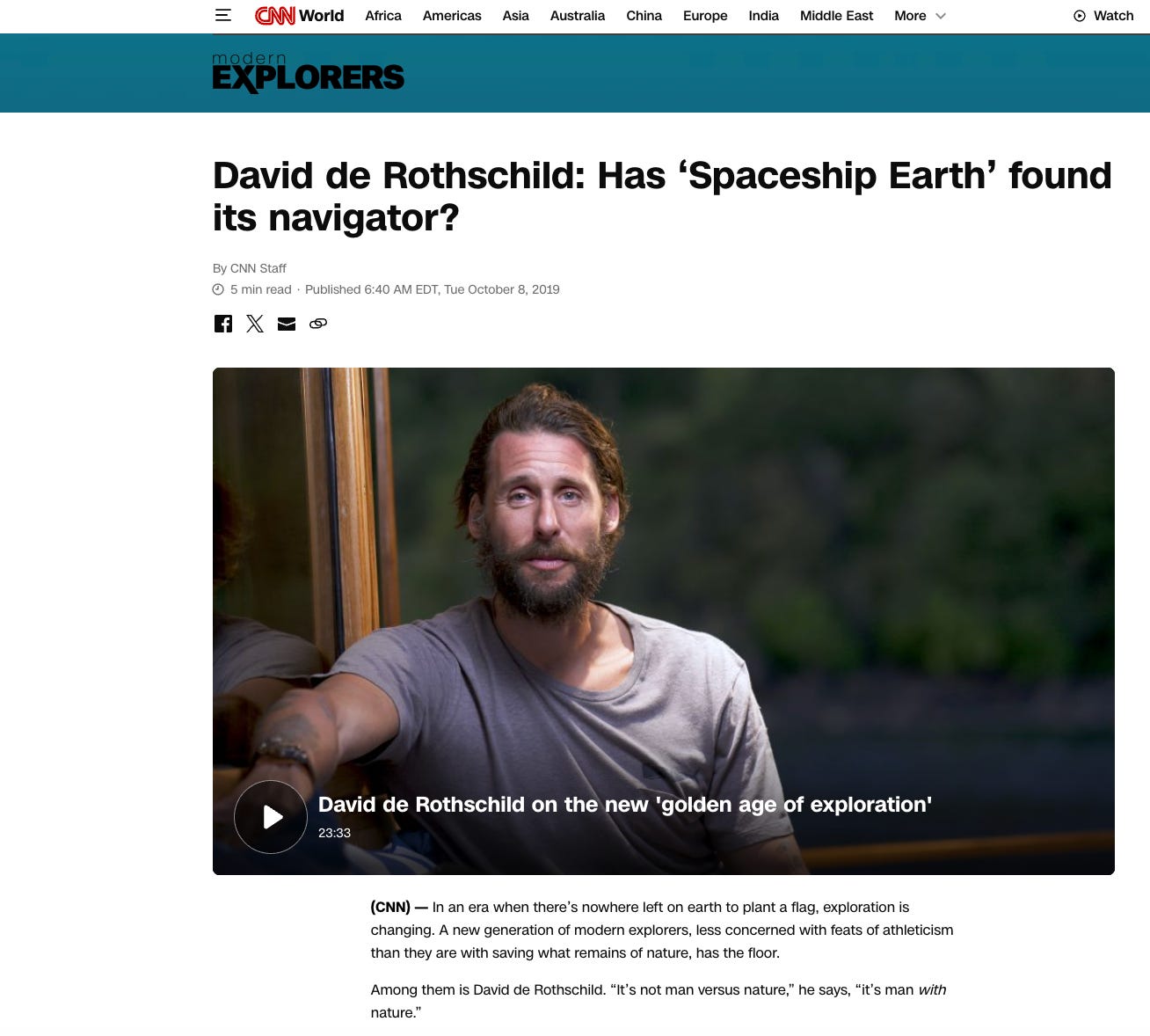
Ergo, this is all fully compliant with the path laid out by Karl Marx, Friedrich Engels, Alfred de Rothschild, Julius Wolf, Eduard Bernstein, Cecil Rhodes, Andrew Carnegie, Leonard S. Woolf, Vladimir Lenin, Alexander Bogdanov, John Maynard Keynes, Victor Rothschild, Lionel Curtis, Alfred Zimmern, Max Nicholson, John D Rockefeller Jr, Miriam Rothschild, Julian Huxley, Walter Lippmann, Kenneth Boulding, Erich Jantsch, Nelson Rockefeller, David Rockefeller, Maurice Strong, Sir Evelyn de Rothschild, Thomas Lovejoy, Edmund de Rothschild, Michael Sweatman, Stephen Rockefeller, Emma Rothschild, Ariane de Rothschild, António Guterres, Lynn Forester de Rothschild, and all the many, many co-conspirators who similarly belong in Boulding’s ‘Invisible College’ such as David de Rothschild who’s presently seeking to ‘sell’ us systems theory through the Spaceship Earth label for sakes of environmental protection.

in tandem
And all of this centralises an enormous amount of power with the central banks, with the Fabian Society’s 2023 report, In Tandem, in effect suggesting giving them even more ‘influence’ — this time through the setting of fiscal policy (taxation and spending) — and without a shred of democratic legitimacy about the whole affair.
The central banks stand to gain, almost exclusively, because every single transaction can, in effect, be refused through conditionality. And this conditionality is justified through an ‘ethical imperative’ constructed by severely flawed, fabricated ‘science’ which you are not allowed to call into question, lest you be called a ‘conspiracy theorist’.
Yet, when things go wrong, there is absolutely no one to blame — and that’s a feature of the system. A feature which certainly benefits the central banks which accommodate all of this. And that leads us back to Marx, Engels, Lenin, and Bogdanov — because what they produced was the template for the hyper-monopolisation of all assets via the 10 planks; its institutionalisation through Lenin’s accounting and control; and its development into systems theory through Bogdanov.
As for Moses Hess… well, it was he who introduced both Marx and Engels to the communism. And it was he who, in 1845 — at a time when Marx and Engels merely hinted at the abolishing of property — wrote a long, severely detailed explanation of why property had to go, full stop. A call which only through surveillance could realistically address the alleged needs of society — which Marx then developed into theory and Lenin placed into practice through accountability & control.
Once this pervasive, always-on surveillance goes global, it will — per Lenin — when combined with Digital ID and CBDCs lead to the condition which — per Lenin — allow the transition to the final stage of communism, where ‘the state’ would be in control of absolutely everything.

game b
It’s just that Lenin didn’t tell you that, in practice, it was not to be the central bank subsumed by the state, but rather the opposite in practice. A practice you might have heard of in the context of the Great Transition, with the ‘Game B’ narrative floated in an attempt to attract strategic intellectuals who already work in the computer sciences through which Bogdanov’s Tektology was progressively rolled out — and which facilitates the global surveillance, indicator-based governance you should have become familiarised with during the recent alleged pandemic, soon encoded in your CBDC and used to ensure you don’t leave your 15-minute city during curfew.
And that some names appear more frequently in the list above — well, that’s just a coincidence.

Outstanding 30 months of work ESC, deeply thankful
One last step remaining in their thoughtful arc it would seem : your full life on their Ledger
Lenin's "Universal Accounting & Control" 2.0 = BIS' global "Tokenised Unified Ledger"
BIS Annual Economic Report 2025 has a chapter explicitly laying out the unified ledger blueprint: “Next-generation monetary and financial system takes shape, based on a tokenised unified ledger…”
Sources:
https://www.bis.org/publ/arpdf/ar2025e3.htm
https://www.bis.org/press/p250624.htm
Key BIS / BIS Innovation Hub project tackling this Tokenised Unified Ledger are (list not be exhaustive) :
Meridian, Mandela, Rosalind, Promissa, Helvetia, Agora, Pine, ...
Critical proof-of-concepts showing conditional atomic settlement between an asset/security (tokenised) + payment in central bank money, namely exactly the central kind of mechanism a programmable unified ledger requires.
Other key related concepts and initiatives :
- Atomic Settlement / Atomic Swaps
- The UN/UNECE Digital Product Passport (DPP), under the UN Transparency Protocol (UNTP) from UN/CEFACT + ISO
All of this will, of course, wither away once fully implemented. Not to worry
Thanks ESC. This will dovetail into my next blog post.