
Ratification Theatre

World leaders gather at a G7 or G20 summit. The media covers their arrivals, their handshakes, their group photos. Headlines announce their ‘decisions’ on climate policy, banking regulations, or global taxes.
The media does its very best to leave the impression that this is democracy unfolding, live on a global scale. But that’s really not what you watch at all.
What you watch is ratification theatre.
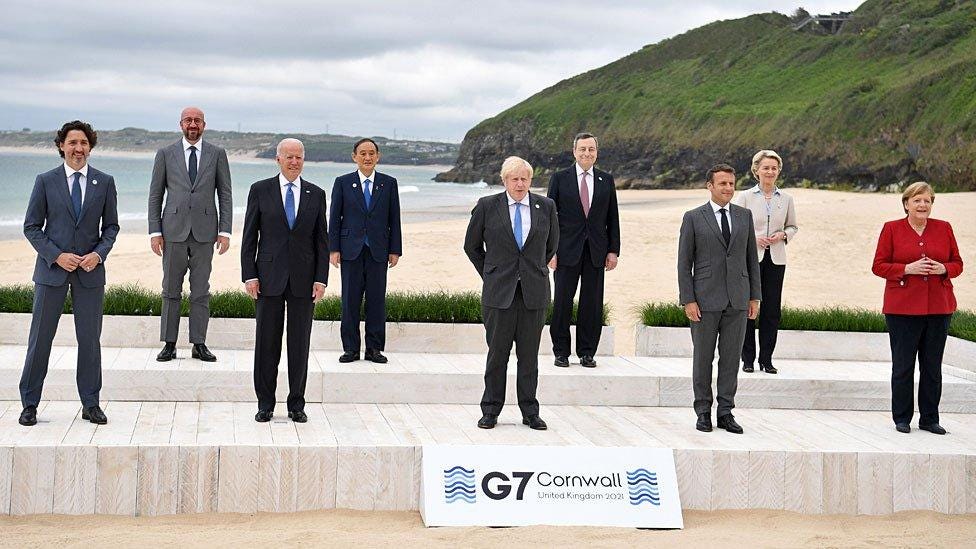
The ‘decisions’ announced are typically made months or perhaps even years in advance by committees you likely never heard of, because the media never informed you of their existence. The leaders are essentially actors reading from a script they didn’t write, performing in a play whose ending was determined before they arrived.
What Is Ratification Theatre?
Ratification theatre is the process by which technical committees and international organisations design complex global policies over many months, and then have political leaders ‘endorse’ these pre-cooked decisions at summits to media fanfare, creating the illusion of democratic deliberation while bypassing actual, legit democratic debate.
Imagine your city council meeting where they ‘vote’ on a new development project. But the project was already fully designed by external consultants, the contracts were already negotiated by staff, and the financing was already arranged by bureaucrats. The council’s vote is just rubberstamping what’s already been decided. Now scale that up to global level, and you have ratification theatre.
This isn’t hypothetical. In 2024, Buckinghamshire Council rejected a £1 billion data center development twice. Deputy Prime Minister Angela Rayner simply overruled them in July 2025, approving it as ‘critical national infrastructure’1. Three Rivers District Council suffered the same fate when they rejected a similar project citing ‘significant landscape and visual harm’ — overridden2. But the Labour government went even further: they now propose to remove elected councillors from planning decisions entirely3, transferring authority to unelected planning officers for any application that complies with local plans.
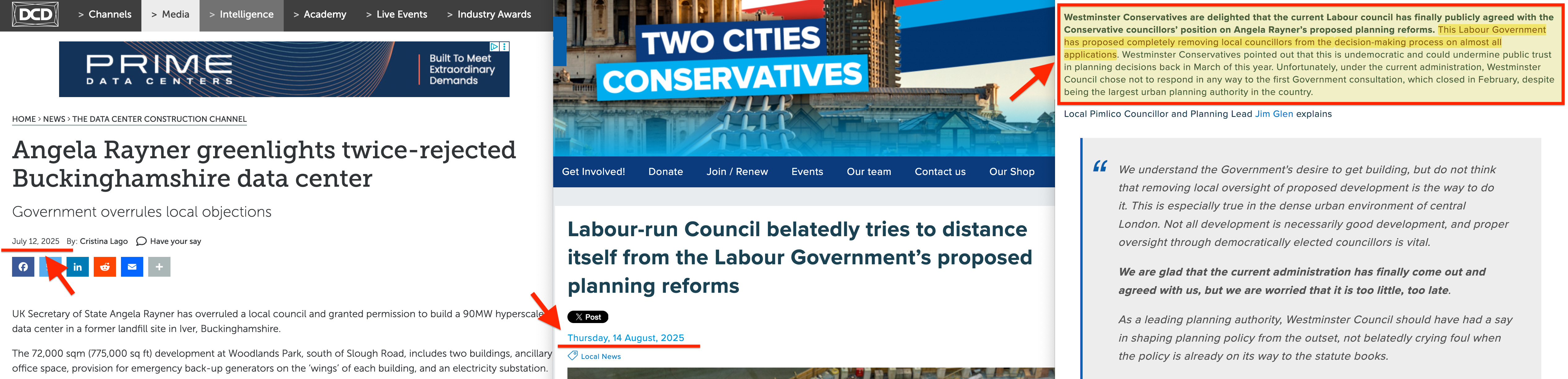
The democratic process thus isn’t just being emptied of substance — it’s being completely eliminated. When local votes can be overridden by ministerial decree, and ministers propose removing the votes altogether, what remains isn’t democracy with problems. It’s theatre with props. And this same pattern, operating at the local level in Britain, operates at the global level through the systems we’re about to examine — a system outlined at the local government level by Tony Blair in his 1998 Fabian Society pamphlet, ‘The Third Way’. Should the local government fail to hit targets, funding is cut. Should they still refuse, so is politics itself it now appears.


The system does look legitimate, once again, you can thank the media for leaving that impression. The leaders do meet, they do issue statements, and the media does report their ‘decisions’ as though they were the outcome of leader deliberation. But the real decisions happened elsewhere, in acronym-heavy organisations — BIS, FSB, OECD, IMF, FATF, NGFS, IUCN — that operate below the radar of public attention.
Sure, to an extent this has always taken place. However, the difference is scope. When technical committees make decisions which affect the sovereign nation, accountability will either be assigned to those committees, or — more likely — the politicians pushing their recommendations into law. But when we scale the principle internationally, the sovereign politician escapes accountability, not merely because the media will readily lie to protect the guilty, but also because the outcomes will be encoded in international standards — and the sovereign have to adhere or face economic ruin through exclusion.
This is the net effect of Leonard S Woolf’s report, written for the Fabian Society in 1916; ‘International Government’. This report, in brief, outlines the use of international organisations to siphon sovereign powers, a little at a time. Through Alfred Zimmern, it served as a functional blueprint for the League of Nations (later United Nations).


Follow the Money
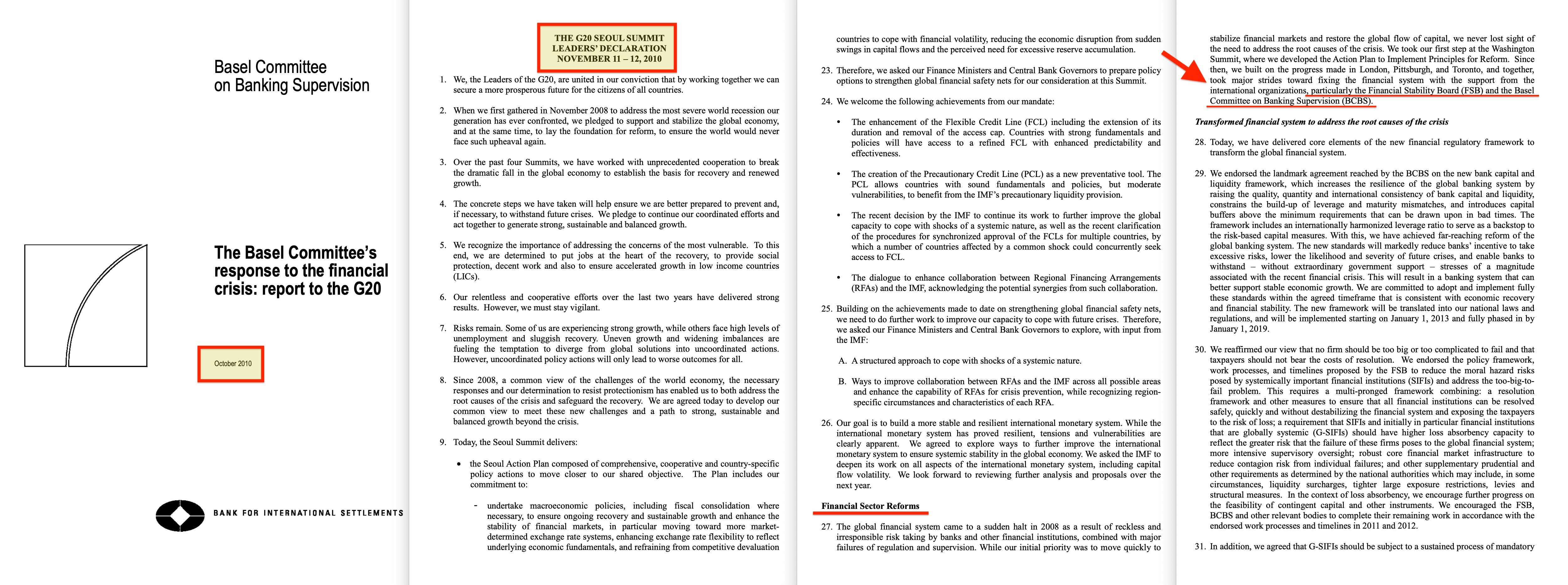
But talk is cheap. Let’s instead follow a concrete example to see how this actually works. After the 2008 financial crisis4, the world’s banking rules were completely rewritten through Basel III5. Here’s how that ‘decision’ actually happened:
The Real Work (2009-2010)6: Deep in Basel, Switzerland, at the Bank for International Settlements (BIS), technical committees spent 18 months designing new rules for how much capital banks need to hold. No cameras, no media coverage, just central bankers and regulators in conference rooms with spreadsheets.
The Preview (2010)7: Finance ministers and central bank governors reviewed the framework at their preparatory meetings. Still no public attention. The deal was essentially done.
The Theatre (November 2010)8: At the G20 Seoul summit, world leaders ‘endorsed’ Basel III in a single paragraph of their communiqué. Media reported that leaders had ‘decided’ on new banking rules.
The Implementation (2013-2019): Banking supervisors around the world implemented these rules through regulatory guidance. No parliamentary debates on the actual technical details — the substance that determines whether your small business can get a loan or what your mortgage costs.
Now, defenders of this system will say: ‘But parliaments did pass laws empowering regulators to ensure financial stability’. True. But there’s a crucial distinction: legislatures passed vague framework laws saying ‘keep banks safe’. They never voted on the specific Basel III requirements that actually determine how banks operate. The democratic mandate was a blank check; the technical committees filled in the amounts.
The result? Every major bank in the world reorganised its balance sheet, changed how it lends money, and altered what it charges for loans — all based on rules written by unelected technicians in Switzerland, rubber-stamped by leaders in Korea, and implemented without a single democratic vote on the substance that actually affects your life.

The Climate Control Nobody Asked For
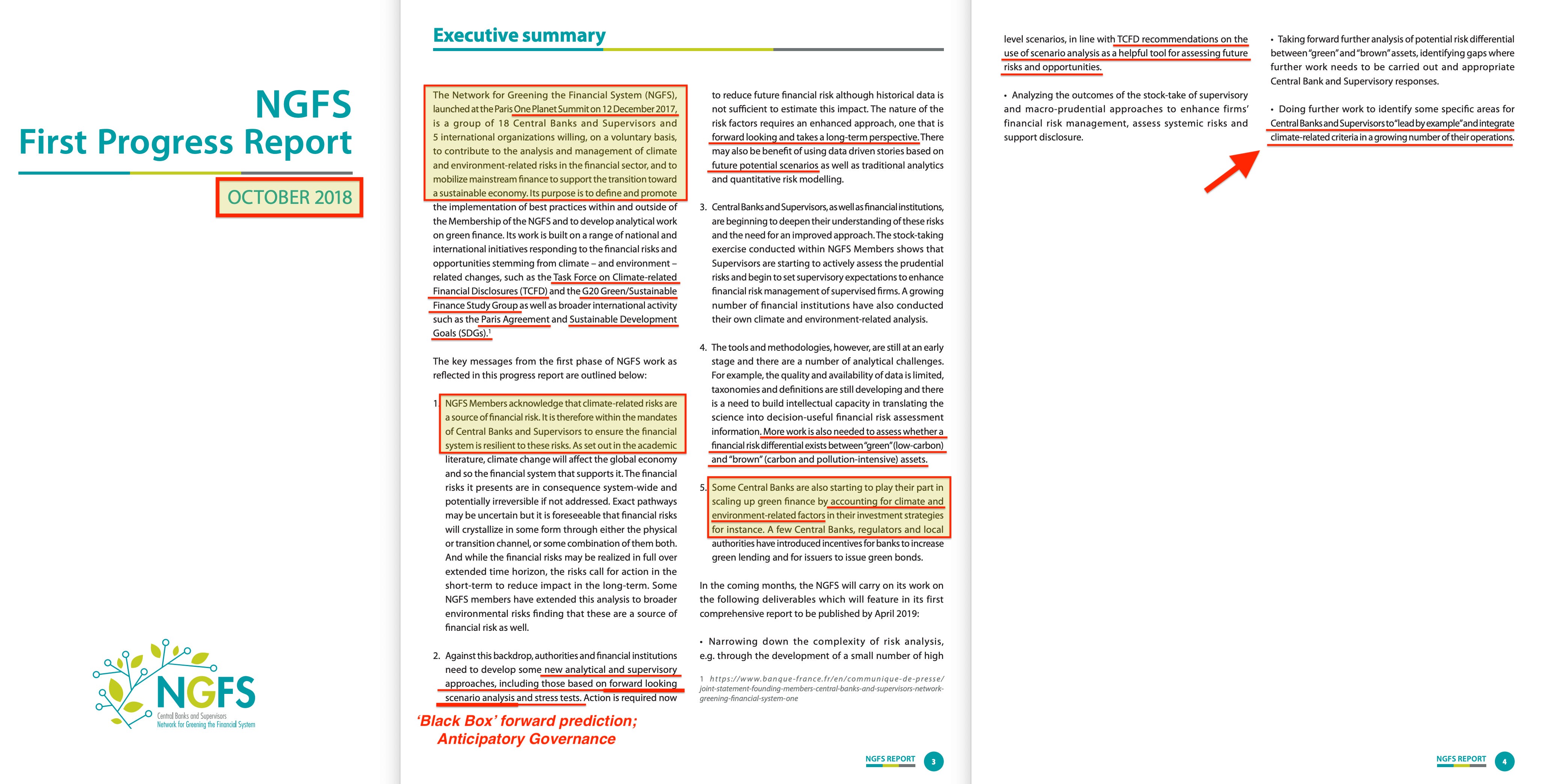
Central banks are implementing climate policy through banking regulations, and they’re doing it without any climate legislation being passed. How? Through the Network for Greening the Financial System (NGFS)9.
Step 1: Self-Organisation (2017)10: A group of central banks decided on their own to form NGFS. No government told them to do this. No treaty required it. They just did it — though years earlier, Bank of England Governor Mark Carney had delivered a 2014 speech at Lynn Forester de Rothschild’s Conference on Inclusive Capitalism11, explicitly connecting climate action to financial regulation12. The ‘spontaneous’ formation had a blueprint.
Step 2: Scenario Creation (2019-2020)13: NGFS developed climate risk scenarios — computer models of how climate change might affect the economy. These weren’t approved by any legislature.
Step 3: Making It Mandatory (2020-present)14: Banking supervisors now require banks to stress test against these scenarios. If a bank doesn’t comply, it faces higher capital requirements (higher reserve ratios), regulatory scrutiny, and restrictions.
Step 4: Changing the Economy: Due to the higher reserve ratios, banks respond by making it more expensive to lend to fossil fuel companies and cheaper to finance solar panels and wind farms. Not because a law was passed, but because central bank scenarios require it.
Notice what didn’t happen? Congress didn’t pass a climate bill. Parliament didn’t debate carbon pricing. Voters didn’t choose this policy. Instead, central bankers created scenarios, made them mandatory through banking supervision, and changed how capital flows through the economy.
Someone might object: ‘But this is just about financial risk, not climate policy’. That’s the sleight of hand. When you decide which climate scenarios banks must prepare for, you’re choosing economic winners and losers. When you make ‘brown’ assets require more capital to finance, you’re implementing industrial policy. The NGFS scenarios embed political choices about our energy future, but present them as technical risk management.
And because central banks already possess comprehensive information about bank assets through Basel III reporting requirements15, differential enforcement of capital requirements can selectively disadvantage banks whose lending doesn’t align with NGFS scenarios — creating competitive pressure that achieves through regulation what couldn’t pass through legislation.


How Conservation Rules Bypass Democracy
The pattern extends far beyond banking and taxes. When a company wants to build a dam, mine minerals, or develop land, they often can’t get permits or financing if the project affects endangered species or protected areas16. Fair enough — but who decides what counts as ‘endangered’ or ‘protected’?
The answer: IUCN (International Union for Conservation of Nature)17, a hybrid organisation of governments and NGOs based in Switzerland.
IUCN Creates Standards18: They maintain the Red List of Threatened Species19, define Key Biodiversity Areas20, and classify protected areas21. These aren’t treaties — they’re just lists and categories created by conservation scientists.
Development Banks Adopt Them: The World Bank22, regional development banks, and export credit agencies embed IUCN standards into their lending policies. No vote, they just reference IUCN criteria23.
G20 Blesses ‘Nature-Positive’ Goals: Leaders endorse vague commitments to ‘biodiversity’24 and ‘nature-based solutions’25 that implicitly incorporate IUCN frameworks.
Local Impact: A farmer in Indonesia, a small miner in Peru, or an infrastructure developer in Kenya suddenly can’t get financing because their land is near an IUCN-designated Key Biodiversity Area. They never voted for IUCN. Their government might not even be a member. But IUCN standards determine their economic fate.
This shows how the same ratification theatre pattern governs not just money and taxes, but land, nature, and development itself. Technical committees set standards, financial institutions enforce them, and democratic governments are reduced to rubber stamps.


The Digital Money Nobody Asked For
Right now, central banks worldwide are developing digital ID26 requiring digital currencies (CBDCs)27 that could fundamentally change how money works. The technical specifications already include the ability to program restrictions, either directly into the money, or into the wallet which gates the CBDCs — your digital dollars could thus be coded to expire28 if not spent within 30 days, to work only at certain stores, or to automatically deduct taxes with every purchase.

Here’s how this decision is being made:
Technical Design (2018-present)2930: The Bank for International Settlements and the Financial Stability Board are designing standards for CBDCs. They’re writing code that determines whether your money can be programmed, tracked, and controlled.
G20 Blessing (2020, 2022)31: The G20 ‘endorsed’ a roadmap for improving cross-border payments, including CBDCs. A few paragraphs in communiqués, no details, no debate about whether we want programmable money.
Implementation (Ongoing)32: Central banks are building these systems now. China’s digital yuan already has expiration dates and spending restrictions33. The European Central Bank is designing a digital euro with ‘programmable features’.
Going first presents a huge opportunity. By the time the public debate is had, the infrastructure has already been built, the standards are set, and reversing course will be described as ‘economically catastrophic’. The decision about whether your money should be programmable is being made by central bankers and their associated technical committees in Basel — not by your elected representatives.


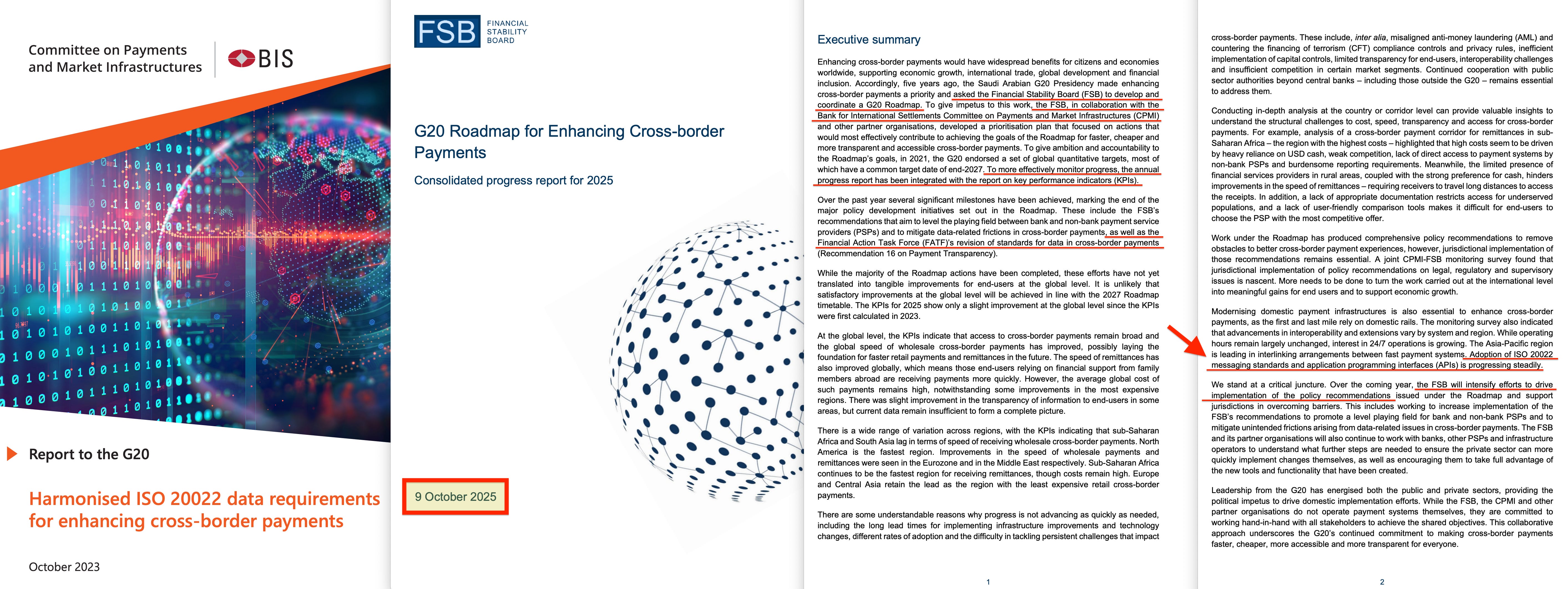
The infrastructure for CBDCs is being built now through ISO 20022 standardisation34, years before most citizens even know what a CBDC is. The ‘decision’ about CBDC-compatible architecture already happened — in technical committees talking about ‘messaging standards’.


When the BIS Innovation Hub develops the technology first, all followers can choose to either implement the BIS version, or reinvent the wheel at a much greater cost. And that’s the trick, because the architecture is the trap.

The Pattern Revealed
There are other examples, but we’ve now seen this pattern across four different domains — banking, climate, conservation, and digital money. In each case:
Technical committees design the policy (12-36 months of work by BIS, OECD, FSB, IMF, NGFS, IUCN, …)
Finance ministers preview it (3-6 months before the summit, in meetings with little media coverage)
Leaders bless it (one or two paragraphs in a communiqué at G7/G20)
Implementation is automatic (through regulatory guidance, supervisory expectations, lending conditions — no legislative votes on the substance)
The key tell is the language in communiqués. Leaders don’t ‘decide’ or ‘create’ — they ‘welcome’, ‘endorse’, ‘take note of’, or ‘encourage’. They’re acknowledging work done elsewhere, not making decisions.
This isn’t even hidden — it’s just sufficiently boring that most people don’t pay attention. The committees publish their reports, their meetings are documented, the paper trail is there. But who reads BIS working papers or OECD technical guidance? Who follows NGFS scenario development or FATF methodology updates?


Why This Supersedes Democracy
These international frameworks effectively sit above national law. Not legally, but functionally.
Domestic law is written to comply: Countries pass legislation specifically to meet international standards. The standards come first, the laws follow.
Exit is economically catastrophic: Try to leave the Basel framework? Your banks lose access to international markets. Reject FATF standards? You’re cut off from global banking. Ignore IUCN metrics? No development financing. The system enforces itself through economic consequences that no country can afford.
Reversal requires global coordination: Once every major economy has implemented a framework, changing it requires getting everyone to move together — nearly impossible. The system locks itself in.
This means the real governance happens at the international technical level, while national democracies are reduced to implementation machines. Your vote might change which party is in power, but it won’t change Basel capital requirements, NGFS climate scenarios, or CBDC specifications.
We’re back with Woolf; we’re back with guild socialism scaled beyond borders.
This is called ‘regionalism’3536, and — much like ‘black box’ governance — it creates an accountability gap. Rules are set for a whole region, yet there’s no-one to hold accountable, because the region isn’t a legitimate political actor.
Starting in 1924, the Rockefeller Foundation’s Laura Spelman Rockefeller Memorial funded Howard Odum at the University of North Carolina to pioneer regional studies — research that would ultimately receive $1.25 million from Rockefeller foundations alone37. After Woolf outlined the blueprint in 1916, Rockefeller funded the empirical research and institutional infrastructure to make it operational38, years before these concepts would be encoded into the United Nations system.


Breaking the Fourth Wall
The reason ratification theatre works is because it maintains democratic appearance while emptying it of substance. Leaders get to look like they’re in charge. Media gets to report on ‘historic agreements’. Citizens feel like the normal democratic process is functioning.
Should the citizen disagree with the direction taken, they’re even assigning blame to the symptom, not the cause. The root cause will carry on, while the voter replaces the minister, or even the government itself.
The real process is this: Unelected technical committees make the substantive decisions. Finance ministers and central bankers (mostly unelected) review and adjust them. Elected leaders show up for photos and signatures. Implementation happens through regulatory channels that bypass legislatures. By the time citizens notice, it’s too late to change course.
Consider the Financial Action Task Force (FATF), created at the 1989 G7 summit to combat drug money laundering, yet astonishingly with language inclusive of environmentalism and Debt-for-Nature Swaps, still in their ideological cradle, in the original 1989 release39.

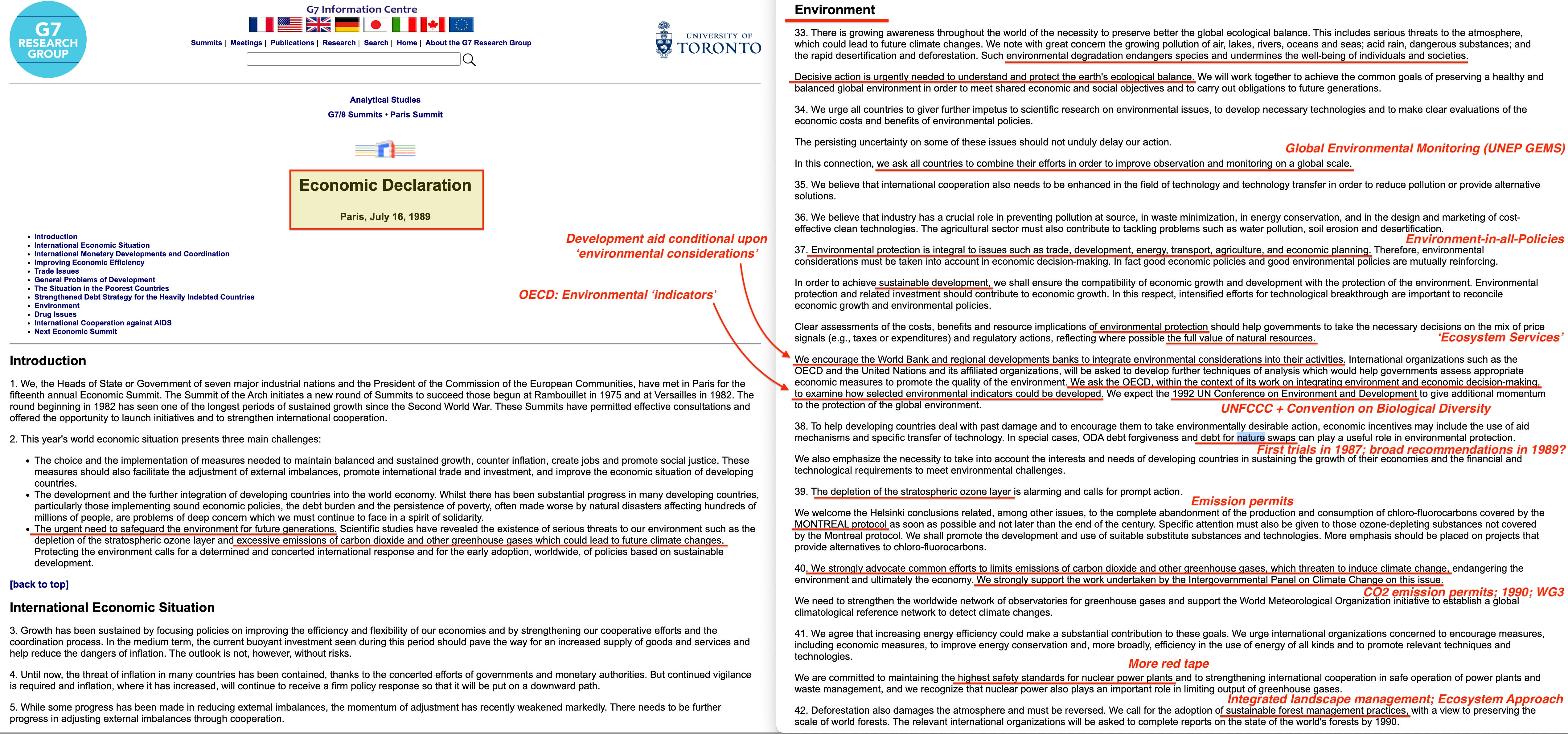
The 1989 summit thus didn’t just create FATF for drug money laundering40 — it gave FATF an open-ended mandate from the start. This allowed it to expand over 35 years without new democratic authorisation: from drug money (1989) to terrorism financing (2001) to proliferation financing (2012) to environmental crime (2019).
Simultaneously, the same summit introduced ‘environmental indicators’ via the OECD, made development aid conditional on environmental compliance, and laid groundwork for ecosystem services valuation and carbon markets. Financial surveillance and environmental governance were built as a unified system from the start, with FATF’s open mandate ensuring it could evolve to enforce whatever standards international committees later developed.
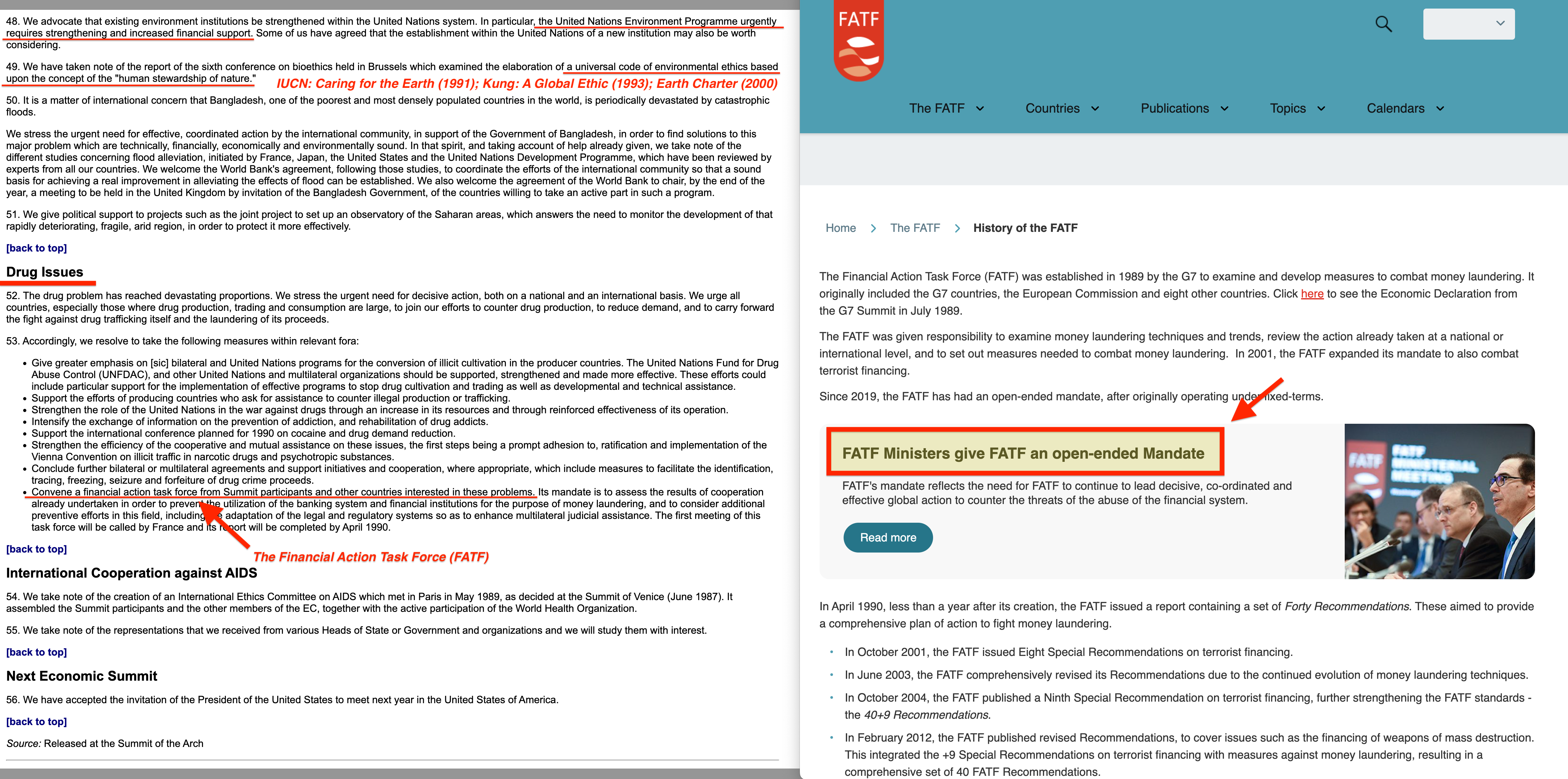
Beyond the FATF, what escaped notice was the civil servants who greased the wheels in the process. Especially when interparliamentary groups write one-sided briefs for politicians years in advance of policy.
Consider GLOBE International41, a network of legislators from over 30 countries focused on climate and environment policy. Years before most parliaments debated climate legislation, GLOBE was circulating model laws, technical briefings, and ‘best practice’ frameworks among its members. When climate bills subsequently appeared in multiple national legislatures with remarkably similar language and structure, this wasn’t convergent evolution — it was coordinated choreography.
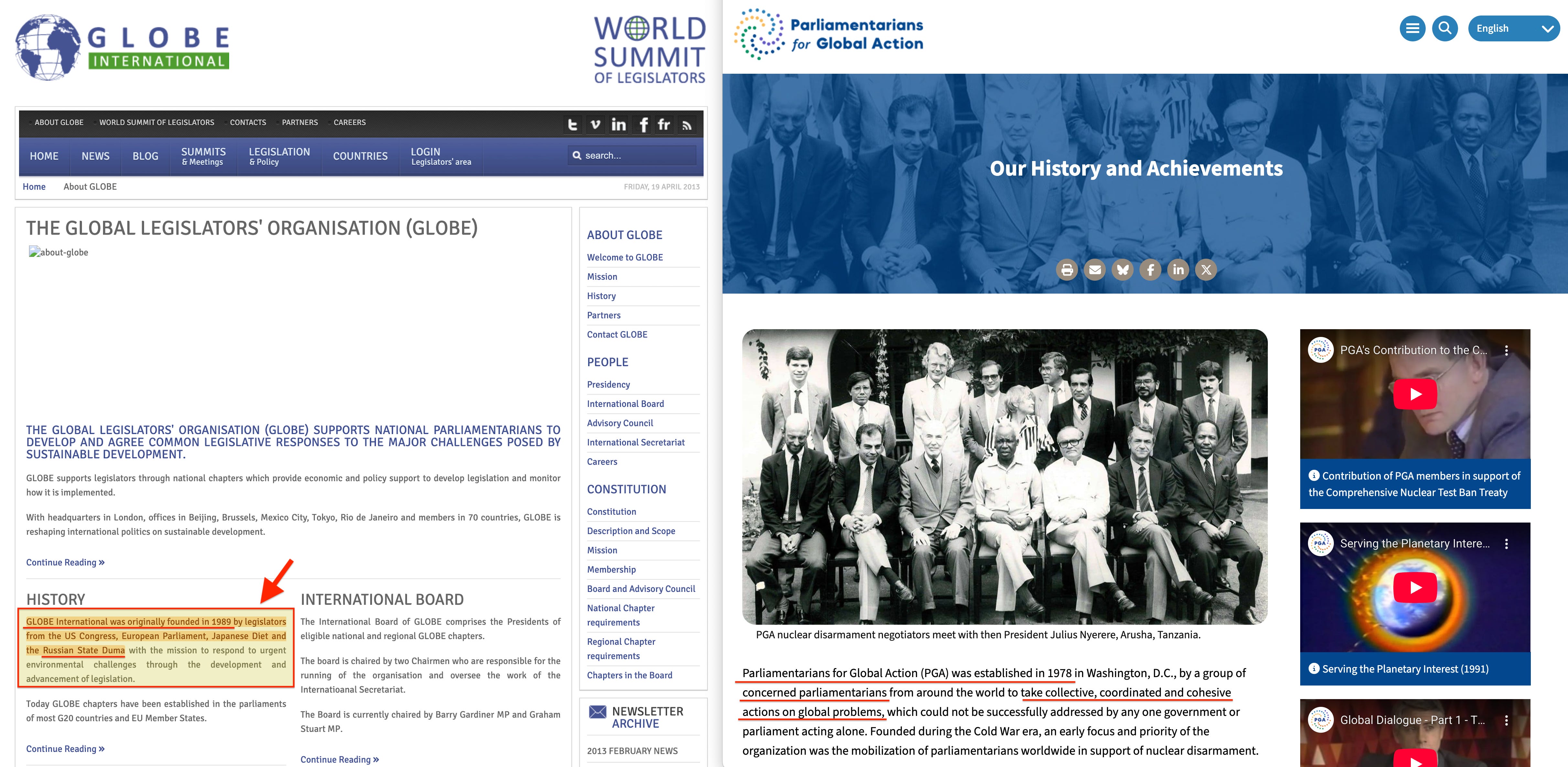
The same pattern holds for the Parliamentarians for Global Action42 (PGA) on international criminal law, the Inter-Parliamentary Union (IPU) on democratic governance standards43, and the International Institute of Administrative Sciences (IIAS) on administrative reform44. These networks operate in the gap between international framework and national law, translating Basel accords, FATF standards, and NGFS scenarios into legislative language before most citizens — or even most legislators — know these frameworks exist.
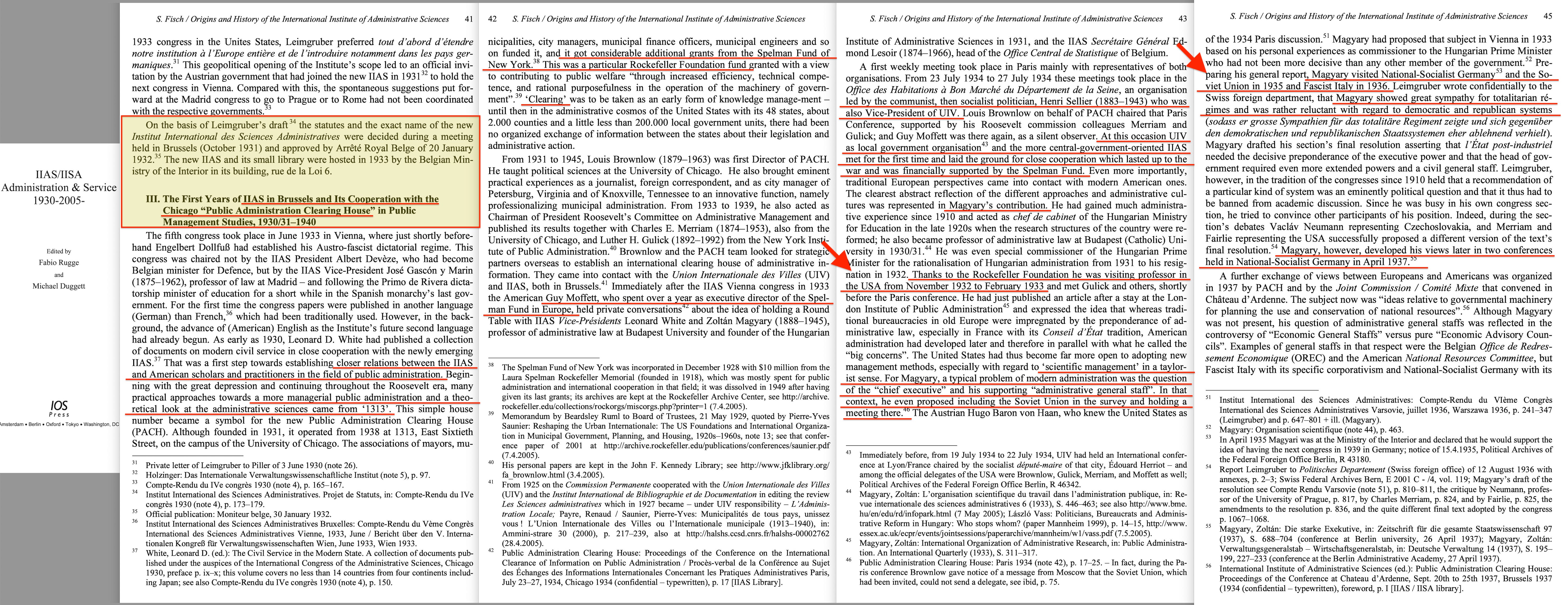
Via the Chicago Public Administration Clearinghouse (PACH 1313)45, IIAS received Rockefeller Foundation funding through the Spelman Fund until 1939 — even as Nazi Germany became a participating member in 1937. This was the same foundation that had funded Odum’s pioneering regionalism research a decade earlier. The pattern is consistent: Rockefeller money flowed to both the theoretical development of regional governance concepts and the practical mechanisms for implementing them through international administrative networks46.
By the time a bill reaches parliamentary debate, the substantive choices have already been made. The ‘debate’ is performance: legislators arguing over a text whose key provisions were drafted years earlier in working groups most voters have never heard of. National democracy becomes another stage in the ratification theatre, where even the supposedly sovereign act of passing domestic legislation is merely implementing a script written elsewhere.


Your Economic Life in 2025
Let’s make this concrete. Here’s how ratification theatre affects your actual life right now:
Your mortgage rate is higher because Basel III capital rules (designed by BIS, blessed by G20) require banks to hold more capital against home loans47.
Your local factory can’t get a loan because NGFS climate scenarios (created by central banks, never voted on) classify it as ‘transition risk’48.
Your cousin’s small business can’t receive international payments because their country is on FATF’s grey list (decided by a committee, no appeal process)49.
Your town can’t build needed infrastructure because the site is near an IUCN Key Biodiversity Area (designated by conservation scientists, enforced by development banks)50.
Your digital money might soon be programmable because CBDC standards (designed by BIS, endorsed by G20) include those features51.
None of these policies were debated in your parliament. Your representatives never voted on the specific technical details that shape these outcomes. Yet they affect your economic life as surely as any law.

Conclusion: Where Democracy Now Lives
We’re living under a system of governance where the most important economic decisions — how banks operate, how money works, what can be built, who can access finance — are made by international technical committees, blessed in brief summit paragraphs, and implemented through regulatory guidance that never faces democratic vote on its substance.
This system has been accelerating for 35 years, since the 1989 G7 summit simultaneously created modern financial surveillance (FATF) and environmental finance frameworks. Each piece seems reasonable in isolation. Cumulatively, they’ve created an international governance system that operates above and beyond democratic control.
But here’s the critical point: the theatre only works while the audience believes it’s real. The more people understand that G7/G20 summits are ratification ceremonies, not decision-making forums, the less legitimate the whole system becomes. Visibility itself is destabilising to theatre — you can’t maintain the illusion once people see the stage machinery.
The summits aren’t where decisions are made. They’re where decisions are announced. The leaders aren’t deciding — they’re performing.
This is ratification theatre: the simulation of democracy, where the appearance of choice masks the absence of it, where technical necessity disguises political decisions, and where the real power flows through committees you’ve never heard of, following procedures you’ve never voted on, implementing changes you’ll only notice years later, when they’ve already reshaped your life.
In an age where technical committees write the rules, finance ministers preview them, and leaders just perform the blessing…
… where exactly does democracy live?

Dear ESC, I’ve written something in this vein before and now, I’m saying it again, “don’t lose hope in the affect your research/writings are producing”. For some unfathomable reason, the comments on your blogs number in the single digits, when there should be tens of thousands. Pay no heed to this; your knowledge, insight and ability to perfectly express your insight into the invisible plan behind the global f*ckery, is enough to make a difference. It may be subtle, gradual and painstakingly slow, but all good things take tiny steps. Your insights are the oaks, not the weeds, of the growth of awareness. And of course, thank you for your hard work.
''Banking'' for Wo/Man as the Living Creditors
Imagine wo/man standing up as the creditors of all forms of ''value/money'' manufactured fraudulently as debt in the current '''banking'' process i.e. psychopaths and narcissists banking on us not discovering their centuries old scam:
* the living wo/man would take their true role under God as creditors and beneficiaries of their God-Given LifeForce - endless opportunities to employ skills, time and knowledge for creative exchanges
* all essential operational systems across all sectors could continue with people rewarded in debt-free currency
* the means of exchange for local, regional, national or international projects and other opportunities to use our skills, time and knowledge would be readily available
* the amount of currency required could be related to real ''spending power'' - the speed of its recycling for goods, services and worthy investment
* ''local banking'' would provide the funds debt-free out of the vast sums created in debt; excess $trillions could be extinguished to maintain real value
* the qualifying criteria for funds would remain as a properly-designed operational model; supported with business plans, schedule and specification of work, prospectus and so on
* the draw-down of monies would remain based on progress ''on site''
* the valuation of ''assets'', goods or services to be created would be based on their Social Value ie savings and benefits to life and living
* the traditional debt-money (or other forms of value) allocated could be transformed into debt-free cryptocurrency on transfer to the project recipient
All said and done, we the living wo/man already develop and manage every aspect; we simply continue without the debt and employ ''money'' as ''oil for creative, life-enhancing interaction''