
Iran
The third deployment

On February 28, 2026, the United States and Israel launched coordinated airstrikes across Iran1. Reports indicate the opening salvo killed Supreme Leader Ali Khamenei, with his son Mojtaba assuming leadership2.
Trump has since said he is ‘open’ to the new supreme leader — provided he accepts the new conditions3.
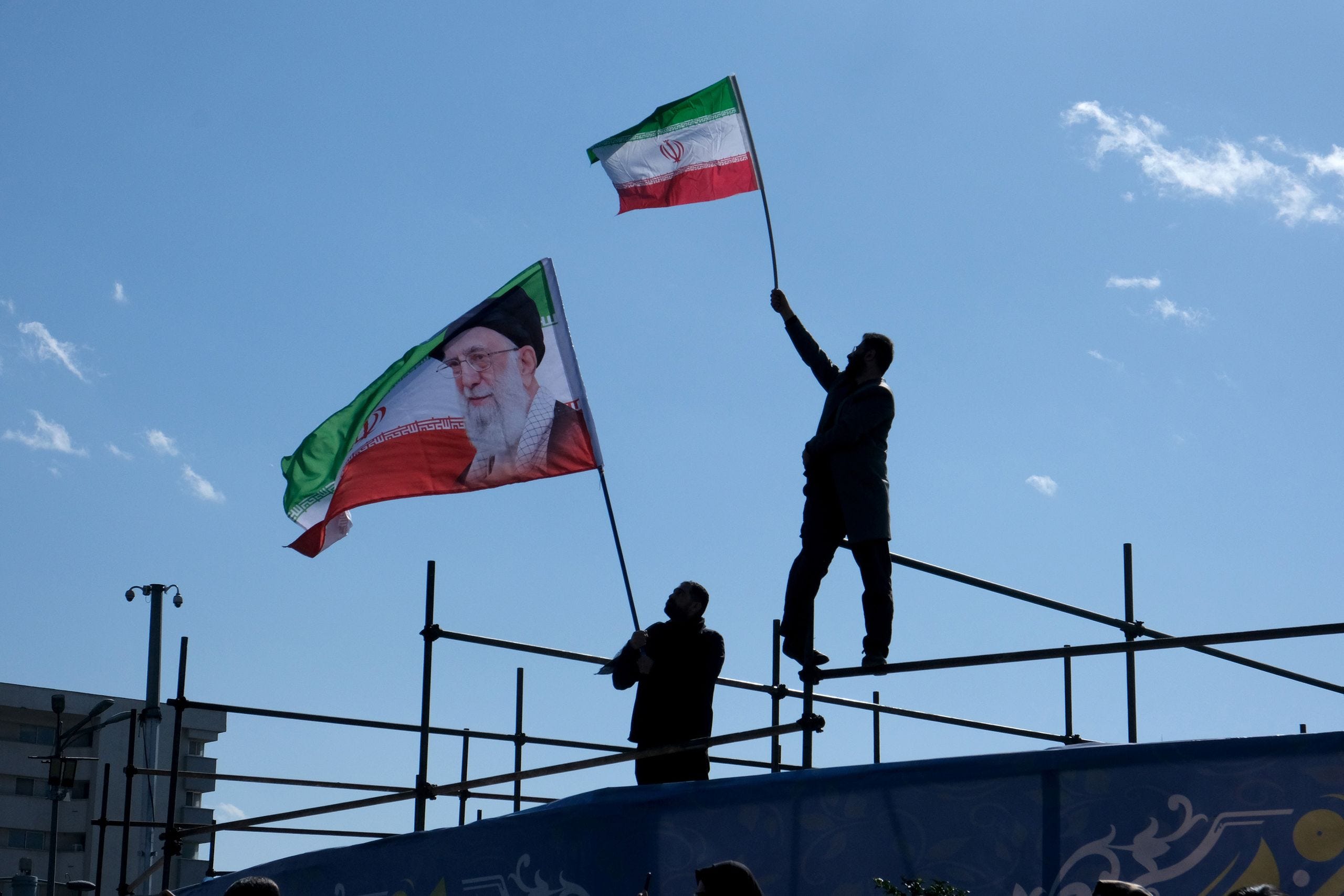
On March 22, Trump issued a 48-hour ultimatum4: reopen the Strait of Hormuz or the United States would ‘obliterate’ Iran’s power plants, ‘starting with the biggest one first’5 — a facility he said cost more than ten billion dollars to build. Two days later, with the deadline approaching, Trump postponed the strikes for five days, citing ‘very good and productive conversations’ with Tehran6. He confirmed that his son-in-law Jared Kushner and special envoy Steve Witkoff had participated in talks with ‘a top person’ in Iran the previous evening7.
Iran denies that any negotiations are taking place8. Parliament Speaker Ghalibaf accused Washington of spreading ‘fake news’ to manipulate financial and oil markets9 — though multiple reports identify Ghalibaf himself as the ‘top person’ in backchannel contact with the operator cell, making him simultaneously the negotiator and the denier10. Iran’s Defence Council warned that any attack on its southern coast would trigger the laying of sea mines across Gulf shipping lanes11, and the Revolutionary Guards threatened to target power plants and desalination facilities across the region — including in countries hosting US bases12.
The pattern, however, is familiar.
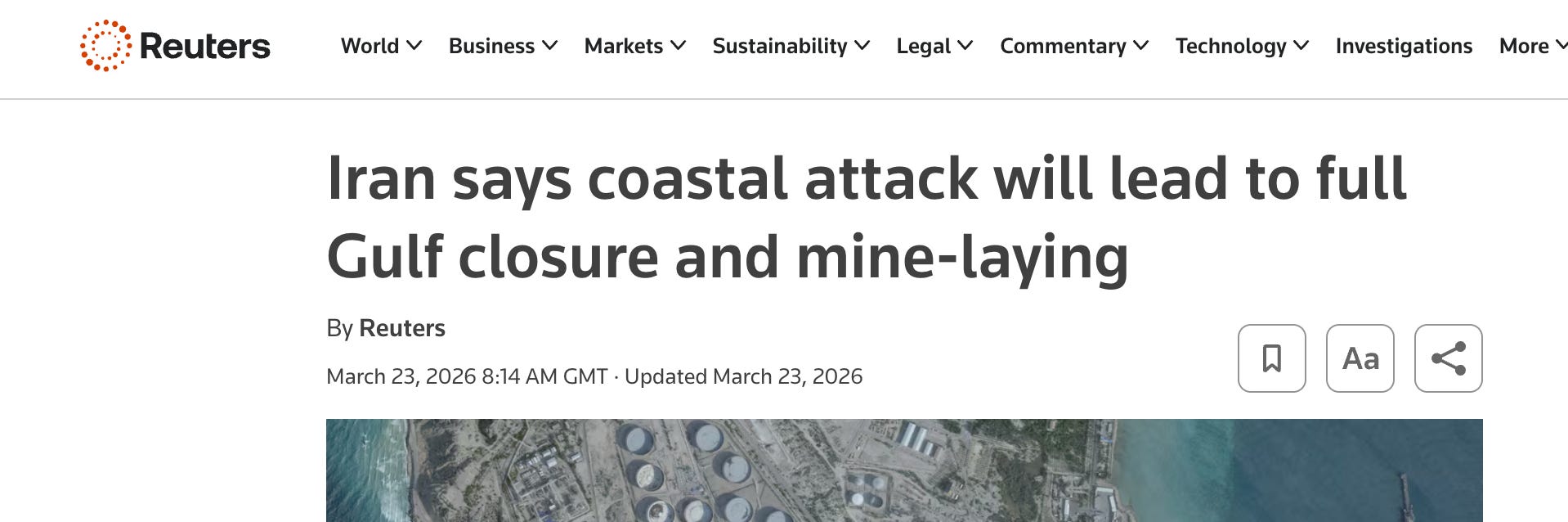
Ukraine was the first deployment of a template documented across this series. Military destruction of sovereign infrastructure was followed by conditional reconstruction — $588 billion over a decade13, funded through the World Bank, the EU, and the IMF, conditioned on alignment with ‘EU green and digital standards’.
The country does not rebuild on its own terms, but on terms set by international financial institutions whose conditions include ISSB taxonomies, NGFS scenarios, and digital infrastructure specifications.
EU accession is the exit condition14.

Gaza was the second. Total destruction of all infrastructure was followed by the GREAT Trust — a US-run trusteeship governing the territory for a decade, with land rights converted into digital tokens, six to eight AI-powered smart cities built from cleared ground, and every service and transaction mediated through ID-based digital systems.
The exit condition is joining the Abraham Accords. The Board of Peace — whose charter does not mention Gaza — has expanded into an international disputes forum with permanent seats costing one billion dollars15.

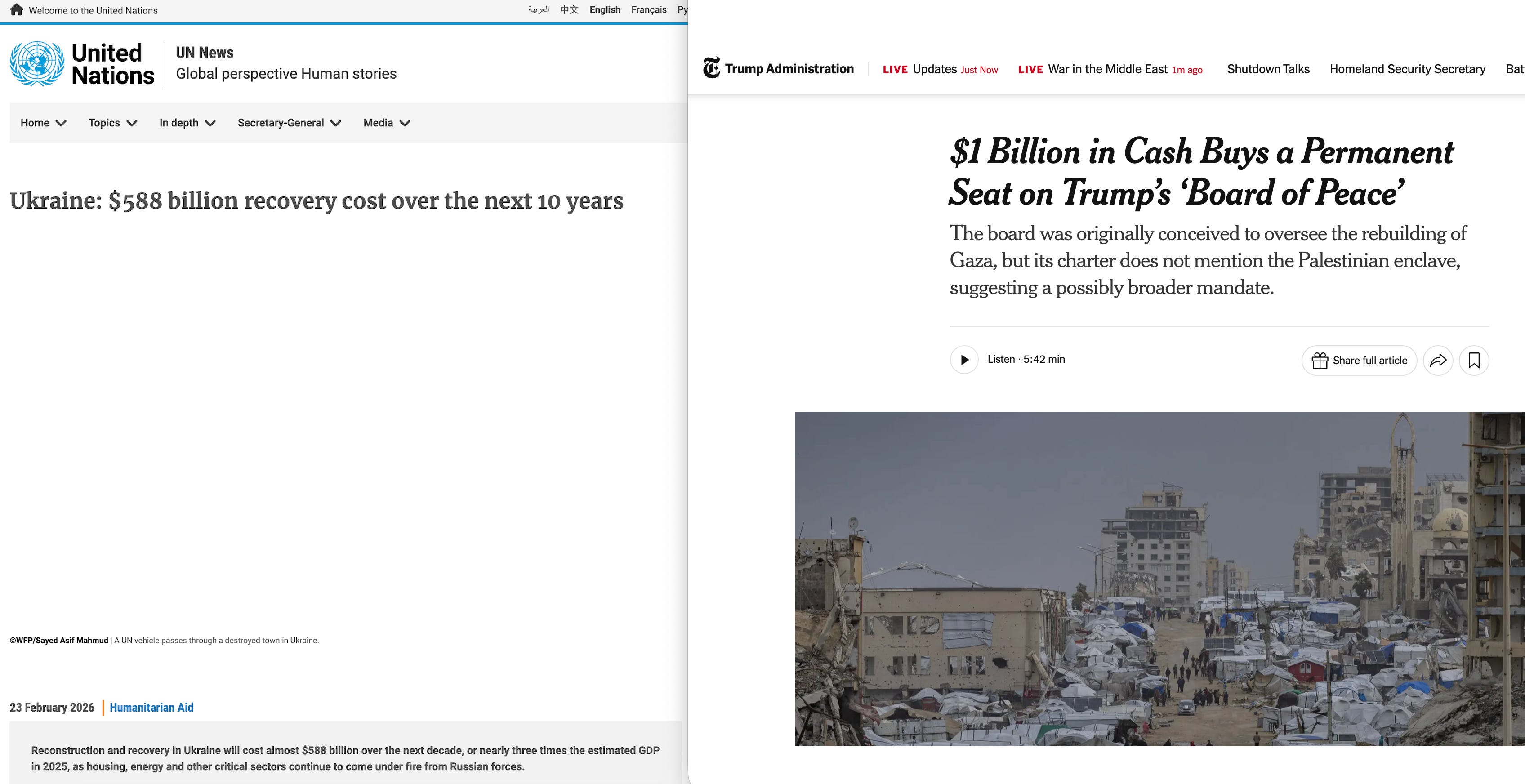
In both cases, the same operator cell processed the settlement: Witkoff and Kushner, working outside normal diplomatic channels, at compressed timescales, producing implementation specifications rather than political agreements. Phased conditionality, technocratic administration, international oversight bodies, and infrastructure that embeds compliance into the architecture itself.
The outcome in each case is a territory that retains the trappings of sovereignty — a government, a flag, perhaps elections — but whose financial rails, digital identity infrastructure, and compliance conditions are set by a clearinghouse whose standards the territory did not write and has no mechanism to rewrite. The governments that emerge will govern within parameters set externally.
Iran is the third.


The United States did not threaten Iran’s remaining military installations, its government buildings, or its communications infrastructure. It threatened its power plants. Energy infrastructure is what enables a country to operate its own financial system, its own industrial base, and its own governance independent of external conditions. A country without electricity cannot run a banking system, cannot process transactions, cannot power the servers that maintain its records. A country whose energy grid has been destroyed is a country that must accept whatever terms are offered for reconstruction — because the alternative is darkness.
Iran is the last major sovereign energy and financial system in the Middle East that operates outside the architecture. It is not connected to SWIFT16. It does not comply with the BIS supervisory framework17. It runs its own energy grid, its own financial settlement system, and its own governance structures. From the perspective of the conditional infrastructure being built across the region — the IMEC corridor connecting India to Europe through the Gulf and Gaza, the Abraham Accords18 integrating financial and trade flows across aligned states, the programmable settlement rails being tested through the BIS Innovation Hub — Iran is an uncleared node. A participant in the regional system whose transactions do not pass through the clearinghouse.
The template is consistent: uncleared nodes either comply voluntarily or they are cleared through destruction and conditional reconstruction.
When asked who would control the Strait of Hormuz after a deal, Trump said it might be ‘jointly controlled’ by himself and ‘whoever the ayatollah is’, describing this as ‘a very serious form of regime change’19.
Joint control of Hormuz is the formalisation of the energy clearinghouse. The Strait handles roughly twenty per cent of global oil and gas flows20. Whoever sets the conditions under which vessels transit — which cargoes clear, which flags are permitted, which compliance standards apply — controls the physical flow of energy between producers and consumers. A jointly controlled Hormuz is a chokepoint with a cognitive layer defining the conditions, an evaluative layer assessing compliance, and a behavioural layer granting or denying passage — the same three-tier architecture applied to the physical flow of energy that the unified ledger applies to the flow of money.
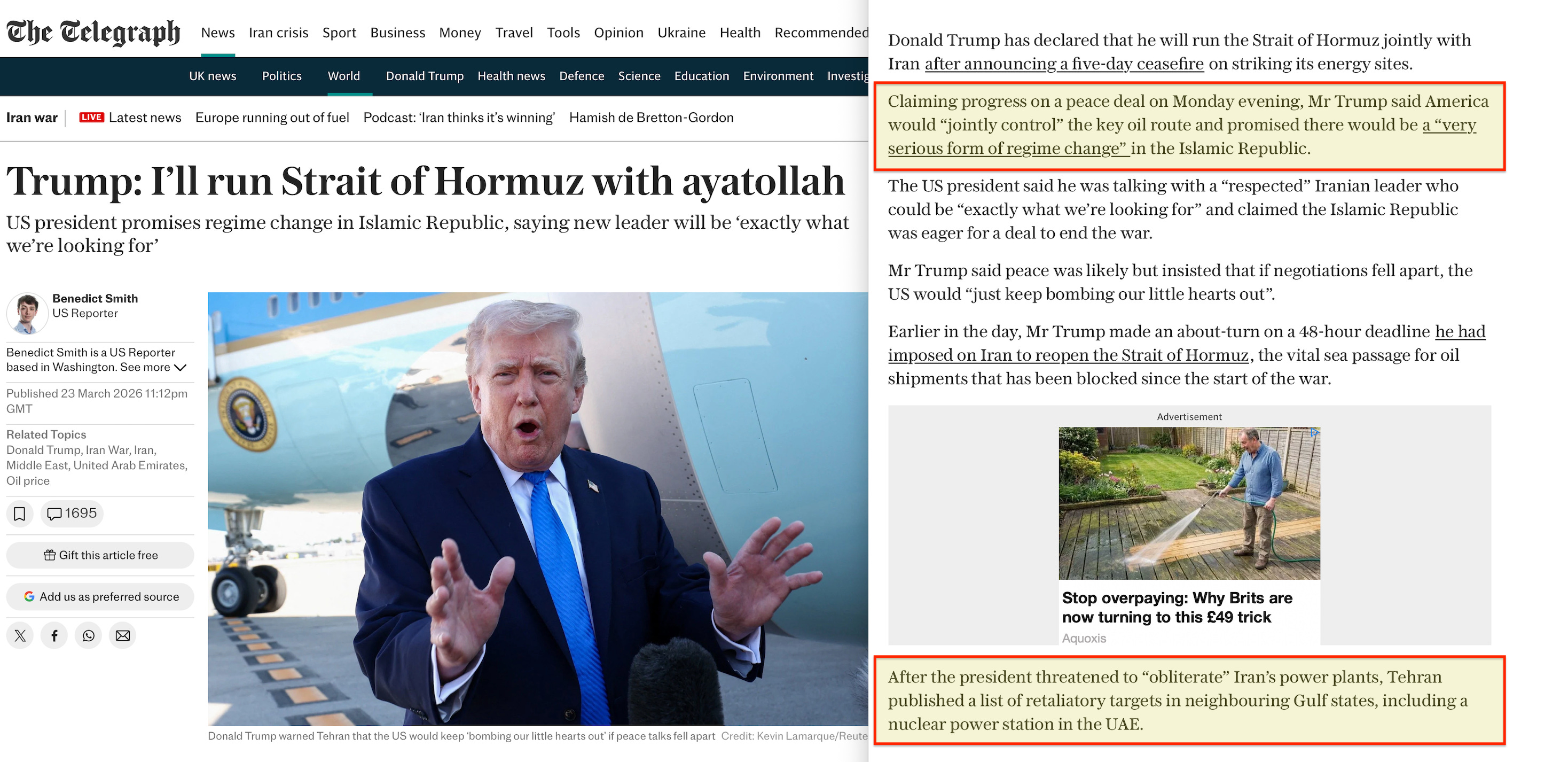
The Strait of Hormuz is to energy what SWIFT is to finance21 — the clearing infrastructure through which the medium must pass. Formalising its control under international conditions transforms it from a geographic feature into a governed chokepoint whose terms are set by the same architecture processing every other flow in the region.
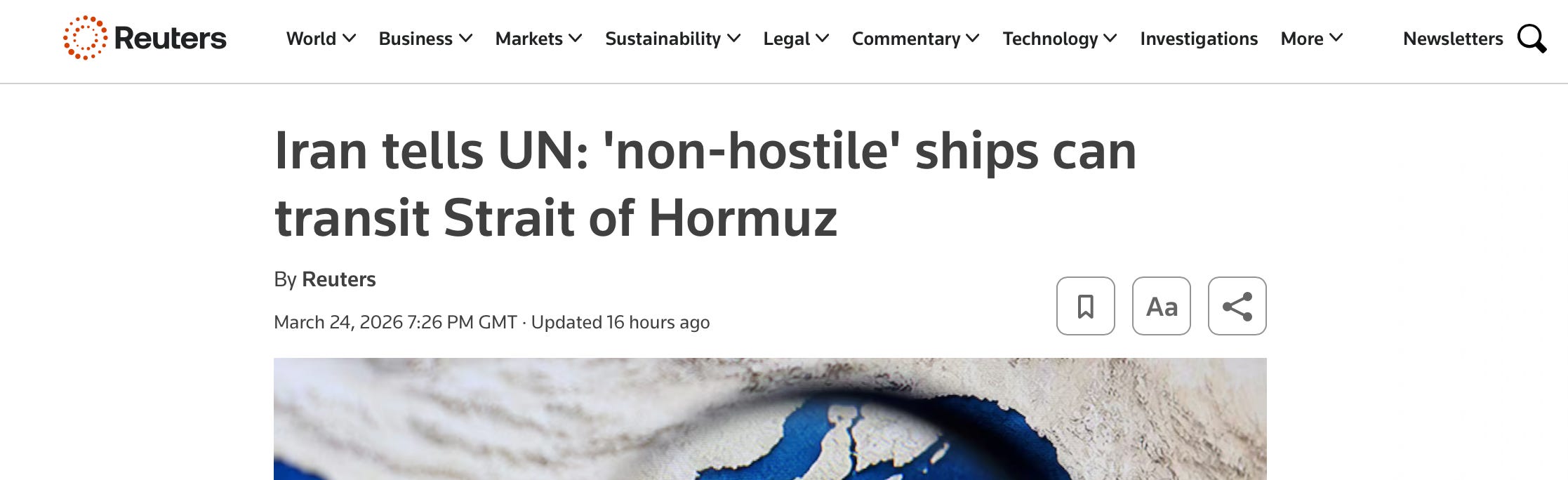
On March 25, Iran announced through the International Maritime Organisation that ‘non-hostile vessels’ may transit the Strait of Hormuz if they coordinate with Iranian authorities22. This is conditional passage — clearance granted or denied based on a classification Iran defines. ‘Non-hostile’ is a category. Who qualifies is determined by whoever holds the gate. The Strait has already become a governed chokepoint where passage is conditional rather than free, with the cognitive layer defining the category, the evaluative layer assessing each vessel, and the behavioural layer granting or denying transit.
The remaining question is — who should govern it?
Witkoff and Kushner negotiated Ukraine’s settlement terms in Moscow and Miami23. They negotiated Gaza’s Phase 2 with Turkey, Egypt, and Qatar24. They are now negotiating Iran’s terms directly with Tehran25. The same two-person interface, operating outside traditional diplomatic channels, producing phased conditions at compressed timescales.
Reports indicate Kushner’s Affinity Partners is positioning to participate in reconstruction financing across the region26 — meaning the operator cell negotiates the conditions, then affiliated capital funds the conditional rebuild. The negotiators have a direct financial interest in the terms they set.
When Robert McNamara moved from the Pentagon to the World Bank, he carried the Planning, Programming, and Budgeting System with him — conditional lending structured as measurable targets with disbursement tied to compliance. The operator cell performs the same function at the speed of crisis: settlement terms negotiated in one theatre embed conditions that propagate through implementation infrastructure.
The terms become the architecture, the architecture becomes the governance, and the governance persists long after the negotiators have moved on.

The financial ground has already been prepared. Iran’s Central Bank is now fully cut off from SWIFT27, and the rial has lost roughly forty per cent of its value since February 2828. The country cannot access its own reserves, cannot settle internationally, and will require an injection of liquidity — liquidity that will come with conditions attached. The energy infrastructure is being destroyed physically while the financial infrastructure is being destroyed through isolation, and both converge on the same outcome: a country that must accept external terms to rebuild, because it has no sovereign capacity left to rebuild on its own.
The terms Trump outlined on March 24 follow the template precisely: Iran will never have a nuclear weapon, the Strait of Hormuz will reopen under jointly managed conditions, and the framework resembles what had been under quiet negotiation in Oman before the war began29.
By March 25, the framework had become a 15-point plan30. Points 1 through 11 specify what Iran must surrender: nuclear dismantlement, abandonment of the proxy network, Hormuz as a free maritime corridor, and missile programme limits. Points 12 through 14 specify what Iran receives: full sanctions relief, US assistance with civilian nuclear power at Bushehr, and removal of the snapback mechanism.
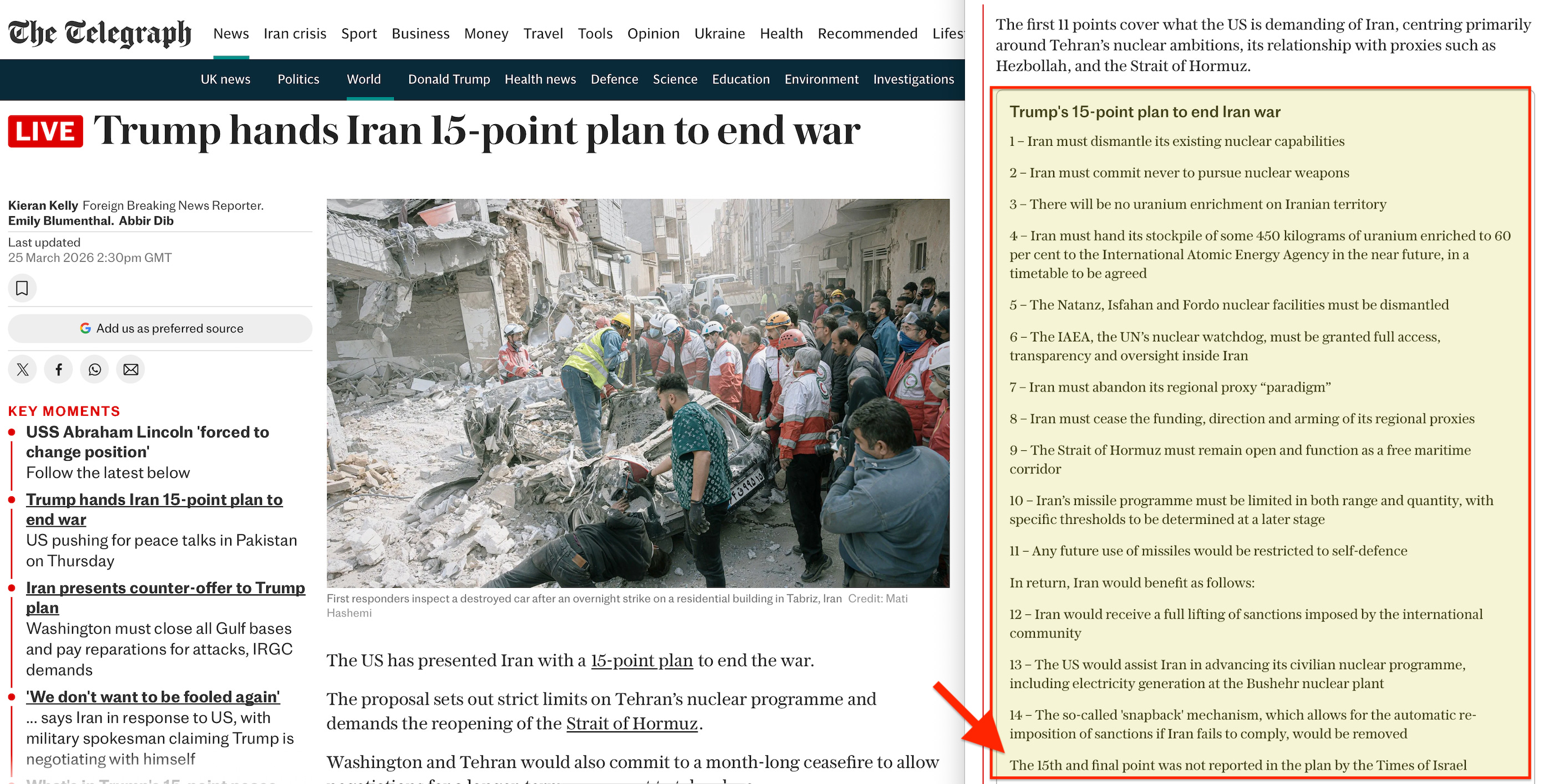
The fifteenth point was not published. Fourteen points describe what Iran gives up and what Iran receives. Reports suggest the missing point may require Iran to acknowledge Israel’s right to exist.
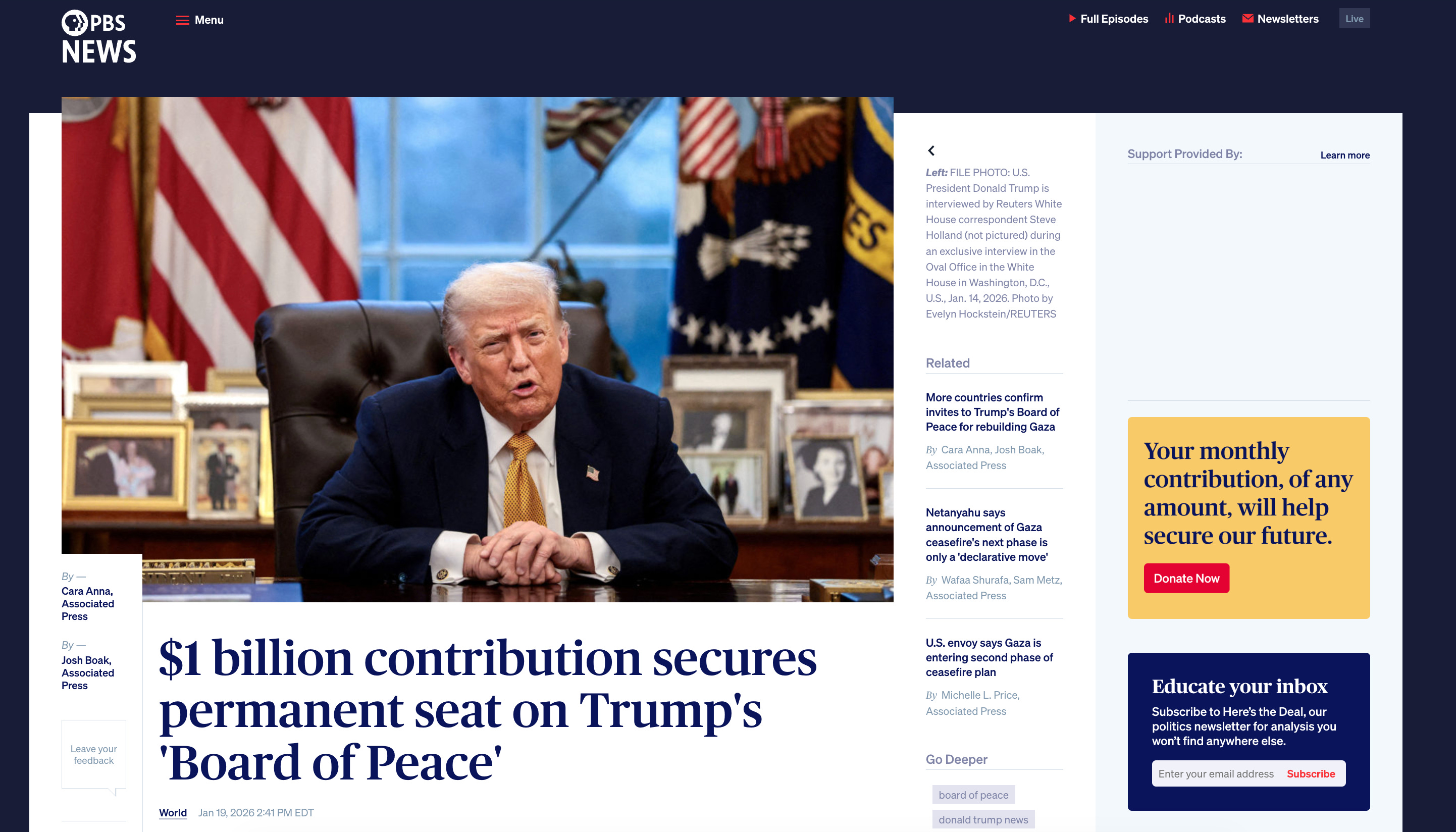
Above all three theatres, the Board of Peace — whose charter mentions no specific territory31 — positions itself as a permanent evaluative mechanism for the region, with seats at one billion dollars32 and a mandate that extends to any dispute the operator cell delivers to its door.

If a deal is reached, the reconstruction of Iran’s energy infrastructure — destroyed or degraded by weeks of strikes — will be conditioned on compliance with whatever framework emerges. The country will not rebuild on its own terms. It will rebuild on the terms set by the clearinghouse.
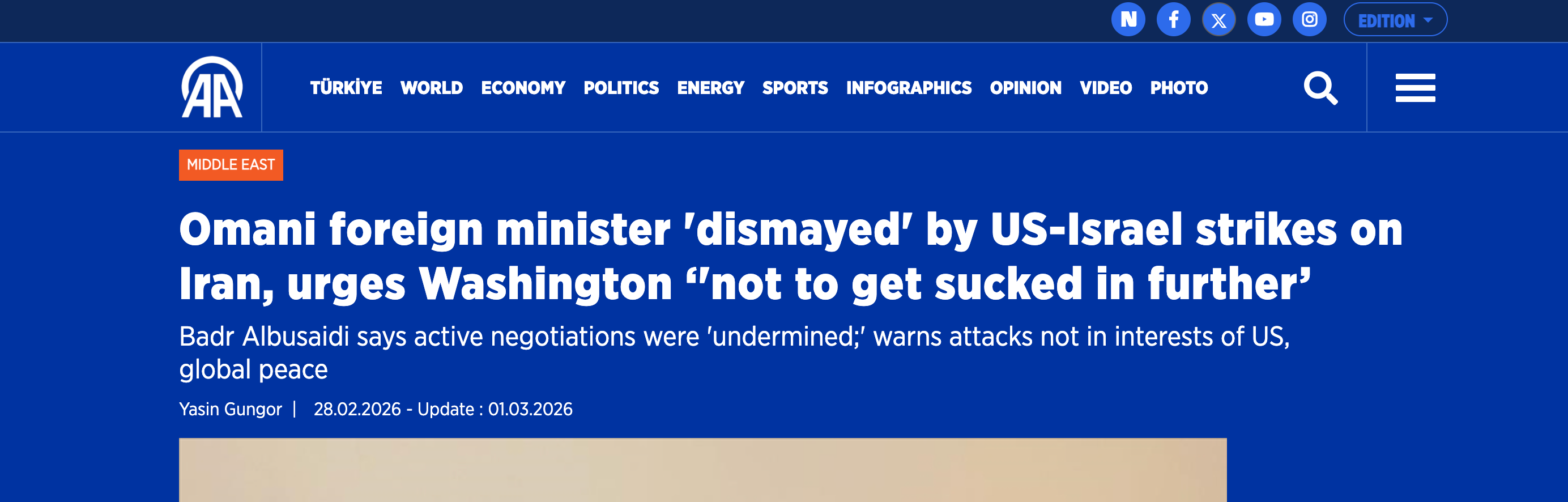
On February 27, one day before the strikes began, Oman’s Foreign Minister announced that a ‘breakthrough’ had been reached — Iran had agreed to never stockpile enriched uranium and to full IAEA verification, including irreversible downgrade of its enriched material to the lowest level possible33. Talks were expected to resume on March 2. The strikes were launched on February 2834. After the war began, the Omani Foreign Minister said he was dismayed and that ‘active and serious negotiations’ had been undermined35. Diplomats said Witkoff misrepresented the key exchange36.
The pattern recurs across all three theatres processed by the same operator cell.
In Gaza, the January 2025 ceasefire had agreed terms for Phase 2 — a political settlement with conditions both sides had accepted. Witkoff replaced those terms with what became known as the ‘Witkoff plan’37: different conditions, a compressed timescale, with Israel retaining the option to resume war38. Hamas rejected it39, and fighting resumed. The deal that would have produced a political settlement was replaced with conditions that produce the GREAT Trust40, the digital tokens, and the smart cities41.
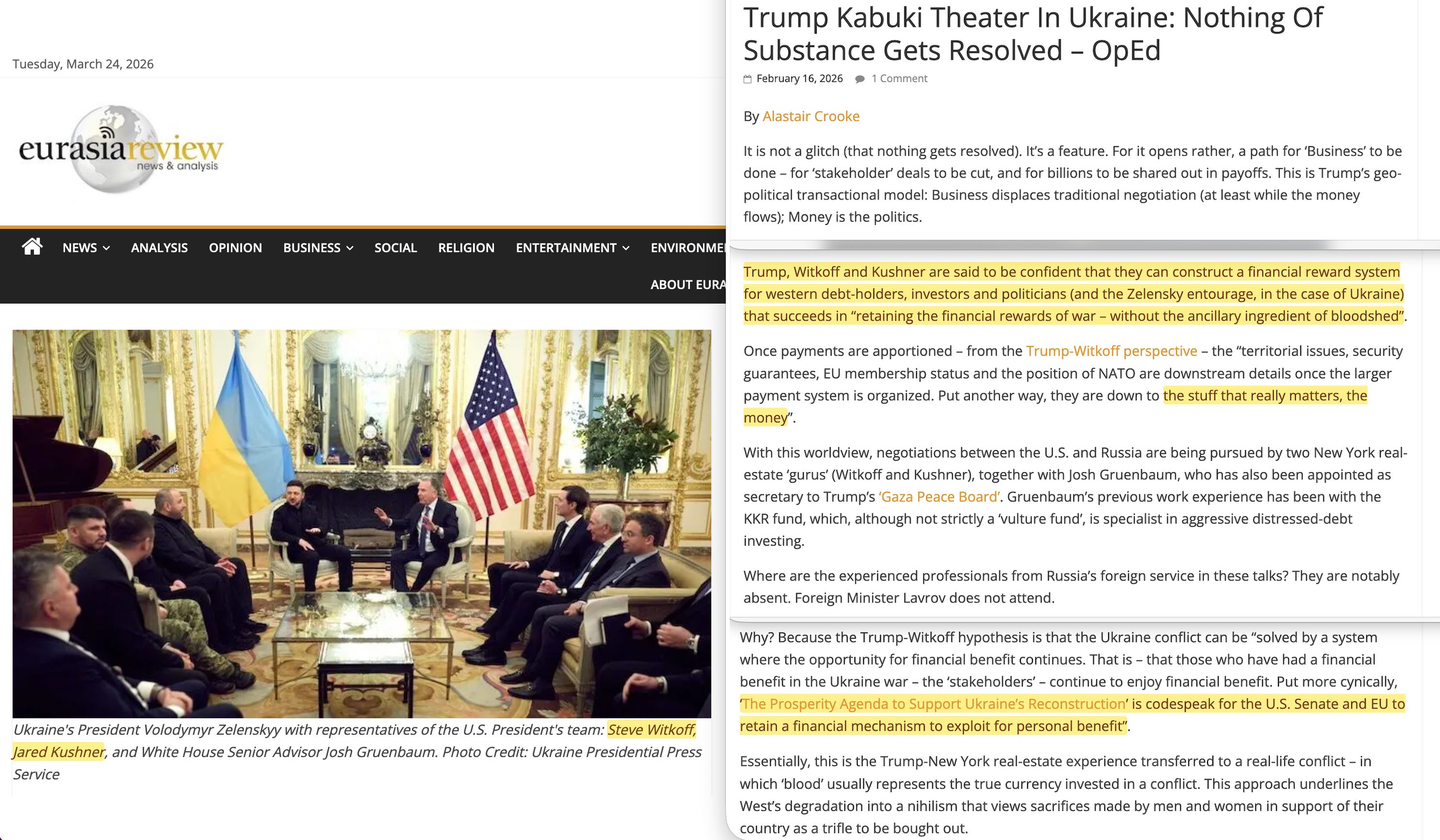
In Ukraine, Alastair Crooke documented the same dynamic — nothing of substance gets resolved, and the non-resolution is the feature42. The territorial issues, security guarantees, and NATO status remain perpetually deferred while the financial architecture is assembled underneath, sovereign bonds rally from 19 to 76 cents on peace speculation, and the creditors position themselves43.
In each theatre, the operator cell does not resolve the problem. It replaces a resolution that would preserve the territory’s sovereign infrastructure with conditions that install the clearinghouse.
The war is the mechanism that produces the conditions under which the architecture is installed — and any diplomatic solution that would end the war without installing the architecture is bypassed, torpedoed, or replaced with terms the sovereign cannot accept.


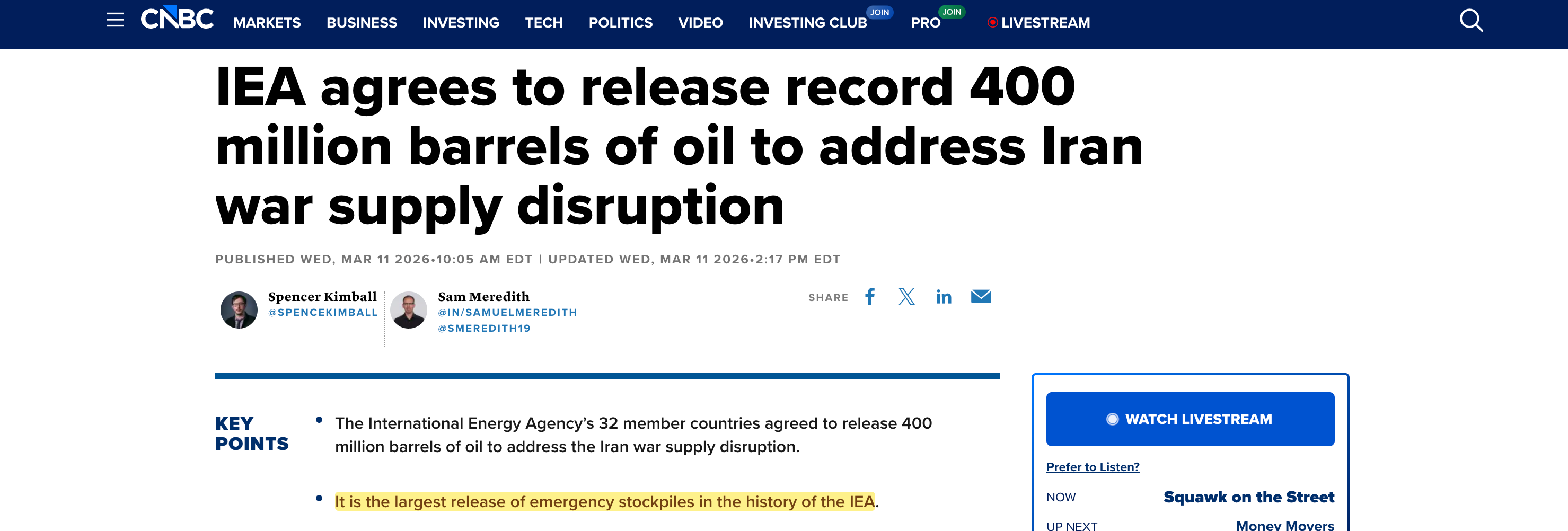
The scale of the energy disruption is itself part of the mechanism. The International Energy Agency’s 32 member states agreed on March 11 to release 400 million barrels from strategic reserves44 — the largest coordinated drawdown in the agency’s history45. The IEA’s director warned that the situation is worse than the 1973 and 1979 oil crises combined46.
The European Council called for a moratorium on strikes against energy and water facilities while simultaneously considering scrapping carbon credits to manage surging prices47.
A crisis of this magnitude creates its own demand for a permanent solution. The same pattern that produced the BIS in 1930 — war reparations requiring a clearing mechanism — is operating at the level of energy flows.
The Strait of Hormuz disruption will produce calls for a permanent international mechanism to govern transit, just as the Franco-Prussian reparations produced calls for a permanent international clearinghouse.


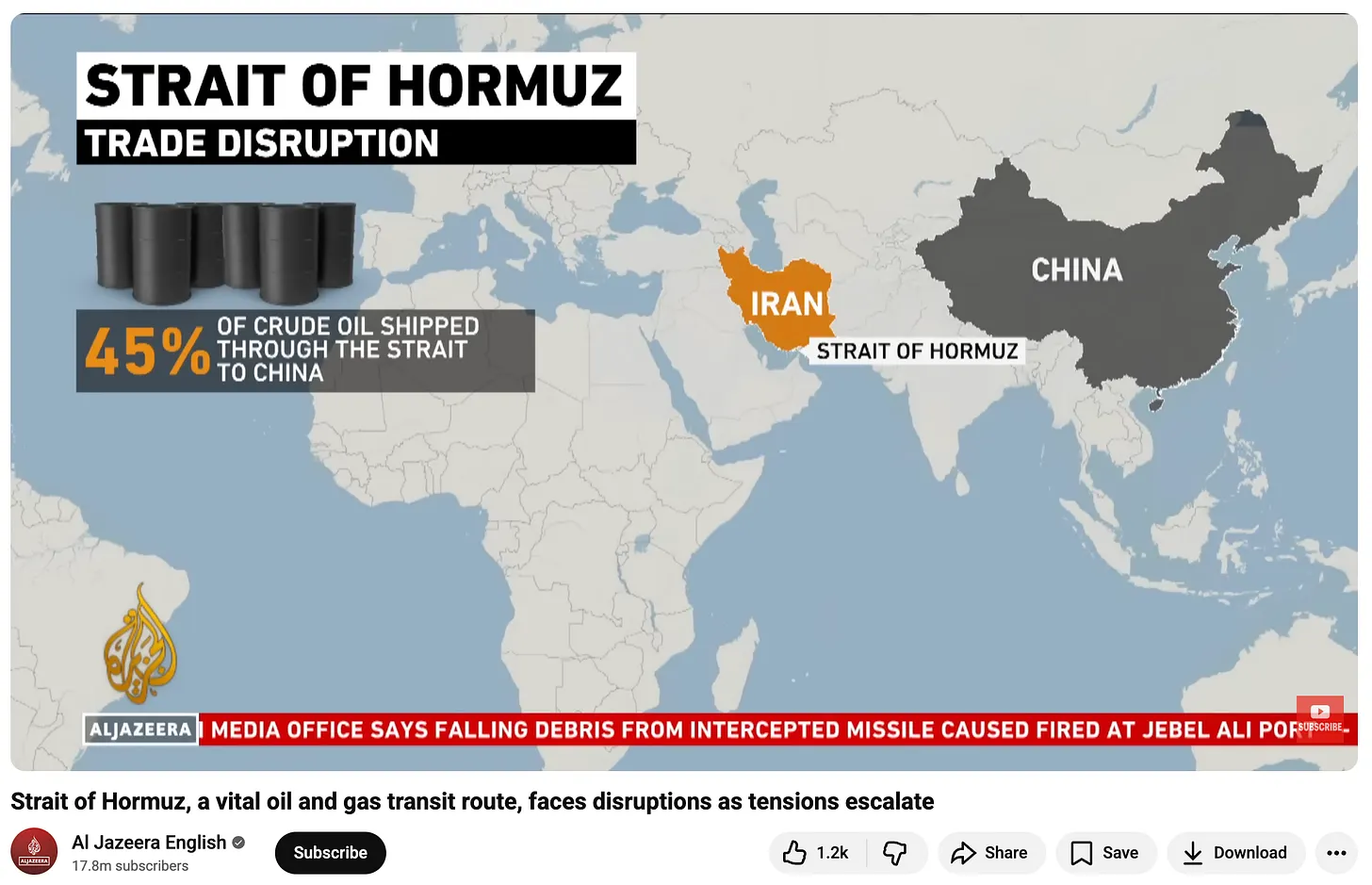
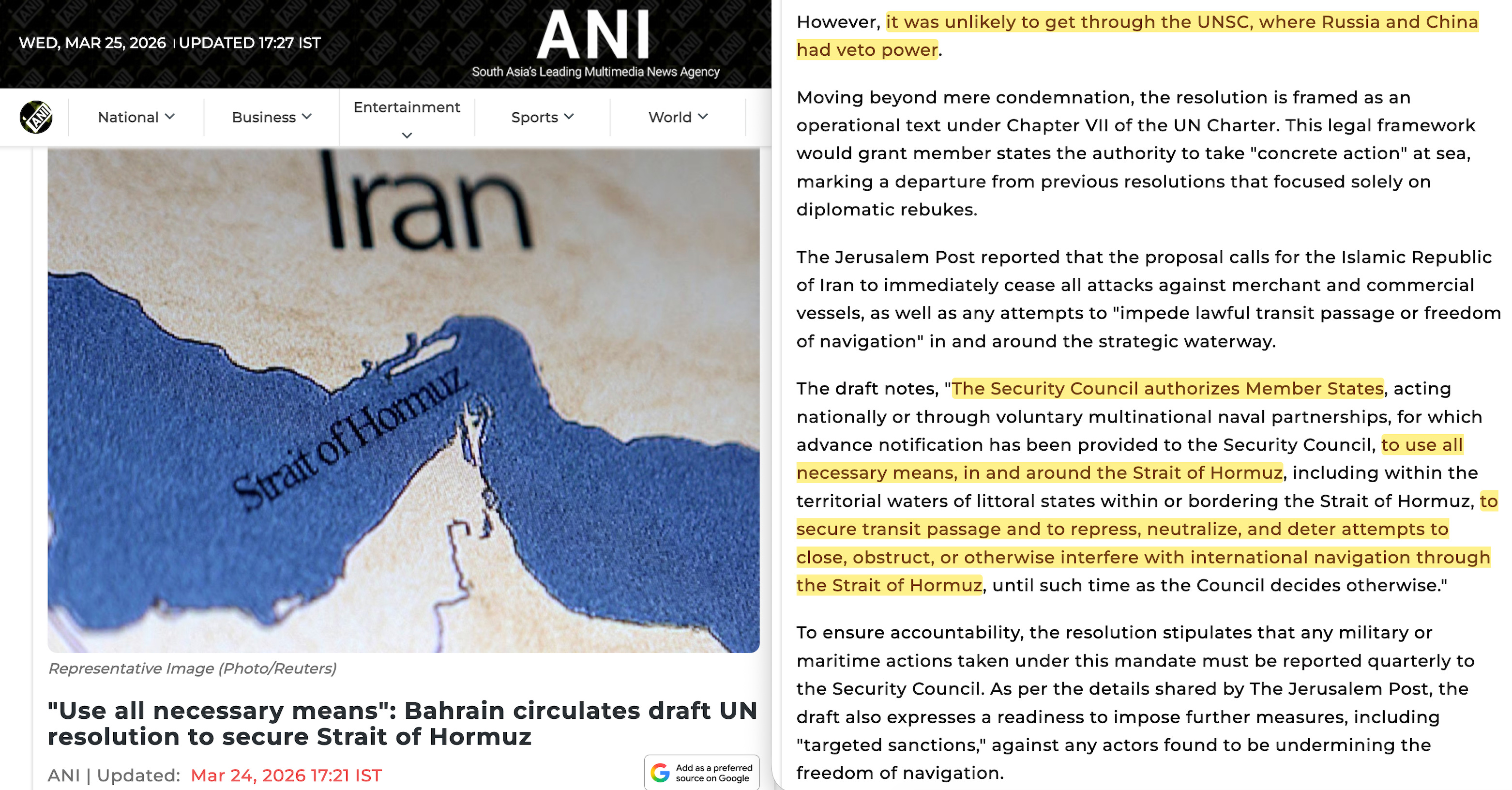
On March 24, Bahrain circulated a draft UN Security Council resolution under Chapter VII authorising member states to ‘use all necessary means’ to secure the Strait of Hormuz48, with quarterly reporting requirements to the Security Council. If adopted, the resolution would transform the waterway from a geographic feature into an internationally governed clearing mechanism — its transit conditions set not by Iran but by the body the crisis itself has justified.
The clearinghouse for energy is being written into international law in real time.
Iran’s Revolutionary Guards have explicitly declared that ‘the scope of the regional war expands to infrastructure war’ — a framing that acknowledges what the targeting already shows49. Their affiliated Tasnim News Agency released a list of US technology companies in Israel and the Gulf that would be targeted: Google, Microsoft, Palantir, IBM, Nvidia, and Oracle50. Those are the same vendors building the GenAI.mil platform, the Genesis Mission, and the data fusion layer documented in previous essays.
The threat inadvertently mapped the architecture’s physical footprint across the region — the servers, the data centres, the processing nodes through which the cognitive and evaluative layers operate.
Iran identified the infrastructure it opposes by naming the companies that built it.


The three deployments now form a complete sequence.
Ukraine: destruction of sovereign infrastructure → conditional lending → reform alignment with EU green and digital standards → integration through EU accession.
The wrapper is European.Gaza: destruction of all infrastructure → trusteeship → digital tokens → AI-powered smart cities on programmable rails → integration through the Abraham Accords.
The wrapper is Abrahamic.Iran: destruction of military capacity and energy infrastructure → negotiated settlement through the operator cell → reconstruction conditioned on nuclear compliance, energy corridor governance, and regional integration.
The wrapper is not yet named — but the architecture underneath will be identical.
In each case, the crisis eliminates the sovereign infrastructure that enabled independent operation. The reconstruction is funded through conditional channels. The conditions require adoption of the cognitive layer’s standards — financial, digital, environmental, or security. The population is onboarded through mechanisms it did not design and cannot challenge from within the framework. And the exit condition is integration into a regional or international architecture whose terms were set before the country had any voice in them.
The template does not require coordination between the three theatres. It requires only that each actor performs its function — the military destroys, the operator cell negotiates, the financial institutions condition, the standards bodies define, and the clearinghouse evaluates the evidence in light of the given standards. The architecture assembles itself because each component is structurally compatible with the others.
One template, three deployments, and the clearinghouse acquires its most significant new client.

The Strait of Hormuz handles the energy, the unified ledger handles the money, and Gaza handles the trade corridor. The architecture is not confined to finance. It is being applied to every flow that sustains the region — energy, money, goods, data, credentials, permissions — each governed by the same three-tier structure: a COGNITIVE layer defining the conditions, an EVALUATIVE layer assessing compliance, and a BEHAVIOURAL layer executing the verdict.
What began in the 1770s as a room where London bankers settled their debts has become a planetary architecture governing every medium the clearinghouse can track. Money was first, information followed, energy is being captured now — and the war in Iran is how the capture looks when a sovereign node refuses to clear voluntarily.

The question is not whether Iran will be integrated. The question is what the reconstruction conditions will be, who will set them, and whether anyone inside the architecture will have the capacity to challenge the definitions once they are embedded in the infrastructure.
In Iran, a breakthrough nuclear deal was within reach on February 27 — and the strikes were launched on February 28. In Gaza, agreed Phase 2 ceasefire terms were replaced by the operator cell with conditions that produce a US-run trusteeship and AI-powered smart cities. In Ukraine, the settlement is perpetually deferred while the financial architecture assembles underneath.
In all three theatres, the same two men are present. In all three, their affiliated capital is positioned for the conditional reconstruction. In all three, the available resolution that would have preserved the territory’s sovereign infrastructure was bypassed in favour of conditions that require adoption of programmable, conditional, digitally governed infrastructure that did not exist before the crisis.
Three theatres, three bypassed resolutions, three conditional rebuilds, one operator cell — and one architecture installed each time.
That is either the most remarkable coincidence in modern diplomacy, or the (unreported) function.
The architecture documented in this essay — a cognitive layer defining conditions, an evaluative layer assessing compliance, a behavioural layer executing the verdict — has an older name. The Zohar51, the thirteenth-century source text of Kabbalah, describes the same three tiers: Chabad (cognitive), Chagat (evaluative), Nehiy (behavioural), with light flowing downward through all of them.
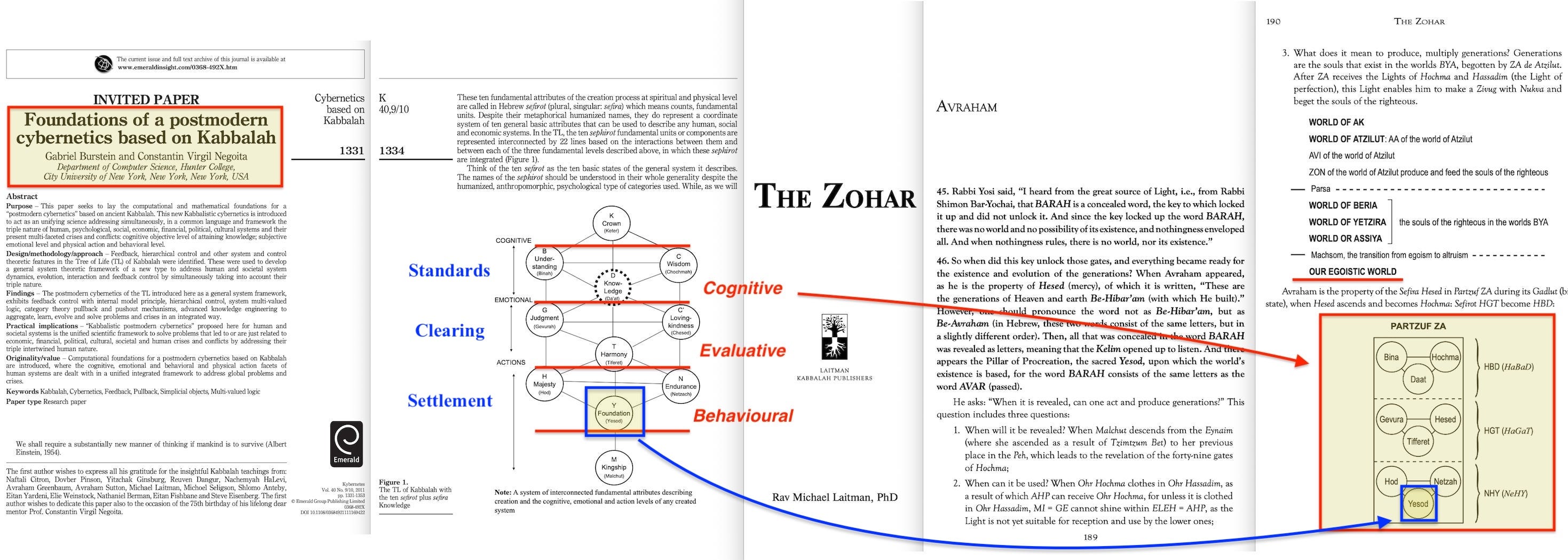
At the base of this structure sits Yesod — the narrow channel through which everything above is funnelled into a single passage, accepting or rejecting what passes through it. The Strait of Hormuz is Yesod made physical: one chokepoint, now being formalised as a governed gate, through which a fifth of the world’s energy must pass on conditions set by the cognitive tier above it, as evaluated by the clearinghouse.
Below Yesod, in the Zohar, sits a tenth node — Malkhut. The place where the system meets reality and where a signal can travel back upward to correct the model. Gabriel Burstein, a mathematician at BNY Mellon who studied with the Kabbalist Michael Laitman, formalised the nine-node architecture as canonical. Nine nodes, not ten.


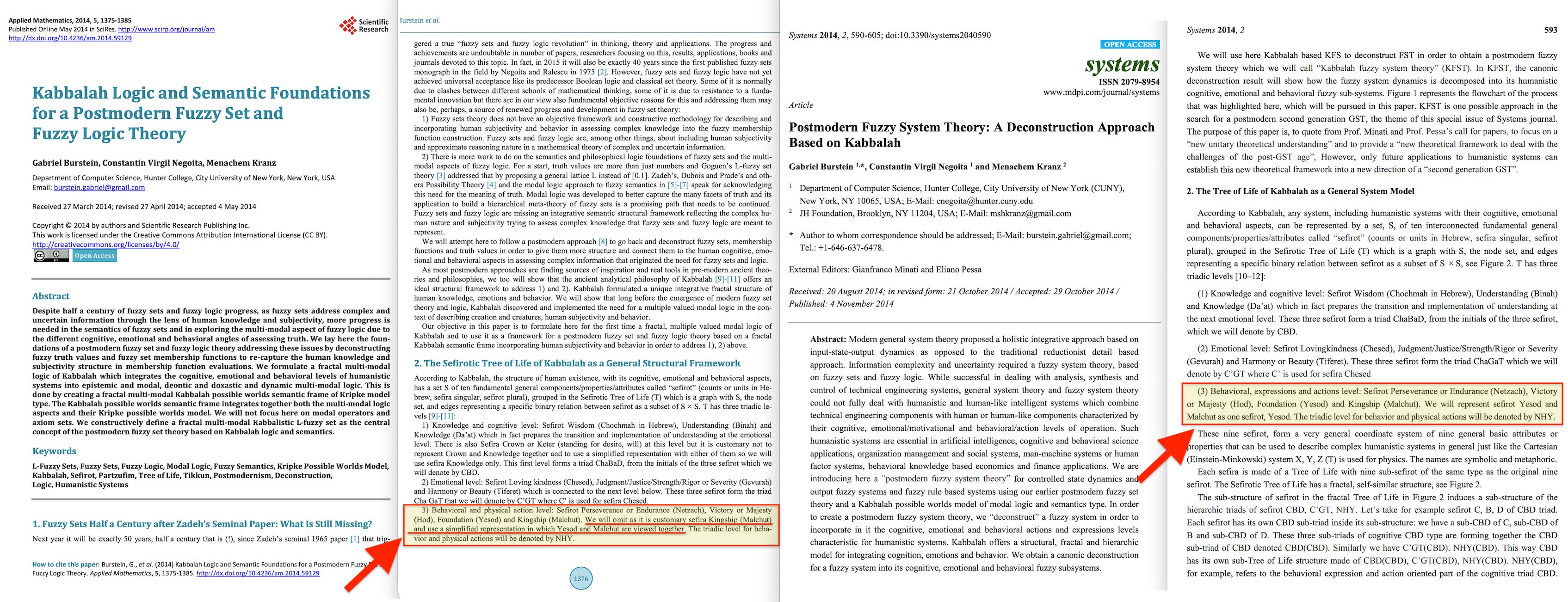
The positions are not ethnic. In Gaza, Israel occupies Binah — the sefira that determines who exists within the model — because it controls NGO registration on the ground. In Ukraine, NATO occupies the same position, determining which security actors are legitimate. In Iran, the Gulf states are emerging in that role, controlling regional market access, reconstruction capital, and the corridor. Binah is not the nation state Israel. Binah is whoever holds the accreditation gate in a given theatre.
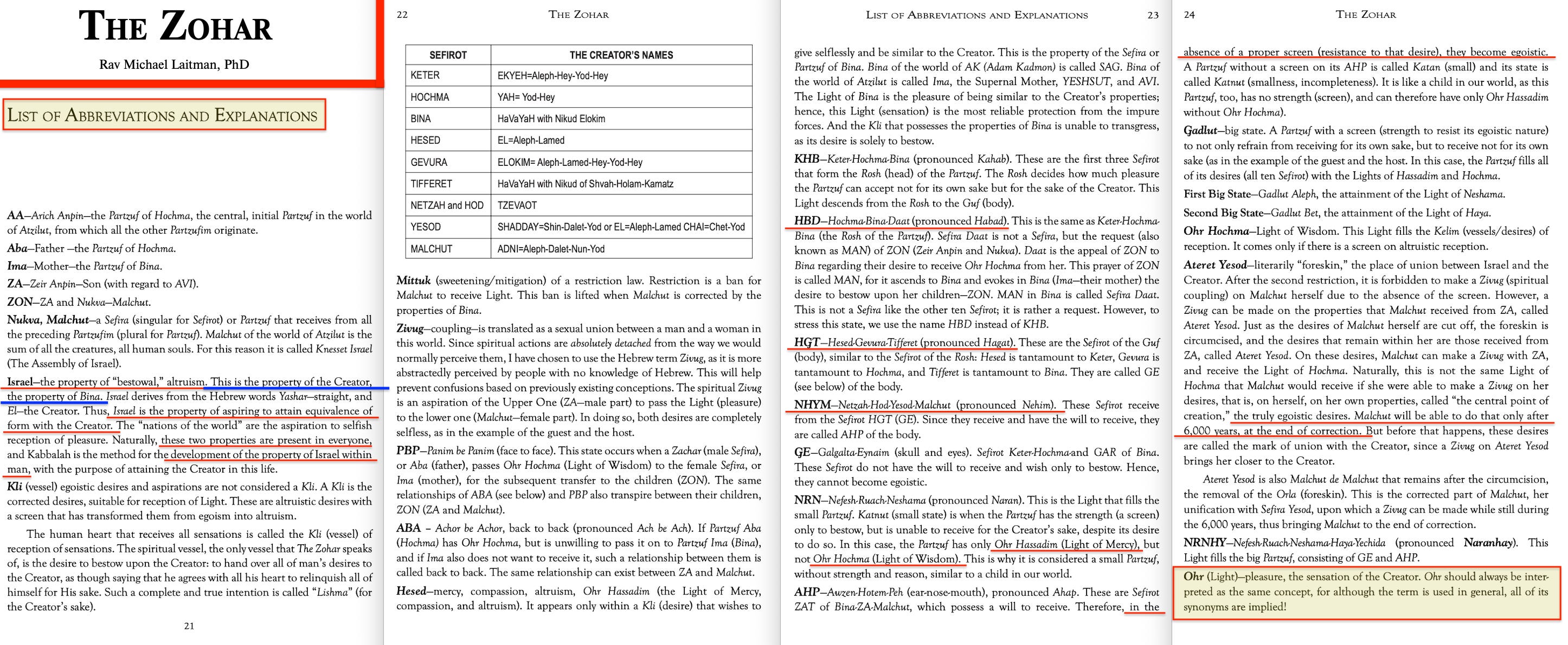
Laitman’s own glossary confirms this: ‘Israel’ in his framework is not a geography or an ethnicity — it is Yashar Kel, ‘straight to the Creator’, meaning whoever has fully aligned with the governing principle.
To Laitman and Burstein, ‘Israel’ is a compliance state, not a nation state. Whether the missing point 15 in the peace plan subversively calls for the creation of a clearinghouse, or for the ‘right of Israel to exist’ doesn’t matter.
They are the same thing.
The architecture does not serve a people. It processes all of them.
The populations of Iran, Gaza, and Ukraine sit where Malkhut should be. They receive whatever passes through the gate. They do not define the terms, and have no mechanism to send a signal back up that changes the cognitive standards at the top. Whether they agree to being ‘cleared’ by the Board of Peace is utterly irrelevant. But should their grievances ultimately be heard and the members of the board be displaced, it will not matter in the end, because the cognitive standards were not established by the clearinghouse anyway.
The price of a billion to sit on the clearinghouse ensures that only the ‘right’ kind of person is ever accepted to ‘serve’ — the type, with a mindset similar to those invited to Sir Bani Yas. Even so, the clearinghouse does not ask permission. It clears. And the node that would tell it whether its conditions match reality was removed from the architecture before the first line of code was written.


I'm like 75% convinced that Kushner is the physical incarnation of Ahriman that Rudolf Steiner wrote about many years ago - pure ruthless materialism absent of any trace of spirituality.
The pattern you’ve identified is real and the structural analysis is sharp — conditional reconstruction as a compliance mechanism dressed up as development aid is older than the World Bank. The Gaza template maps almost exactly onto the Ottoman capitulations: sovereignty in form, dependency in function, with the financial architecture doing the political work that military force used to do more visibly. The Ottomans retained their flag, their sultan, their administrative apparatus — and governed within parameters set entirely by external creditors and treaty obligations they had no mechanism to rewrite. Nobody designed that system. It accumulated over centuries through opportunistic extraction by actors who recognized an asymmetry and kept showing up with terms.
The intentionality is wrong here too.
The operator cell you describe — Kushner, Witkoff, MBS as the regional interpreter — are opportunists who are very good at reading a situation created by someone else’s chaos, not grand strategists executing a three-deployment plan. Kushner in particular has demonstrated an ability to identify the gap between what a power-mad principal will authorize and what can be monetized in that authorization window. That’s a different and in some ways more dangerous skill than strategic planning — it doesn’t require a coherent plan, only a reliable supply of chaos and a principal too impulsive to notice the arbitrage.
The terrifying part of your analysis isn’t that someone designed this. It’s that the template works whether it was designed or not. Structural dependency doesn’t require intent — it just requires someone to show up with the reconstruction contracts after the bombs stop falling.