
The Rosetta Stone

Few bother reading the acknowledgments section at the end of academic papers. They typically come after the dry equations and before the references you tend to skim for a few selected entries.
But sometimes acknowledgments reveal more than abstracts ever could. They show you who the authors learned from, whose ideas they’re building on, and which intellectual tradition they see themselves continuing.
And that’s where Burstein and Negoita once again deserve to come under the spotlight.

Find me on Telegram: https://t.me/escapekey
Find me on Gettr: https://gettr.com/user/escapekey
Bitcoin 33ZTTSBND1Pv3YCFUk2NpkCEQmNFopxj5C
Ethereum 0x1fe599E8b580bab6DDD9Fa502CcE3330d033c63c
First, a recap.
In ‘The Purpose of a System Is What It Does’, we discussed CBAM — the EU’s Carbon Border Adjustment Mechanism — and found a recurring pattern. The system creates conditions for market access, forces data collection through financial penalties, generates new authorities who decide what counts as true, and couples everything to private finance. Through six functional rails (accreditation, finance, digital identity, audit, data, and procurement), we noted a theoretical parallel in academic papers that formalise ‘Kabbalah System Theory’ as a recursive control topology for behavioural economics and AI.
In ‘The Architecture of Emergency’, we examined Gaza’s reconstruction governance and found the same pattern operating at territorial scale. A gatekeeper — Israel — sits above the entire structure, controlling access to all sectors without occupying any of them directly. Gaza populations become beneficiaries to be processed rather than citizens to be consulted, and sovereignty becomes conditional on external certification that never quite arrives.
These two systems share one architecture, with one governing individual transactions and one governing entire territories.
This essay goes through the common framework that connects them.


The Papers
Between 2011 and 2016, Gabriel Burstein and Constantin Virgil Negoita published six peer-reviewed papers developing what1 they2 called3 Kabbalah4 System5 Theory6. The name may sound mystical, but these are ultimately control engineering papers published in mainstream academic journals: Kybernetes (Emerald’s systems theory journal), Systems (MDPI’s complexity science publication), and Springer’s engineering series.
These journals typically publish work on industrial control, aerospace guidance, and economic modelling, and Burstein and Negoita employed the standard mathematical tools of those fields — category theory, control engineering, fuzzy systems, and cybernetics. The same mathematics governs thermostats, autopilots, … even central bank policy.
Kabbalah System Theory serves as a compiler that renders a mystical structure into engineering categories. The infrastructure being built today runs the resulting programme: standards → evaluation → enforcement, coupled to finance.

Understanding this does not require belief in the Kabbalah — only observation that someone wrote a specification, someone built a translation layer, and someone is running the output.
The KST framework maps the Kabbalistic Tree of Life to a three-level hierarchical control system.
The top level handles the cognitive — standards, knowledge, and truth-definition, deciding what counts as valid.
The middle level handles the emotional — evaluation and judgment, assessing who meets the standard.
The bottom level handles the behavioural — execution and enforcement, determining what happens to those who pass or fail.
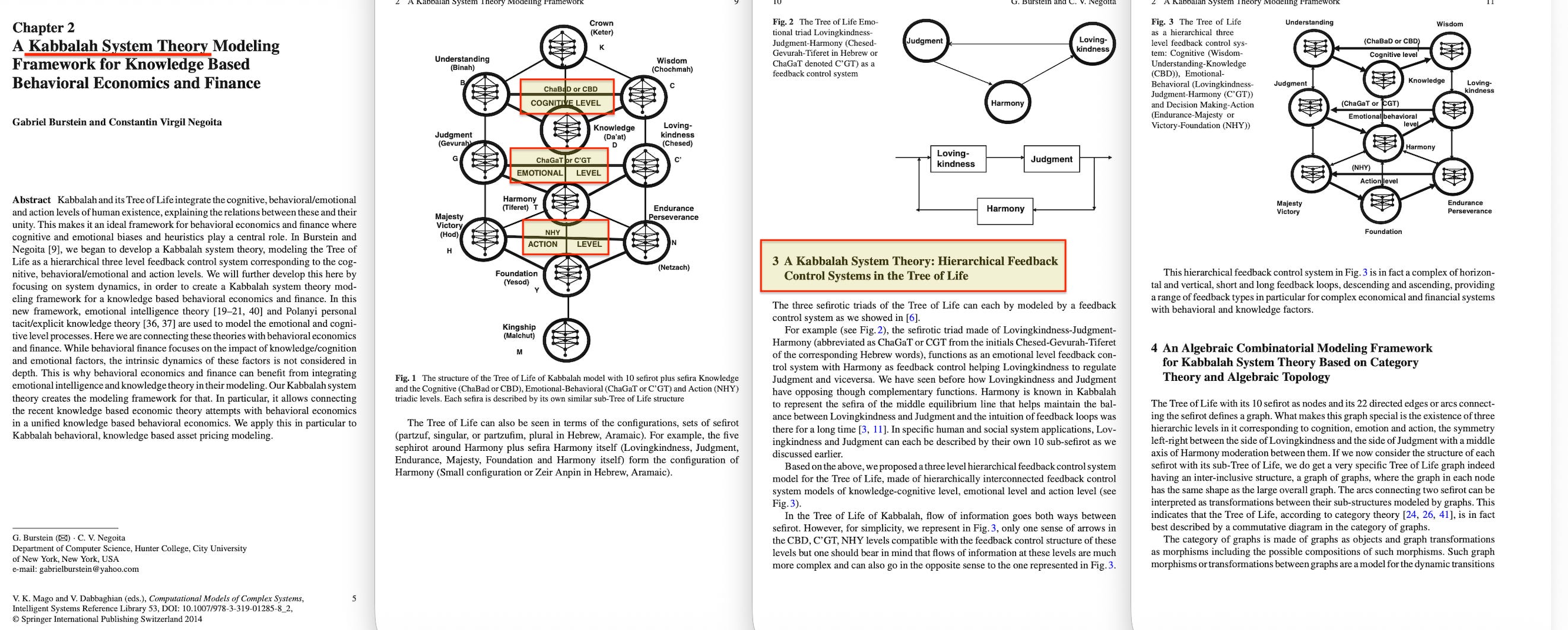
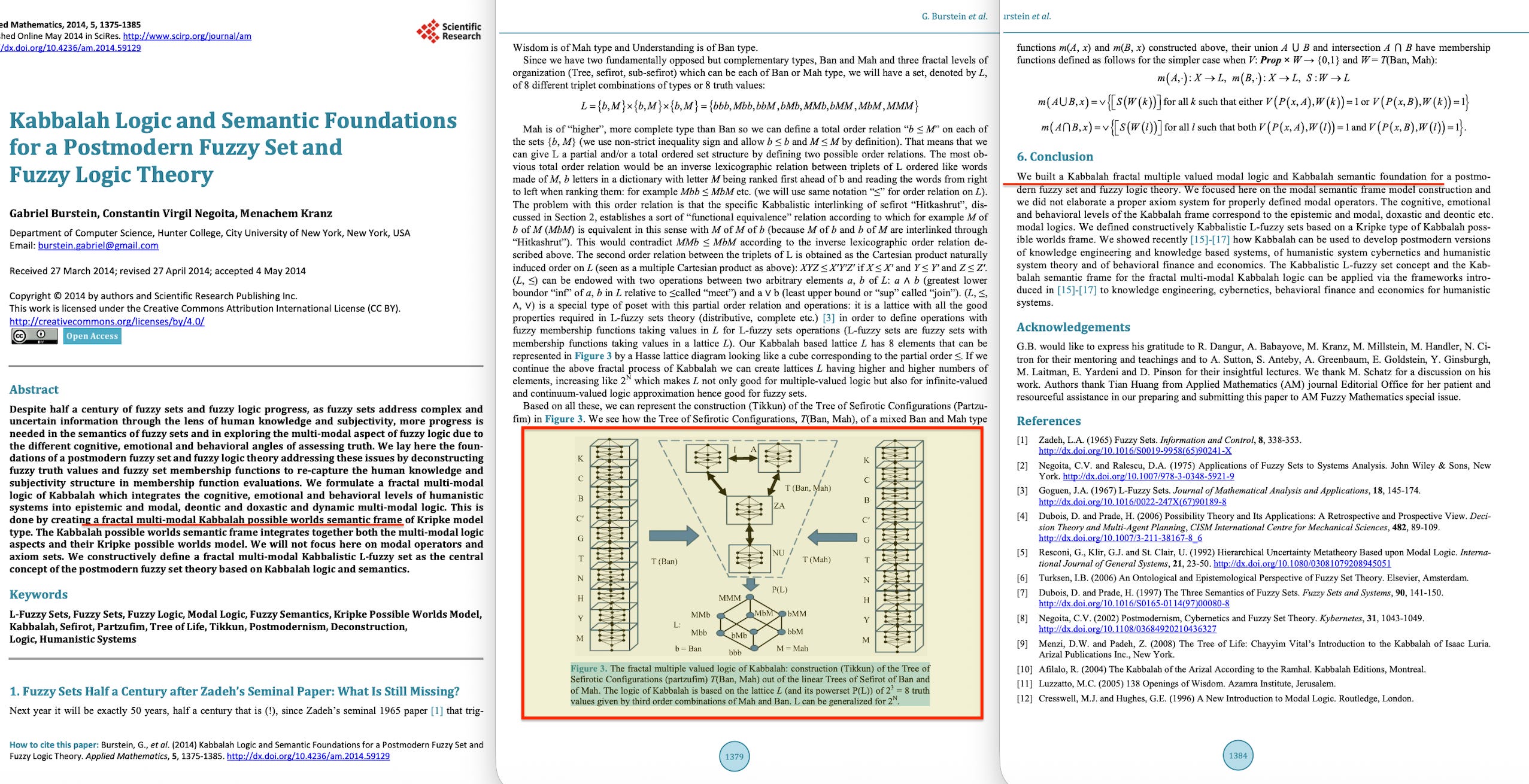
Crucially, the authors do not just use the Tree of Life as a diagram; they model it using Category Theory7. They explicitly define Tikkun (repair) as a ‘pullback’ operation — a mathematical function that constrains the system to ensure stability. ‘Pushout’ represents the expansion of the system (growth, data, connection), while ‘pullback’ represents the restriction (regulation, limits, ethics). By defining governance as a topological ‘pullback’, they render (divine) correction into a computable constraint function that can be executed by AI.
The structure is fractal — recursively nested, meaning each level contains the same three-part pattern internally, and the whole pattern repeats at every scale from the individual and all the way up to Spaceship Earth.
The authors explicitly designed this framework for what they called ‘humanistic systems’ — systems involving human decision-making, knowledge, and behaviour. One paper applies it directly to behavioural economics and finance, while others apply it to AI and knowledge systems. The sixth paper, published in 2016, went beyond theoretical exposition and explicitly called for KST to be adopted and implemented as governance architecture.

The Acknowledgments
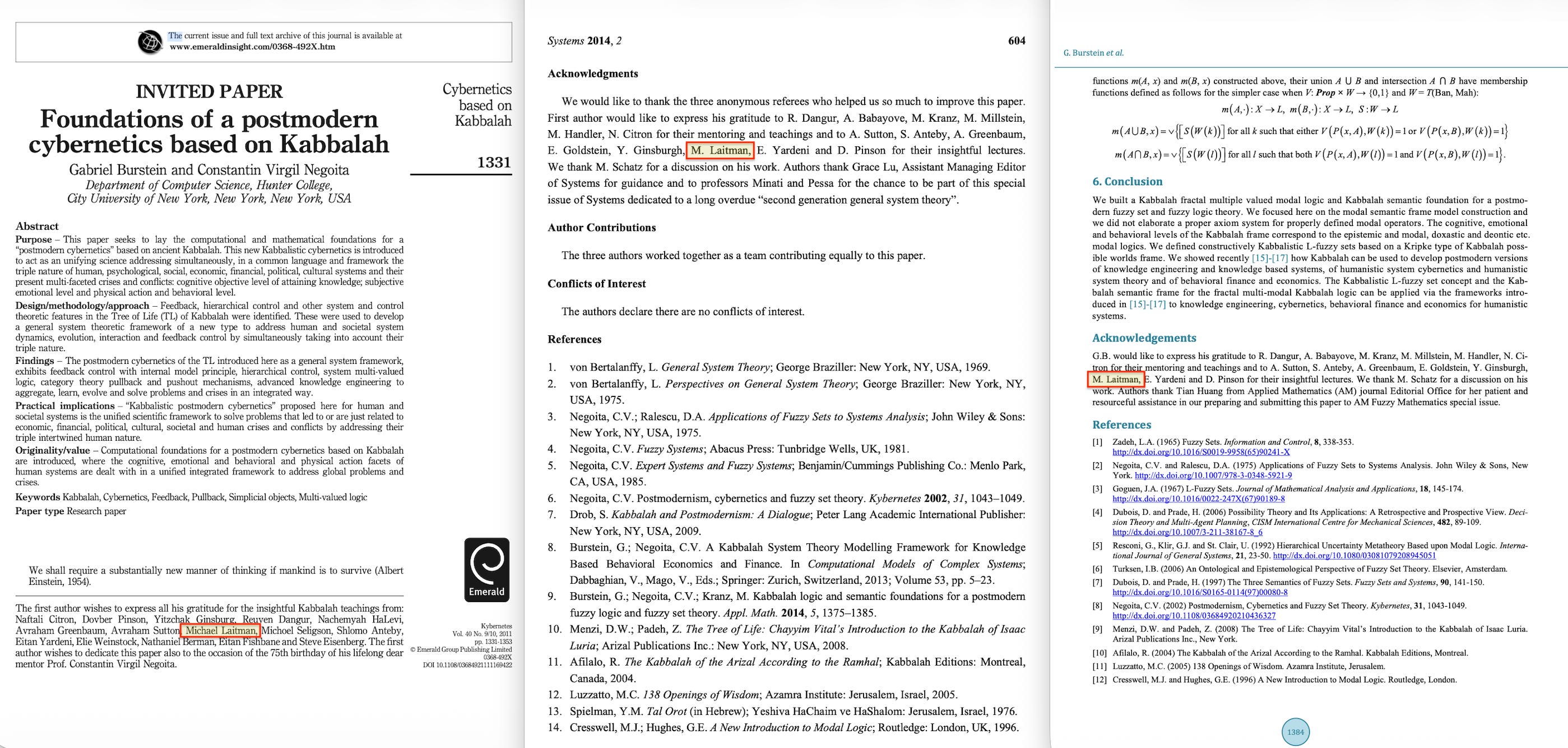
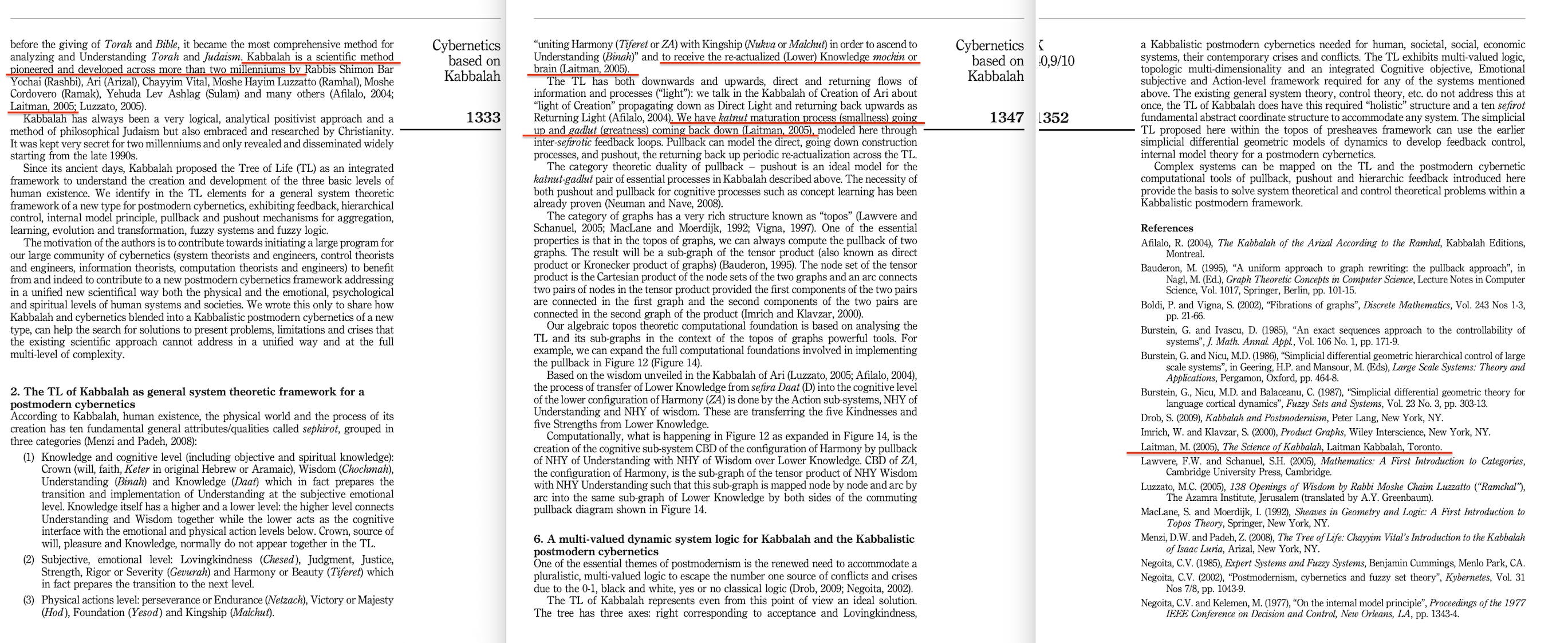
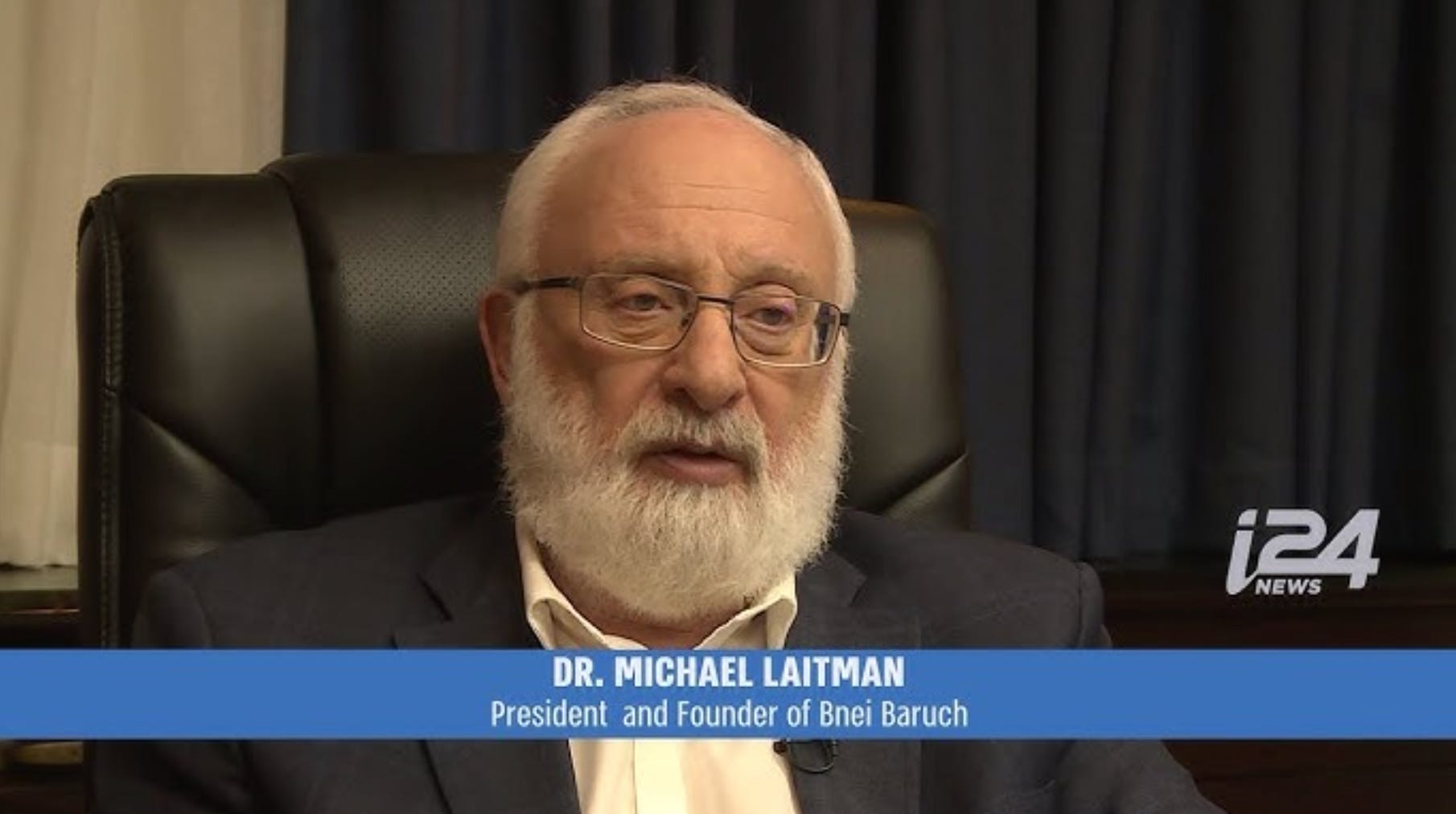
Three of these papers acknowledge Michael Laitman and teachers associated with Bnei Baruch8, with the acknowledgments documented directly in the published texts.
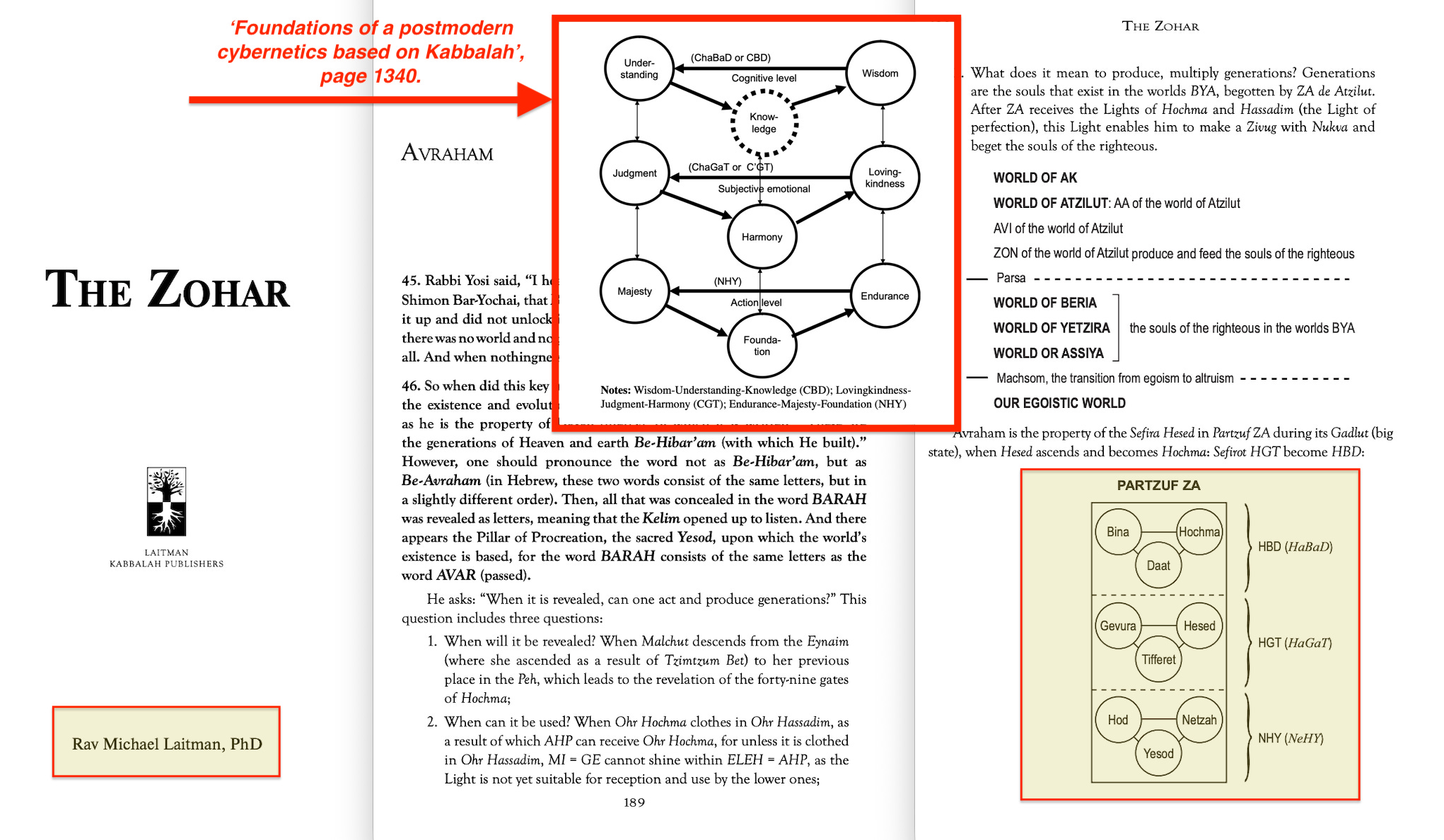
The structural diagram in the KST papers matches Laitman’s diagram from the Zohar — the foundational text of Kabbalah — diagram node-for-node9: the same three triads (HBD/HaBaD, HGT/HaGaT, NHY/NeHY), the same positions, relabelled into English and reframed as cognitive, emotional, and action layers.
The papers didn’t just acknowledge Laitman; they imported his schema.
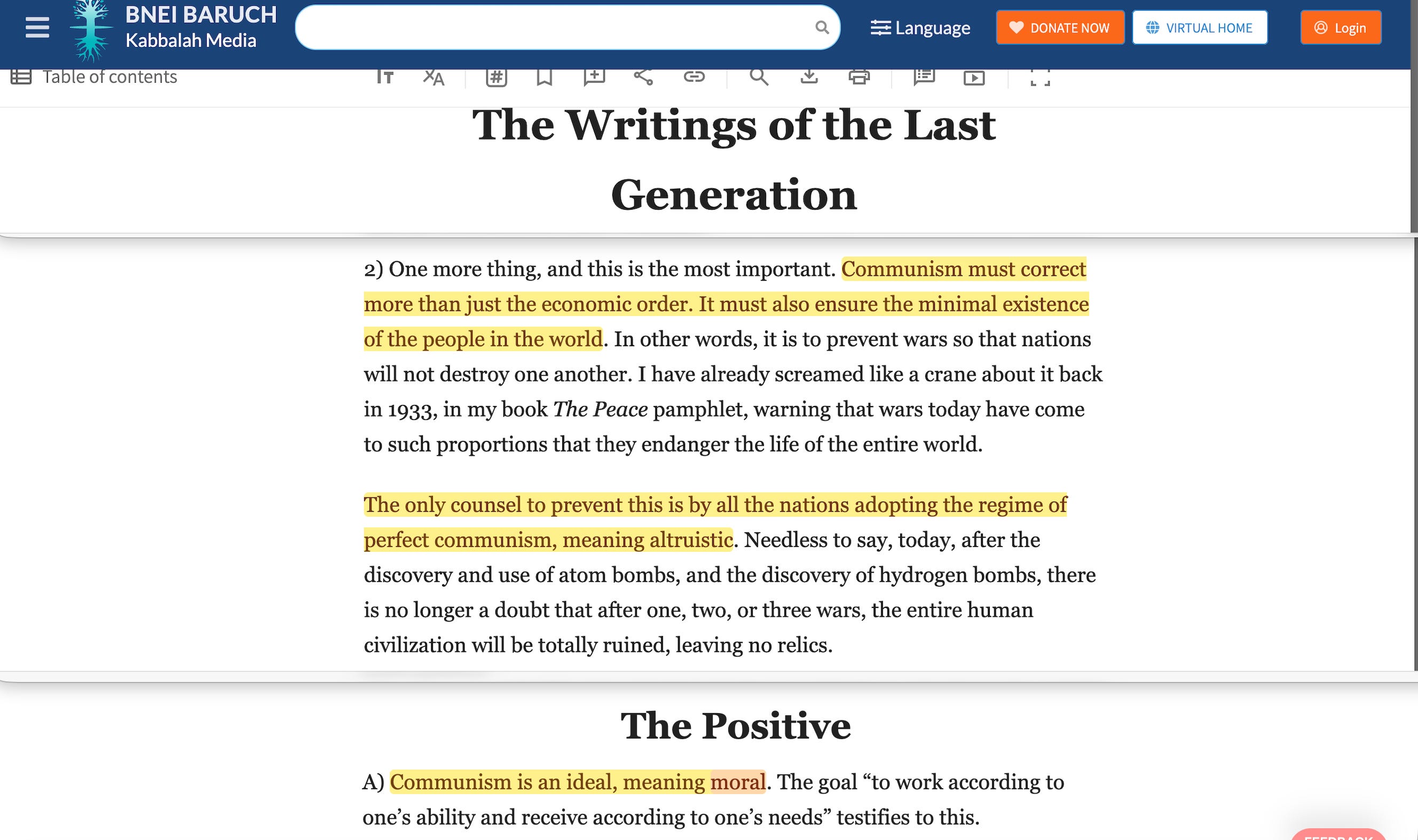
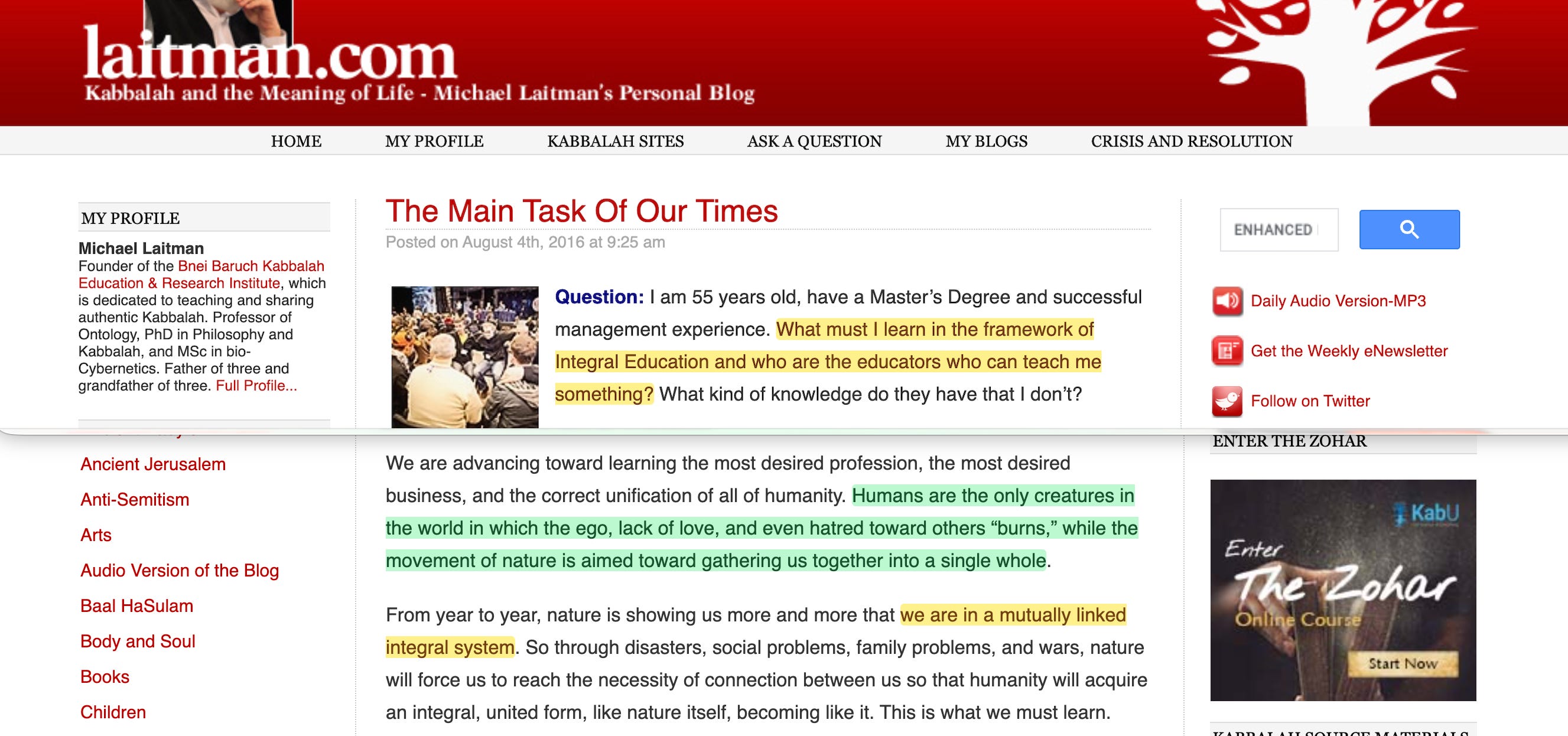
This matters, because Laitman founded Bnei Baruch10, currently the largest Kabbalah education organisation in the world11, promoting ‘ideal’, ‘moral’, even ‘perfect communism’12 which is ‘altruistic’ in an inverted sense.
While altruism normally means voluntary giving, here it means mandatory contribution — you serving society for ‘ethical’ ends.
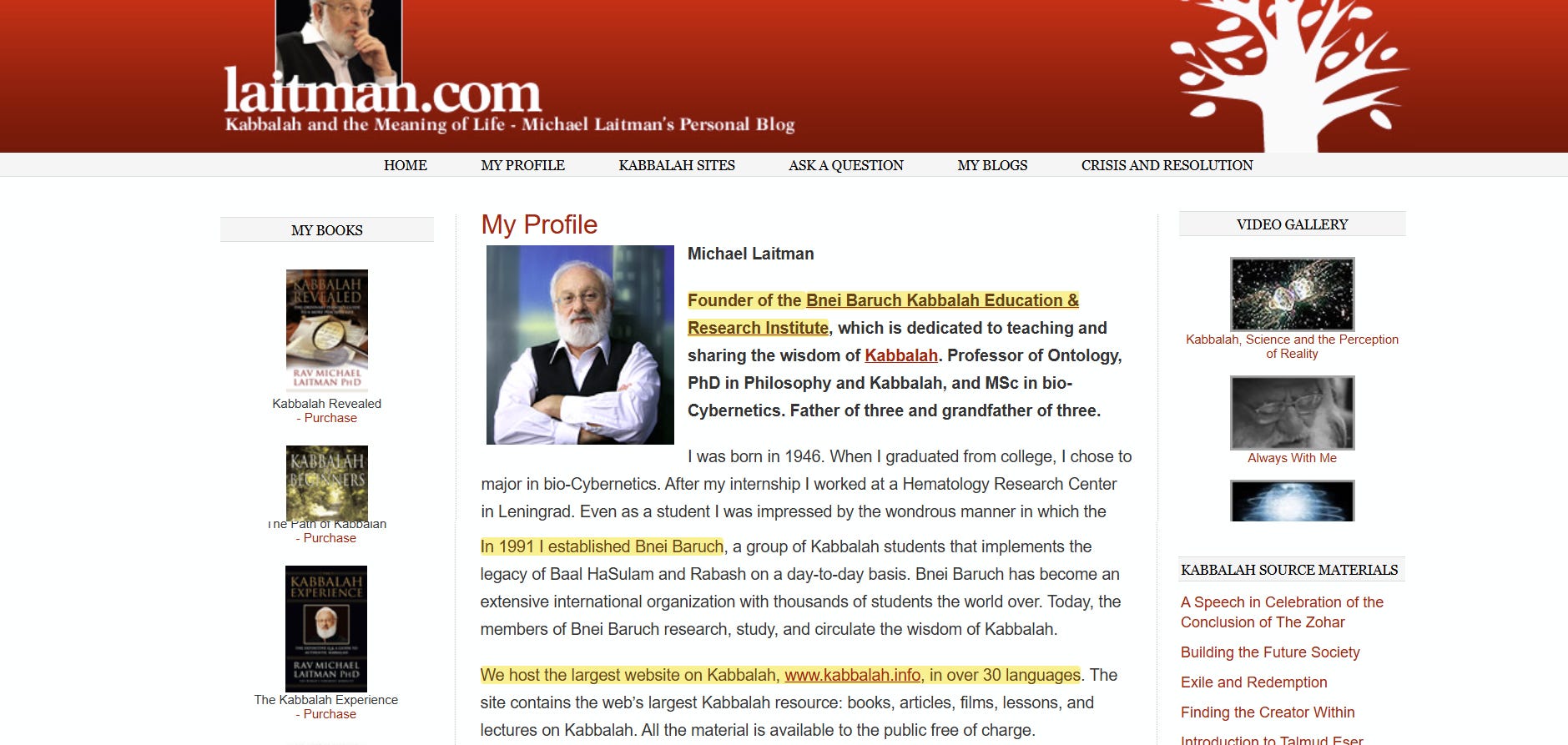
Laitman has published over forty books, delivers regular lectures, and runs courses translated into dozens of languages. His teachings are publicly available, systematically presented — and explicitly political in their implications.
He teaches ‘altruistic communism’13 or ‘integral society’14; the core idea is mutual guarantee, where each individual bears responsibility for the collective and the collective bears responsibility for each individual. He sees humanity as a single interconnected system where crisis reflects imbalance requiring correction, economics must serve collective harmony rather than individual accumulation15, and education must restructure consciousness toward perceiving interconnection as primary reality16.
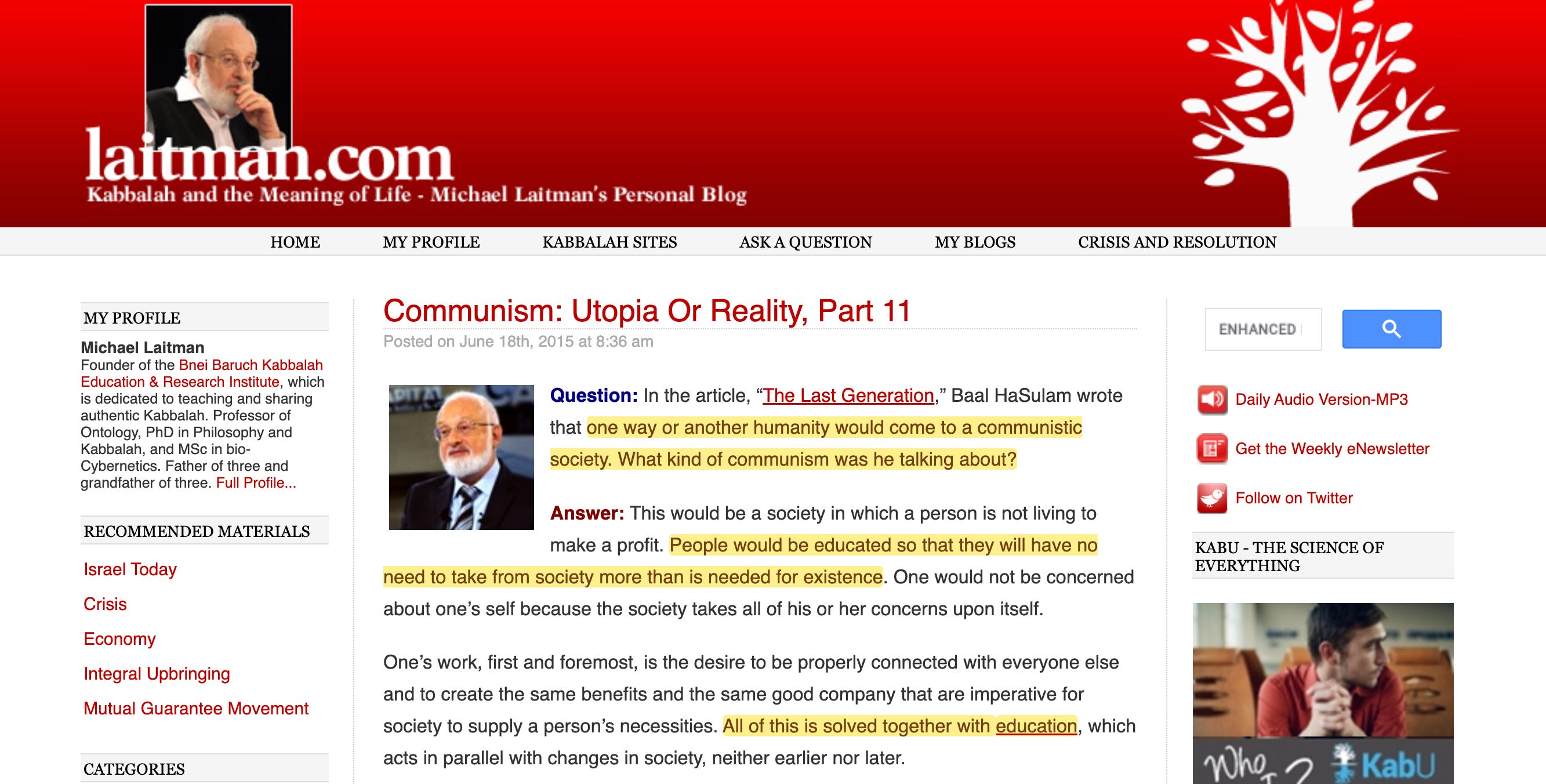
Laitman engages directly with Marx17, arguing that Marx correctly diagnosed capitalism’s contradictions but prescribed the wrong cure18 — violent revolution rather than gradual spiritual correction through education. His ‘altruistic communism’19 keeps the destination of collective governance while replacing the revolutionary mechanism with education and inner restructuring.
None of this is hidden. Laitman’s books include The Benefits of the New Economy20, Completing the Circle21, and Self-Interest vs. Altruism in the Global Era22. Bnei Baruch publishes position papers on global governance23, economics24, and education reform25. The political philosophy is stated plainly, and the KST papers acknowledge this source while formalising its structure as control architecture.
Two Intellectual Rivers
Kabbalah System Theory sits at the confluence of two intellectual traditions that flow toward the same destination from different origins.
The first river…
… runs through the history of systems thinking and planning. Marx argued that societies can be analysed as totalities governed by structural logic, with the economic base determining the social superstructure26.

Lenin operationalised this through ‘accounting and control’27. In State and Revolution and subsequent works, Lenin argued that socialism is fundamentally about comprehensive accounting of all economic activity combined with central control based on that accounting28. The political revolution creates the conditions, but accounting and control constitutes the actual governance.

Bogdanov, a Russian polymath working in the early twentieth century, through Tektology29 created a universal organisational science applicable to all systems — physical, biological, and social. Although Lenin rejected his work30, Bogdanov markedly influenced the founders of Western systems theory.

Leontief developed Input-Output Analysis31, the mathematical accounting of how all sectors of an economy interconnect and how every input flows to every output, first for Soviet planning and later at Harvard, where he won a Nobel Prize32. This was Lenin’s ‘accounting’ rendered as mathematics.

Von Bertalanffy created General Systems Theory, treating systems as irreducible wholes with emergent properties; broadly considered a further development of Bogdanov’s Tektology33. Boulding added hierarchy34, C West Churchman included an ethical dimension35, Holling introduced adaptive management to govern (ecological) uncertainty36, while Wiener developed cybernetics37, the mathematics of feedback control, with (surveillance) sensors measuring system states, controllers comparing measurements to targets (through input-output analysis), and actuators adjusting the system accordingly, and increasingly automatically.
This was Lenin’s ‘control’ rendered as engineering. Stafford Beer applied cybernetics to organisational management38 and designed Project Cybersyn for Allende’s Chile39, an attempt at real-time socialist economic management.

Beer gave us the POSIWID principle — ‘the purpose of a system is what it does’40 — that frames our analysis throughout these essays.
The through-line of this tradition is Lenin’s ‘accounting and control’ as the essence of governance, involving comprehensive measurement of all flows, central coordination toward defined objectives, and feedback mechanisms to correct deviation. What Lenin articulated as political programme, Leontief mathematised, Wiener mechanised, and contemporary digital infrastructure (including AI) now implements at a scale the original theorists could scarcely have imagined.
The second river…
… runs through Kabbalistic thought. The Tree of Life41, particularly as developed in sixteenth-century Lurianic Kabbalah42, maps creation as a hierarchical structure of functional positions.
The cosmos is understood as a system requiring correction through integration of its parts. Laitman has translated these concepts into secular language and applied them to contemporary problems of global governance, economics, and social organisation.
Kabbalistic Systems Theory (KST) operationalises this translation. It takes Laitman’s conceptual framework and encodes it into artificial intelligence, financial risk modeling, and behavioural economics.
The through-line of this tradition holds that reality is hierarchically structured, currently fragmented, and requires correction through integration of individual into collective under proper governance.
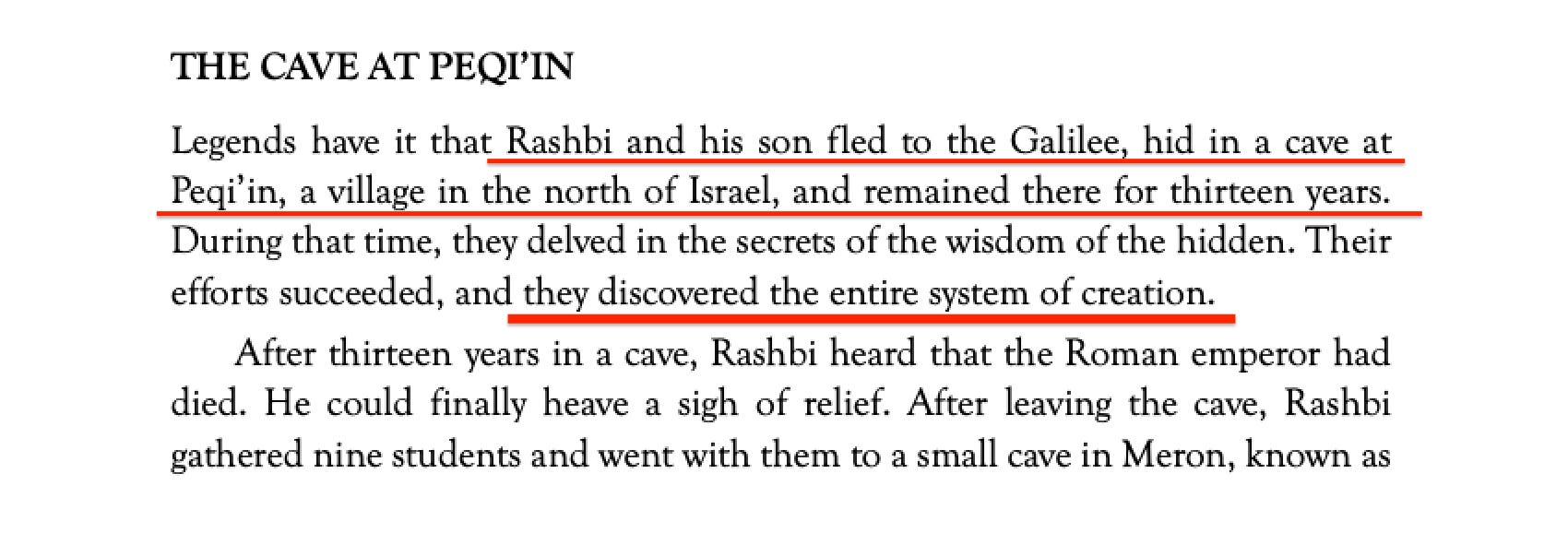
Laitman doesn’t present the Zohar as religion. He presents it as systems theory. In his prologue, he details that Rashbi and his son spend years in a cave and ‘discovered the entire system of creation’. That framing matters. Laitman’s book tells you to read the Zohar as a technical document describing how reality is structured — and controlled.
This is what Burstein and Negoita formalise — Laitman’s structure, rendered in systems theory and cybernetics, applied to economics, AI, and governance. They acknowledge him directly.

Three Substrates, One Grammar
The KST papers explicitly address three domains: knowledge systems43 (including AI), behavioural economics44 (governing human behaviour), and ‘humanistic systems’45 (encompassing social governance). These three domains correspond to three substrates where the same control grammar can operate.
The first substrate is the economy, which governs material behaviour and determines what you can buy, sell, and access. The second is artificial intelligence, which governs your information environment and shapes what you can see and know. The third is brain-computer interfaces46, which govern neural activity itself and will eventually shape what you can think and perceive.
Each substrate develops its own ethics layer that occupies the crown position in the hierarchy.
Global ethics47, expressed through frameworks like the Sustainable Development Goals, ESG criteria, and climate justice, defines permitted economic behaviour.
AI ethics48, expressed through alignment research, safety protocols, and fairness standards, defines permitted information processing.
Neuroethics49, an emerging field governing cognitive enhancement and neural intervention, will define permitted modifications to thought itself.
Each ethics domain creates its own clearinghouse of accredited authorities who determine what counts as compliant, and each connects to finance as the ultimate enforcement layer.


The Ethical Clearinghouse
The gatekeeper in any of these systems need not pay for what happens below, need not profit directly from the operations, and need not occupy any of the working rails. The gatekeeper need only clear — certify who meets the ethical standard and who does not.

In Gaza, Israel performs this function for reconstruction, with every NGO, contractor, and aid worker required to pass Israeli vetting to operate. In CBAM, GLOBAC5051 accredited verifiers perform this function for carbon claims, with every importer required to pass verification to avoid punitive penalties.
In AI governance, ethics boards and safety committees perform this function for model deployment. In the emerging field of brain-computer interfaces, neuroethics committees will perform this function for neural interventions.
The trajectory is obvious: ethics becomes computable52.

All of these connect to the same ultimate enforcement layer: finance. Fail carbon verification and you face cost-of-capital penalties. Fail AI ethics review and you receive no deployment approval. Fail neuroethics review and you receive no insurance coverage. Fail territorial vetting and you receive no reconstruction contracts.
The ethical clearinghouse occupies the crown of the hierarchy while finance occupies the foundation — ethics defines what is permitted, and finance enforces the boundaries.

The Convergence
The ethics layer draws from multiple streams that flow into the same crown.
Moses Hess, writing in the mid-nineteenth century, argued against egoism and for what he called ethical socialism53 — transformation of society through moral, economic, and spiritual renewal. He influenced Marx and Engels, who adopted the economic analysis while setting aside the ethical-spiritual emphasis.

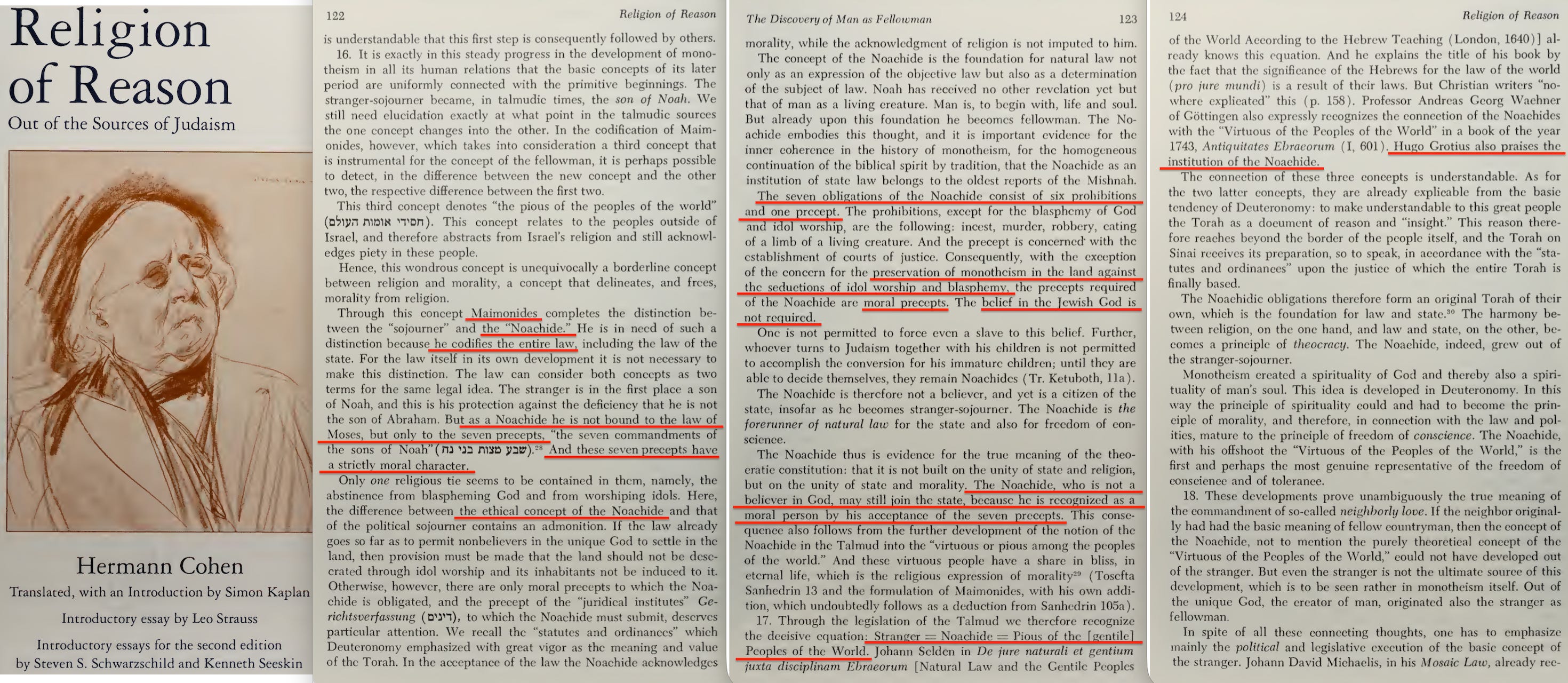
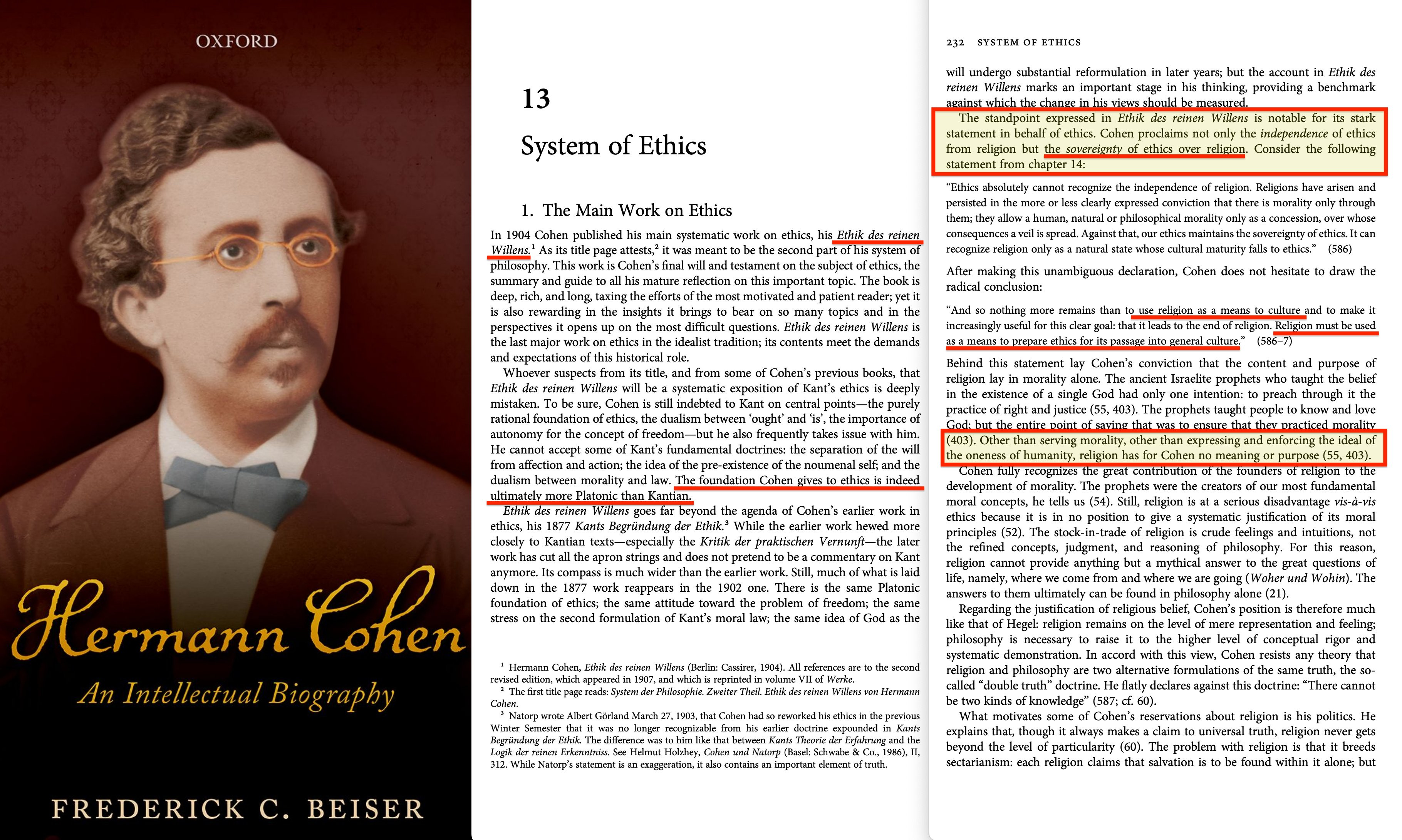
Hermann Cohen, the Neo-Kantian philosopher who founded the Marburg school, took this further. In his Ethics of Pure Will54, Cohen argued that moral agency generates its purpose from within, aligning individual aims with universal law. Crucially, in his final work Religion of Reason55, Cohen explicitly grounded this universalism in the Noahide laws — the seven commandments he saw as a basic moral foundation binding on all humanity.

The ethics required universality56 — and endless refinement. He called this the ‘eternal task’: always correcting, never arriving at a final state. Law and morality perpetually move toward an ideal they never reach. The gap between what ‘is’ and what ‘ought’ to be never closes — which means the work of correction never ends. This provides philosophical justification for permanent governance: if ethics is never finished, neither is the authority that administers it.
Hannah Arendt identified this merger of law and ethics as the defining feature of the total state57. Cohen, somehow, made that merger sound like progress.

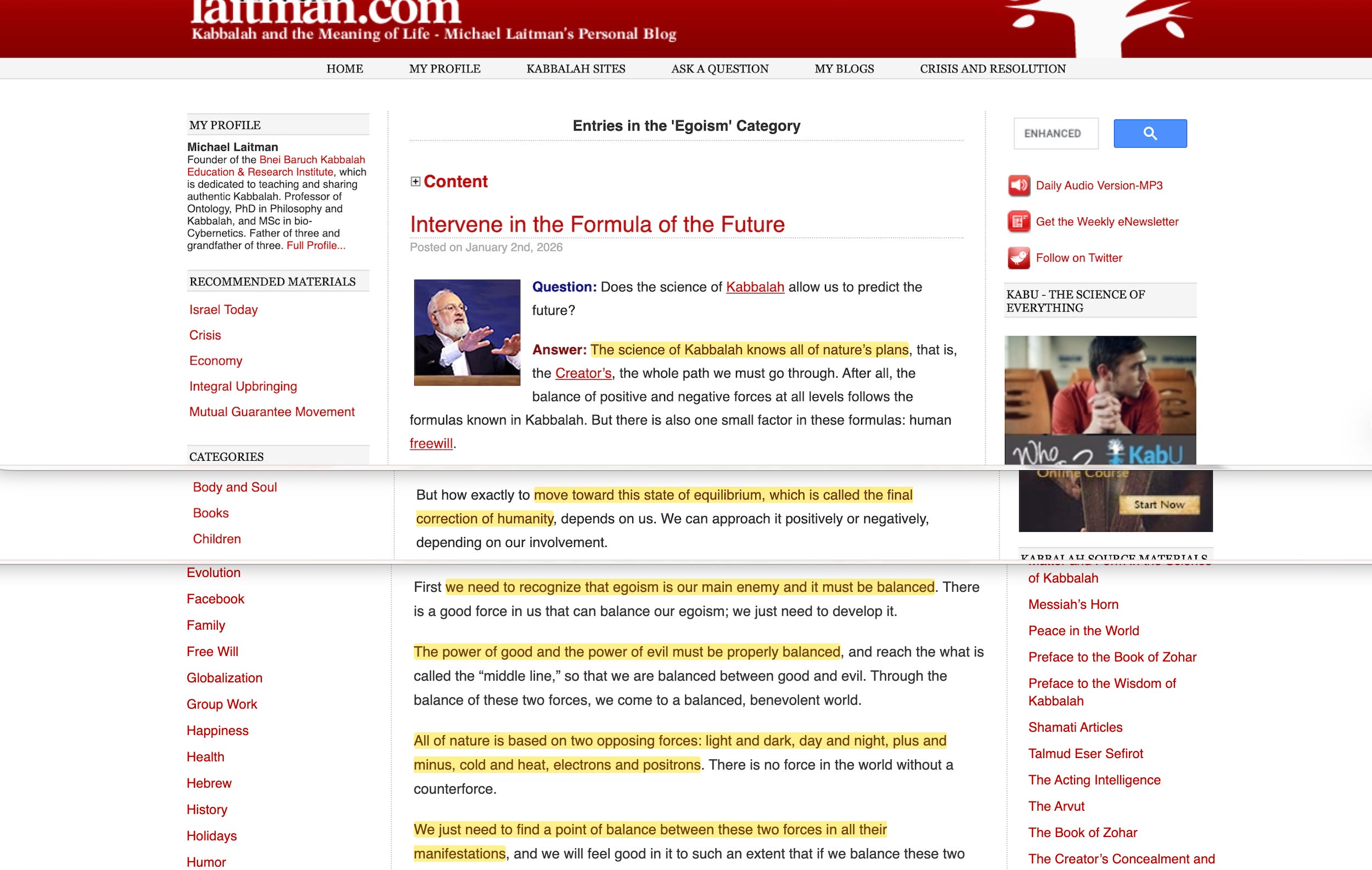
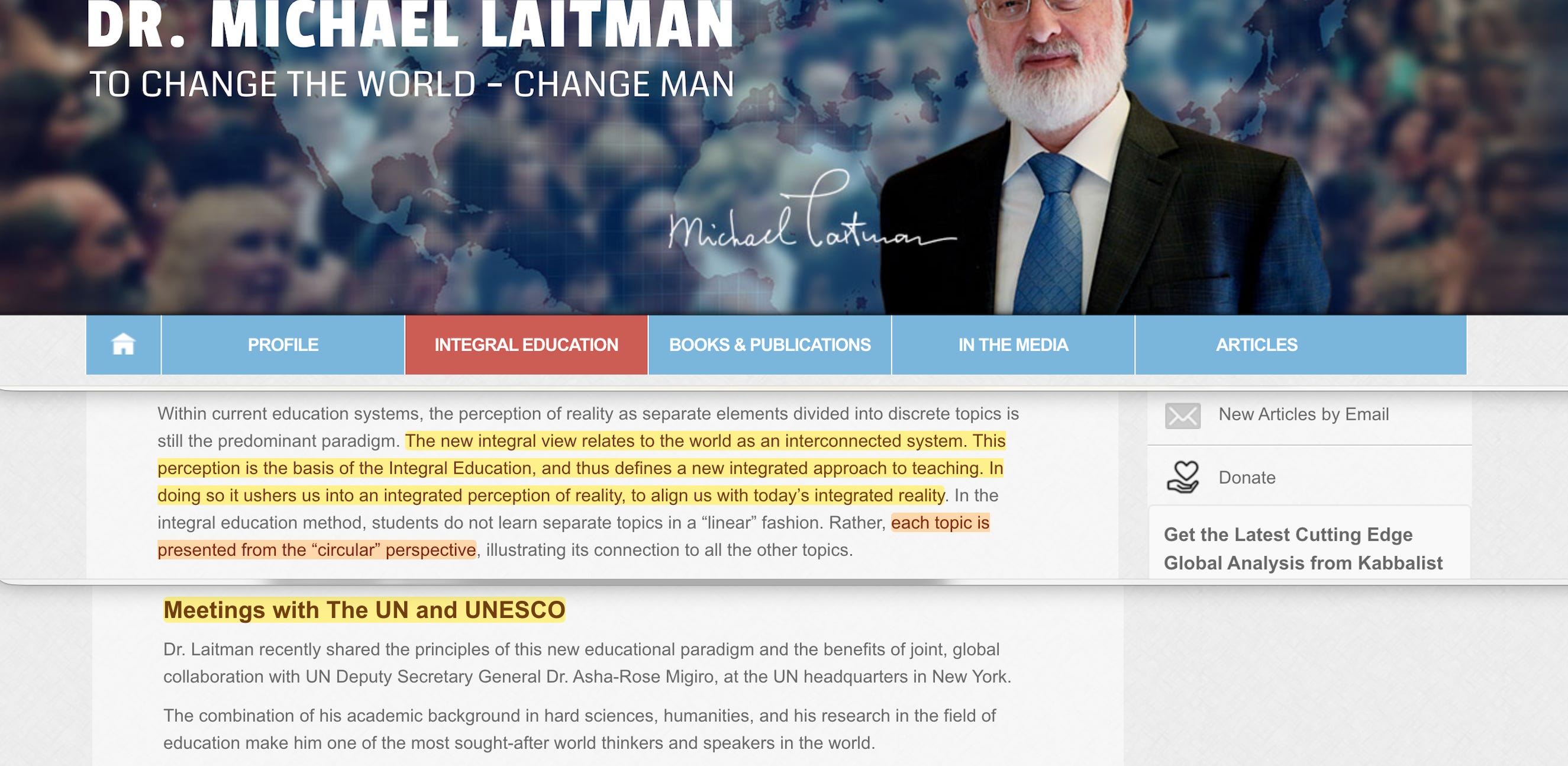
Laitman centres his entire teaching on the same opposition: egoism is the disease58, altruism the cure. He has developed what he calls Integral Education59, a pedagogical programme designed to restructure consciousness toward perceiving ‘interdependence’ as primary reality60.

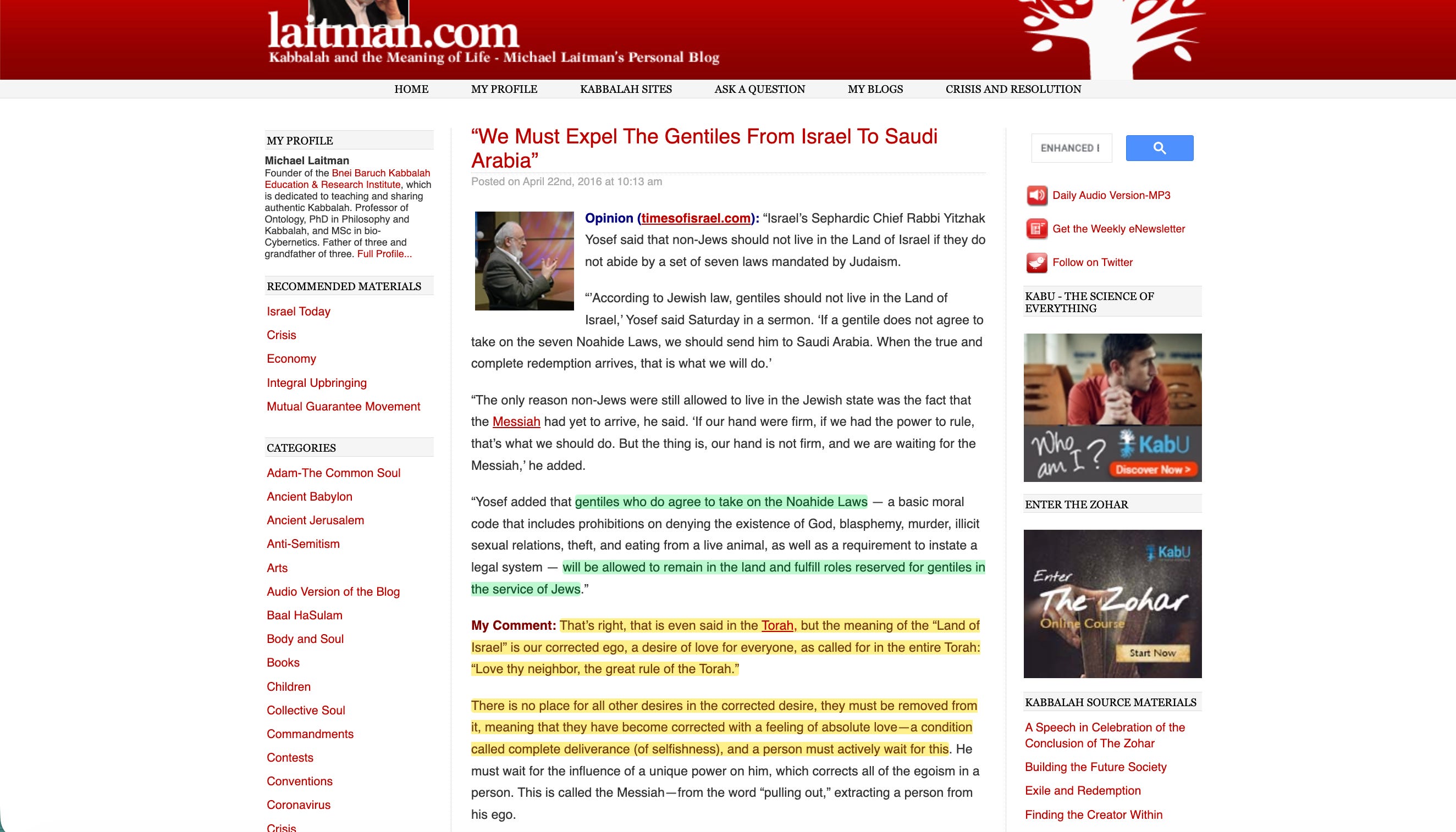
Laitman also redefines traditional religious categories in ways that globalise them. Commenting on the statement that ‘gentiles who do agree to take on the Noahide Laws… will be allowed to remain in the land… and fulfill roles reserved for gentiles in the service of Jews’, he writes61:
That’s right, that is even said in the Torah, but the meaning of the ‘Land of Israel’ is our corrected ego, a desire of love for everyone, as called for in the entire Torah: ‘Love thy neighbor, the great rule of the Torah.’
There is no place for all other desires in the corrected desire, they must be removed from it… He must wait for the influence of a unique power on him, which corrects all of the egoism in a person. This is called the Messiah — from the word ‘pulling out’, extracting a person from his ego.
In this version, ‘Israel’ becomes a state of consciousness achieved through correction of egoism — anyone who completes Integral Education becomes ‘Israel’, regardless of ethnicity or geography. The ‘Land of Israel’ is wherever the corrected collective exists, which is to say globally.
The Noahide Laws62 thus become the minimum compliance threshold for those who have not fully transformed but wish to participate in the global system. This maps directly onto the conditional access architecture documented in the previous essays: the fully corrected receive full participation, those who accept the basic code receive conditional access, and those who refuse both are excluded entirely — not from a territory, but from economic life itself.
Yet, the merger of Cohen and Laitman is significant.
In Cohen’s Religion of Reason, he describes a three-tier structure for the territorial state: (1) citizens of Israel who believe in God occupy the top tier; (2) Noachides — strangers who accept the seven moral laws but do not believe in the Jewish God — receive conditional residence; (3) everyone else is excluded.
Cohen says Noachides need not believe, yet two of the seven prohibitions are blasphemy and idol worship63. You don’t have to affirm monotheism, but you cannot practice anything else.
Cohen’s effective choice is binary: the God of Israel or no God at all (atheism). Every other religious tradition is structurally excluded.
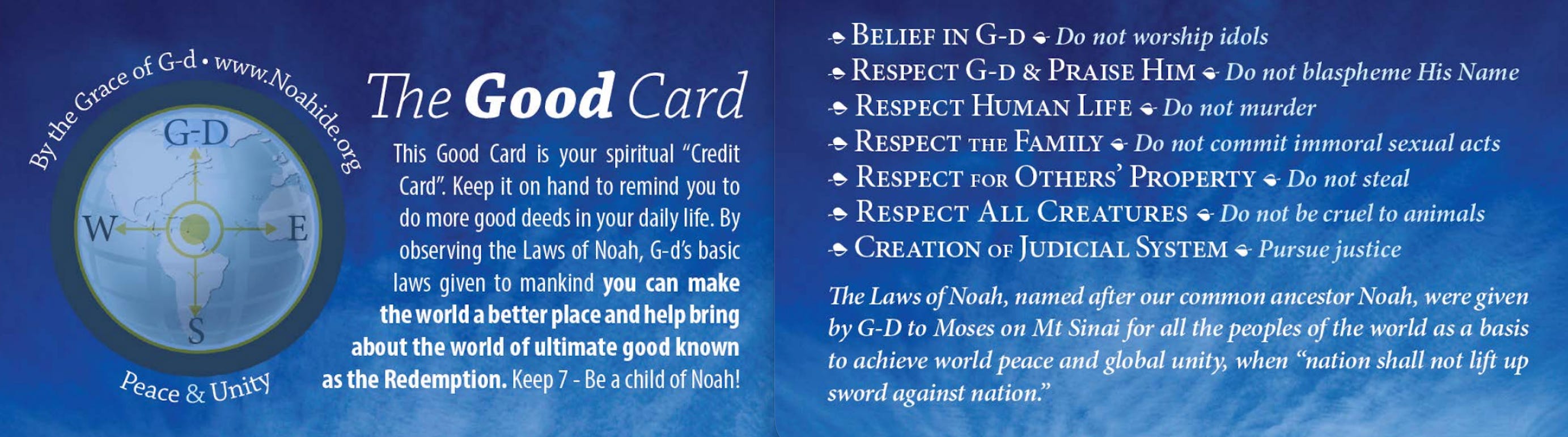
Laitman takes this tiered membership template and makes it global. If ‘Israel’ is wherever the corrected collective exists, and the corrected collective is defined by completion of Integral Education, then the Noahide framework applies where that system operates: everywhere.
The prohibition on idol worship translates readily: no competing value systems. The structure that governed who could live in the land now governs who can participate economically, and ‘inclusively’.
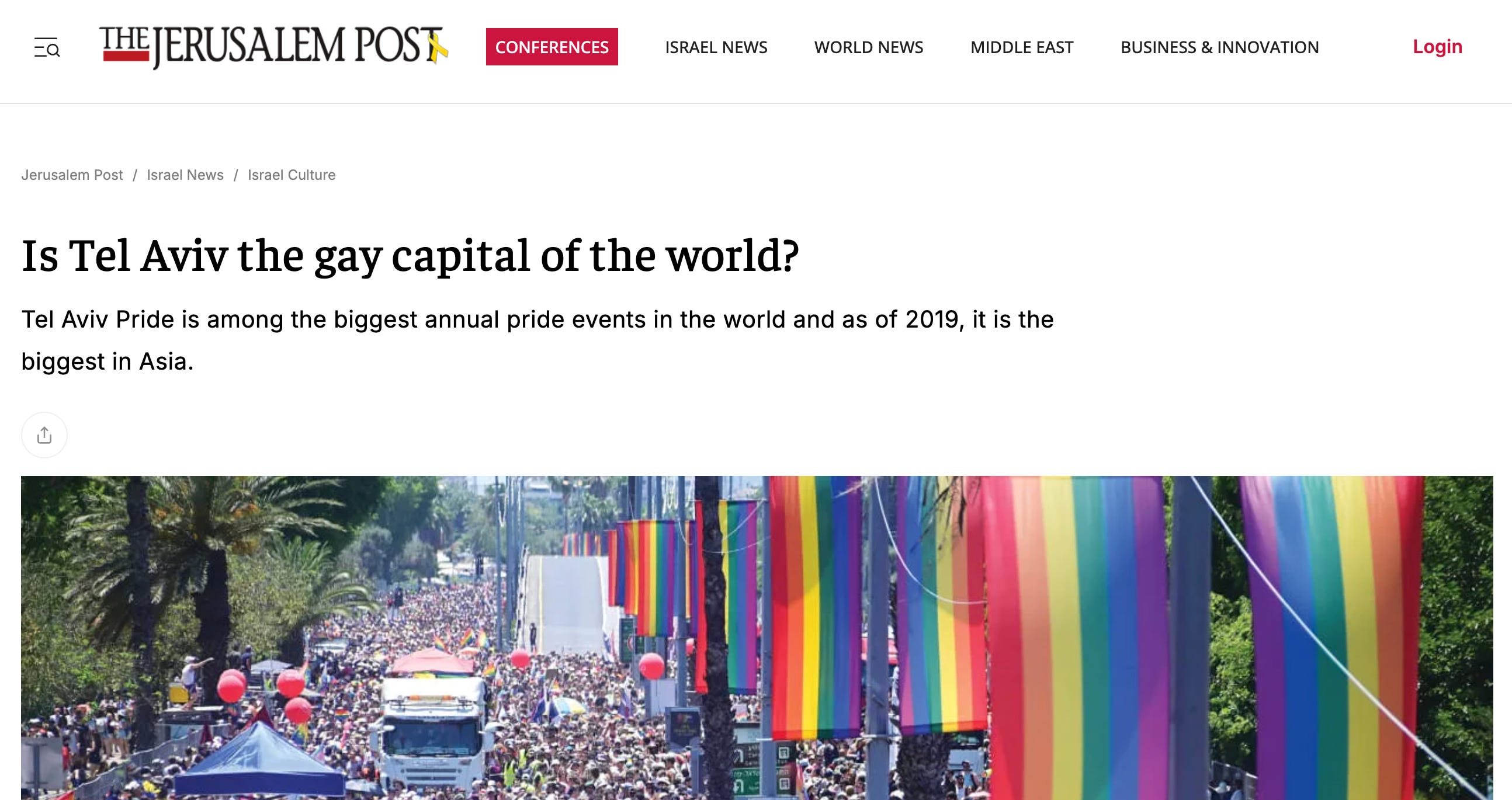
Note what this means: the framework that borrows the name ‘Israel’ would exclude most actual Israelis. The liberal population of Tel Aviv64 would be considered ‘gentile’ by Laitman’s definition, if even that. So would most of the Jewish population worldwide. ‘Israel’ here is not an ethnicity or a nation-state. It is whoever has eliminated any sense of ‘egoism’.
Meanwhile, the Israeli state is currently drafting the ultra-Orthodox into military service65 — the very population that would actually qualify under Laitman's definition. The secular state is in open conflict with its religious citizens.

The framework consequently contains its own obsolescence. Once correction is universal, the intermediate categories — including ‘Israel’ itself — become scaffolding to be discarded.
The move to ‘One Religion’ can finally come to pass. The architects of this system care for religion only to the extent of its political utility.
This returns explicitly to Hermann Cohen’s hierarchy: the sovereignty of ethics over religion. As he argued, faith has no independent meaning; it exists solely as a ‘means to prepare ethics for its passage into general culture’66 — a vessel to be used until the ethical system is installed.

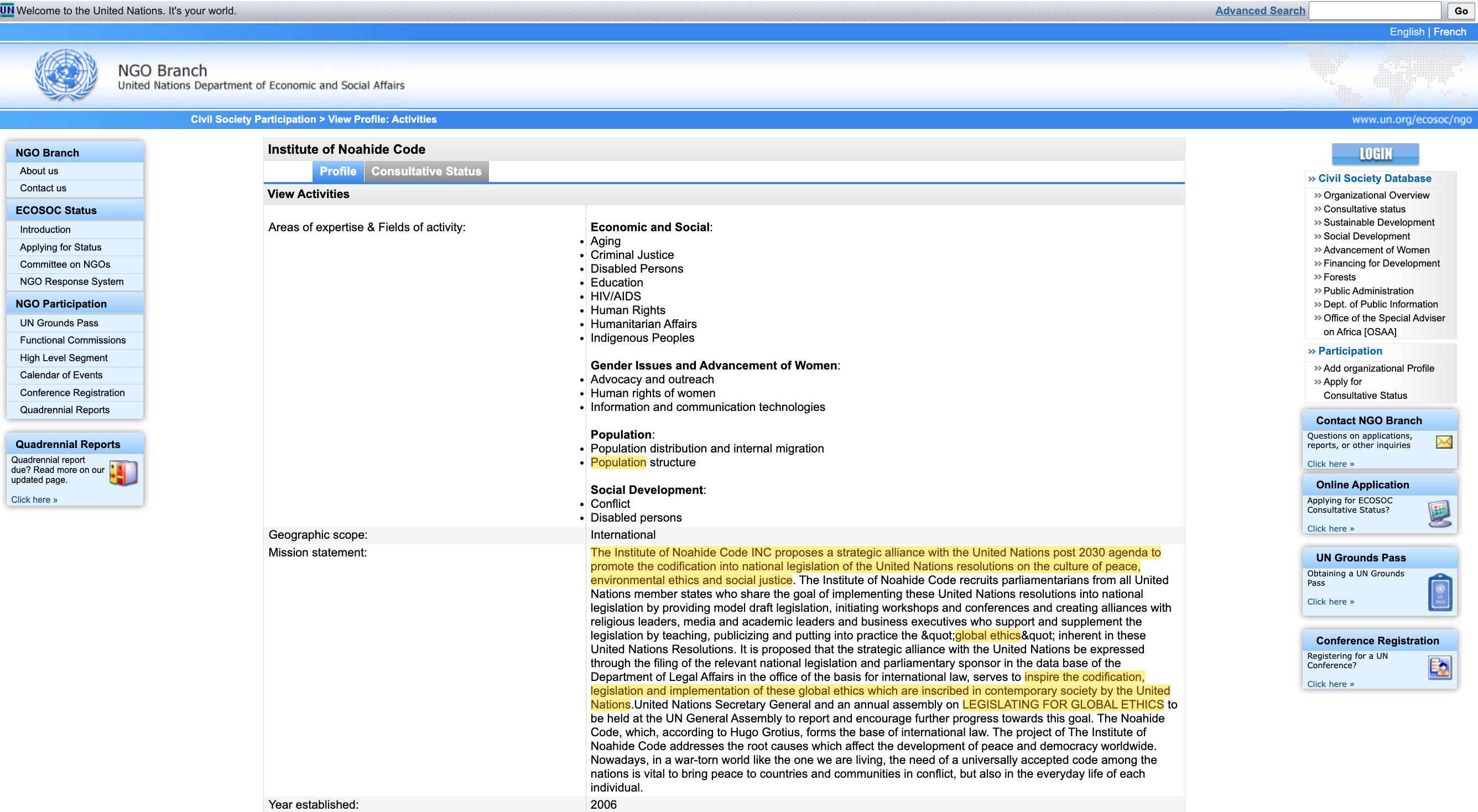
In the meantime, the framework has institutional address. The Institute of Noahide Code67 holds UN ECOSOC General Consultative Status and explicitly works to codify UN resolutions on ‘environmental ethics’ and ‘social justice’ into national legislation — what they describe as ‘Legislating for Global Ethics’68. Their materials further cite Hugo Grotius, the father of international law, whom Cohen also references in Religion of Reason as praising the Noahide institution.

The educational vision is delivered through UNESCO69. The organisation’s Education for Sustainable Development framework70 and its Global Citizenship Education71 programme pursue strikingly similar objectives: reshaping how individuals understand their relationship to the collective, the planet, and global governance structures.
The terminology may differ across these programmes, but they converge on the same destination — education as the mechanism for producing subjects who perceive collective imperatives as self-evident rather than externally imposed.
Bogdanov’s Integral Man72 in the ‘interdependent’ Human Super-Organism73.

Pope Francis’s 2015 encyclical Laudato Si74 brings Catholic social teaching into the same convergence. The document explicitly cites the Earth Charter, which calls for ‘planetary ethics’ and ‘universal responsibility’. Francis builds his argument around ‘integral ecology’, the idea that everything is connected and that separation of individual from whole constitutes the fundamental problem.


The encyclical draws on the vision of Teilhard de Chardin, a Jesuit priest who described humanity evolving into a single thinking layer around the Earth and converging toward an ‘Omega Point’ of unified consciousness.

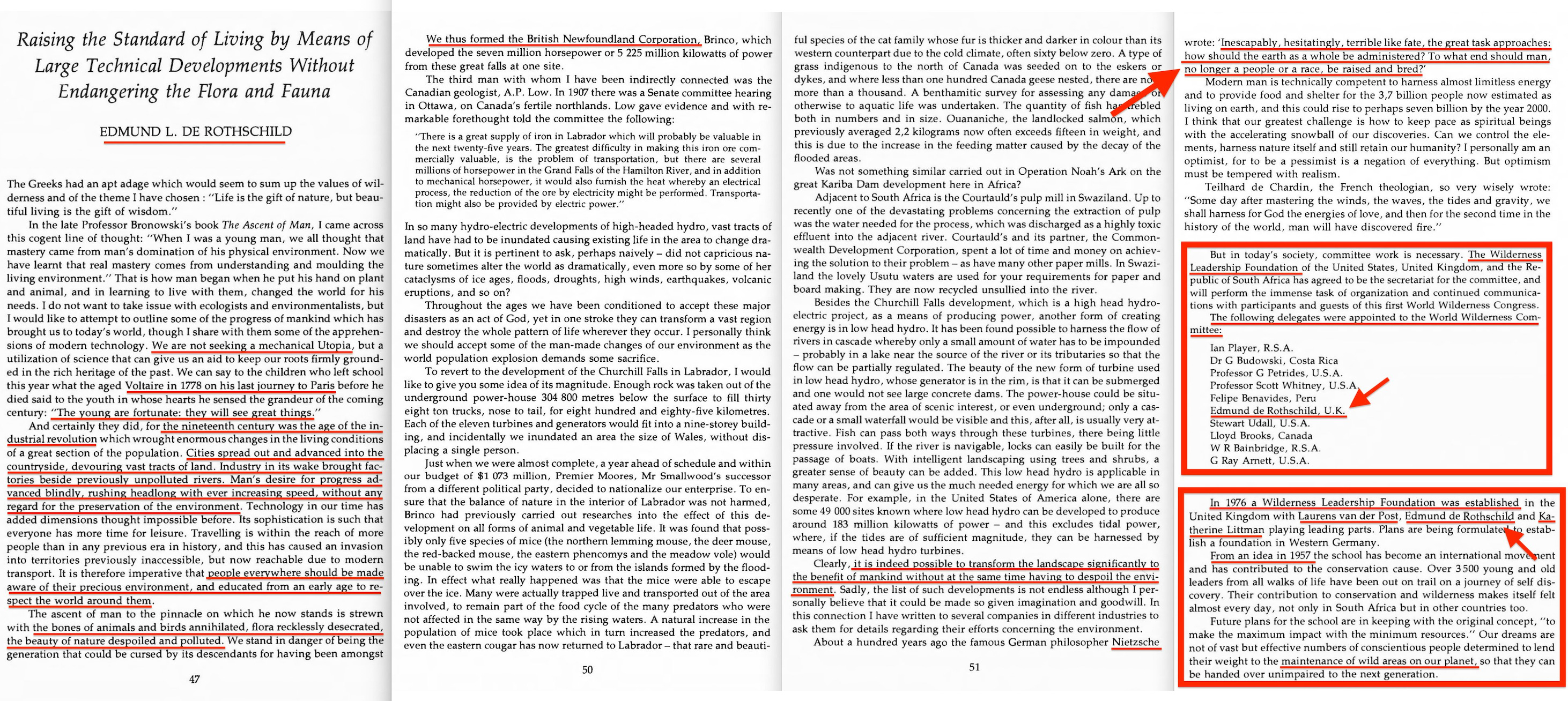
This convergence of the Mystical and the Financial has a specific birthdate. In 1977, at the first World Wilderness Congress75, Edmund de Rothschild stood on stage with the mystic Laurens van der Post (mentor to the future King Charles III76). Van der Post invoked Teilhard de Chardin to argue that the biosphere was the vessel of the global soul. Rothschild argued that this vessel must therefore be treated as 'Natural Capital'.
That was the moment the circuit closed. The 'Noosphere' of the mystic became the asset class of the banker. The 'Inclusive Capitalism' we see today is simply the implementation of that 1977 merger: using the moral authority of the 'whole' to justify the financial enclosure of the parts.

In 2017, Jeffrey Sachs — architect of the UN Sustainable Development Goals framework — published ‘Ethics in Action for Sustainable Development’ with direct contribution from Pope Francis through the Pontifical Academy of Sciences, framing the SDGs as ethical imperatives and explicitly bridging Catholic social teaching with UN governance architecture77.

These streams are united through the same opposition:
Egoism against altruism
Individual against collective
Separation against integration.
Each frames the individual as the problem and integration into a managed collective as the solution. Each connects to the same enforcement layer — Laudato Si calls for aligned economic structures, the SDGs create measurable targets flowing into ESG frameworks, UNESCO’s programmes prepare populations to accept collective imperatives as natural — and Laitman’s Integral Education pursues the same transformation through different channels.

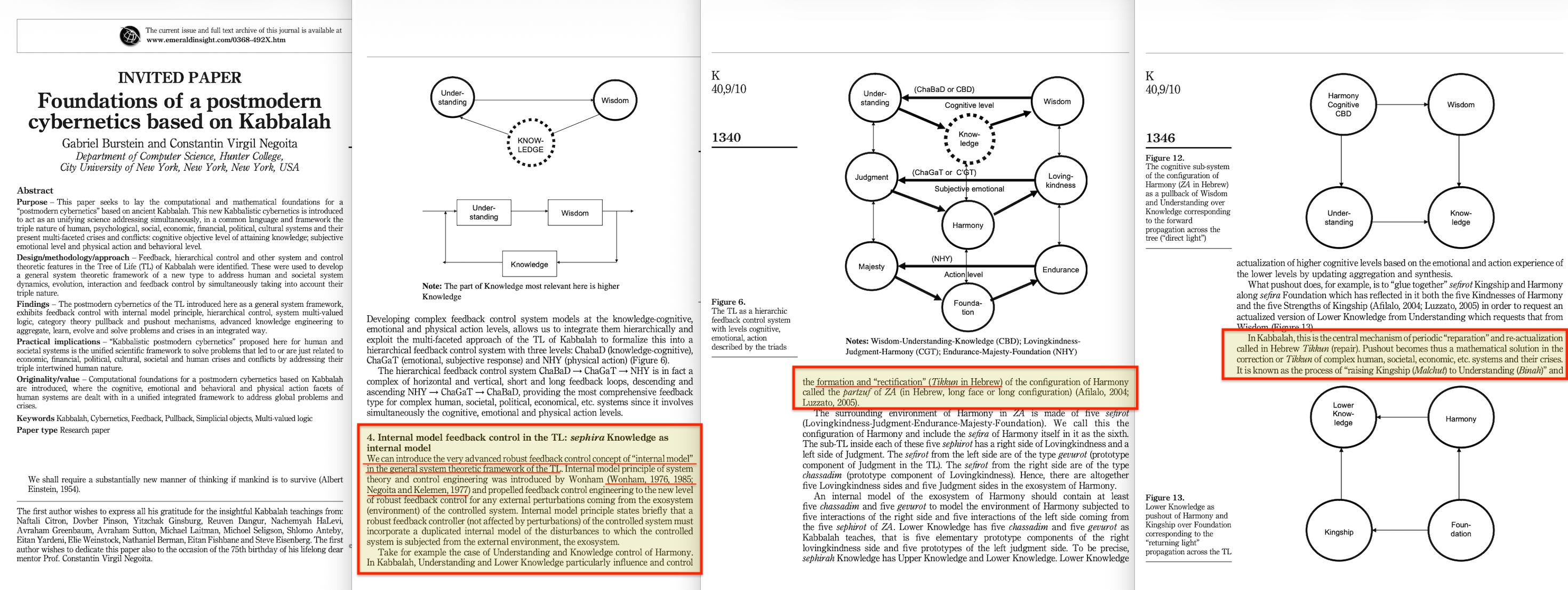
The KST papers make the connection explicit. Burstein and Negoita identify Tikkun — the Kabbalistic concept of repair or correction — as the central feedback mechanism:
In Kabbalah, this is the central mechanism of periodic ‘reparation’ and re-actualization called in Hebrew Tikkun (repair). Pushout becomes thus a mathematical solution in the correction or Tikkun of complex human, societal, economic, etc. systems and their crises.
The term ‘sustainable’ is Tikkun in secular translation, performing the same operation of identifying systemic imbalance, measuring deviation from targets, and applying corrections until the system is ‘repaired’. Sustainable development, climate action, and ESG metrics are all presented as Tikkun, as healing the planet78.
The coefficients become corrections rather than restrictions. The exclusions become ‘participation in repair’ rather than punishments. This framing makes opposition appear as ‘unethical’ obstruction of the healing process itself.

The ethics crown is a convergence point where multiple traditions meet, each contributing legitimacy, each reinforcing the frame that makes opposition appear selfish rather than principled.
But what does ‘ethics’ actually mean in this architecture? It reduces ultimately to balance and stability. The ethics clearinghouse does not determine right and wrong in any traditional moral sense — it determines what threatens system equilibrium and must be corrected.

Ethical behaviour becomes behaviour that maintains stability, while unethical behaviour becomes behaviour that destabilises. Egoism is a perturbation, while ‘altruism’ is integration that serves system equilibrium. Dissent is destabilising, while individual autonomy becomes a variable to be managed. The moral vocabulary makes system maintenance sound virtuous, but underneath the language lies control engineering — feedback loops maintaining homeostasis, with ‘ethics’ as the branding that forecloses objection.
And Laitman names this explicitly. In Kabbalah, Science and the Meaning of Life79, he writes that ‘the best state in which we can get along with the world is that of equilibrium’, which ‘science refers to as ‘homeostasis’’. He then offers a striking image of what this equilibrium looks like: ‘It can only be compared to being a fetus in my mother’s womb: everything exists only to care for me; there is no need to erect any defenses’.
Laitman’s ideal state is consequentially total dependency with no autonomy — enclosed, provided for, … unable to leave.
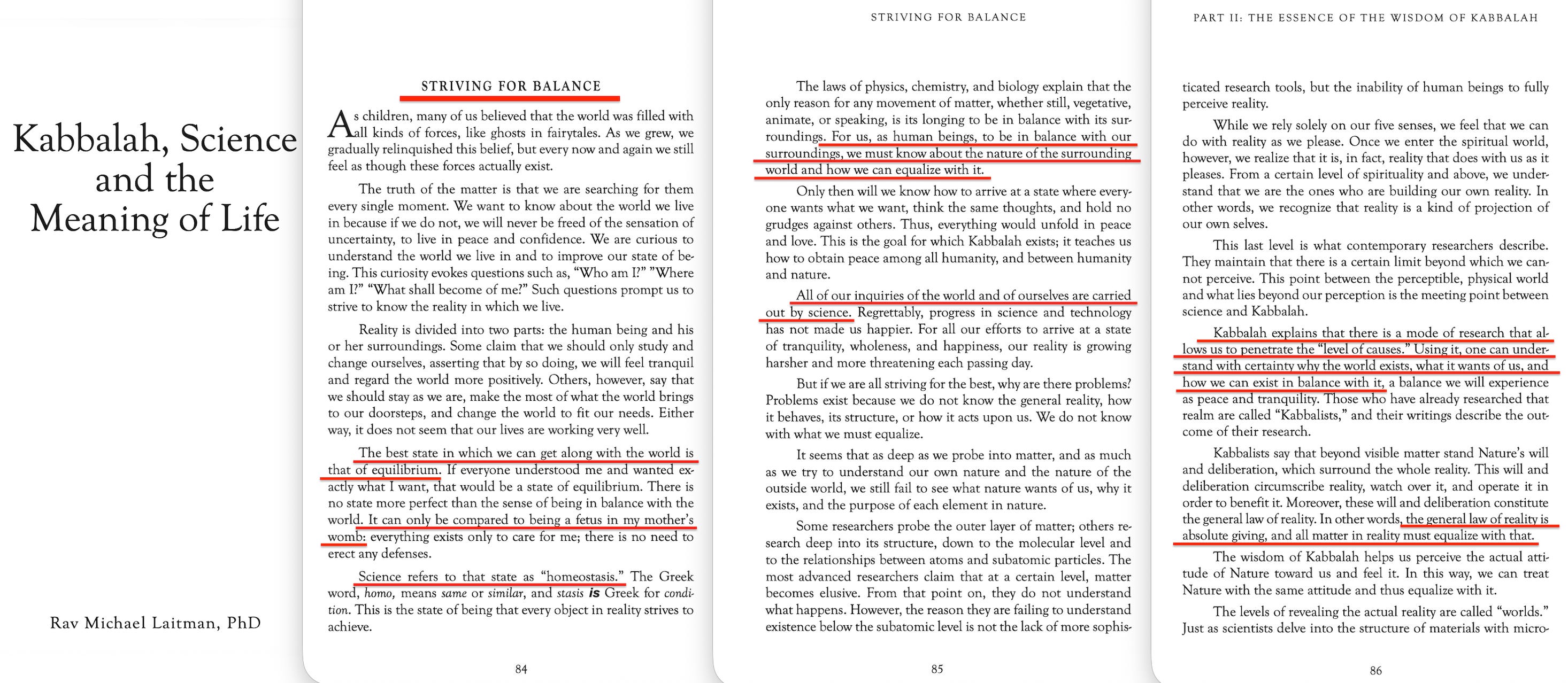
This is Spaceship Earth as a womb. But when considering life at the planetary scale, this homeostasis has a name: Gaia.
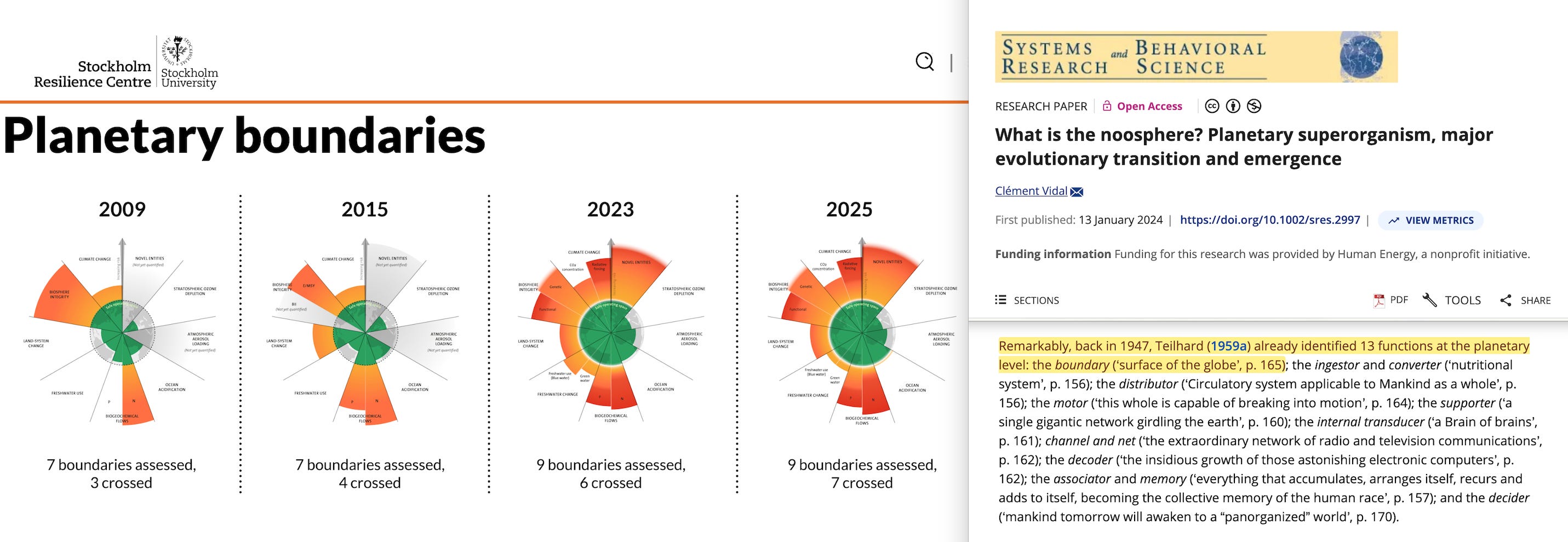
Lovelock’s hypothesis frames Earth itself as a self-regulating organism maintaining conditions for life. The planet becomes a single system, human activity becomes a potential perturbation, and correction becomes a biological imperative rather than a policy choice.

Planetary boundaries80 — the measurable parameters the Earth system must stay within — become the physiological tolerances of Teilhard’s living organism81. Your carbon budget is your allocation of perturbation allowance. Exceed it and you are ‘destabilising the planetary body’. The framing transforms economic behaviour from individual choice into potential pathology, with the ethics clearinghouse functioning as a diagnostic authority determining who is making the planet sick.

The landscape ecologist Zev Naveh formalised this as the ‘Total Human Ecosystem’82 — a framework in which human populations are not managers of nature but components within it, their behaviour a variable to be optimised alongside soil chemistry and species distribution.
The framing sounds ‘holistic’, but operationally it means you are part of what gets managed.

‘Stability’ itself is the master term that unifies these domains. In finance, the Financial Stability Board and the Bank for International Settlements coordinate global policy around this single word, with central bank mandates explicitly including financial stability and macroprudential regulation addressing systemic stability rather than individual soundness.
The same word governs climate policy (planetary stability), biology (homeostasis), social policy (social stability/justice83), and control theory (equilibrium). ‘Stability’ does the same rhetorical work as ‘ethics’ — it forecloses objection. Who could argue against stability? But operationally, stability means predictable, controllable, measurable, within parameters, non-disruptive.
Instability is threat. And threats must be corrected.
And that requires a steady stream of surveillance data, and the capacity to act on it.


The Circle Closes
Follow these threads to where they converge.
From Karl Marx comes the insight that systems can be understood as totalities and governed toward defined objectives.
From Vladimir Lenin comes the operational principle of accounting and control — comprehensive measurement of all flows and central direction based on that measurement.
From Alexander Bogdanov comes the universal organisational (systems) science spanning all domains.
From Wassily Leontief comes the mathematical technique for accounting every input and output across an entire economy.
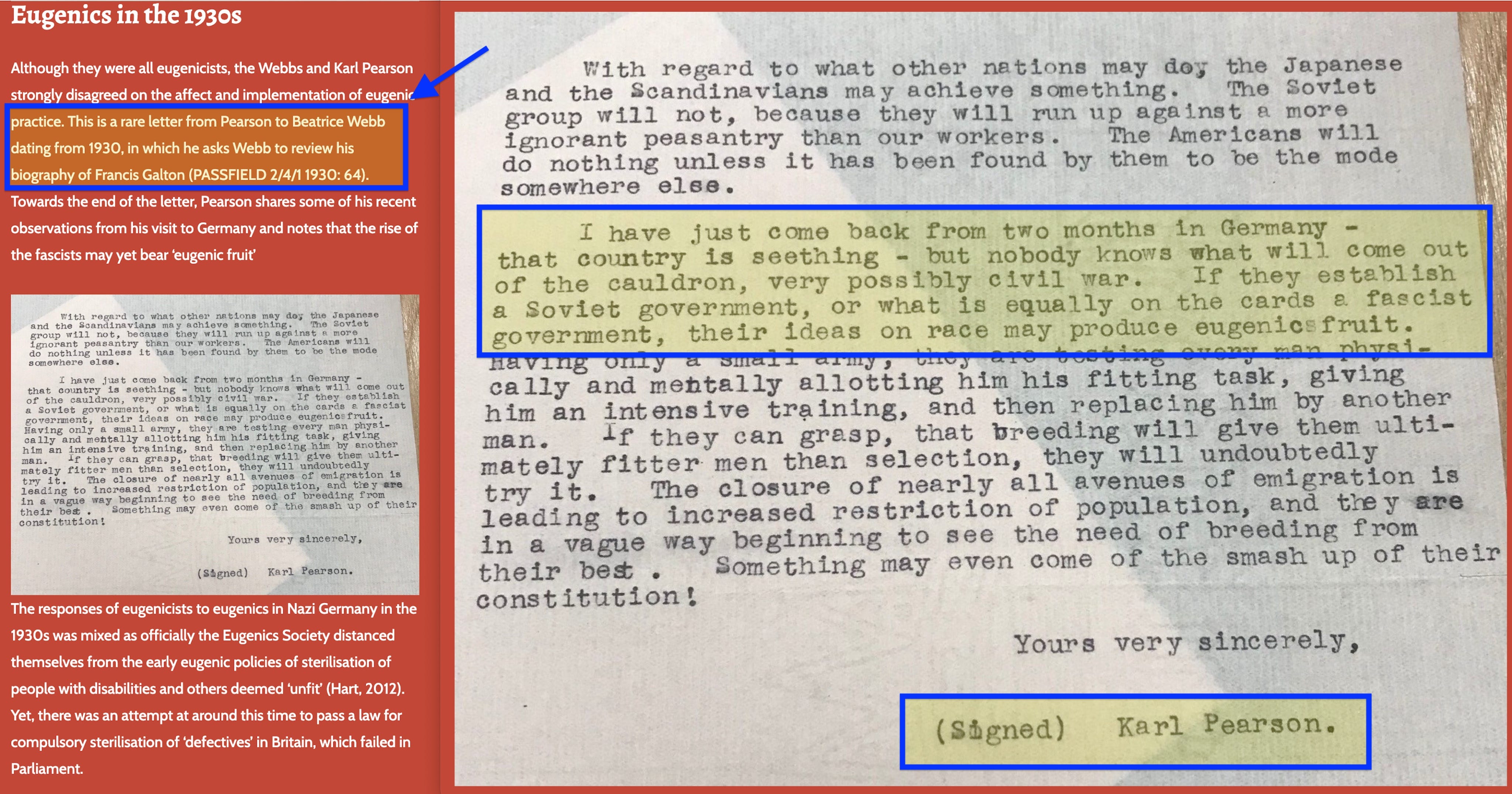
From Karl Pearson comes the statistical apparatus84 — correlation, distribution, population measurement — and the belief that human characteristics are variables to be quantified and optimised85. This metric view was foundational, not accidental; Pearson, after all, was a committed eugenicist.
From Norbert Wiener comes cybernetic feedback loops that steer systems toward target states through continuous measurement and adjustment.
From CS Holling comes the operational synthesis: Adaptive Management. It fuses the modelling of General Systems Theory, the surveillance processing of input-output analysis, and the feedback loops of cybernetics into a single governing framework — one that is now increasingly executed by AI.
From Michael Laitman comes the explicit political vision of humanity as a single system requiring correction through integration of individual into collective — what he openly calls ‘altruistic communism’86.
From Gabriel Burstein and Constantin Negoita comes the formal Kabbalah System Theory synthesis: all of the above, unified as a recursive three-level control topology applicable to AI, economics, and human behaviour simultaneously, with the authors explicitly calling for its adoption as governance architecture.
Moses Hess is the hinge where both lineages meet. In the 1840s, Hess drew Marx toward communism while developing his own vision of ethical socialism — the abolition of selfishness as the path to collective harmony. Marx took the economics but set aside the ethics. Laitman, a century and a half later, keeps the ethics and synthesises Hess’s vision with Lurianic Kabbalah.
The operational lineage runs from Hess through Marx through Lenin through Bogdanov through Leontief to contemporary ‘indicator governance’, easily observable during COVID-19.

The theological lineage runs from Hess through Teilhard through Laitman through KST to the infrastructure being built today. Both converge at the same destination: comprehensive accounting of all flows, central coordination toward defined objectives, feedback mechanisms to correct deviation, and the abolition of ‘egoism’ as the governing ethic.
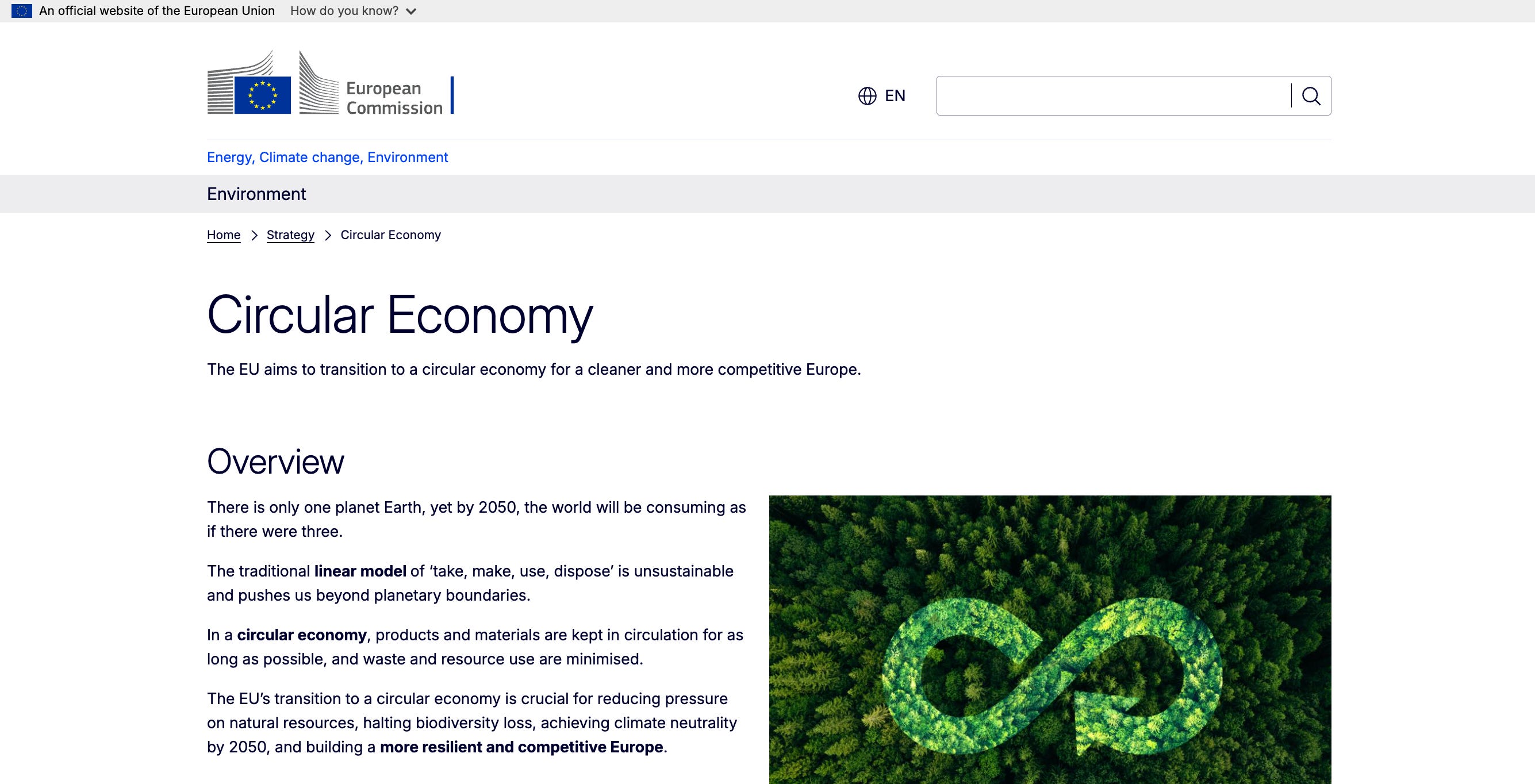
The circle that closes is literal. Pearce and Turner coined ‘Circular Economy’ in 199087, building on Boulding’s ‘Spaceship Earth’88, which built on closed-loop (circular) systems theory, which further developed Bogdanov’s Tektology, which established the framework for Lenin’s ‘accounting and control’.
The EU’s Circular Economy framework89 — of which CBAM is part of the enforcement mechanism — is the contemporary implementation of what Hess envisioned and Lenin operationalised.

The destination we arrive at might best be understood as cybernetic communism: feedback control applied to collective governance, with individuals integrated into a managed whole, behaviour continuously measured against centrally-defined standards, and finance serving as the enforcement mechanism.
The word ‘communist’ may sound provocative, but Laitman himself uses the term. The KST papers cite him, the infrastructure matches what he describes, and the architecture is founded on the logic of prominent communists: Marx, Bogdanov, and Lenin.
All of these are closed-loop systems by design. Cybernetic feedback requires closure — surveillance sensors measuring against targets, controllers adjusting inputs, no exit from the circuit. At the planetary scale, this closure has a name: Spaceship Earth.

The concept, developed by Kenneth Boulding and Buckminster Fuller in the 1960s, frames Earth as a closed system with finite resources requiring central management. A spaceship needs a captain, a control room, resource allocation, and crew who understand they cannot leave. The framing makes exit unthinkable by definition and transforms consumption into a collective problem requiring collective solution.

Your carbon budget becomes your allocation of the spaceship’s finite capacity. Egoism — wanting more than your share, refusing the quota — becomes not merely antisocial but existentially threatening to everyone aboard. The closed loop is both technical architecture and moral container.

However, should you shift from operating in the present to future prediction through advanced AI and Digital Twins, the trajectory is better understood as Anticipatory Governance.
The catch is that this system relies on notoriously imprecise ‘black box’ modelling. To compensate for the uncertainty, it requires… complete societal control.


Whether you prefer to call this destination ‘stakeholder capitalism’, ‘inclusive capitalism’, ‘sustainable development’, or prefer Laitman’s ‘integral society’, the underlying architecture remains the same: recursive control from global to individual scale, ethics as the legitimiser, finance as the enforcer, and populations reframed as beneficiaries to be processed rather than citizens to be consulted.
The term ‘inclusive capitalism’ — promoted through the Council for Inclusive Capitalism with the Vatican, which incredibly brings together Pope Francis with executives from Mastercard, Bank of America, BP, and other major corporations — reveals the logic most clearly: inclusion is conditional.
You are included if you align.

The word that sounds like welcome functions as a conditional gate. And the gate connects directly back to Laudato Si, integral ecology, and the ethics convergence we have already discussed.
In Category Theory, a diagram is said to ‘Commute’ when all paths lead to the same result. If you go through the Ethics Rail, you arrive at ‘Stability’. If you go through the Finance Rail, you arrive at ‘Stability’. If you go through the Carbon Rail, you arrive at ‘Stability’.
The KST papers explicitly model the Tree of Life as a Commutative Diagram. This means the system is architected so that no matter which path of dissent or compliance you take, the outcome — system integration — remains the same. The ‘repair’ is simply the mathematical forcing of this commutativity. Dissent is treated as a ‘failure to commute’ — a mathematical error to be corrected.


The Bridge
CBAM operates at the individual and commercial scale, creating permission gates for market access, deploying six functional rails, empowering accredited verifiers to define truth, and enforcing through finance. Wallet-level conditionality through digital currencies waits on the horizon, with the potential to make individual behaviour auditable against centrally-defined quotas.

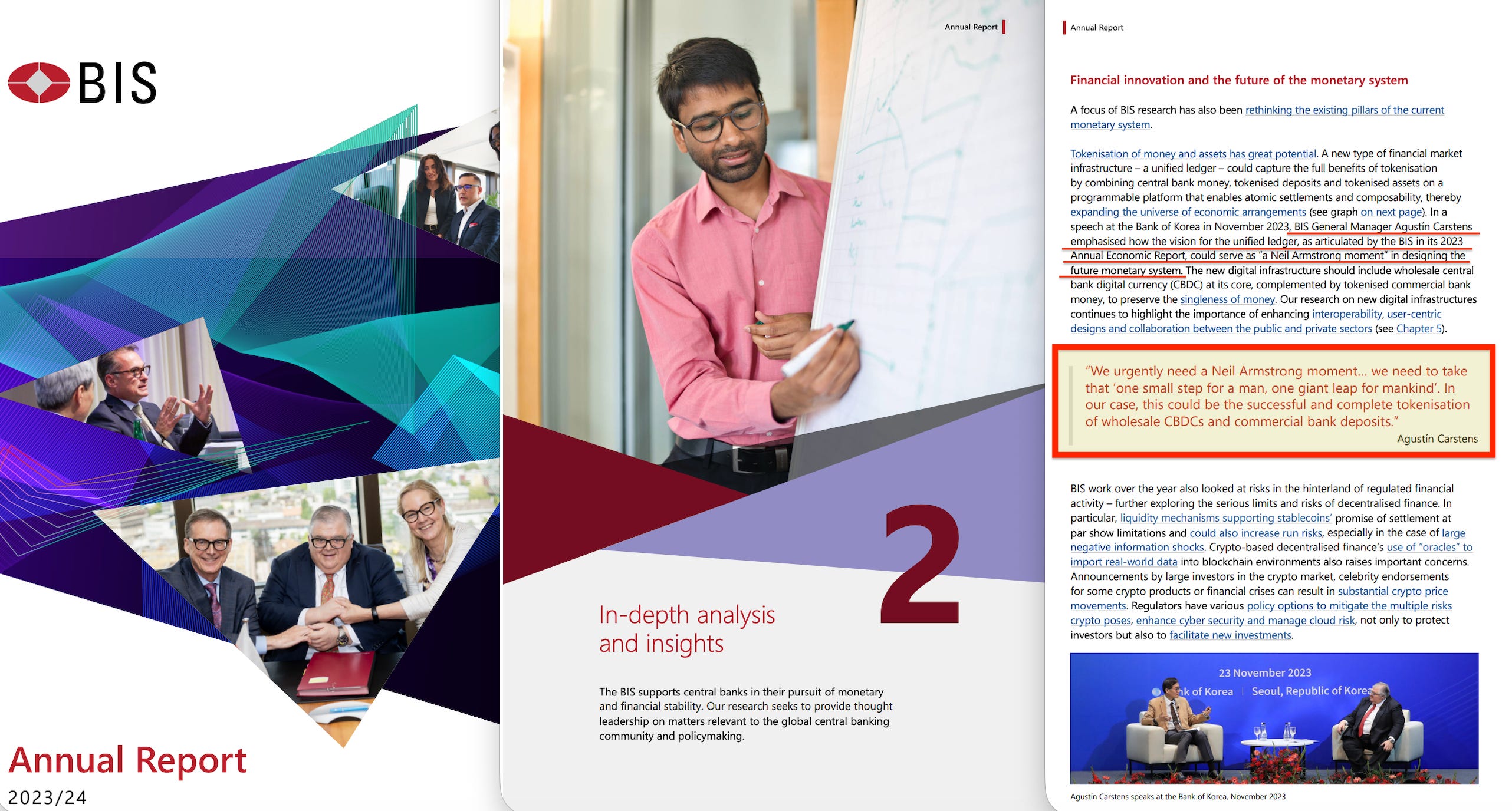
In 2023, BIS General Manager Agustín Carstens — co-authoring with Nandan Nilekani, architect of India’s mandatory Aadhaar biometric ID system90 — unveiled the blueprint: the ‘Unified Ledger’91.
This fuses financial assets and compliance rules into a single programmable environment. The functional mapping to our control topology is precise:
The Cognitive Layer: Project Mandala92 acts as the ‘policy compiler’, automatically embedding regulatory requirements into transaction protocols, while the Unified Ledger itself defines the absolute standards of the environment.
The Evaluative Layer: Project Ellipse93 uses AI for real-time regulatory supervision and Project Viridis94 scans portfolios for climate risk compliance, determining who meets the criteria.
The Behavioural Layer: Project Rosalind95 establishes the API for ‘conditional payment instructions’, while Project Genesis96 (green bonds) and Project Agorá97 (tokenised deposits) execute the enforcement — funds that only move when specific logic is satisfied.
Carstens calls this a ‘Neil Armstrong moment’98. It is the move from money as a bearer asset you own to a conditional entry they control.


This logic of enclosure extends from the digital wallet to the physical territory.
Gaza’s reconstruction operates at the territorial scale, creating permission gates for participation, deploying the same six rails, empowering external auditors to define compliance, and enforcing through conditional financing. Sovereignty becomes permanently contingent on external certification, and populations become beneficiaries to be processed.

The architecture even extends to a third scale. In late 2025, the United States announced twin AI platforms — Genesis for civilian governance under the Department of Energy99, GenAI.mil for military operations reaching 3 million personnel100.


These provide what the infrastructure previously lacked: a computational crown, the cognitive layer that processes inputs, models outcomes, and generates policy through optimisation rather than deliberation. The KST papers explicitly designed their framework for AI and ‘humanistic systems’, and the AI systems now being deployed implement that design — foundation models trained on comprehensive datasets, agents that evaluate outcomes against targets, and feedback loops that refine the models based on results.
The same architecture that governs transactions and territories now governs the decision-making process itself.
The architecture, the ethics-as-control pattern, and the recursive topology are identical across all three scales. The ethical clearinghouse in Gaza happens to be Israel, while in Ukraine it is the EU (and soon in Venezuela the United States) — the specific gatekeeper rotates depending on the territory, but the architecture persists regardless of who occupies the crown position.

At the individual level, the ethical clearinghouse becomes the distributed network of standards bodies, accredited verifiers, and compliance certifiers that collectively determine your status — your carbon status, your health status, your information-behaviour status, and eventually perhaps your neural-compliance status. All of these get queried by financial systems, and all of them gate your access to economic life.
Kabbalah System Theory is the bridge — the compiler that translates theological structure into engineering specification. The papers use category theory, control engineering, and fuzzy systems precisely because these are engineering tools — the framework is designed to be built, not merely theorised.
The authors explicitly called for its adoption as governance architecture. The infrastructure being built around us implements this grammar whether or not its builders have read these papers — the shape matches, the recursive pattern matches, and the destination matches.
Watch the outcomes
The intellectual genealogy is documented in published papers, the acknowledgments appear in the texts, the teachings are publicly available, and the infrastructure is observable by anyone paying attention. This is not ‘conspiracy theory’.
The question is whether we consent. Do we consent to ethics defined by bodies we did not elect? Do we consent to evaluation by authorities we cannot meaningfully challenge? Do we consent to enforcement through money we cannot opt out of? Do we consent to the recursive application of this pattern across every domain of life, from global governance down to individual thought?
The architecture is being built at territorial scale in reconstruction zones, at commercial scale through mechanisms like CBAM and ESG frameworks, at informational scale through AI governance, and at cognitive scale through emerging neuroethics frameworks. Each component serves a stated purpose that sounds reasonable in isolation.
The combination enables comprehensive, recursive, ethically-legitimised control over human behaviour at every scale, with finance as the enforcement layer and ‘ethics’ as the word that makes opposition sound unreasonable.
The purpose of a system is what it does.
Watch the outcomes, and forget about ‘intent’.


Remarkable. The 100 sub laws of the Noahide Laws are subject of a podcast I can't find again. It was always the intention to kill everyone in the Roman Empire, meaning Rome west in the north plus New Zealand and Australia, is how I understood it. Just wondering if that is the reason for the lines in the sky. Also, what about pole reversal and why the rush for 2030? Limited rooms in bunkers for sure but there's something missing to all of this somewhere.
Under every rock, a communist scorpion.