
Permanent Reconstruction

‘Ethics of Pure Will’ traced global governance all the way down to its ‘why’. The claim was that this deepest purpose was formalised by Hermann Cohen and then turned operational through Lenin and Bogdanov. You can still feel that stamp today in the push for universal rules, institutional integration, and the idea of nonstop ‘progress’ through global systems. We ended by treating Spinoza as the philosophical bedrock.
But Spinoza wasn’t really the starting gun — and Cohen’s own trajectory hints at that.
Find me on Telegram:
In his final work he returns to what he called ‘the sources of Judaism’, and in doing so he seems to rediscover older building blocks that fit his project. The logical structure he’d been chasing wasn’t something he invented from scratch. It looks more like he recognised a pre-existing blueprint — already mapped out, just waiting to be named.

And Cohen had predecessors. Moses Hess — an early collaborator of Marx and author of Rome and Jerusalem1 (1862) — developed what one might consider ‘ethical nationalism’: the idea that nations are moral organisms with historical and spiritual missions, and that the Jewish nation carries a distinctive ethical role within that story. In this framework, the collective — not the individual — becomes the main channel through which ethical purpose enters history.
But Hess also brought an economic backbone to this story. In his earlier ‘true socialism’ of the 1830s–40s, he argued that political freedom is kind of hollow if you don’t also have social freedom — and that social freedom means reshaping the economic rules themselves. Property and production should be organised as a moral community: associations, cooperatives, and some form of public coordination. For Hess, socialism was basically ‘the desire for social justice and a harmonious life’. In modern terms, that’s international social justice via economic administration before anyone was using that language — the same basic formula Alfred Zimmern would spell out much more explicitly in 1926.

So you end up with two tracks that share one root. An ethical-national track (nations as moral agents), and an economic-administrative track (justice achieved through managed economic systems).
On this reading, the template doesn’t just get stitched together from a bunch of different traditions later. It splits from a single source, then recombines inside institutions.
Then comes Theodor Herzl as the practical engineer. In Der Judenstaat2 (1896) and Altneuland3 (1902), he starts sketching the machinery: identity systems that distinguish citizens and members of the ‘New Society’, an ‘aristocracy of talent’ functioning like a credentialing order (akin to Plato’s philosopher kings4), data gathered through registers and corporate ledgers, audits via accounts and legal oversight, allocation through central planning and financing, and enforcement through law plus the leverage of infrastructure.
Read this way, Altneuland looks less like a utopian novel and more like a prototype — an early conceptual model of the technocratic architecture that global governance would later try to scale up. Hess supplied the purpose. Herzl designed the container.

What’s a clearinghouse? In banking, it’s the institution that sits in the middle of lots of transactions — routing them, matching them, verifying them, and settling them. It’s basically the central pipe all the flows run through, balancing expansion against restriction, credit against debt.
But the idea scales way beyond banking. If you route any complicated exchange through a single trunk that holds the ledger, that trunk quietly gains serious power: it can set the rules, impose standards, and shut out anyone who won’t comply. That’s the template these thinkers kept circling back to: governance as clearinghouse — a central pillar that mediates forces that might otherwise fly apart, channeling them into a managed order.

Bogdanov’s Red Star5 (1908) lands on a similar architecture from the opposite ideological direction. His Martian utopia runs on statistical bureaus, labour accounting, resource calculation, and collective management via organisational science. Where Herzl’s New Society ‘clears’ through registers and corporate ledgers, Bogdanov’s Mars ‘clears’ through an Institute of Statistics and constant system feedback. Different ideological wells — ethical nationalism on one side, revolutionary socialism on the other — same operational diagram.

Both novels read less like fiction and more like prototypes: narrative proofs-of-concept for governance through centralised data and expert coordination. Bogdanov — Lenin’s early rival for Bolshevik leadership and co-founder of the Bolshevik party in 19036 — then pulled the idea up a level in Tektology7 (1913–22), his attempt at a universal science of organisation. The point wasn’t to sell the template as an ideology; it was to present it as a general schema for running any complex system — biological, social, technical.
That move matters because it helps explain what comes next. Tektology’s themes — feedback, equilibrium, systemic regulation — look like early versions of what would later be formalised in Wiener’s cybernetics and broader systems theory. In other words, the control-theory version of this template has a real genealogy. And the fact that Herzl and Bogdanov converge on basically the same operational design from opposite ideologies suggests that the template doesn’t depend on any one justification. It precedes them and outlives them.
Which also reframes the twentieth century. At the operational level, many of the big ideological fights were arguments over who would control the clearinghouse — not whether one should exist.

Lenin then translated the template into state practice. His repeated insistence that socialism is ‘primarily accounting and control’8 — universal registration, measurement, and supervision of production and distribution — turned this logic into governing doctrine. The Soviet state would function, in essence, as a clearinghouse: a centre that tries to see all flows, balance all accounts, and channel resources from source to outcome. That it was never fully achieved doesn’t change the architectural intent. Taylorism, electrification, Gosplan — different expressions of the same impulse: govern by total visibility of the ledger.

Julius Wolf, a German political economist, helped lay out the economic channels. In 1892 he proposed an international monetary clearing system built around gold certificates and coordination among central banks9 — a model later taken up by the Bank for International Settlements upon its foundation. His design was structural and deliberately hybrid: a public-private arrangement linking governments, central banks, and private finance into a cooperative clearing union. The central bank sits in the middle as mediator, balancing expansion and restriction — channelling credit toward social stability rather than class conflict.

From there, the logic keeps travelling. Eduard Bernstein, the major theorist of revisionist Marxism, takes Wolf’s clearing idea and applies it at home through cooperative credit and a mixed-economy approach10 (1899) in pursuit of a Hessian ‘social good’. Leonard Woolf scales the template internationally through functional agencies (International Government11, 1916). Julius Wolf even anticipates European integration in outline: his 1904 proposals for Europe-wide economic coordination12, and his 1915 plan for a German–Austro-Hungarian customs union13, foreshadow later integration efforts that eventually converge in the EEC.
So you can see two parallel tracks: an economic one — Wolf → Bernstein → Woolf → Bretton Woods — and a political one — Hess → Herzl → Oppenheim → League. Both ultimately grow out of Hess’s dual vision and both end up pointing to the same institutional destination.

Cohen then universalises the move. In his system, the rational collective becomes the channel through which pure ethical will descends into the world. The will can’t stay abstract; it has to take shape through structured forms — legal, political, economic — until it becomes real in history. This is what Cohen frames as the ethical process: intention becoming institution.
Lassa Oppenheim — whose International Law14 (1905–06) became a go-to reference for generations of diplomats and jurists — helped lock this structure into positive law. Working in the tradition Grotius set in motion in the seventeenth century15, Oppenheim’s framework fed into the Hague system, the League of Nations, and later the UN order. Where Cohen universalised the ethics at the level of philosophy, Oppenheim institutionalised them at the level of law — he gave that ‘descending will’ a real juridical pipeline.
Walther Schücking, a German jurist and later a judge on the Permanent Court of International Justice, pushes this further in Die Organisation der Welt16 (1908). The title is basically the thesis: world organisation as an explicit goal. So the template keeps developing: from prophetic vision, to technocratic design, to philosophical formalism, and then into the legal and organisational machinery of international governance.
This is where the streams start to converge. Andrew Carnegie founded the Carnegie Endowment for International Peace17 (1910) to fund and promote the Hague system that Oppenheim and Schücking had helped shape. And Carnegie’s idea of ‘peace’ wasn’t just ‘no war’. It was closer to governance by arbitration — routing conflict through a single moral and institutional centre.
In that model, peace becomes compliance with external standards, backed by real economic and political consequences. The legitimised arbitrator gradually turns into the judge. Wars that ‘clear’ through the institution get framed as ‘peacekeeping’; wars that don’t get framed as ‘aggression’. Same structure — just a different funding engine and a more polished moral vocabulary.

Leonard Woolf’s International Government (1916) — commissioned by the Fabian Society and written by Virginia Woolf’s husband — offered a very practical blueprint. He lays out how to design international bodies, coordinate specialised agencies, and route decisions through expert committees. It reads less like a theory essay and more like an operating manual for what Oppenheim and Schücking had been sketching in legal terms.

Alfred Zimmern then used Woolf’s model as a working template for the League of Nations. He also helped found some of the first international relations departments and trained a generation of international civil servants. So the League — and later the UN — didn’t just echo Woolf’s ideas; they institutionalised them.
Hans Kelsen, the Austrian jurist behind the ‘pure theory of law’18, adds the legal glue that makes the whole hierarchy feel internally consistent. In his view, law forms a unified structure where international norms sit above national ones, creating a single system from base to apex.
Hersch Lauterpacht — Kelsen’s student and later a judge at the International Court of Justice — gives that structure a human-rights vocabulary19. This is the move that brings the individual fully into frame as a direct subject of international concern — an early legal bridge toward the idea of the contemporary ‘world citizenship’. It’s like wiring the highest legal roof to the everyday human ground floor. His influence runs straight into the postwar human-rights project, including the language the Universal Declaration of Human Rights20 would later formalise.

David Mitrany’s A Working Peace System21 (1943) basically gives the logic for what comes next: functionalism. The idea is pretty straightforward. Instead of trying to build one giant world government all at once, you build governance by domain. So health gets its own structure, labour gets its own, food, transport, communications, and so on. Each one is like a branch growing out from a shared trunk.
These systems are separate enough to be practical, but connected enough to integrate over time. Mitrany — who advised the British Foreign Office22 — argues this is the smarter route: you build multiple specialised channels rather than a single world state. In that sense, the UN’s specialised agencies are functionalism in real-world form: WHO, ILO, FAO, UNESCO, ICAO. Each one runs its lane, and the wider UN system coordinates the lanes. The trunk holds; the branches multiply.
HG Wells just says the quiet part out loud. The Open Conspiracy23 (1928) calls for a kind of world directorate of scientists, industrialists, and enlightened administrators to manage planetary affairs — not through a dramatic revolution, but through the slow, strategic capture of key institutions. His World Brain24 idea (1938) goes even further: a permanent global knowledge system that gathers and organises information into usable intelligence for governance. Think ‘total awareness’ at the centre — a knowledge hub that links the top and the bottom.
Wells wasn’t hiding the architecture. He was openly pitching it.
John Maynard Keynes and Harry Dexter White designed the financial clearing layer. Bretton Woods (1944) created the IMF and the World Bank25 — a monetary trunk that international finance would be routed through. Keynes actually wanted something even more ambitious: a global currency (the Bancor26), automatic adjustment rules, and a more systematic way to manage global liquidity. The world perhaps received a compromise, but the core architecture was still there: international financial institutions as the main channel for managing the global economy.

Julian Huxley, the first Director-General of UNESCO (1946–48), then helps fuse these streams at the cultural and intellectual level. He coined ‘transhumanism’27, championed Teilhard de Chardin’s Omega Point28, and shaped UNESCO’s founding philosophy around scientific humanism and world unity. In his framing, UNESCO would coordinate the cognitive and cultural domains in the same broad way WHO coordinated health and FAO coordinated food. The specialised agencies become branches of an emerging planetary organism — different functions, but increasingly tied into a single, shared flow.

European integration followed the same pattern. Jean Monnet pushed a technocratic, step-by-step approach29 — coal and steel, then atomic energy, the functional sectors first, with political union as the long game. Altiero Spinelli, writing the Ventotene Manifesto (1941) while imprisoned by the fascists, argued for federation openly. But his vision wasn’t merely European — his collaboration on the World Congress for Freedom and Democracy30 in the early 1960s31 connected him directly to Arthur Schlesinger Jr, Rockefeller and CIA-adjacent networks designing ‘stakeholder governance’ through NGOs and foundation funding. His draft treaties helped shape the EU’s constitutional architecture.

Joseph Retinger, a Polish political operator with ties into elite and intelligence-adjacent networks on both sides of the Atlantic, worked the ‘soft wiring’: building alignment through groups like the European League for Economic Cooperation32 and, later, the Bilderberg network33, so key actors were already broadly aligned before anything was formally ratified. Three methods — functionalist, constitutionalist, networked — one destination.
NATO’s 1956 Committee of Three34 extended the same logic to security: redefine the core concept to include ‘all factors that affect’ it, then use that expanded definition to justify coordination across every domain it touches.

Thomas Henry Huxley named one part of it in his 1893 Romanes Lecture35. Evolution is blind process; ethics is humanity deliberately opposing and guiding what nature would do on its own — the cultivated garden against the cosmic wilderness. The ethical process is conscious direction: will descending into matter and reshaping it according to purpose. To act morally at civilisational scale is to steer what would otherwise drift. His grandson Julian carried this forward: scientific humanism as the deliberate guidance of human evolution, UNESCO as one institutional vessel. The connection across generations was direct.
Teilhard de Chardin — the Jesuit palaeontologist — supplied the metaphysical counterpart to the institutional story. In his view, evolution isn’t just random churn. It trends toward greater complexity, higher consciousness, and eventual convergence — differentiation bending back toward unity, with the Omega Point pulling history upward. The direction is already there to be noticed; the real question is whether you participate consciously in it or stay blind to the pattern. For Teilhard, matter is spirit taking shape, and history is the long arc of return.

Julian Huxley championed Teilhard and helped weave parts of this outlook into UNESCO’s early philosophical mood. The family resemblance wasn’t subtle.
Together, this gives you a third option between conspiracy and coincidence: teleological participation. The idea here isn’t that everyone needs to be centrally coordinated. They can converge because they think they’re reading the same signal. They align not because someone is explicitly directing them, but because they believe the same underlying structure is real — and worth building into the world.
But shared perception doesn’t implement itself. The template still needed real-world carriers with money, access, and organisational reach — Carnegie’s endowments, the Rockefeller foundations and institutions, Rothschild-style networks, Zimmern’s trained cadres of international civil servants. Ideas may set the direction; institutions provide the legs.

Kenneth Boulding — economist and ‘Spaceship Earth’ systems theorist36 — gave this convergence mechanism a clean name: the ‘invisible college‘37. A transnational community of experts who share methods, assumptions, and goals without needing a formal command centre.
But the phrase has older echoes. It goes back to seventeenth-century Rosicrucian-adjacent circles, and the early Royal Society grew out of networks that used similar language. The original vibe was basically: people who think they’ve detected the same hidden structure, and who ‘coordinate’ less through hierarchy than through shared recognition of an order that seems to pre-exist them. The college is ‘invisible’ not because it’s a secret cabal, but because the coordinating force isn’t a single person or committee — it’s the pattern itself. The initiates are just the ones who think they can see the diagram.

So the template circulates through transmission networks. Convergence follows from shared perception, not necessarily from central direction.
That’s why Cohen’s return to ‘the sources of Judaism’38 in his final work isn’t just a biographical footnote. It’s a clue about where he believed the diagram originally came from.
And in the Hess → Herzl → Cohen → Oppenheim line, you can watch the same structural move getting sharpened across different registers: ethical will descending through properly organised collective structures into real-world order. Hess frames the purpose. Herzl sketches the institutional vessel. Cohen universalises the logic in philosophical form. Oppenheim turns it into positive international law. And Schücking then makes ‘world organisation’ an explicit programme.
The shift from theory to real institutional design really tightens up during the war years. The Grotius Society39 (1915), founded in London to develop international law as a practical discipline, helps consolidate a workable legal agenda around the laws of war and peace. As the end of the war comes into sight, it pivots toward the conditions and ‘determinants’ of peace — basically, the rules and structures of the coming order. Carnegie helps bankroll the institutional push. Woolf supplies the operational blueprint, and Zimmern helps embed it in the League’s early shape. If you want the institutional chain into the League in one line, it runs something like:
Hess → Herzl → Cohen → Oppenheim → Schücking → Grotius Society → Carnegie → Woolf/Zimmern → the League.

The Balfour Declaration40 (1917) then looks like confirmation of the sequence. Herzl had argued that ethical-national projects need a ‘charter from the Family of Nations’ — recognition from existing powers that grants legitimacy from above. Thirteen years after his death, British Foreign Secretary Arthur Balfour effectively delivered that charter to Walter Rothschild, 2nd Baron Rothschild, as a representative figure for the Zionist Federation41.
This also sits inside the older overlap between financial and political clearing. The Rothschild network had long operated at that junction. Alfred had praised the Bank of England’s clearinghouse as ‘approaching perfection’ in 188642 — the same general model Julius Wolf suggested scaling internationally in 1892, and the same clearing logic that later shows up in the BIS at its founding in 1930. Now Walter receives the political charter.
So you get financial clearing and political recognition running through overlapping networks — different branches of the same structure. In this reading, the Hess → Herzl → Oppenheim → Woolf architecture works more or less as designed. The League Mandate for Palestine (1920–48) then puts the charter into a formal administrative frame, and UN recognition (1948) completes the cycle.

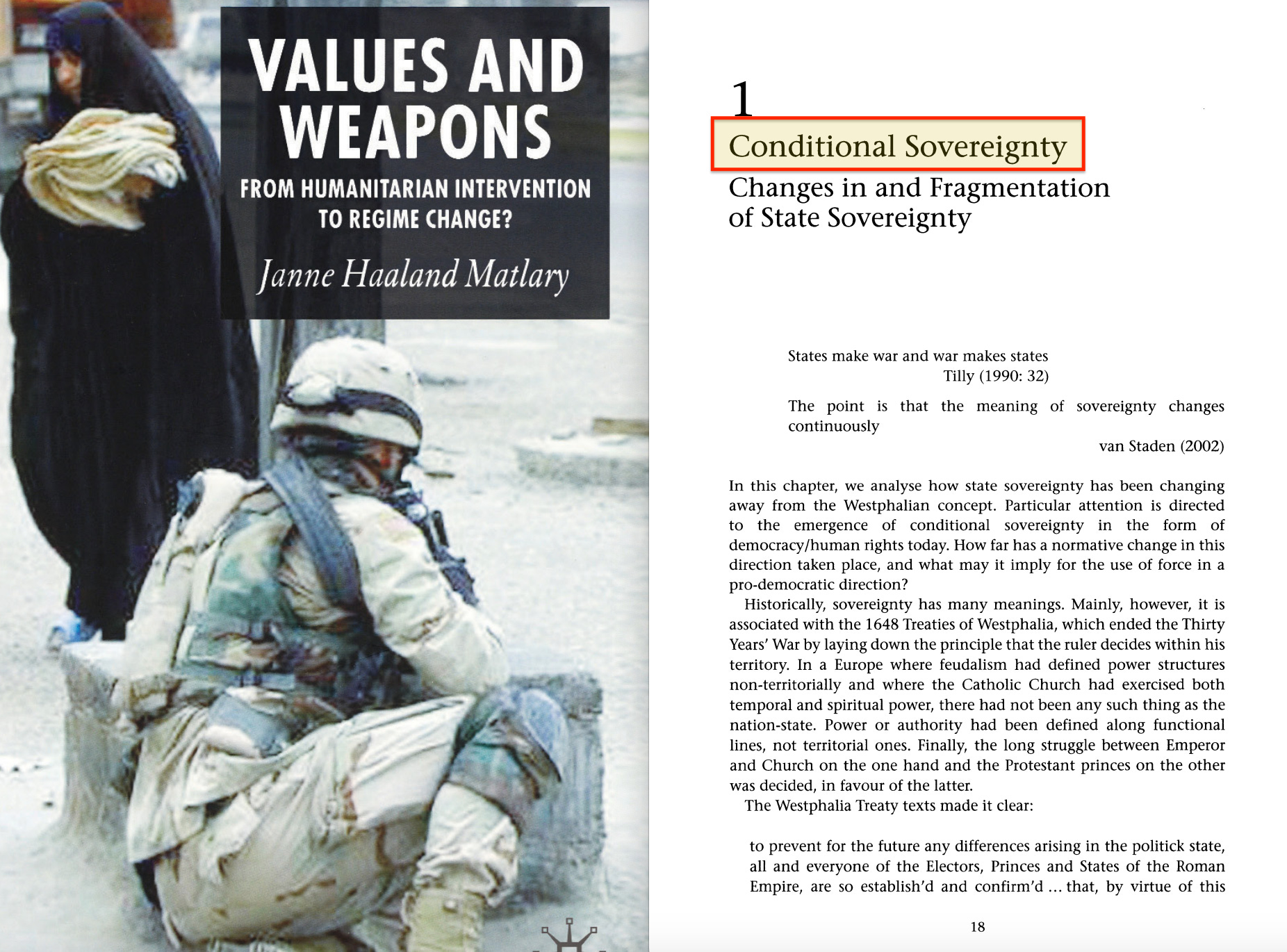
The architecture mapped here isn’t just a historical artifact. It’s being used right now. Ukraine’s EU Facility runs on a big checklist — around 130 reform indicators43 — with funding released in conditional tranches once outside bodies sign off that reforms are complete. Gaza’s proposed reconstruction plan sets up a ‘Board of Peace’44 to manage funding until the Palestinian Authority is judged to have finished its reform program. And Trump’s 28-point Ukraine plan talks about a ‘Peace Council’45 that would set standards, monitor compliance, and impose penalties for violations.


A century after the first charter introduced conditional sovereignty in the Levant, the people displaced by that charter end up living under a more refined version of the very system that emerged from that era. The clearinghouse learns; each cycle tightens the mechanism. But the template stays the same.
And that’s the real point: the template was proven. The structure mattered. Sovereignty is conferred rather than simply asserted. Legitimacy flows downward from above. Sovereignty is now conditional on externally defined standards, and administered under international supervision until ‘full’ political form is deemed achieved. This is the early prototype of what would later harden into ideas like conditional sovereignty46 and Responsibility to Protect47 — legitimacy treated less like an inherent right and more like a licence issued by the international order, and withdrawn if you don’t meet the terms.
But that still leaves a question: what’s the diagram the members of the ‘invisible college’ keep implementing?


So at the end of the day this is a spiritual construct. Teleological Participation.
There are only two spiritual sources, two designs, one real and one an imitation - The Church of God and The Church of Man. The head of the Church of God is Jesus Christ. The head of the Church of Man is, ultimately, Satan, the father of lies. There is, however, only one design, the real and the counterfeit of the real. The real design is based on truth and beauty. The counterfeit design, like all counterfeits, looks very much like the real design however it contains many guises, many manifestations. They are designed to complicate, to confuse, to conceal, to deceive. The purpose of the counterfeit is to destroy the real, something which it has repeatedly failed to do and will ultimately fail to do.
Esc, I'm not very educated about all this, but even I can see that you are absolutely brilliant!