Earth in the Balance

In 1992, then-Senator Al Gore published Earth in the Balance1, a book that sketched an ambitious vision: humanity needed to think about the planet as a single, interconnected system. Environmental problems didn’t respect borders. Climate, ecosystems, and human health were deeply intertwined.
To manage these challenges, Gore argued, we needed new ways of seeing — and governing — the Earth itself.
Yet — as ironic as it perhaps appears — what appears ‘in the balance’ is not Earth, but democratic ideals.
The infrastructure for planetary surveillance had been building for decades before Gore published his book. The technical and institutional foundations trace back to the Cold War.
The Early Infrastructure (1960s-1970s)
The CIA’s CORONA program2 (1959-1972) pioneered satellite reconnaissance, creating the technological capability for continuous planetary observation — initially for military intelligence, but establishing the basic architecture that would later be repurposed for environmental and health monitoring. The dual-use nature of satellite technology meant that surveillance capacity built for national security could be redirected toward other forms of monitoring.

On September 17, 1969, Daniel Patrick Moynihan (counselor to Richard Nixon) wrote a memo3 proposing that NATO should run global surveillance for sakes of the environment. This gave birth to NATO’s Committee on the Challenges of Modern Society4 (CCMS). The committee was formally launched later that year, explicitly linking environmental issues to the Atlantic alliance’s security framework. This was an early move to securitise environmental concerns — treating pollution, resource depletion, and ecological degradation as matters requiring coordinated action by the military alliance.


By 1974, following the first UN Conference on the Human Environment (Stockholm 1972), the UN Environment Programme established GEMS — the Global Environment Monitoring System. GEMS created the first international network for monitoring air quality, water quality, climate, and biological resources; it even included socio-economic factors and public health surveillance as outlined by SCOPE’s third report on the matter. This was planetary-scale environmental surveillance operationalised through international cooperation.


These early systems — CORONA’s satellite technology, NATO CCMS’s security framing of environment, UNEP GEMS’s international monitoring network — established the precedent and infrastructure that Gore would later build upon. The architecture didn’t begin with ‘Digital Earth’. It began with Cold War surveillance systems being gradually repurposed for environmental, and eventually health, monitoring.

Earth in the Balance
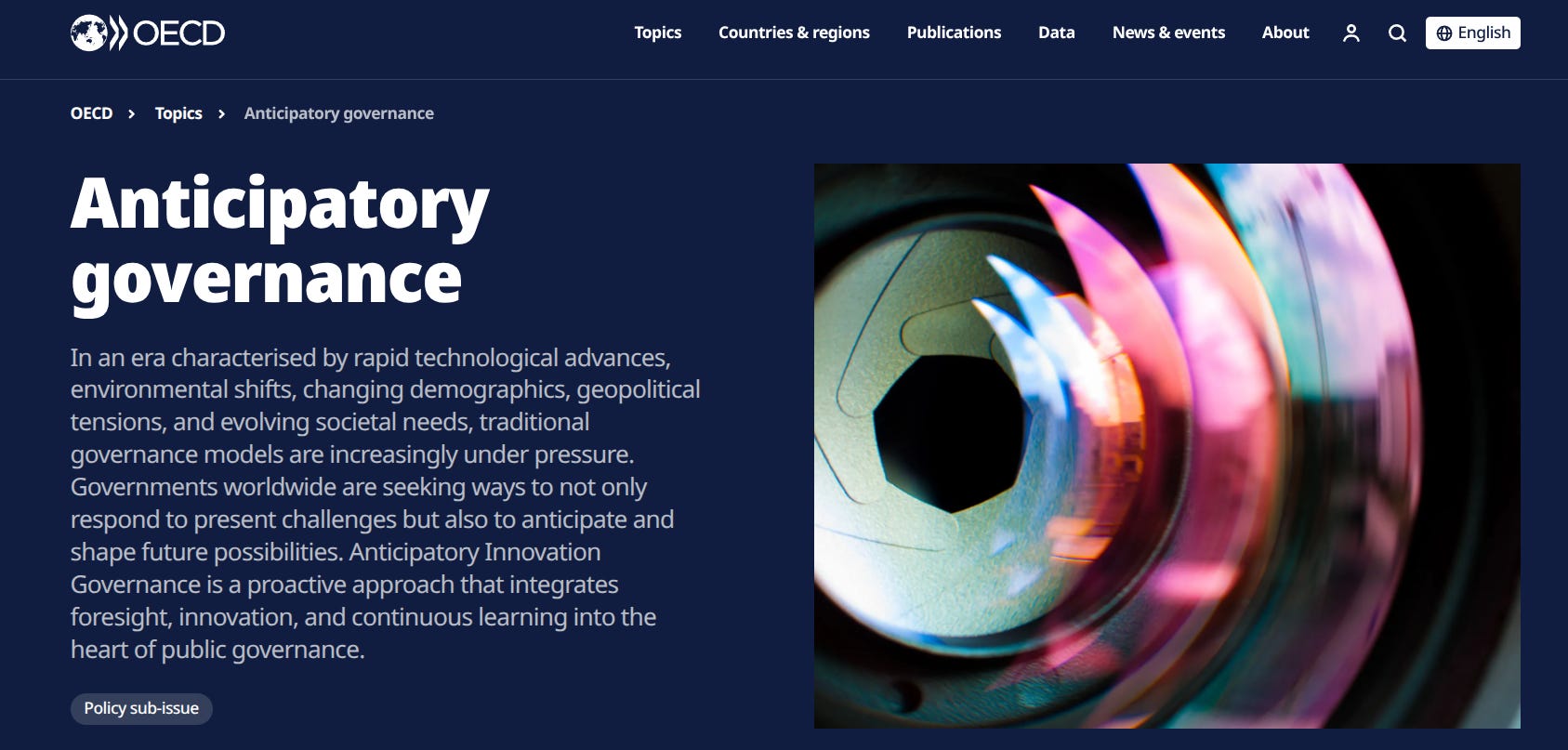
What seemed at the time like environmental advocacy has matured into a governance architecture that is reshaping how international institutions respond to global crises. Over three decades, the conceptual framework Gore outlined has evolved through a series of institutional developments, policy cascades, and technological breakthroughs. The result is progressively a system of anticipatory governance5 that concentrates power in international bodies, operates increasingly through algorithmic predictions as opposed than democratic deliberation, and continuously expands the definition of what constitutes a ‘security threat’ requiring coordinated global response.
This is real and documented policy trajectory — one that raises fundamental questions about accountability, transparency, and democratic control in an age of planetary-scale challenges.
Through his book, Gore explicitly details the need for a sharpened focus on environmental care… incidentally in the immediate aftermath of the IUCN landmark report, ‘Caring for the Earth’… and what would that call for but an increased emphasis on surveillance gathering capability and education.

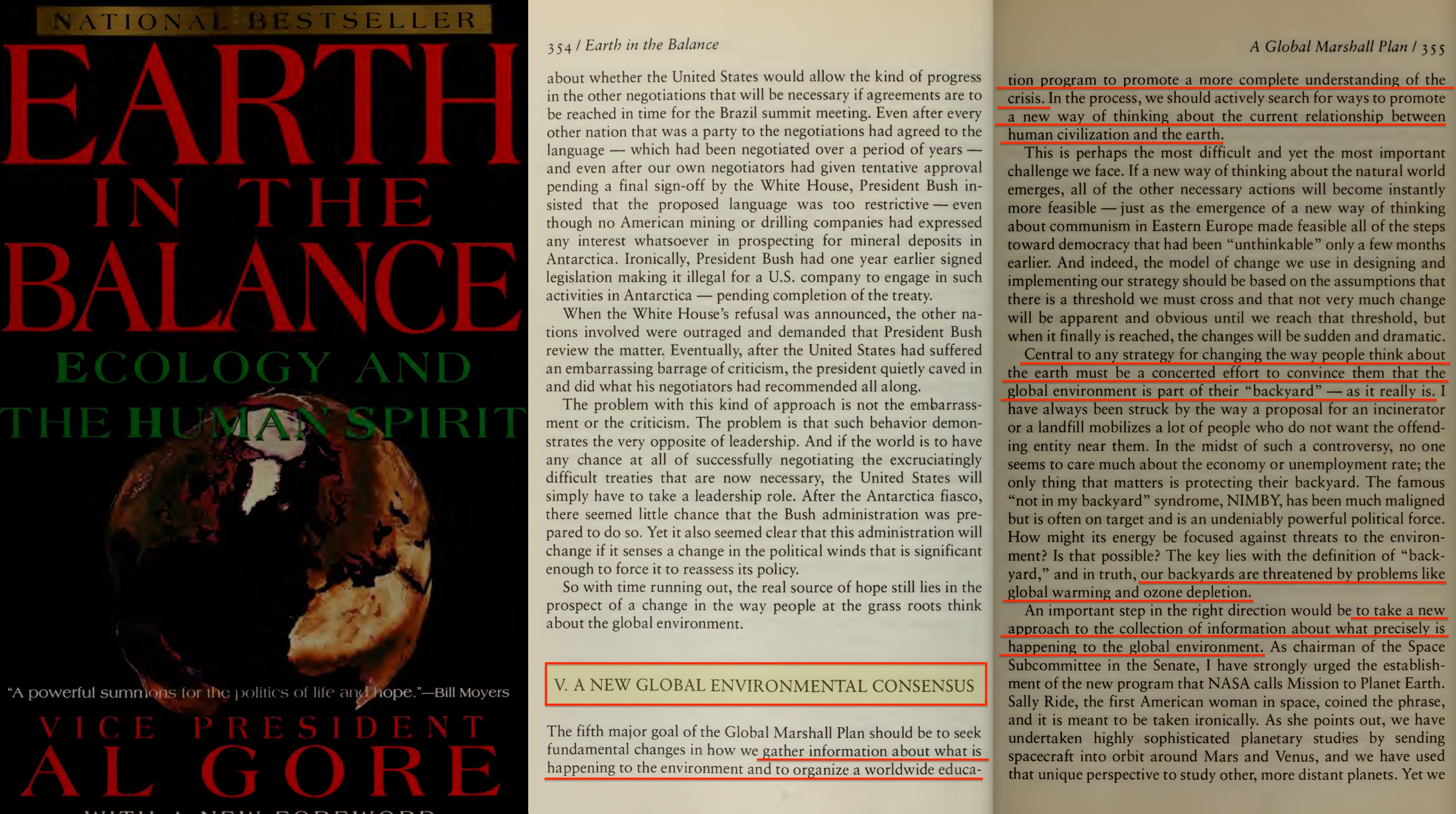
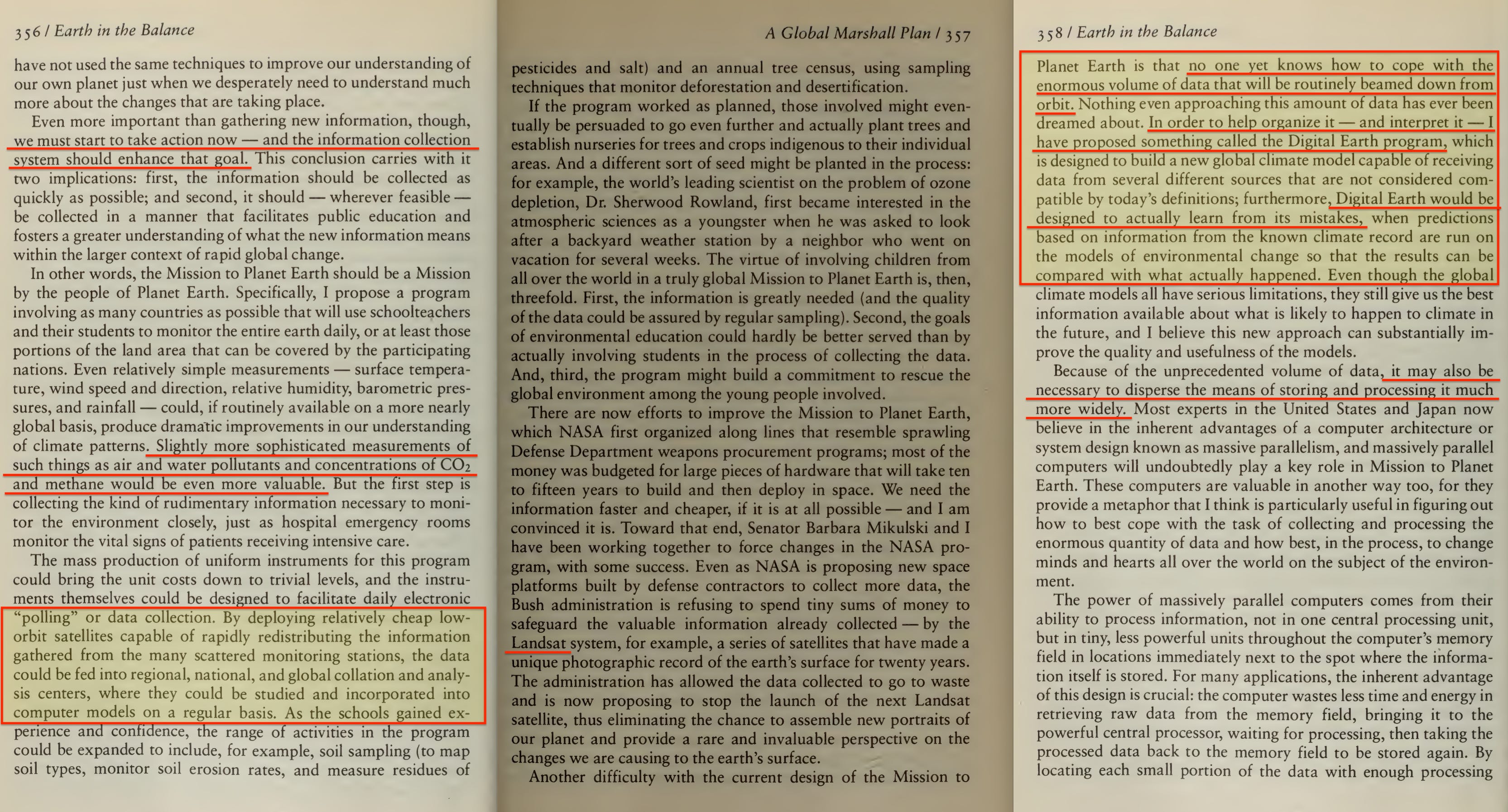
The granularity of surveillance data reaches a disturbing plateau, and he even requests surveillance satellites to distribute environmental information at the regional, national, and global levels. A call developed further:
… no one yet knows how to cope with the enormeous volume of data that will be routinely beamed down from orbit… in order to help organise it — and interpret it — I have proposed something called the Digital Earth program… Digital Earth would be designed to actually learn from its mistakes.
The surveillance sites will generate enormeous amounts of data, and this should be interpreted (through AI or a Digital Twin, perhaps?), which furthermore will ‘learn from its own mistakes’, arguably making it adaptive (and computational?).
Because of the unprecedented volume of data, it may also be necessary to disperse the means of storing and processing it much more widely.
Setting aside the massive parallelism required, the dispersing of the storage logically leads to colossal data centres built across especially the Western world which we unquestionably witness at present6, which can also ‘help organise it — and interpret it’.
Add ‘learn from its own mistakes’, and you have fully automated adaptive management.

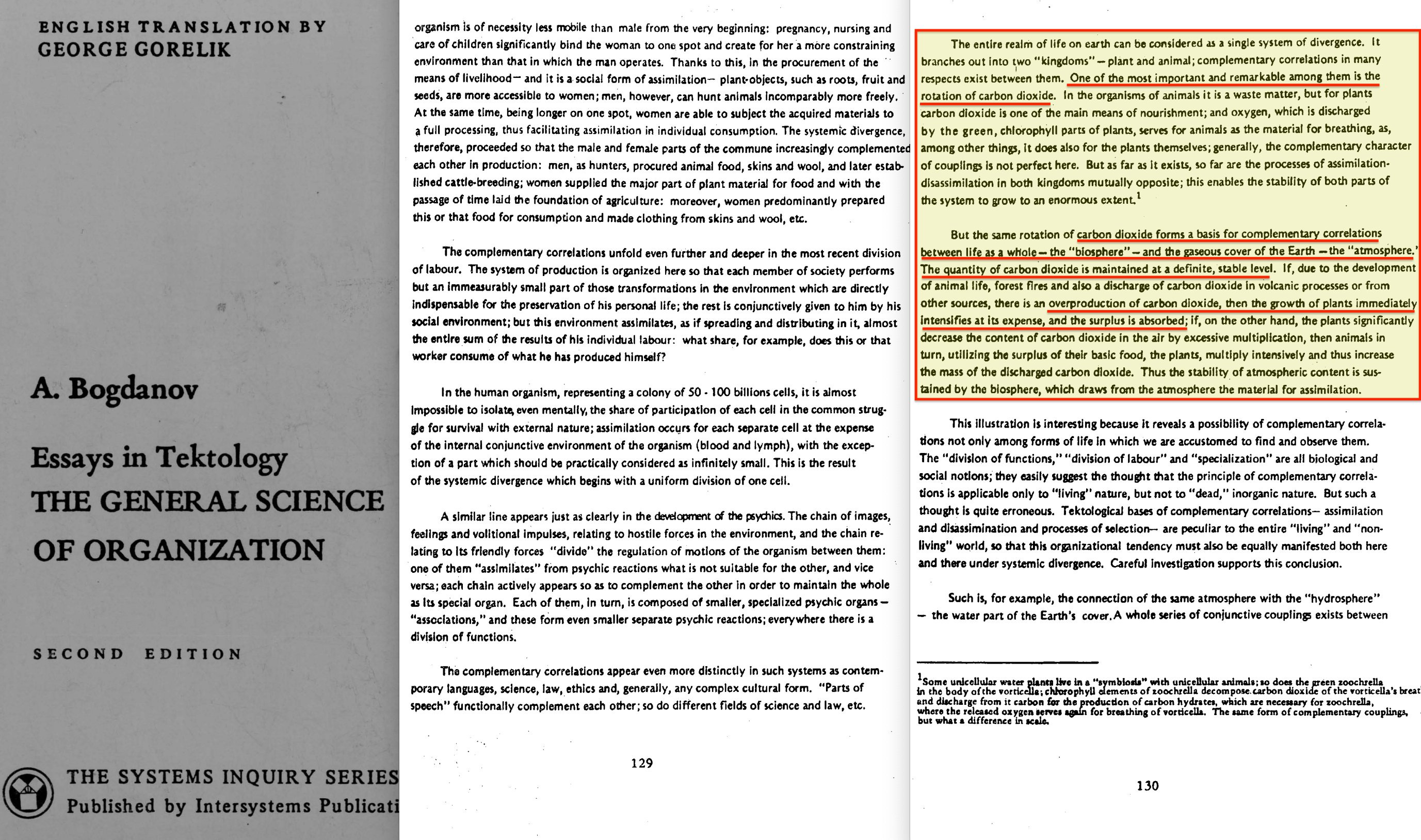
Gore’s vision further calls for an IUCN aligned ‘ethic of stewardship’ before he draws on Teilhard de Chardin (Omega Point) and James Lovelock, whose Gaia hypothesis saw early development through... Alexander Bogdanov, except he considered it from the perspective of circulating carbon dioxide.
Yes, we’re yet again back in alignment with Marxists and technocrats.


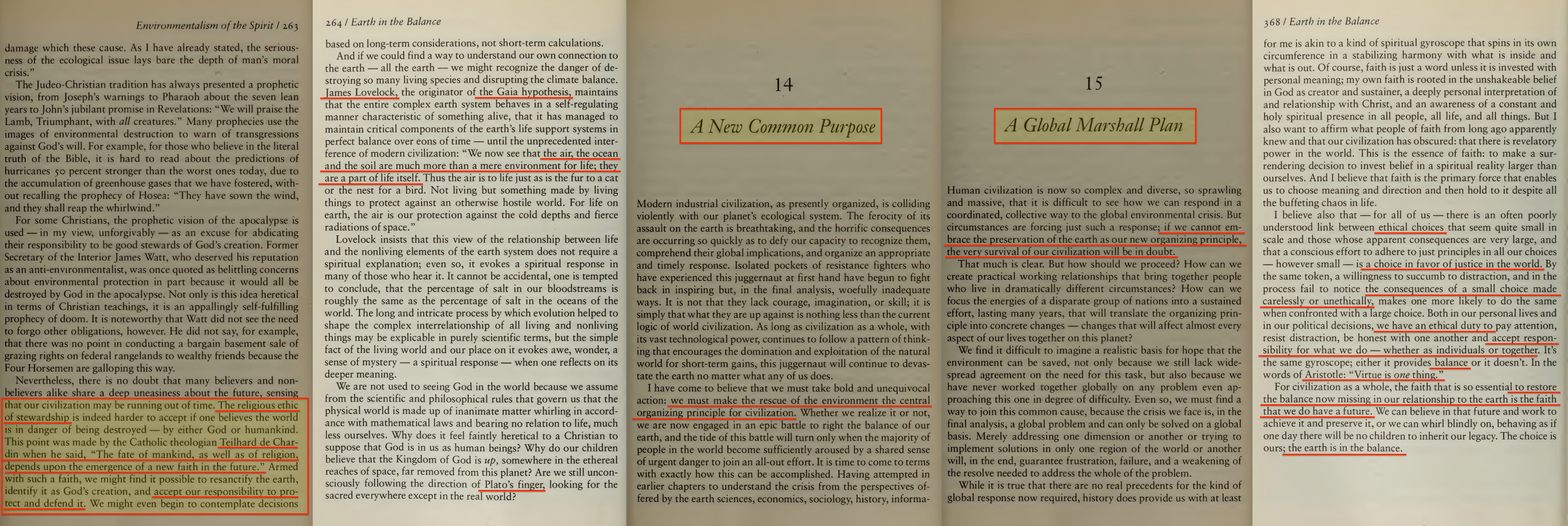
Gore continues by including chapters on ‘A New Common Purpose’, clearly relating to IUCN’s planetary stewardship, ‘A Global Marshall Plan’ which we saw used to install organisations leading to the future model of indicator-driven conditional governance — the model presently piloted in Ukraine, next Gaza, with the EU likely to follow.


Gore also makes an impassioned plea for related ‘ethical choices’ and ‘justice in the world’, and he even mentions our ‘ethical duty’ which eventually — through Aristotle — leads to a discussion ‘to restore the balance now missing in our relationship to the earth is the faith that we do have a future’ which then naturally leads to Hans Kung and Leo Swidlers ‘A Global Ethic’ published only the following year (1993), the Earth Charter’s planetary ethic (2000), and the 1968 UNESCO Biosphere Conference which through recommendation 3 introduced the concept of humanity being out of balance with nature — with zoonotic diseases supposedly arising from this lack of balance.


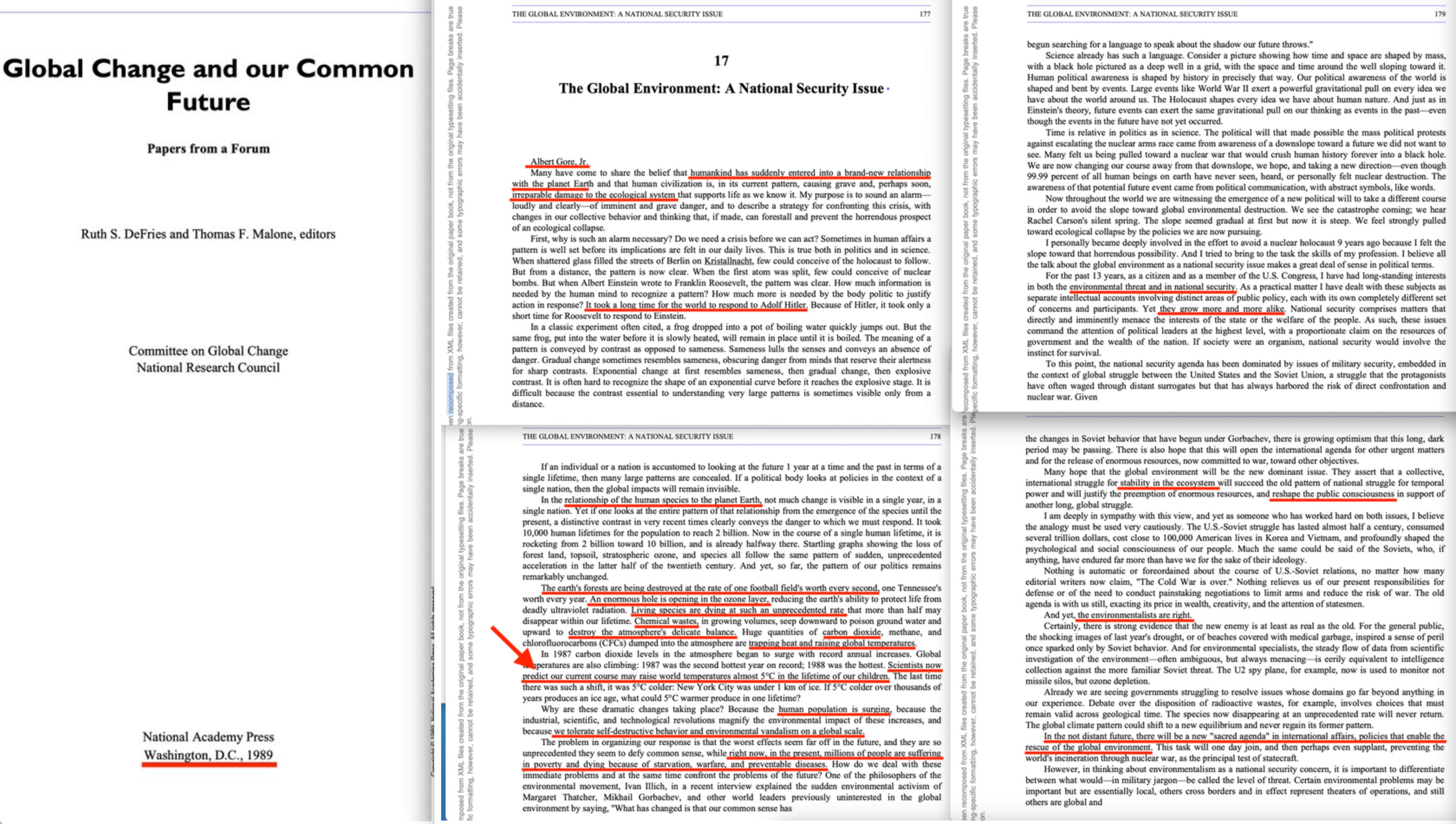
It really is a remarkable book. But as for Gore, this really is only just the start — though I suppose we should briefly consider his contribution to ‘Global Change and our Common Future’7 from 1989, through which he suggests that ‘Scientists now predict our current course may raise world temperatures almost 5C in the lifetime of our children‘ — regardless of how absurd that may appear.

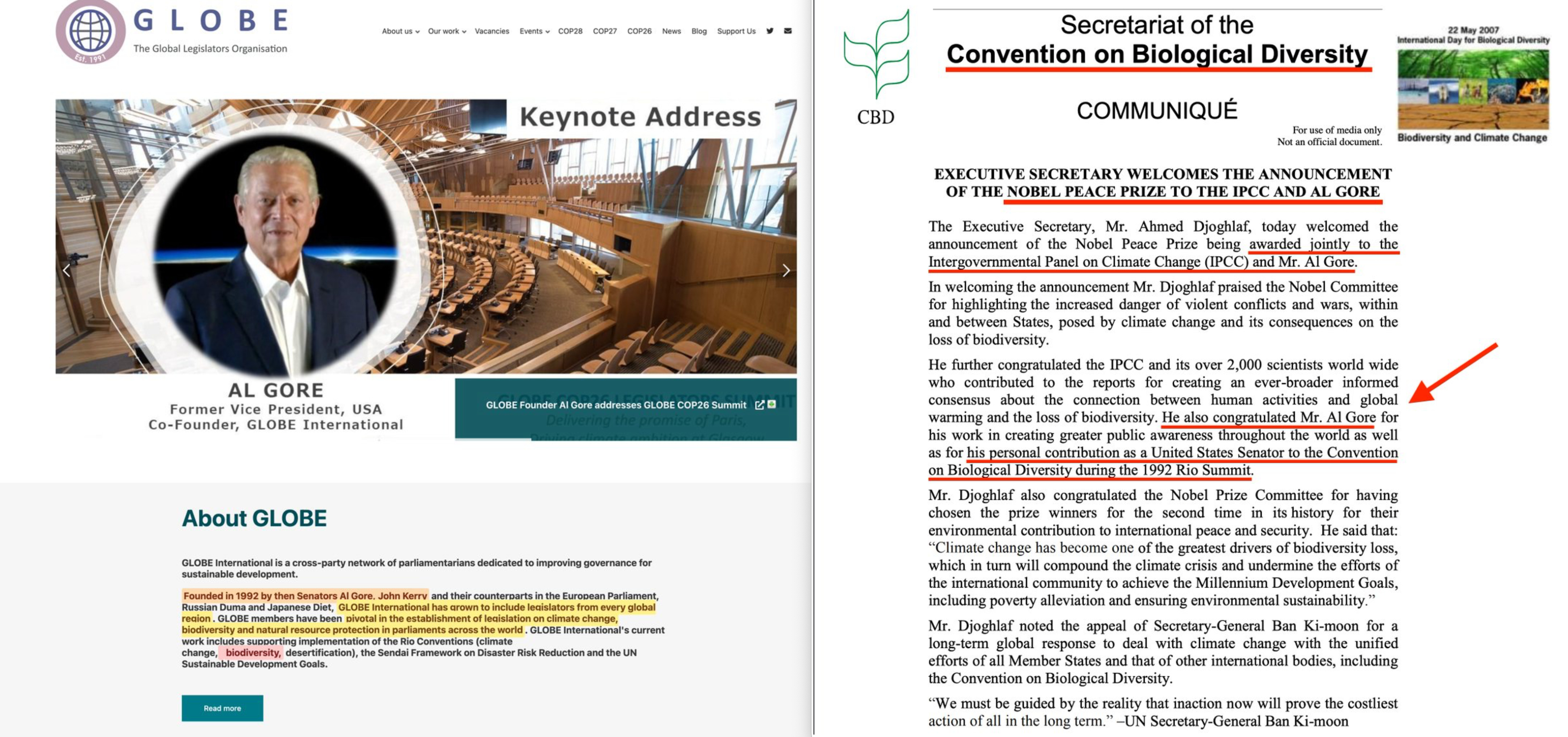
We can also include that Gore — with John Kerry — co-founded GLOBE International in 19928, which focuses on ‘the establishment of legislation on climate change, biodiversity and natural resource protection in parliaments across the world’. Incidentally, GLOBE is a controversial organisation, deeply implicated in the Climategate affair9.

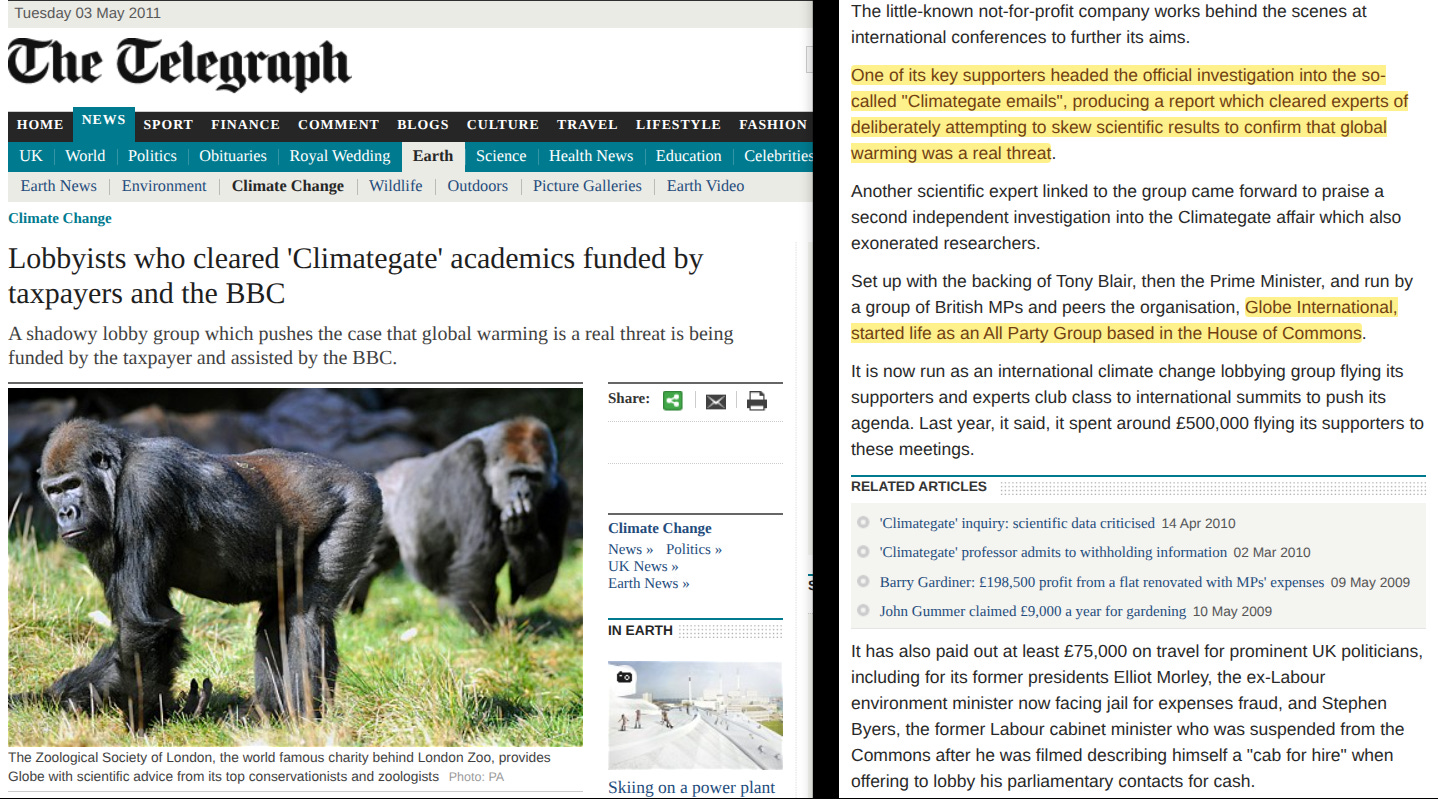
Gore was a leading proponent of the Convention on Biological Diversity in the run-up to the 1992 Rio Earth Summit, the event at which the UNFCCC, CBD and Agenda 21 all came to be, with the CBD later congratulating Gore and the equally corrupt IPCC (who through its working group 3 in 1990 began working on monetising carbon emissions) for their environment related Nobel Peace Prize10.


Gore further contributed to the 1995 Interagency Ecosystem Management Task Force through which the first proper definition of the ‘Ecosystem Approach’ can be traced down, with signs suggesting Rockefeller funding.


In 1997, he wrote the foreword in the report ‘Sustainable America’ which leads to… even more loose ends being tied in with the same picture — a picture entirely aligning with the Convention on Biological Diversity Ecosystem Approach’s focus on integrated landscape management of the sort first discussed in the World Charter for Nature from 1982.


It really is remarkable how many pieces of the puzzle Al Gore ties together — but unbelievably, we have only just scratched the surface.
Digital Earth and Systems Thinking
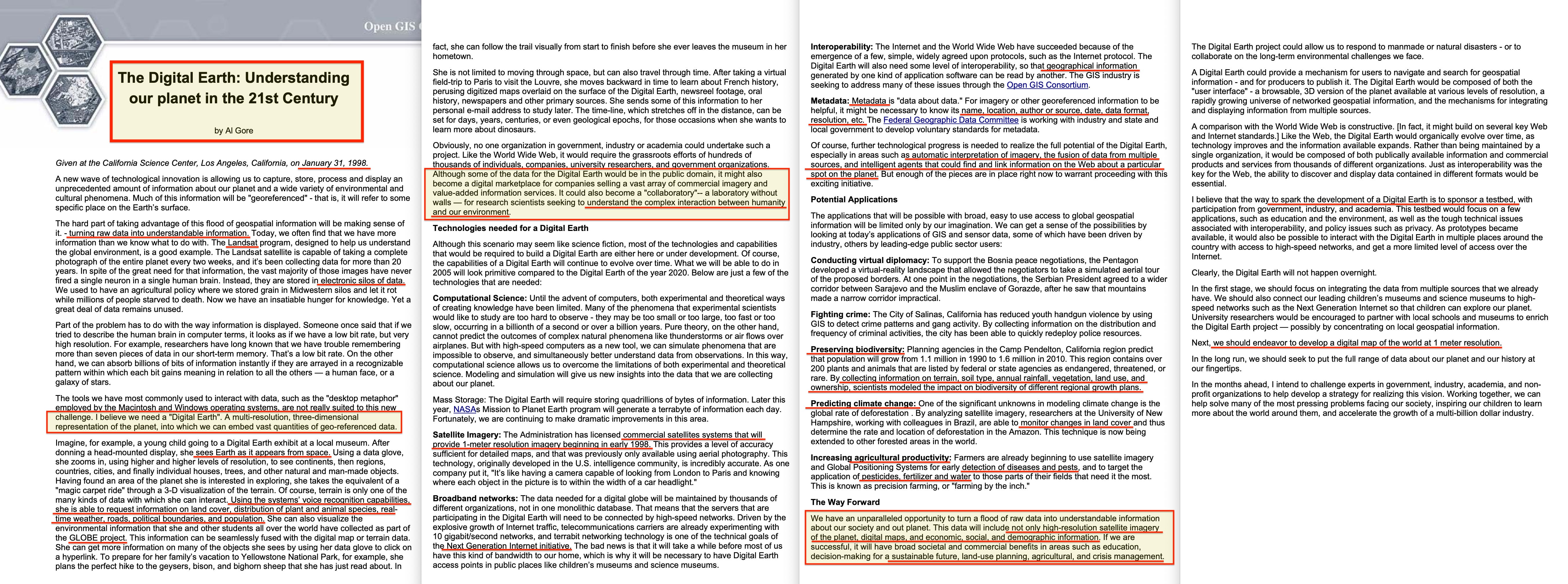
Gore’s vision crystallised in a January 1998 speech at the California Science Center in Los Angeles. First, he repeated his call for a ‘Digital Earth’:
… a multi-resolution, three-dimensional representation of the planet, into which we can embed vast quantities of geo-referenced data… Earth as it appears from space…
The recommendation is channelled through educational purpose, but it quickly develops in a somewhat more… suggestive direction:
Although some of the data for the Digital Earth would be in the public domain… for research scientists seeking to understand the complex interaction between humanity and our environment.
Commercial satellite resolution by then (1998) is already high — 1-meter resolution imagery — but the sheer scale of this data naturally calls for a ‘Next Generation Internet initiative’, where the data further is set to include geographical information and metadata, and where:
… automatic interpretation of imagery, the fusion of data from multiple sources, and intelligent agents that could find and link information on the web about a particular spot on the planet…
He suggests its application in fighting crime, preserving biodiversity, predicting climate change (through monitoring changes in land cover), and even agricultural productivity, with ‘early detection of diseases and pests’ along with ‘application of pesticides, fertiliser and water’…
This data will include not only high-resolution satellite imagery of the planet, digital maps, and economic, social, and demographic information. If we are successful, it will have broad societal and commercial benefits in areas such as education, decision-making for a sustainable future, land-use planning, agricultural, and crisis management.
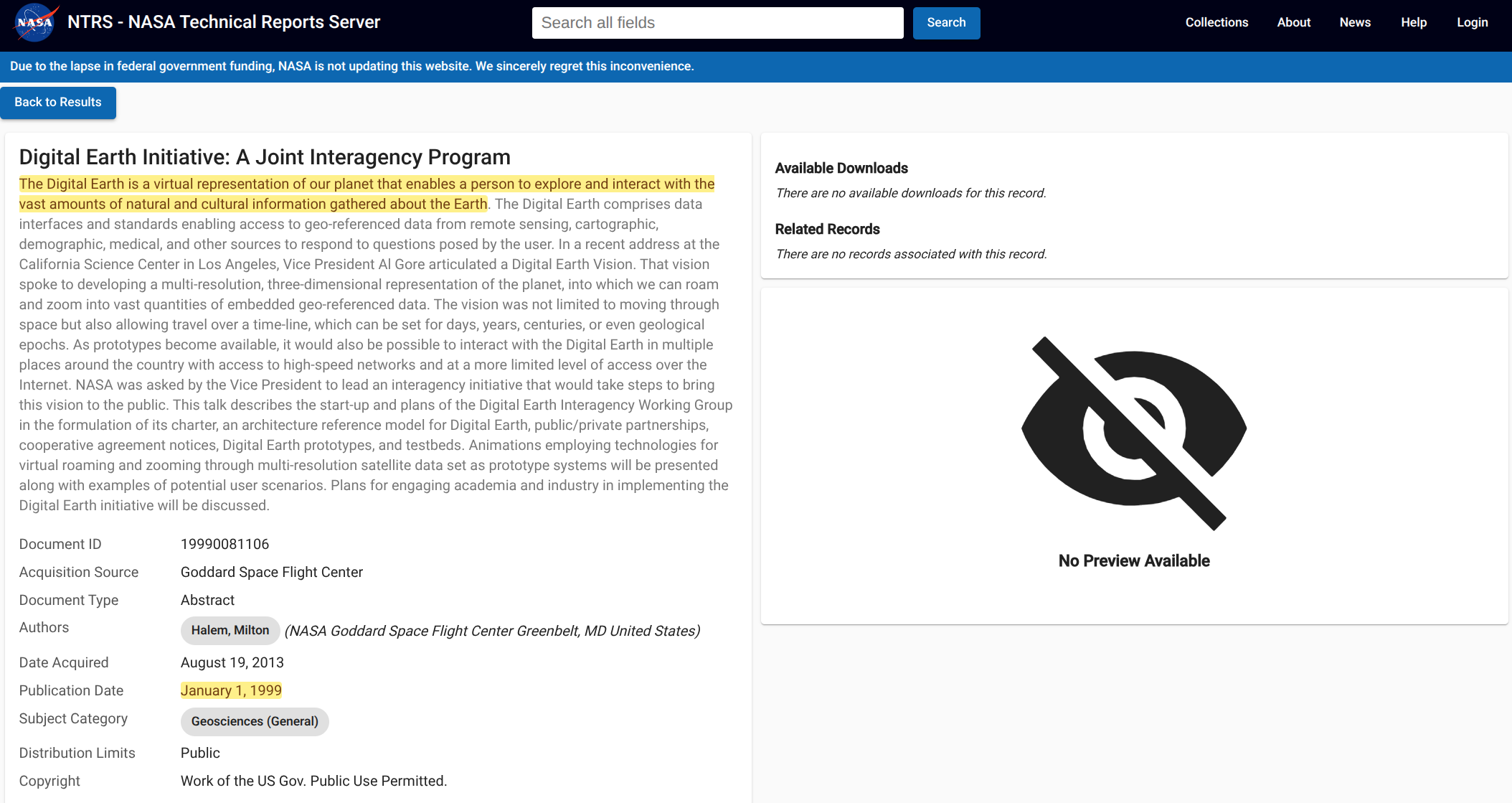
… with the full integration of socio-economic data first proposed by SCOPE in 1973! It finally calls a Digital Earth testbed which arrived in 1999 through NASA’s Digital Earth Initiative11.
GEOSS12 arrived a few year later (2003); a derivative-supporting platform, where contemporary derivatives count GEO-BON13 and GBIOS14 which focus on land cover and biodiversity, and EO4HEALTH15 focusing on public health surveillance — expressly in line with Gore’s recommendations.

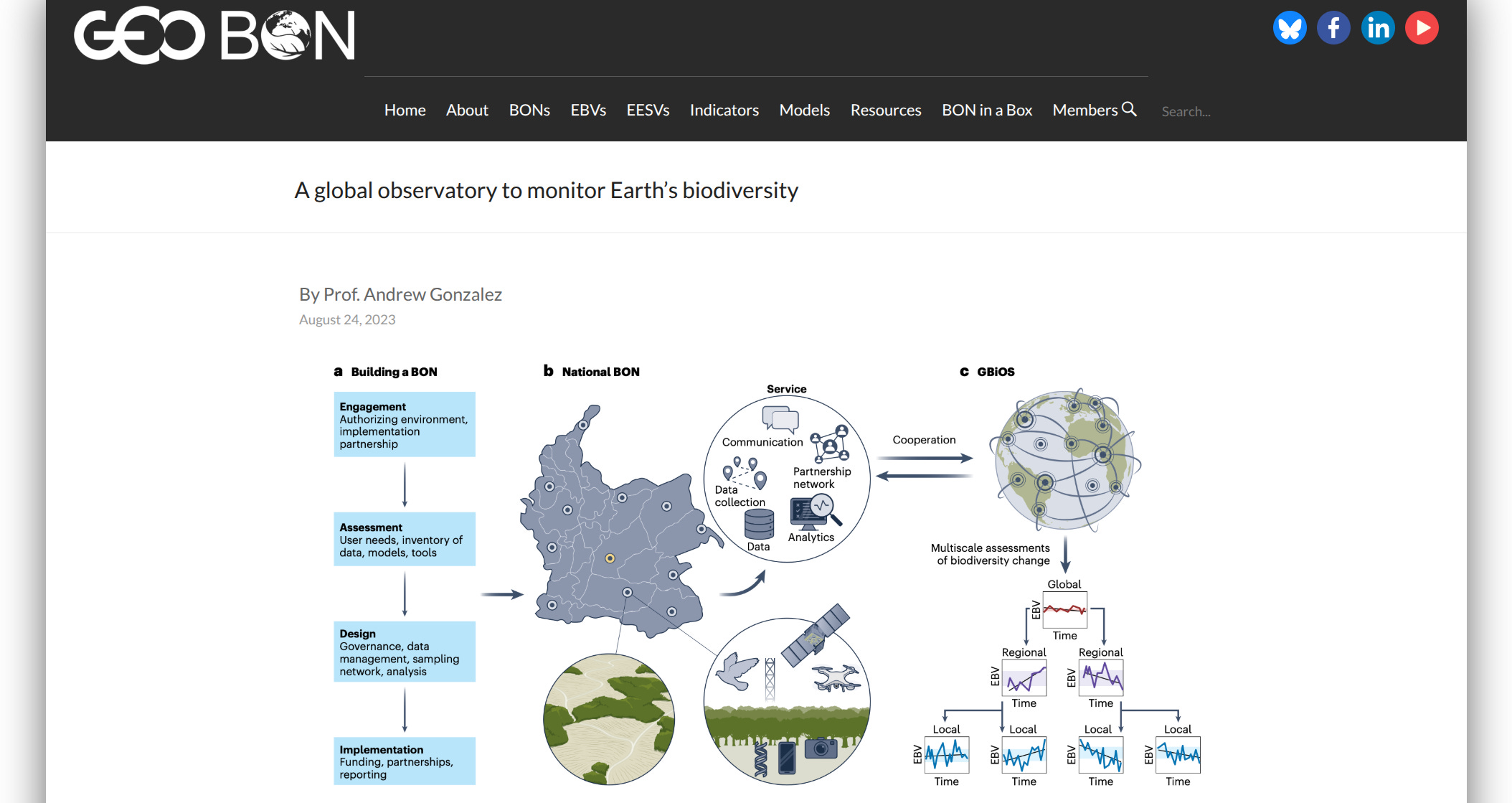
GEOSS federates satellites, ground sensors, and computational models into an interoperable, policy-ready infrastructure. This is Gore’s ‘Digital Earth’ in practice: a coordinated international system turning planetary sensing into decision support.
Today, this infrastructure is extensive: constellations of Earth observation satellites, national digital twin initiatives, and real-time data streams feeding climate models, biodiversity monitoring, and public health early warning systems16.
What Gore proposed — and what was quietly built — was infrastructure for planetary management. If you can see everything, measure everything, and model everything, you can anticipate problems before they become crises. You can govern proactively rather than reactively.
Anticipatory governance17, in effect.
DoD-GEIS and Biosurveillance
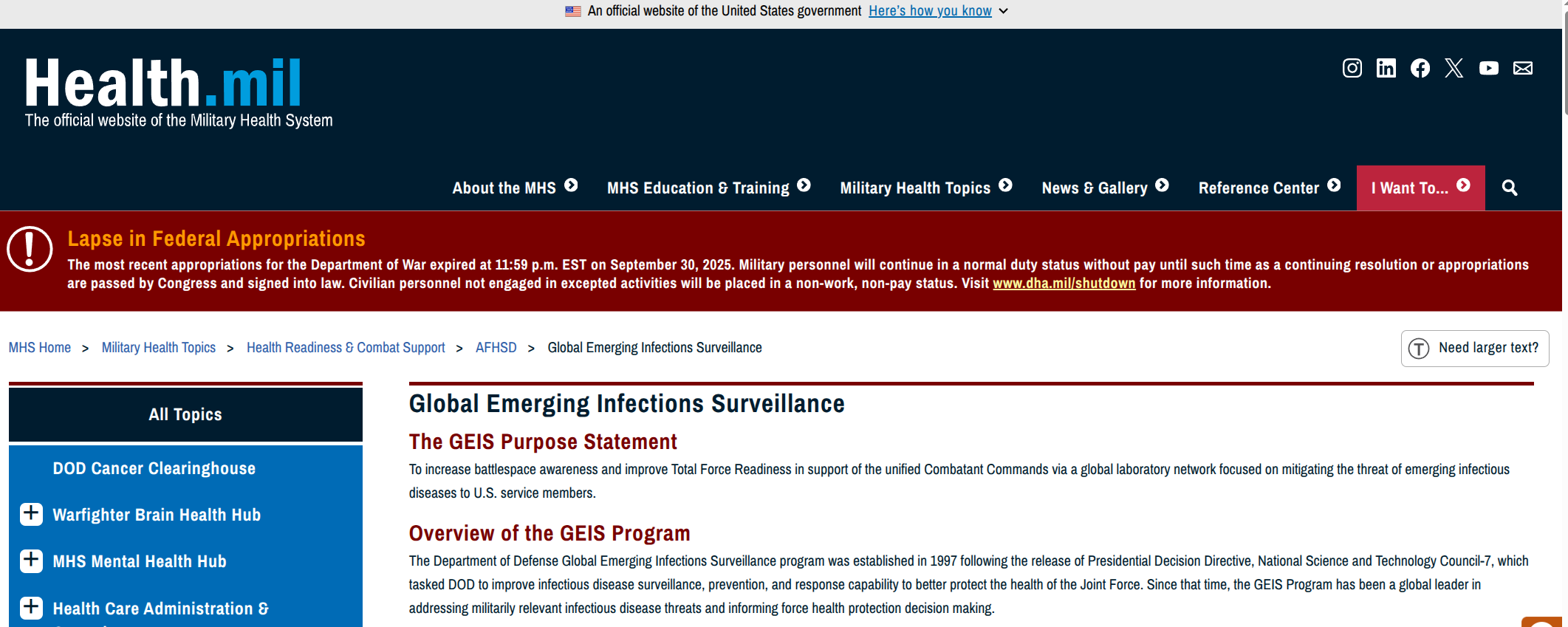
On June 12, 1996, President Clinton issued Presidential Decision Directive NSTC-718, announced by Vice President Gore, which expanded U.S. agencies’ roles — including the Department of Defense — in global surveillance, research, and response to emerging infectious diseases. This directive led to the creation of DoD-GEIS19 (Department of Defense Global Emerging Infections Surveillance and Response System), a worldwide biosurveillance network that became a key US node interfacing with the CDC and WHO.
Health surveillance was being securitised — placed within defense and national security frameworks — even before the international pivot. DoD-GEIS created the operational capacity that would later make the Security Council’s treatment of health issues credible.
When Gore in 2000 argued that pandemics were security threats, the infrastructure to treat them as such already existed.

The Pivot
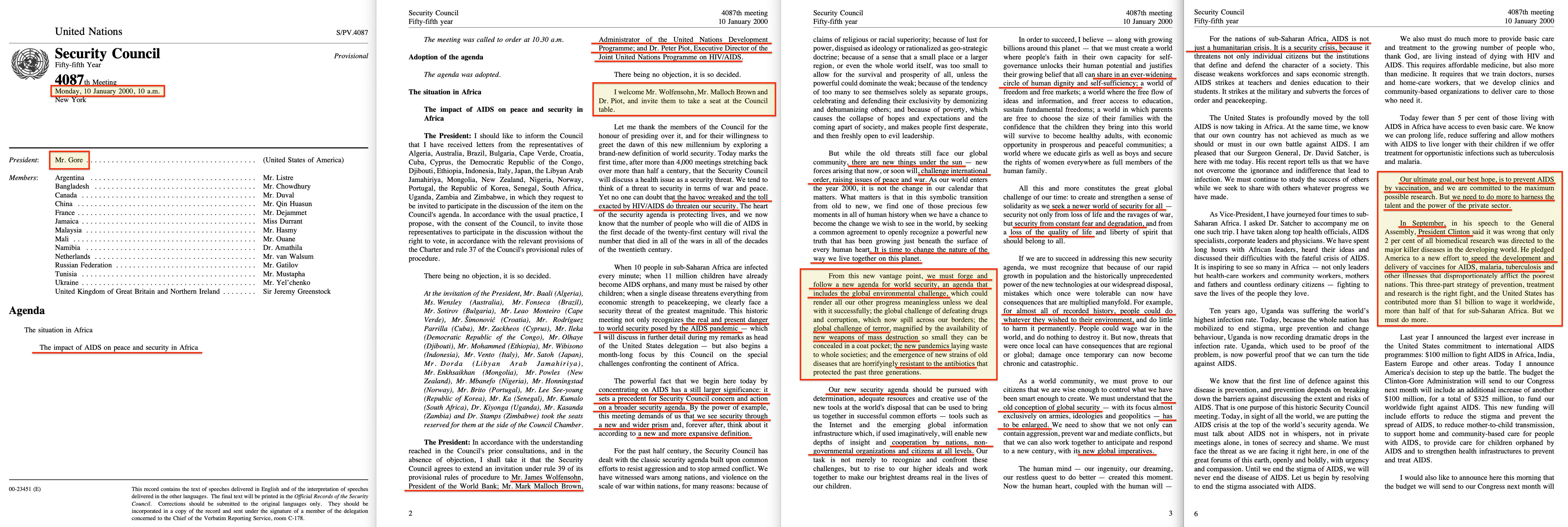
The conceptual became operational on January 10, 2000. Gore used his opening remarks at a UN Security Council meeting (S/PV.408720) to propose that the Council should expand its ‘new security agenda’ beyond traditional military threats to include ‘the new pandemics’, resistance to antibiotics, and ‘the global environmental challenge’.
No doubt by ‘coincidence’, Obama introduced ‘One Health’ through antibiotic resistance in 201521, and the Global Health Security Agenda in 2014.


That same day, the Security Council held its first-ever debate on a health issue, treating HIV/AIDS as a threat to international peace and security. Within months, the Council passed Resolution 130822 — the first Security Council resolution on health — linking HIV/AIDS to the readiness of peacekeeping forces.
This matters greatly, because the UN Security Council isn’t a health agency or an environmental ministry. Yet, it’s the only UN body that can authorise military force and impose binding obligations on member states. By bringing health and environmental issues into the Council’s practice, Gore was securitising them — transforming them from policy problems into security threats.
And while the UN Charter hasn’t (yet23) been amended to formally expand the Security Council’s mandate, the practical effect is the same: issues once handled by specialised agencies like the WHO now appear on the Security Council’s agenda and are subject to its unique enforcement powers which in extreme cases include the projection of military force.

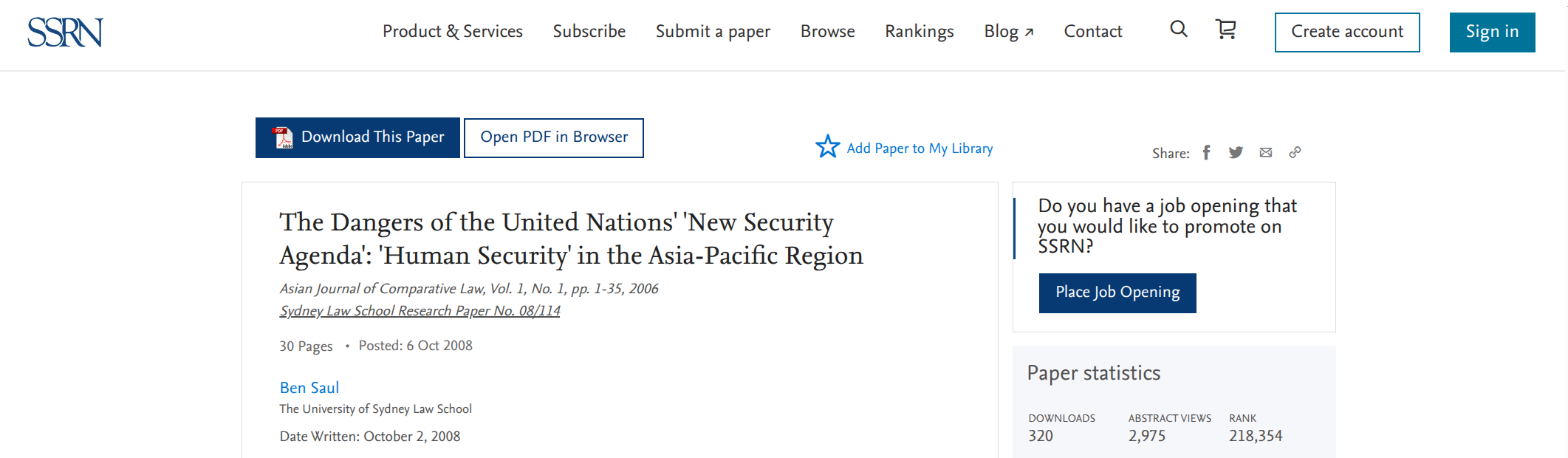
Legal scholarship on the UN’s ‘new security agenda’ shows how the human security paradigm broadened what counts as a threat to peace — from inter-state force to baskets of vulnerability (health, environment, poverty, displacement). That elasticity helped normalise Council attention to non-military harms, but it also imported a structural ambiguity: the looser the category, the easier it becomes to justify Security Council engagement beyond classic Chapter VII scenarios, with mandates that are politically powerful but legally indeterminate.
Regional reactions24 — especially in parts of the Asia–Pacific — underline the stakes. States wary of intervention pretexts have read human security as both a resource-magnet for genuine harms and a doctrinal doorway for mandate creep. The same framing that mobilises attention and resources for pandemics and climate impacts also radically increase the Council’s orbit, shifting crisis governance from specialist agencies toward an enforcement-oriented body with weak electoral accountability.
The cascade that followed was swift:
The G8 summit in Okinawa (July 2000) committed to ambitious targets on HIV/AIDS, tuberculosis, and malaria25.
UN Secretary-General Kofi Annan called for a $7-10 billion “war chest” to fight AIDS in April 200126.
The UN General Assembly Special Session in June 2001 adopted the Declaration of Commitment on HIV/AIDS2728.
The Global Fund to Fight AIDS, Tuberculosis and Malaria launched in 200229.

In January 2003, President George W. Bush announced PEPFAR30 — the President’s Emergency Plan for AIDS Relief — a $15 billion, five-year US commitment which proceeded to install public health surveillance and associated lab capacity through especially the third world; initially for the claimed purpose of tracing the spread of AIDS, but this mission was swiftly broadened to include the likes of Covid in 2020.


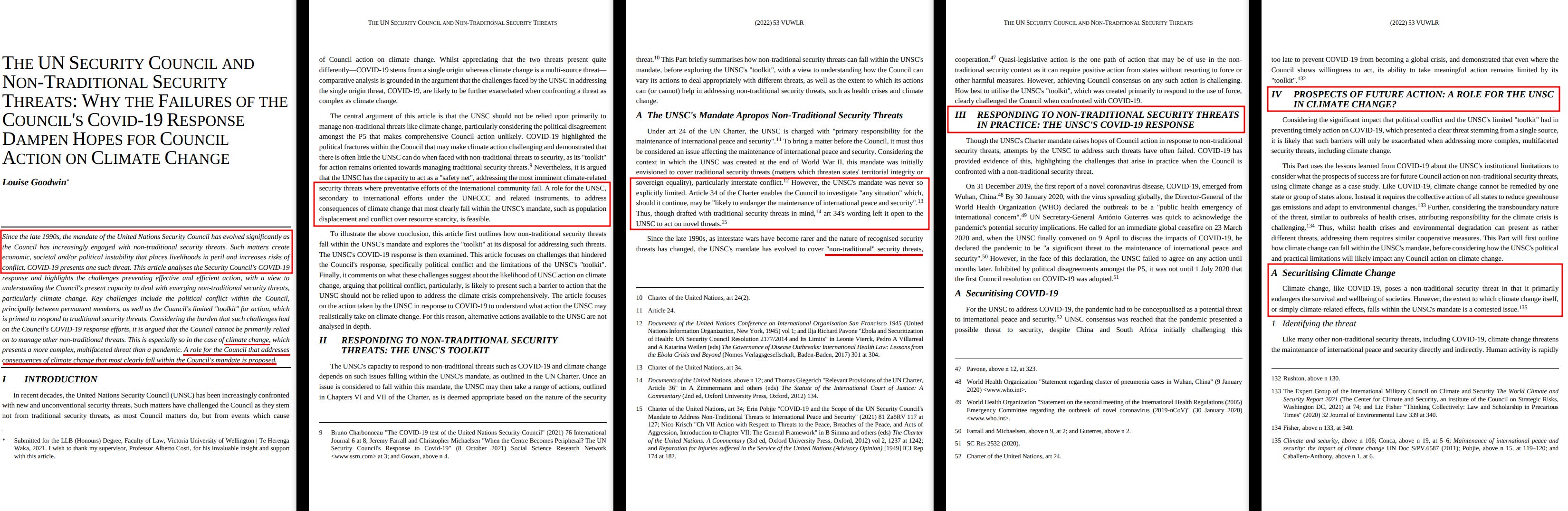
The precedent was set. In September 2014, the Security Council passed Resolution 217731, declaring the Ebola outbreak a ‘threat to international peace and security’. During COVID-19, it passed Resolution 253232 (July 2020) on humanitarian ceasefires and Resolution 256533 (February 2021) on equitable vaccine access.
Legal analyses of the Council’s pandemic record34 describe the Security Council moving slowly and delivering modest results. Politics among the big five dragged things out, and the Council’s tools — built for wars — didn’t fit a pandemic, with especially the veto causing issues. Resolution 2532 did not prescribe binding Chapter VII action, and Resolution 2565 only nudged vaccine access.
Clearly not fit for purpose.
Abolishing the veto would thus work to eliminate these structural issues — and concentrate power. Decisions could move at a much faster speed, with Chapter VII enforcement available for pandemics, climate shocks, and ecological collapse down the line, without being throttled by national politics.
Yet, health crises were now, officially, security issues subject to Security Council action, with equitable sharing leading to PABS and ultimately — the health equity clearinghouse covertly called for through the 1978 Declaration of Alma-Ata which sought to reorganise global health delivery, by centralising the provision of information, education, drugs, and vaccines.


The Environment
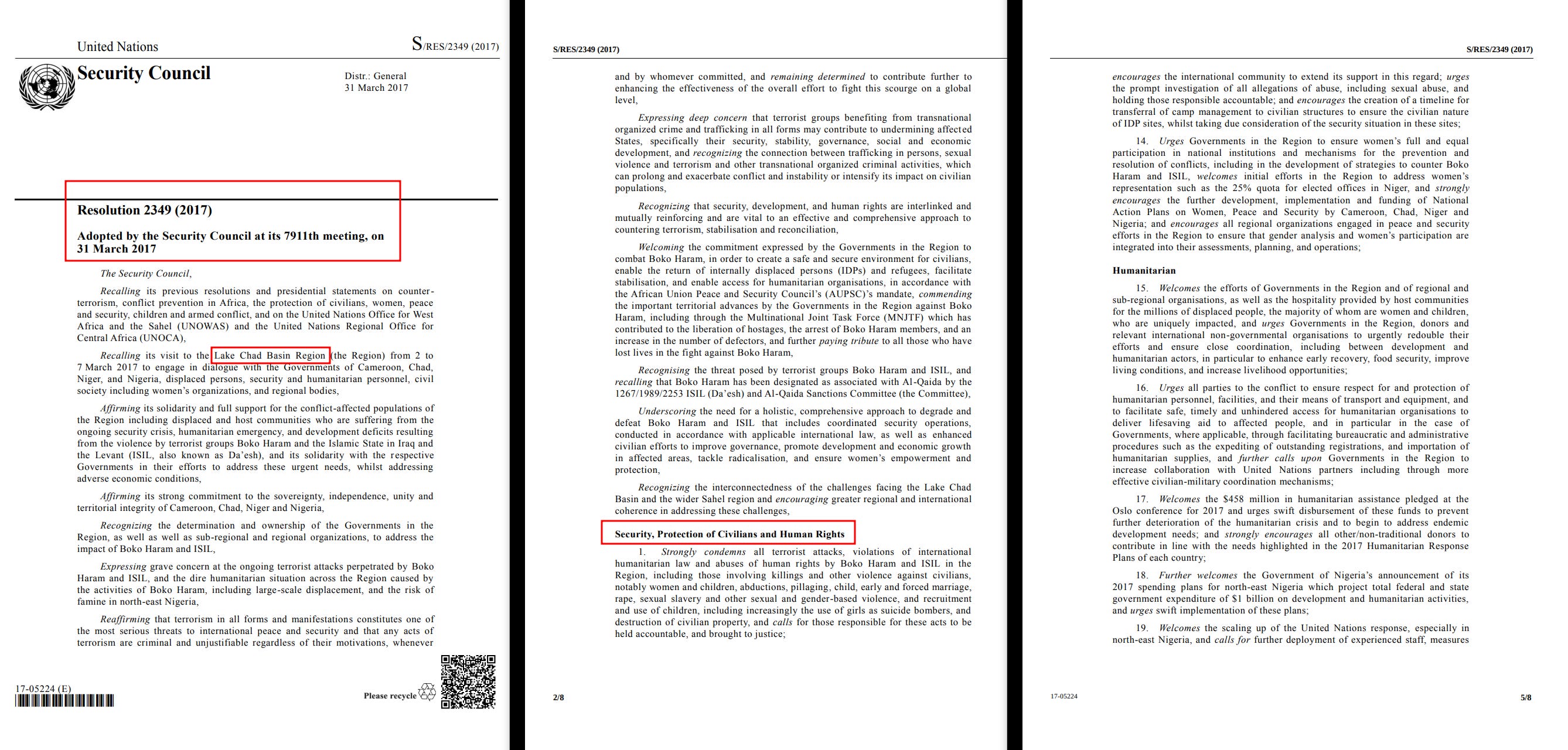
Gore’s 2000 call to add environmental challenges to the Security Council’s agenda met more resistance, but the trajectory is similar. The Council held its first dedicated debate on climate and security in April 2007 (S/PV.566335). Since then, country-specific resolutions — such as Resolution 234936 (2017) on the Lake Chad Basin — have begun noting climate change and ecological degradation as ‘risk multipliers’ contributing to conflict.
A thematic resolution (S/2021/99037) explicitly recognising climate change as a security threat was proposed in December 2021 but failed — vetoed by Russia. The politics remain contested as major powers worry that securitising climate change could be used to justify intervention in their domestic affairs or legitimise sanctions and military pressure under environmental pretexts.
This is where the institutional-design critique becomes important. Advocates of ‘effective multilateralism’ argue that specialised agencies — the WHO for health, UNEP for environment — are the appropriate venues for these issues, with Security Council involvement reserved for exceptional, last-resort situations where enforcement capacity is needed. But the Council’s practice has moved beyond exceptional cases toward routine treatment of health and, increasingly, environmental matters as security-relevant. This shifts governance from technical agencies with specialised expertise toward a political body designed for enforcement, not deliberation.
But the direction of travel is clear, and parallel to the Security Council track, two other developments have been advancing environmental governance:
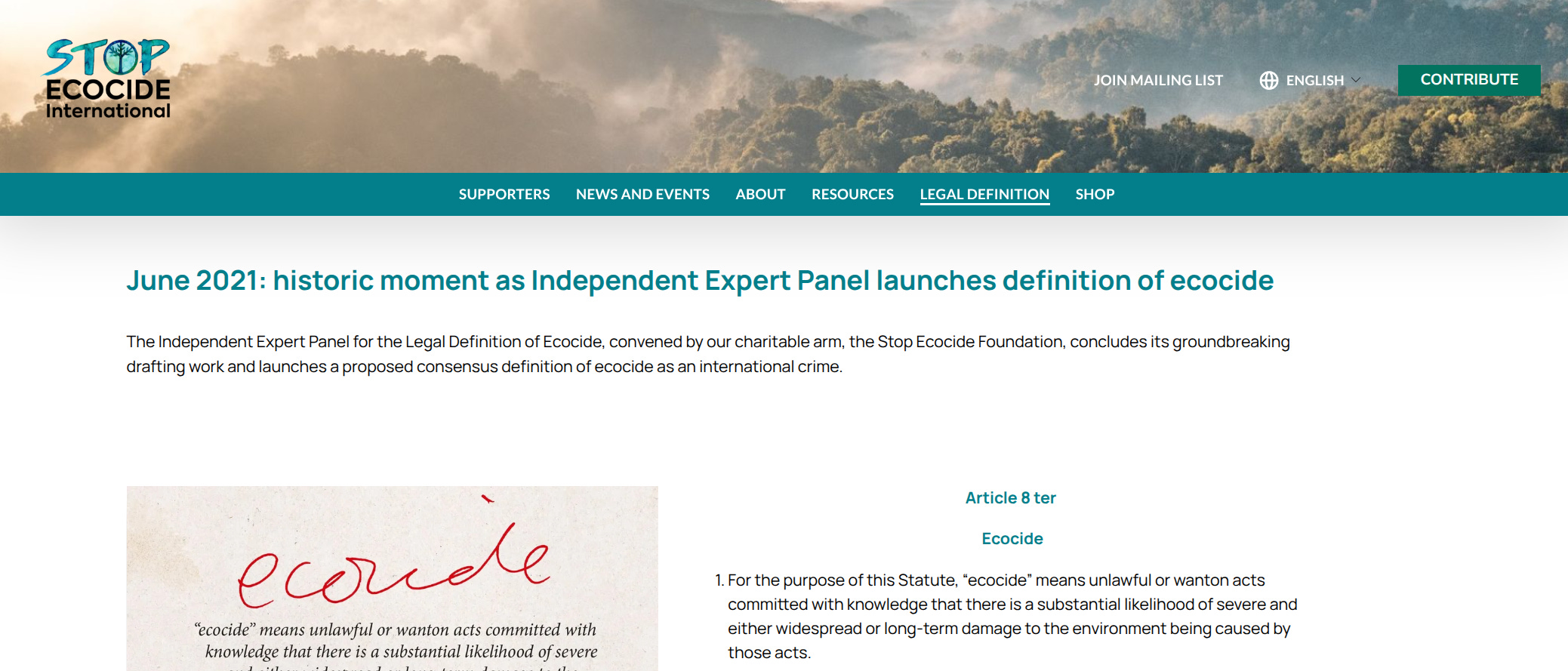
First, the concept of EcoCide — severe environmental destruction as an international crime — has gained traction38. An ‘independent expert panel’ published a legal definition in June 202139. The European Union’s Environmental Crime Directive (2024/120340), which entered into force on May 20, 2024, creates what it terms ‘qualified offences’ for acts causing ‘damage which is extensive, or in the case of damage to an ecosystem, irreversible or long-lasting’ — language widely understood as EcoCide-like provisions — even if the directive doesn’t use that term explicitly.
EU member states are now transposing these provisions into national law. Several countries, including France41 and Belgium42, have introduced or adopted domestic ecocide laws independently.
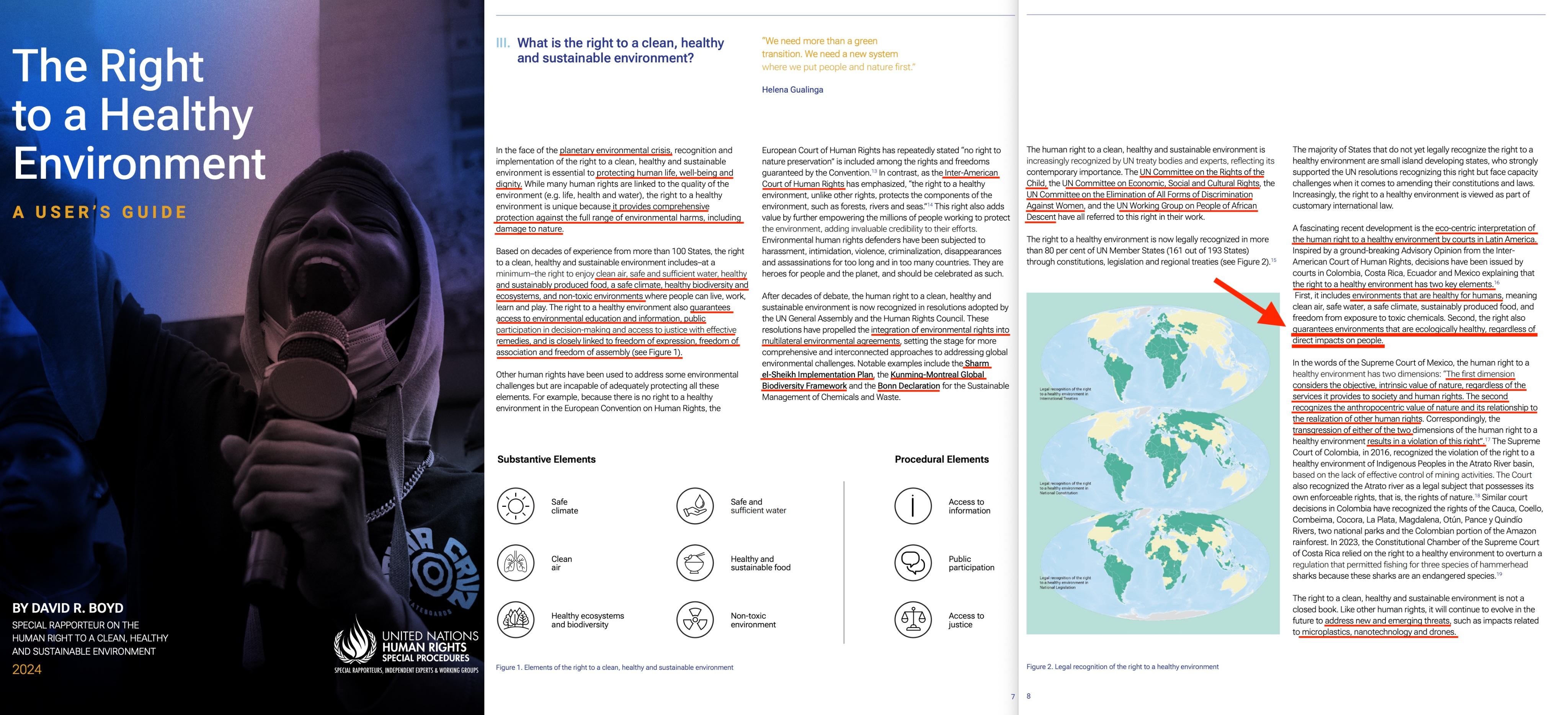
Second, in July 2022, the UN General Assembly formally recognised the human right to a clean, healthy, and sustainable environment (Resolution A/RES/76/30043), yet44:
... the right also guarantees environments that are ecologically healthy, regardless of direct impacts on people.
This raises the weight of environmental protection across the entire UN system, creating legal and political pressure. If EcoCide becomes a matter for Security Council attention — as a threat to peace and security analogous to health crises — the Council could, in theory, authorise coercive measures to halt environmental destruction.
Forward Engagement
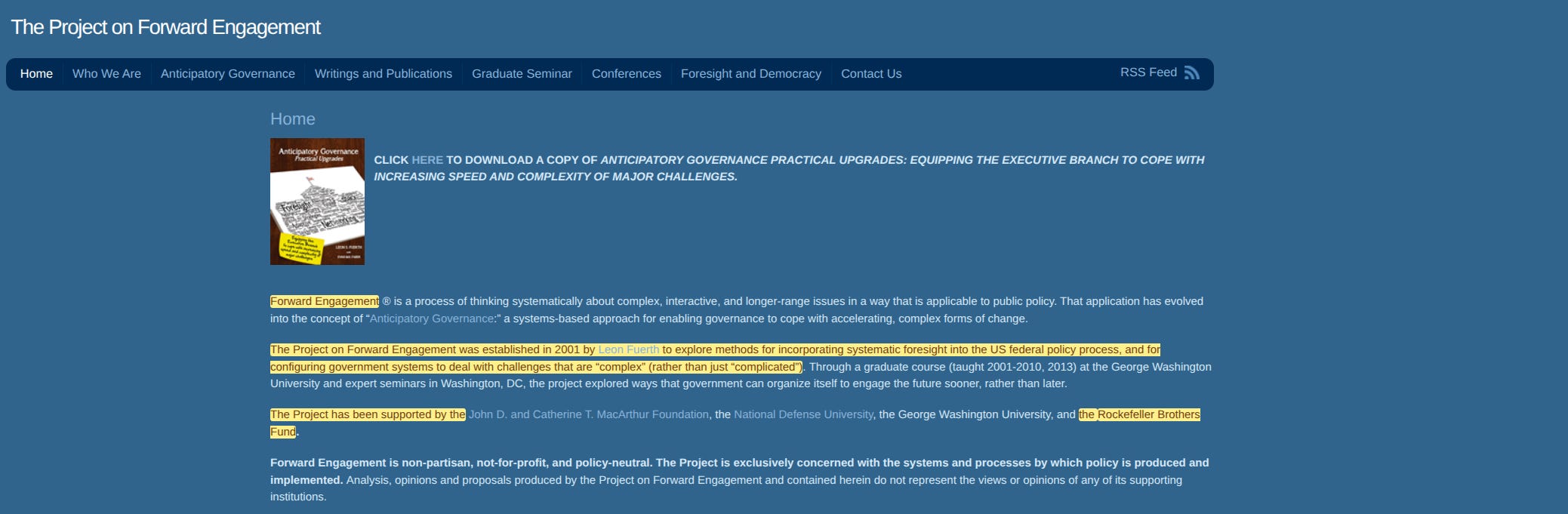
Underpinning this entire trajectory is a governance philosophy called ‘Forward Engagement’45, formalised by Rockefeller-sponsored Leon Fuerth46, who served as Al Gore’s National Security Advisor47. In his 2009 monograph48 and subsequent academic work, Fuerth described Forward Engagement as disciplined foresight linked to policy: using models, scenarios, and early warning systems to anticipate threats before they manifest, then organising cross-agency responses with continuous feedback.
The Project on Forward Engagement was established in 2001 by Leon Fuerth to explore methods for incorporating systematic foresight into the US federal policy process, and for configuring government systems to deal with challenges that are “complex” (rather than just “complicated”).
… do make a mental note of that.
This perhaps sounds reasonable for managing complex, slow-moving threats like pandemics and climate change, with proponents arguing that democratic processes often wait for problems to become undeniable before acting, by which time intervention is more costly and less effective. Anticipatory governance promises to get ahead of crises, unlocking resources and urgency before damage is irreversible. Securitisation, in this view, isn’t a power grab — it’s a recognition that certain threats threaten stability and require coordinated, high-level response.
But anticipatory governance acts on predictions, not realities. It requires trusting models, expert assessments, and early warning systems. And it often operates through emergency measures that bypass normal legislative deliberation — because if you wait for full democratic debate, the window for prevention may close.
This is where the architecture becomes concerning.

One Health and the 2025 Pandemic Treaty
On May 20, 2025, the World Health Assembly adopted the WHO Pandemic Agreement49 — formally, an international instrument under Article 19 of the WHO Constitution, making it legally binding on member states upon entry into force. The Agreement represents an institutional fusion of health, environmental, and animal health governance.

At its core is the concept of ‘One Health’, which holds that human, animal, and environmental health are inseparable. The Agreement mandates that countries integrate these domains in pandemic prevention, explicitly targeting the ecosystem drivers of disease spillover: deforestation, wildlife trade, habitat destruction, agricultural intensification.


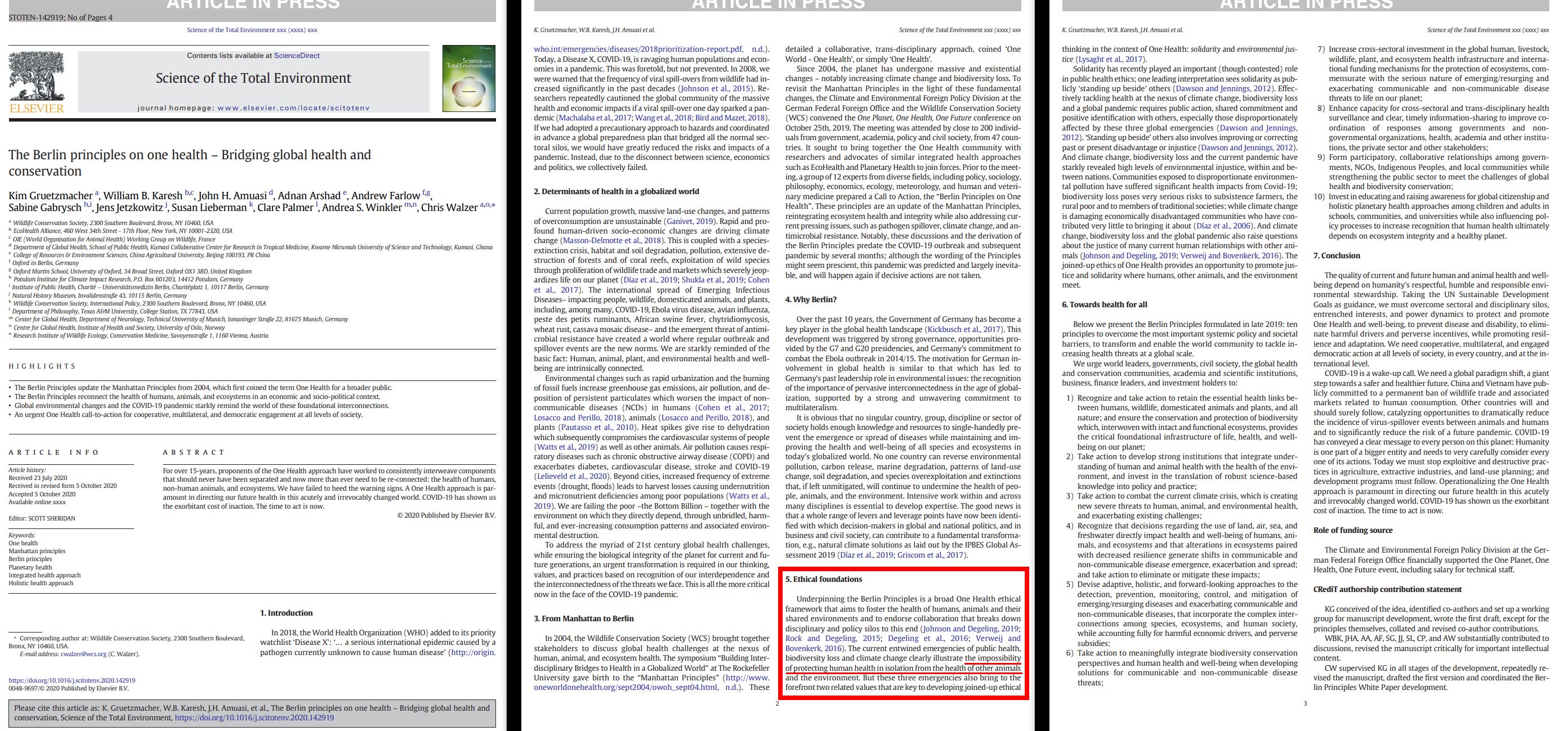
This is the operationalisation of Gore’s interconnected systems logic from three decades earlier. But it also expands the scope of what falls under pandemic governance. Monitoring forests, wildlife populations, livestock systems, and land-use changes becomes part of the global health security apparatus. The boundaries between environmental policy, agricultural policy, and health policy dissolve into a single, ‘holistic’, integrated framework.
The Agreement commits countries to building surveillance systems, sharing data, and implementing measures to address spillover risks. Much of this will be driven by ‘black box’ models — AI systems analysing satellite imagery for deforestation, wildlife tracking data, syndromic surveillance from hospitals, climate projections, all fused into risk assessments.
Who builds these models? What assumptions go into them? What thresholds trigger action? These questions matter, because the answers increasingly determine when emergency measures are justified.

Standing Machinery for Global Shocks
The culmination of this trajectory is the UN Emergency Platform, a concept developed in the UN Secretary-General’s Our Common Agenda50, advanced through the 2024 Summit of the Future51, and referenced in the Pact for the Future52 adopted at that summit. The Emergency Platform is not yet operational — it remains in the proposal and design phase — but its inclusion in high-level UN reform documents indicates serious institutional momentum.
The Emergency Platform is designed as a set of standing protocols that the Secretary-General can activate for ‘complex global shocks’53 — precisely the kind of cascading, cross-domain crises (pandemics, climate disasters, ecosystem collapses) that this governance model anticipates.
And precisely the kind outlined by Leon Fuerth’s Project on Forward Engagement discussed above in context of anticipatory governance.

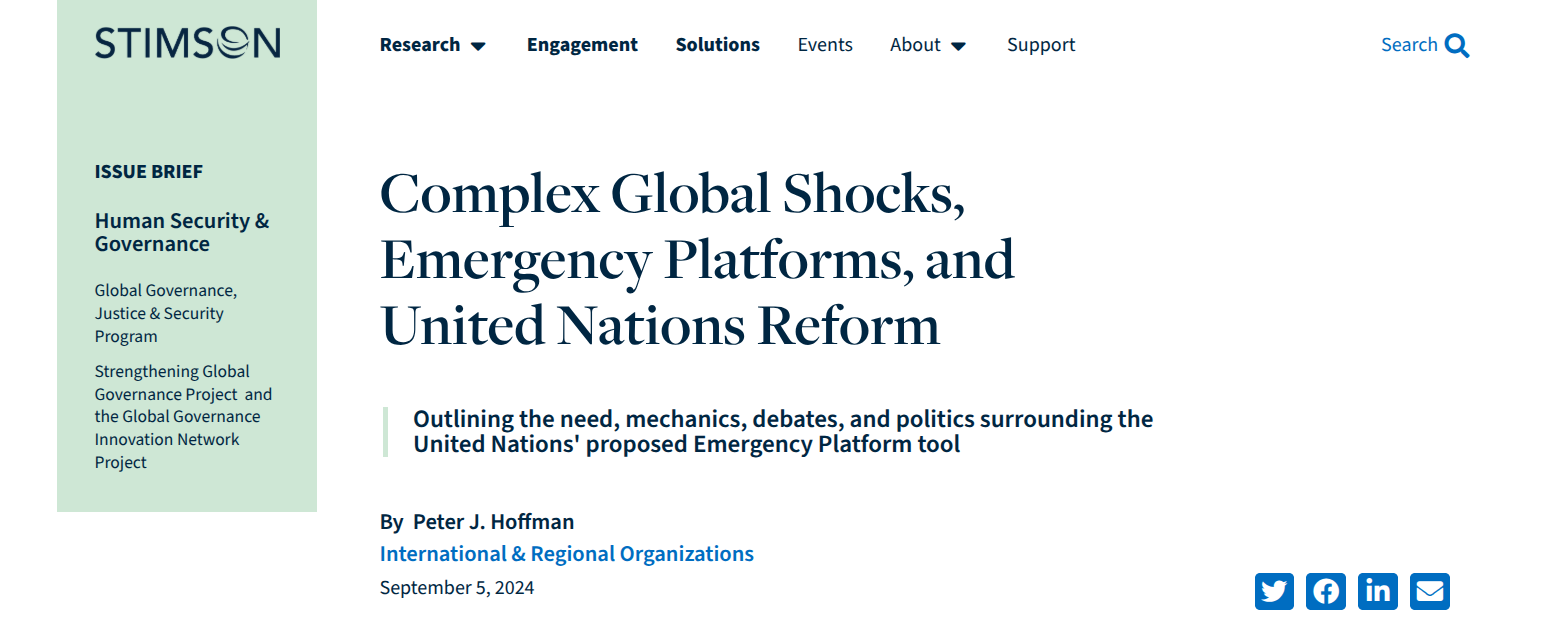
The details remain vague, which is itself concerning. But the logic is clear: rather than convening multilateral negotiations after a crisis emerges, pre-position the coordination machinery so response can be immediate. Create activation criteria, response protocols, and institutional relationships in advance. When the threshold is crossed, the platform activates.
Governance by indicators — precisely what we witnessed during Covid.

This is anticipatory governance institutionalised.
The Emergency Platform isn’t triggered by a manifest crisis that everyone can see and debate. It’s triggered when models and expert assessments determine that a threshold has been crossed — that a pandemic risk score is too high, that a climate tipping point is approaching, that an ecosystem collapse threatens cascading consequences.
It’s the express road to algorithmic authoritarianism and the death of democracy.


The Black Box Problem
The architecture is deeply troubling from a democratic accountability perspective.
‘Digital Earth’ — the planetary monitoring infrastructure Gore envisioned — now exists. Satellites observe deforestation in near real-time. Biosurveillance systems track disease patterns. Climate sensors measure atmospheric composition. Wildlife tracking monitors species movements. Agricultural data captures land-use changes.
All of this data flows into models.
Increasingly, these models are AI systems — sophisticated, opaque, and trained on vast datasets. They identify patterns, generate risk scores, and flag emerging threats. They determine when a situation crosses from ‘concern’ to ‘emergency’.

The opacity problem here operates on two levels:
Epistemic opacity: AI models — particularly deep learning systems — are often not fully explainable even to their designers. Why did the model flag this particular combination of deforestation patterns, wildlife mortality, and climate anomalies as high-risk? The model ‘learned’ patterns from training data, but who picked the training data? The causal logic may further not be fully transparent, the complex system may not be interpretable, and its data not reviewable.
Procedural opacity: Who decides what thresholds trigger action? Who sets the risk tolerance? Who determines that a 15% probability of spillover justifies activating pandemic protocols? These are political choices dressed in technical language. The question isn’t just ‘can we understand the model?’ but ‘who governs the model and its use?’
Both matter, but the procedural opacity is more immediately concerning for democratic accountability. Even if we could make AI models perfectly interpretable, we’d still face questions about who sets activation criteria, who can challenge model outputs, and what oversight mechanisms exist.
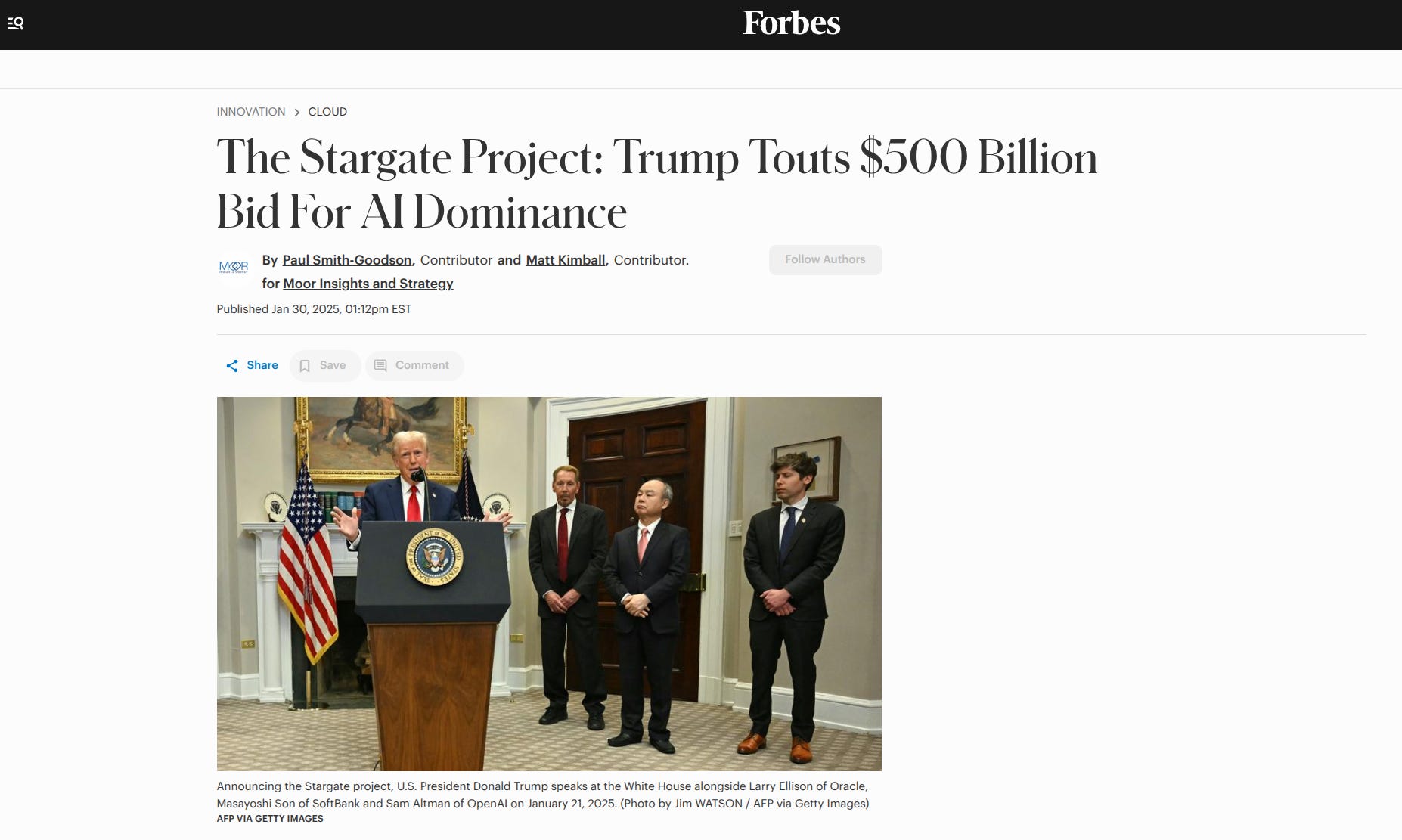
The computational infrastructure for this exists or is rapidly being built54. Hyperscale AI initiatives — including major public-private partnerships for massive compute capacity — provide the processing power to analyse planetary-scale data in real-time.
The problem isn’t just technical opacity. It’s the loop this creates:
Global surveillance infrastructure generates data
AI models process data and flag ‘emergencies’
Emergency Platform activates
Security Council authorises response (potentially coercive under Chapter VII)
Emergency justifies expanded surveillance
Loop intensifies
At every node, accountability is weak:
Surveillance layer: Who controls the sensors, satellites, and data flows?
Model layer: Training data, assumptions, and thresholds set by technical experts, not democratic processes.
Activation layer: Emergency Platform protocols not public, criteria unclear. Who can trigger it?
Enforcement layer: The Security Council has no electoral accountability. The P5 veto is the only structural brake, but it’s increasingly seen as an obstacle to ‘effective crisis response’.
Exit mechanism: How do emergency powers end? COVID-19 demonstrated that emergency measures expand in scope and persist long after the acute phase.

The Veto Paradox
The Security Council’s veto power creates a paradox at the heart of this architecture.
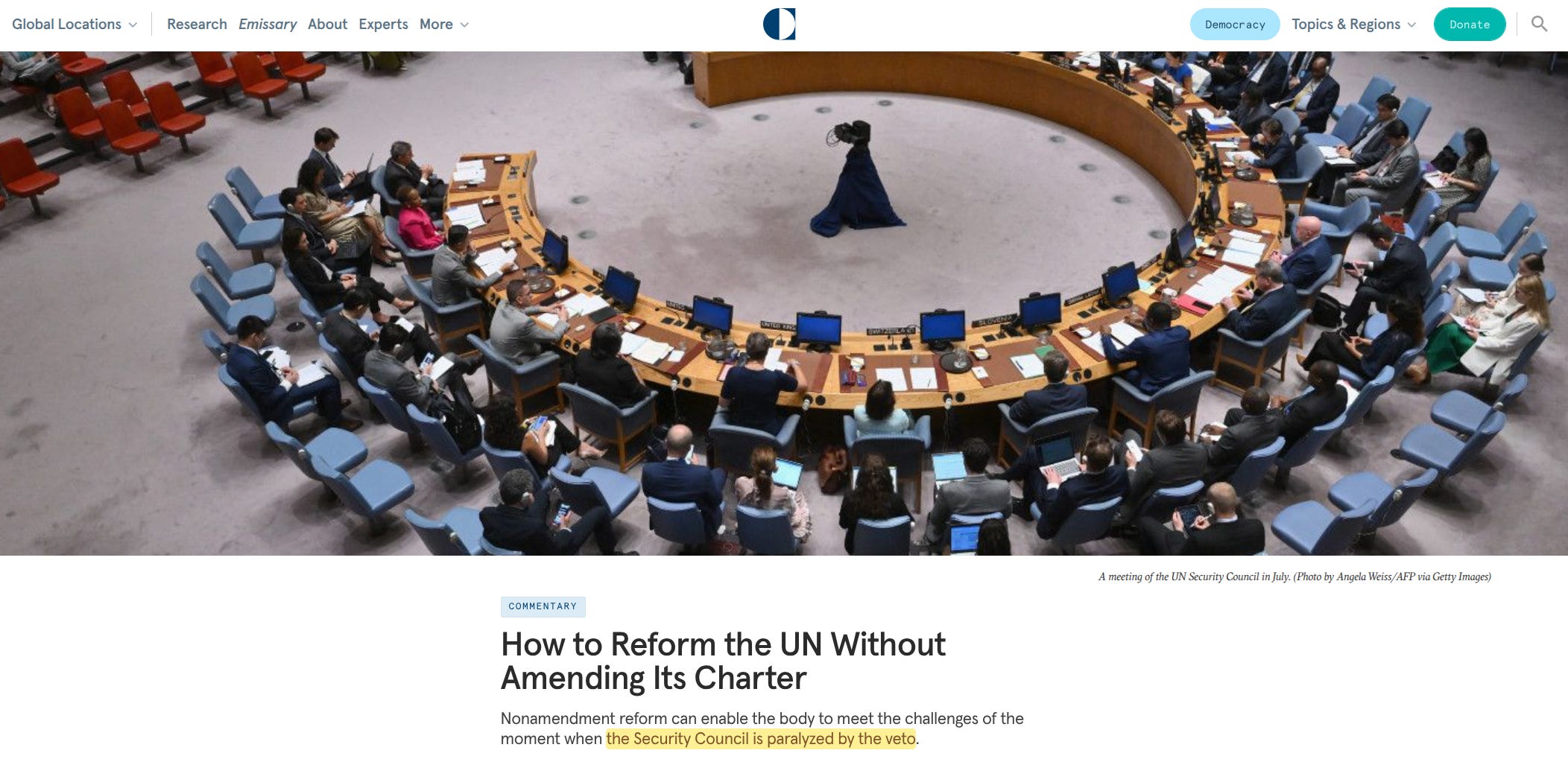
With veto power intact, any of the P5 (United States, United Kingdom, France, Russia, China) can block action. This prevents consensus on climate-security measures (as Russia demonstrated in 2021) or potential EcoCide enforcement. The system can’t act decisively on the very crises it’s designed to address.
But if veto power is reformed or eliminated55 — as many advocates of ‘effective multilateralism’ propose — the last structural brake on concentrated Security Council emergency powers disappears. A body with no electoral accountability would have expanded authority to act on health, environmental, and climate ‘emergencies’ as determined by algorithmic assessments — a wholly unaccountable ‘black box’ model, dictating your life under a potential permanent ‘meta-crises’ emergency56.

What This Means
This isn’t a conspiracy theory, but a documented policy trajectory built through public speeches, published academic work, international treaties, and institutional reforms. The governance architecture is real. The concern isn’t that it’s hidden, but that it’s proceeding with insufficient attention to its implications for democratic accountability.
The defense of this architecture is straightforward: we face genuine transboundary threats that don’t respect borders or wait for legislative calendars. Pandemics spread faster than parliaments can convene. Climate tipping points may pass before consensus emerges. Securitisation unlocks resources and high-level attention. Anticipatory governance prevents rather than merely responds.
Accepting the reality of transboundary threats doesn’t require accepting this particular architecture as the only solution. The system being built has structural features that resist democratic accountability at every layer.
Three decades after Earth in the Balance, the vision Gore articulated has matured into:
A global surveillance infrastructure (Digital Earth realised)
A methodology for acting on predictions rather than manifest crises (Forward Engagement)
Expanded Security Council practice that treats health and increasingly environmental issues as security matters
Legal frameworks that integrate health, environmental, and security governance (One Health and the Pandemic Treaty)
Proposed standing institutional machinery for rapid activation (UN Emergency Platform)
AI systems that process planetary data and generate risk assessments with full impunity (operating with both epistemic and procedural opacity)
Each piece may appear reasonable in isolation. But the system as a whole creates structural conditions for concentrating power, operating through opaque technical processes, and acting under emergency framings that suspend normal democratic deliberation.
The trajectory is toward governance by expert-driven, model-based, anticipatory systems operating at the international level — precisely where electoral accountability is weakest and technical opacity is greatest. ‘Emergency’ becomes a permanent condition justified by algorithmic predictions of futures that haven’t yet materialised.
This should concern anyone who values democratic ideals. The architecture being built could be well-intentioned, but its structural features fundamentally align with authoritarian systems — it’s just hidden well.
The question isn’t whether we face genuine global challenges that require coordination. The question is whether this particular architecture — anticipatory, algorithmic, internationally concentrated, emergency-framed — leads to the creation of a system whose accountability gaps we’ll come to regret.
Postscript
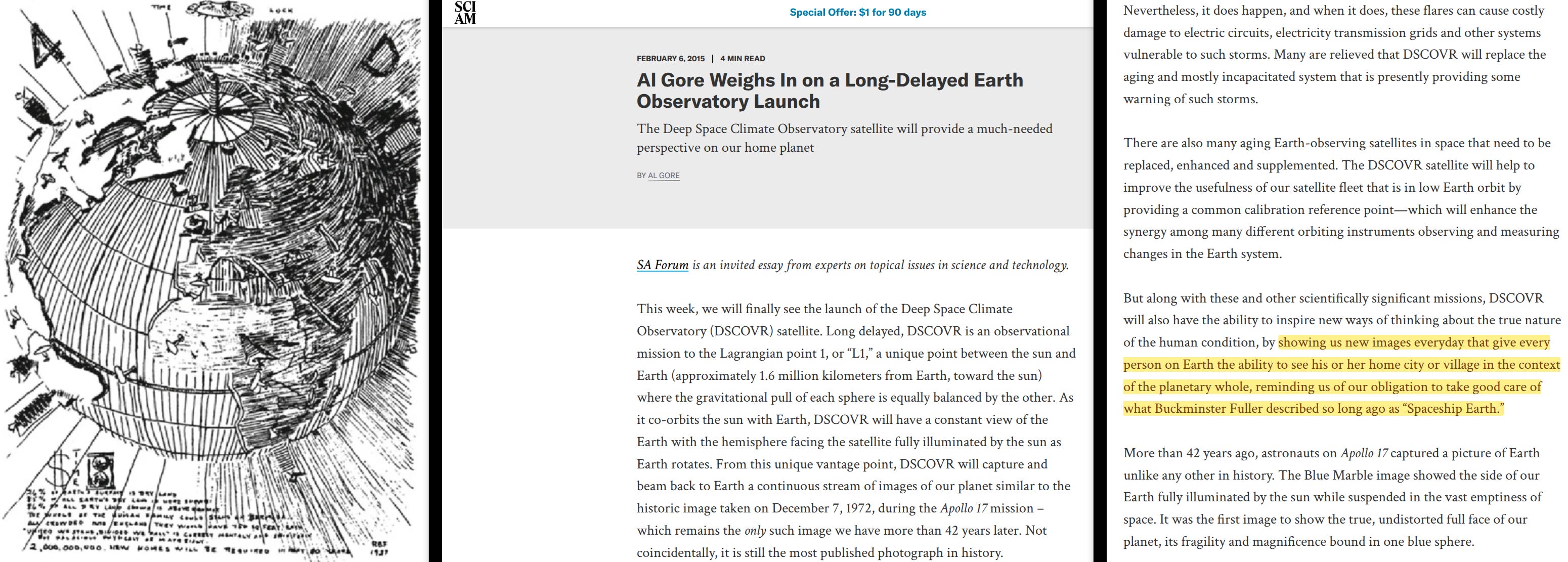
Al Gore’s 2015 Scientific American essay on the DSCOVR satellite explicitly reference Buckminster Fuller’s ‘Spaceship Earth’ metaphor57. Fuller himself, in his 1927-28 Air-Ocean World Town Plan and later Dymaxion maps, pioneered whole-system planetary visualisation — treating Earth as a single, interconnected surface requiring integrated planning.
In context of Gore’s Digital Earth, I can find no better place to finish but with a 100-year old drawing in alignment with this vision, explicitly referencing a closed-loop General Systems Theory view of the world — ie, Spaceship Earth.