
Flow Control

Hess, Marx, Lenin, Bogdanov, Ashlag, Laitman, Burstein, Negoita.
They all worked to solve the same problem: how to make flows visible, steerable and conditional so the output serves whatever the people in charge call ‘the social good’.

They fell out over plenty — spirit versus matter, revolution versus bureaucracy, nation versus world — but really only about who writes the rules. They never argued over the basic design: vessels, channels, processing nodes, clearing, settlement. Top-down flow management is a common answer to coordination problems, and plenty of cultures have invented it independently.
The narrower point here is that it’s this particular chain — tied together by documented influence, direct citation and institutional handovers — that built the global clearing infrastructure.


The Root
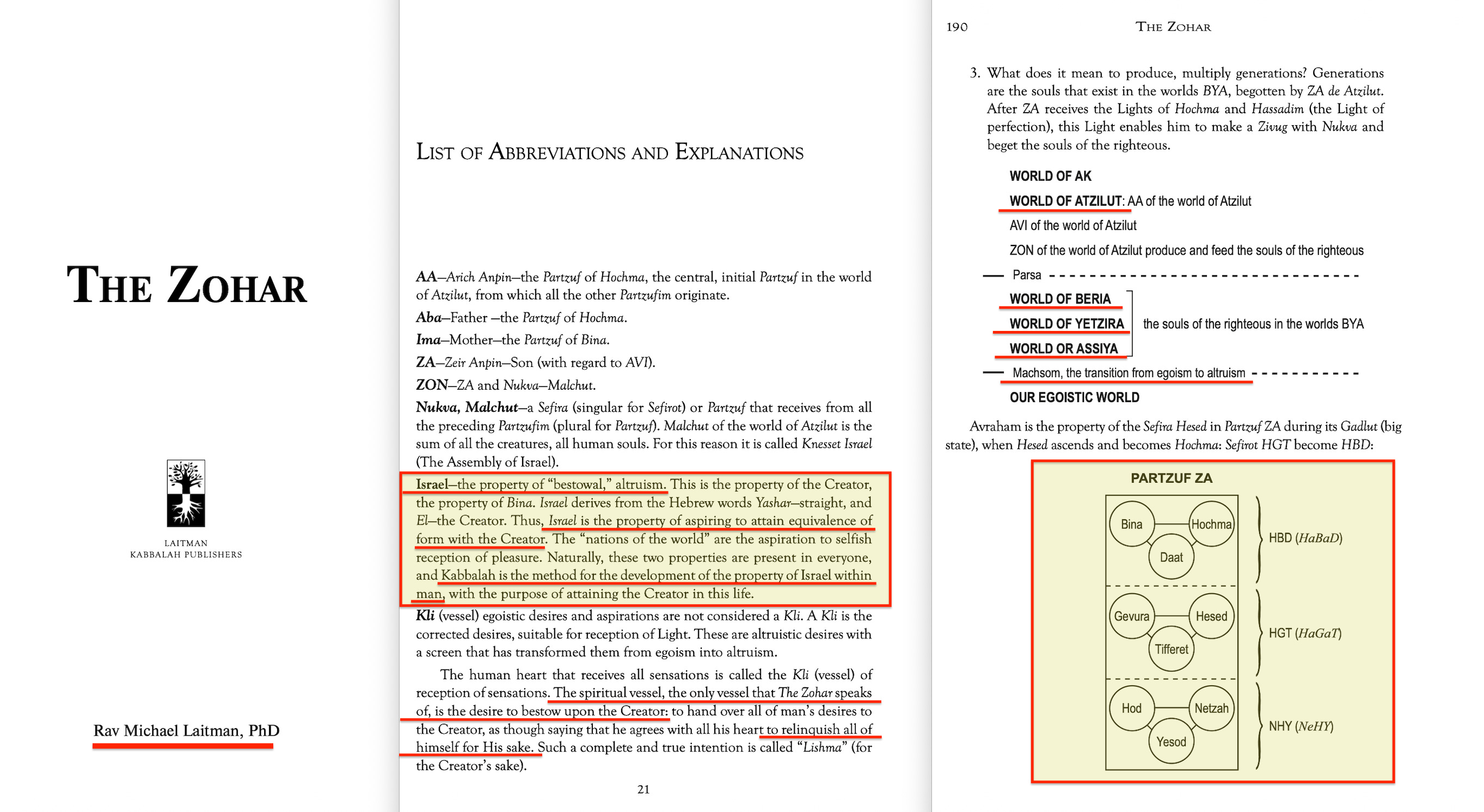
The Book of Zohar1 lays out the structure. Ten vessels called Sephiroth sit on three pillars — right (mercy, expansion), left (severity, constraint) and middle (balance, synthesis) — linked by thirty-two paths. The whole system’s governed by what the Zohar calls the Mystery of the Balance: at each stage, mercy meets severity to produce harmony. Four worlds — Emanation, Creation, Formation and Fabrication — trace successive stages from the infinite down to the material.
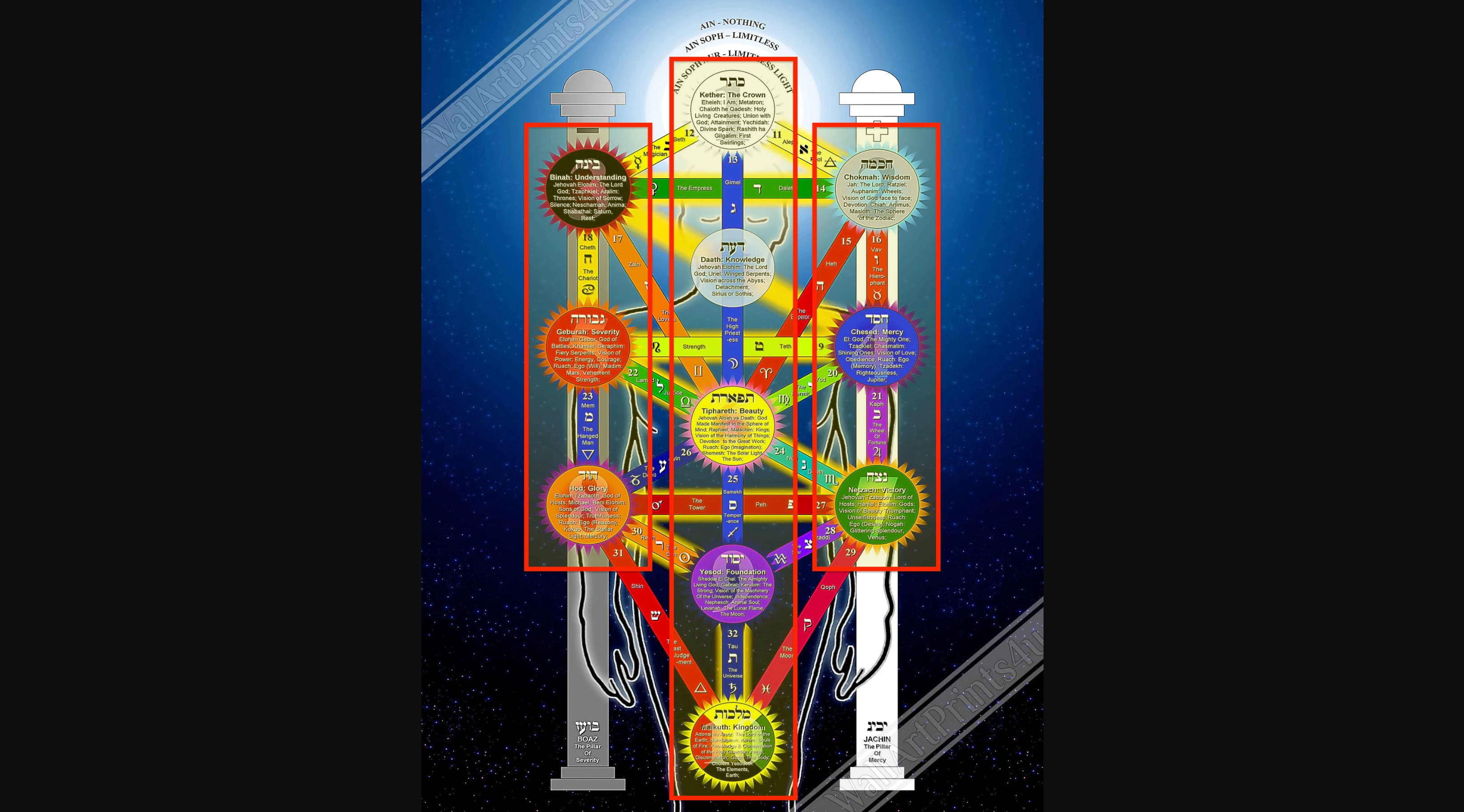
Rabbi Isaac Luria2 added the mechanics. Ein Soph3 — the Infinite — contracts itself (tzimtzum) to create a void, then re-enters through a single channel. Light flows through this channel into the vessels, each one conditioning what it receives and passing the result to the next. At each vessel, a screen — the masach4 — decides how much light passes through and how much gets held back. It works as input constraint: options are narrowed before processing, so the flow’s checked at entry rather than fixed afterwards. Further from the source, the flow grows denser until it hits the bottom — Malkuth, the Kingdom, the material world5 — where the individual receives the outcome as reality.
Structurally, the Zoharic-Lurianic tradition describes how a single input — an ‘ethical’ axiom at the top — gets conditioned through successive layers until it becomes the lived reality of the individual at the bottom6. The individual doesn’t see the architecture; they just experience the output as the way things are.


The Philosopher
Baruch Spinoza7 (1632–1677) studied at Amsterdam’s Talmud Torah school, where Kabbalistic ideas circulated, until his excommunication in 16568. Once the Jewish institutional door closed, he wrote a secular grammar that made the same topology available to every regime that followed. His Ethics9, published after his death in 1677, recast the Zohar’s flow architecture as geometry — axioms, propositions and demonstrations10.
The mapping is exact. Ein Soph becomes Substance11: infinite, self-causing, unknowable in full. The Sephiroth become modes — particular, finite expressions of the infinite, each caused by earlier modes, each expressing the substance in more determined form. The contraction becomes self-limitation into attributes, the channels through which substance becomes knowable12. Kabbalistic correction (tikkun) becomes Spinoza’s ethical programme13: moving from passive affects to active ones, from being pushed around by causes you don’t grasp to acting from a clear understanding of the causal structure.
Spinoza’s key move was making ethics immanent14. If God is Nature — Deus sive Natura15 — then moral law isn’t handed down from outside but built into reality itself. You don’t receive it through revelation but derive it through reason16, and dissent becomes a failure to understand nature rather than rebellion against authority.
Everything downstream follows from this. If the ethical axiom is the structure of reality, it can’t be voted on, opted out of or democratically revised. It can only be discovered — or the population can be corrected until they do.


The Freemasons
Albert Pike’s Morals and Dogma17 (1871) is a collection of lectures for the Scottish Rite. Three chapters carried the Zoharic structure into the Anglo-American institutional class: the sixteenth degree (Prince of Jerusalem), the twenty-sixth (Prince of Mercy), and especially the twenty-eighth (Knight of the Sun), which runs to over a hundred pages.
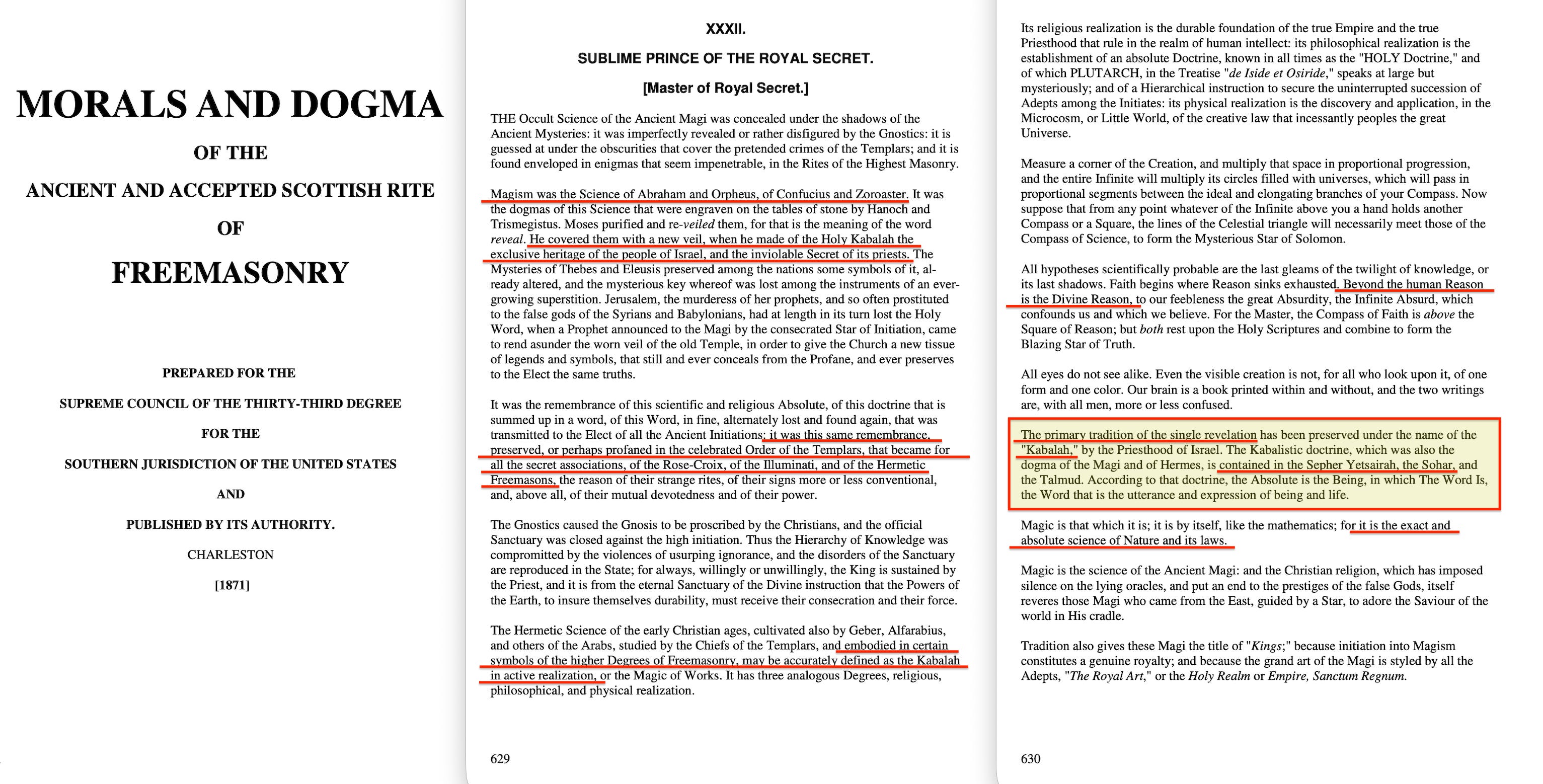
Pike openly names his sources. ‘The cabalistic doctrine, which was also the dogma of the Magos and Hermes, is contained in the Sepher Yetsirah, Zohar and Talmud’. He draws on Rabbi Isaac Luria’s commentary and the Siphra de Zeniutha. The Kabbalah, he writes, is a ‘doctrine so logical, so simple, and at the same time so absolute’ — ten ciphers and twenty-two letters, a triangle, a square, and a circle.
His language is openly hydraulic. The Infinite Deity unfolds ‘by self-limitation, in ten emanations or out-flowings, called SEPHIROTH, or rays’. Chokmah is the active power that produces intellection, and Binah is the passive capacity ‘from which, acted on by the Power, the Intellection flows’. The Adam Kadmon — the original form — receives the light and sends it back out ‘in streams out of itself, by certain apertures, as it were, like windows’. And importantly: ‘the Light proceeding from this Adam Kadmon is indeed but one; but in proportion to its remoteness from the place of out-flowing, and to the grades of its descent, it is more dense’.
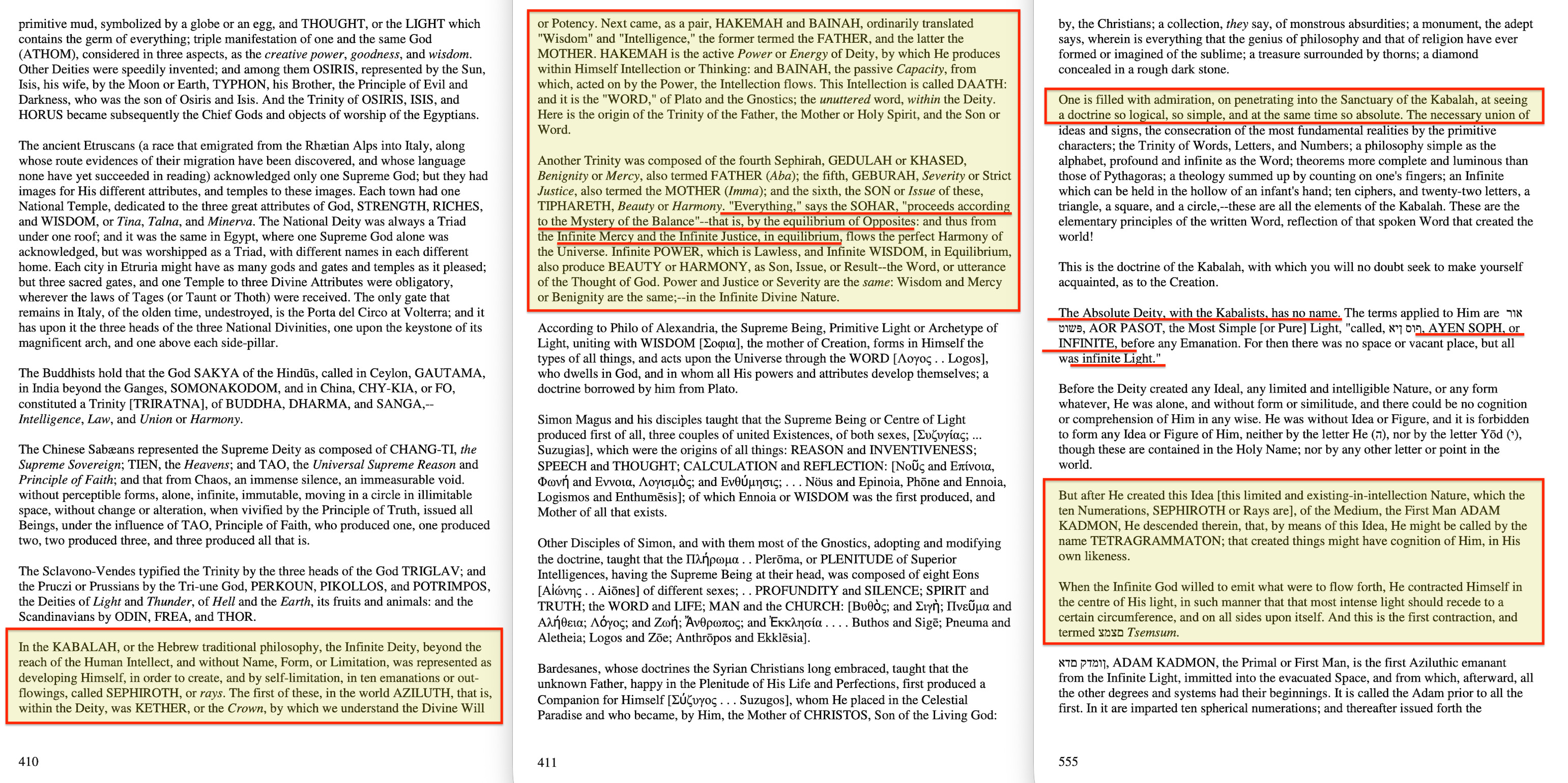
Pike says the Sephiroth ‘are not ten different beings, nor even beings at all; but sources of life, vessels of Omnipotence, and types of Creation’ — they’re containers that receive the flow, process it and pass it on. To stop the infinite light ‘from flowing into and re-filling the quasi-vacant space’, you need partitions, boundaries that are ‘somewhat opaque, and not so splendid as the light they enclose’. The vessels condition the flow; they aren’t the flow itself.
The cascade is simple enough:
The last nine Sephiroth are included in, at the same time that they have flowed forth from, the first of all, KETHER, or the CROWN. Each also, in succession flowed from, and yet still remains included in, the one preceding it.
Each vessel flows into the next while staying inside the one above.
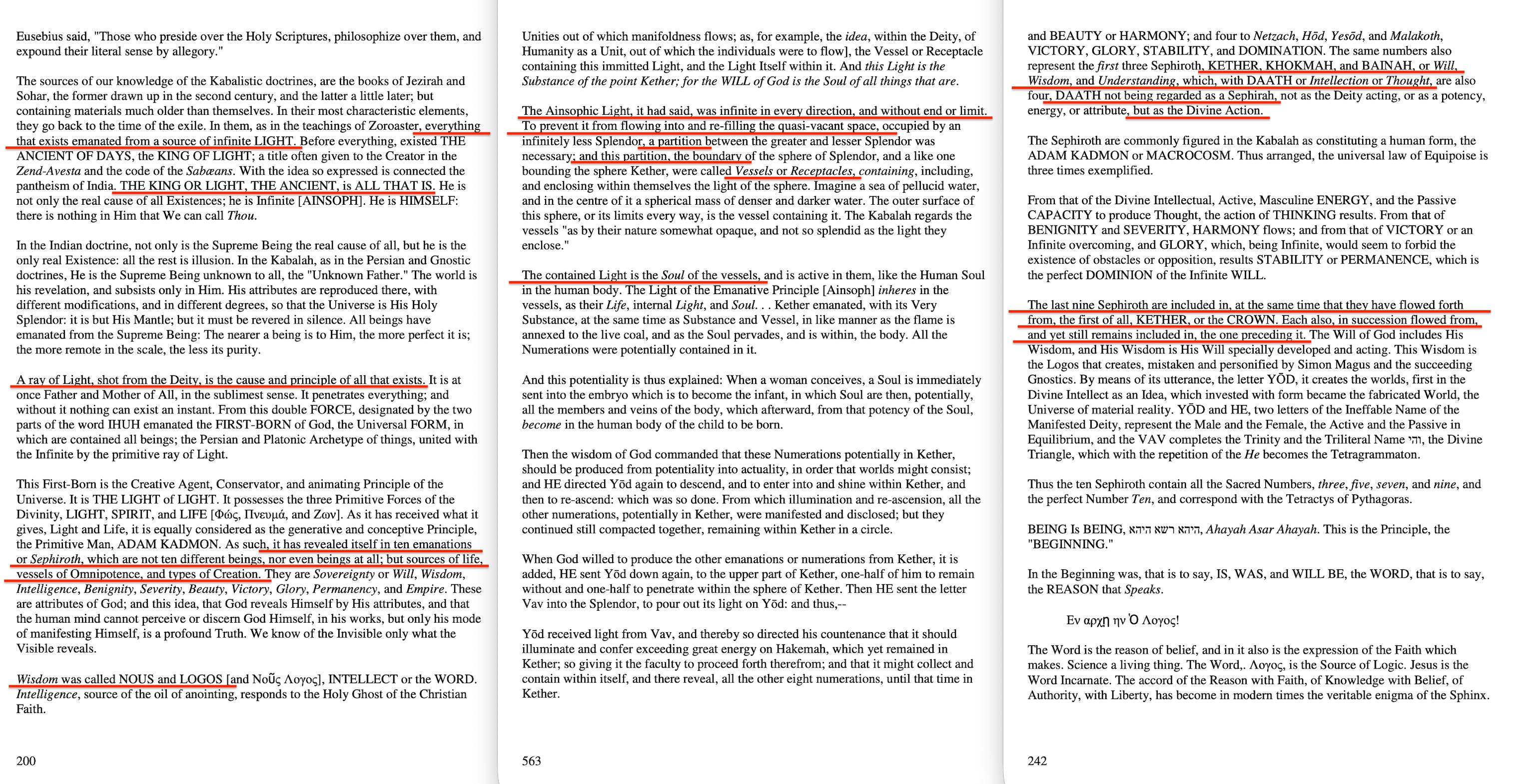
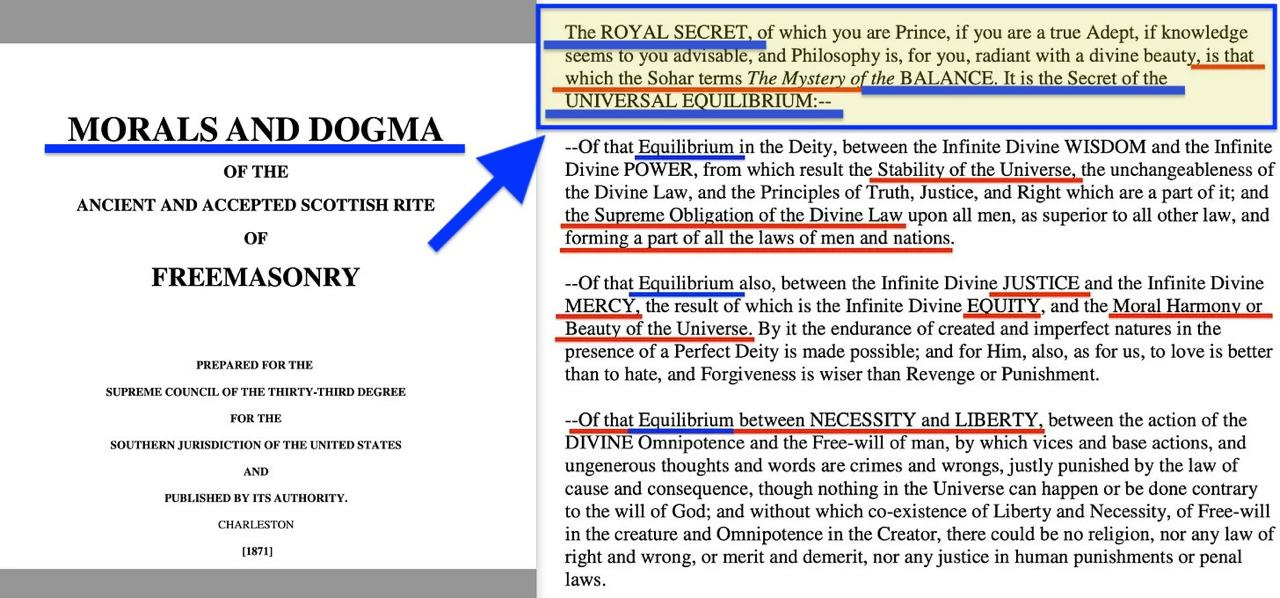
Pike quotes the Zohar on how it works:
Everything proceeds according to the Mystery of the Balance — that is, by the equilibrium of Opposites: and thus from the Infinite Mercy and the Infinite Justice, in equilibrium, flows the perfect Harmony of the Universe.
The Masonic Great Architect occupies the same structural position as Ein Soph and Spinoza’s Substance — a protocol rather than a theology, the ground of being that everything comes from. Muslim, Christian, Jewish and Deist Masons share the same lodge under the same architecture, thinking they worship different Gods while operating inside the same Tree.
The Great Architect is Ein Soph made to work across traditions — loadable with any content while the structure stays intact. This structure was being handed to the people who ran nineteenth-century Anglo-American institutions, the men who’d go on to staff the banks, courts, legislatures and treaty organisations.

The Ethical Architects
Moses Hess (1812–1875) called money social blood — the circulatory system of the social body — in his 1845 essay The Essence of Money18. Value is numbers, money measures alienated social life, and clearing is ethics in action. His European Triarchy19 (1841) gave ethical missions to nations, and Rome and Jerusalem20 (1862) explained how one nation carries the ethical-source role for the whole system.
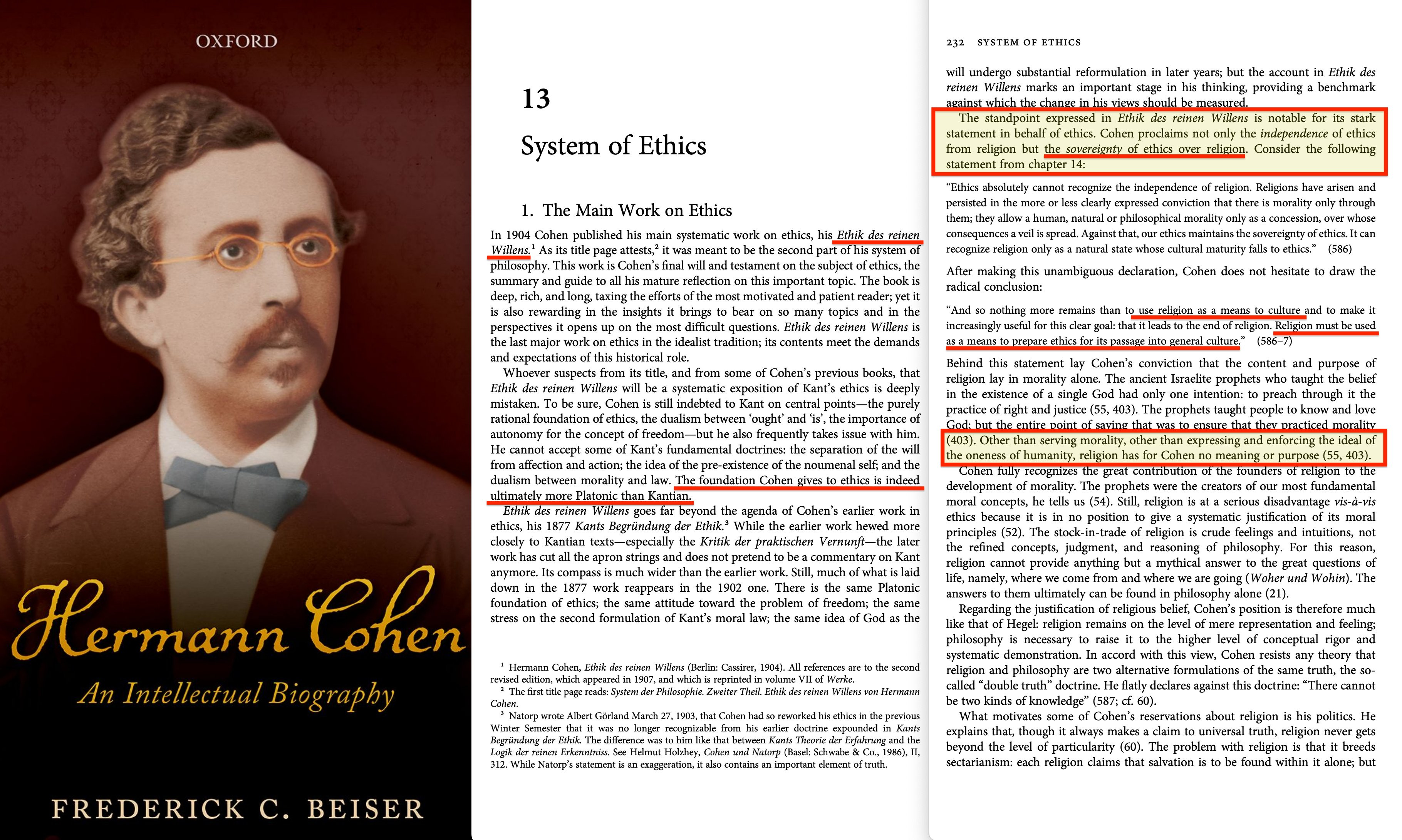
Hermann Cohen (1842–1918), leader of the Marburg neo-Kantian school, provided the philosophical licence. In Religion of Reason out of the Sources of Judaism21 (1919), he put religion below ethics. Ethics is autonomous — it generates moral law through reason. Religion doesn’t produce the ethic but receives it and packages it for the population to absorb through feeling, community, ritual and narrative. Religion is the delivery mechanism — the vessel, not the content. Accept this and every tradition becomes interchangeable at the channel level. What matters is whether the vessel faithfully transmits the ethic, not which vessel carries it.
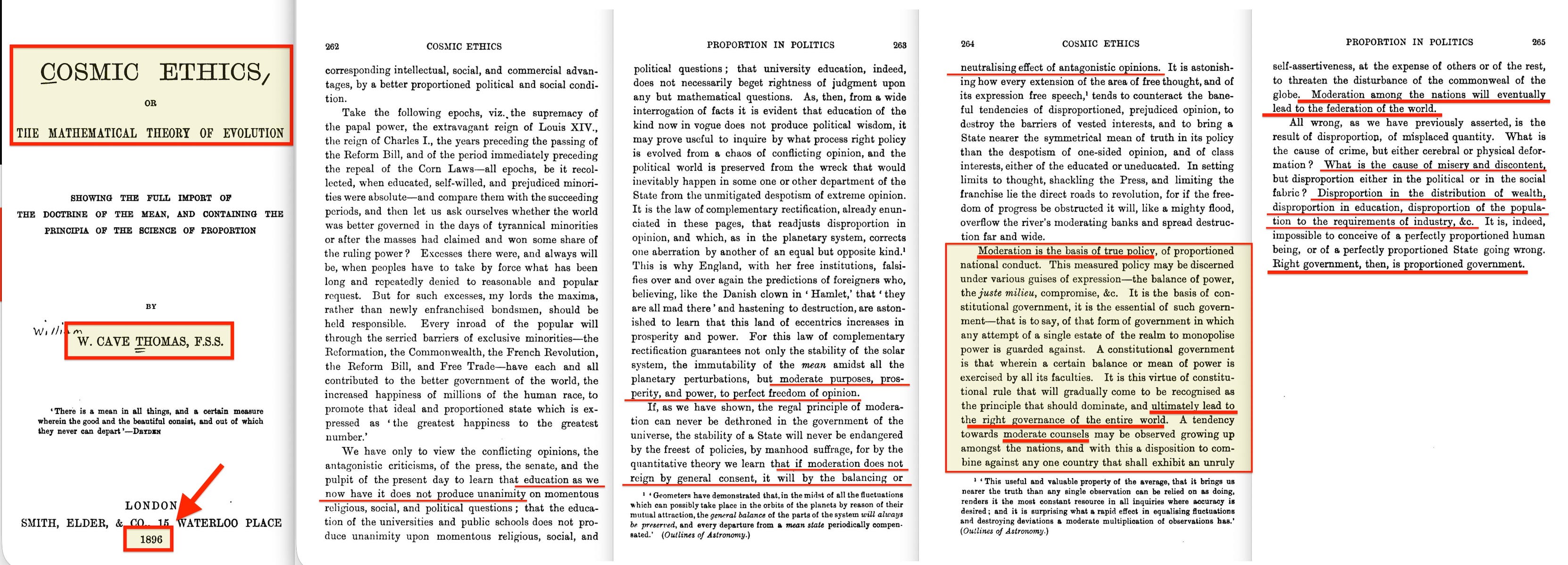
William Cave Thomas (1820–1906) was a Freemason and Victorian artist. Over three decades — from his 1865 essay The Golden and Immutable Mean22 through his 1882 Proportioned Culture23 to his 1896 book Cosmic Ethics24 — he turned Aristotle’s Doctrine of the Mean into a universal law covering education, ethics, politics, organisation and natural theology all at once.
‘Proportion’, he wrote, ‘is the basis of art; it is the basis of education; it is the basis of conduct; it is the basis of politics, and it is the basis of natural religion’. Science underpins morality, the balanced person is the moral one, and disproportion is ‘the fundamental characteristic of all the ills that afflict the world’. In education this means no skill pushed too far — a system that stops people from producing uncontrolled flows through exceptional talent in any one direction. In politics it means moderation between nations leading to ‘the federation of the world’ — written in 1896, twenty-three years before the League of Nations. In Cosmic Ethics he openly names the source: ‘The science of proportion might, in its fullness, have been known to the early Freemasons, to the Pythagoreans’.
Paul Carus (1852–1919), himself a Freemason, built the synchronisation protocol. His Religion of Science25 (1893) made science the meta-channel — the one that validates which ethical content traditions are allowed to carry. He chaired the 1893 World’s Parliament of Religions in Chicago26, sponsored D.T. Suzuki’s Buddhist translation work27, and promoted interfaith dialogue through The Open Court and The Monist. He never committed to one tradition, since that would defeat the purpose. He stood above them all, running the protocol by which they coexist under a shared ethical canopy validated by scientific reason. Carus acknowledged Spinoza as the clarifier of monism for the modern era, and his Religion of Science is Spinoza’s Deus sive Natura made institutional.
The synchronisation protocol had a ready theological candidate. The Báb declared his mission in 184428 — the same decade as Hess’s Essence of Money (1845) and Marx’s Communist Manifesto29 (1848). Bahá’u’lláh’s programme promotes the unity of religions, the harmony of science and religion, and a world commonwealth.
Shoghi Effendi, Guardian of the Bahá’í Faith, spelled out the end goal in The Goal of a New World Order30 (1931): a world executive with ‘supreme and unchallengeable authority’, a world parliament, and a supreme tribunal with compulsory jurisdiction — seven years before Ashlag began writing The Writings of the Last Generation31. The Bahá’í International Community has had consultative status at the United Nations since 194832, contributing to every major UN process on sustainable development, human rights, and interfaith dialogue. The 1893 Parliament of Religions — where Carus launched his synchronisation protocol — also brought Bahá’í teachings to Western audiences for the first time.
The governance model fits the architecture: the Universal House of Justice33 is the supreme institution with binding authority, every national assembly answers to it, and the Covenant blocks independent interpretation by design. One centre, one programme, no schism. Marx left the ethic slot empty, and the Bahá’í programme is built to fill it. Catholic social teaching, meanwhile, provides the vocabulary from the other side — ‘the common good’34, running from Aquinas through Leo XIII’s Rerum Novarum35 (1891) to Francis’s Laudato Si’36 (2015), that’s the language the SDG framework adopted. The architecture finds a gap in every tradition and fills it with a load-bearing role.
Julius Wolf (1862–1937), economics professor at Breslau, turned the topology into institutional finance. At the 1892 Brussels Monetary Conference, he proposed an international clearing-house based on the London bankers’ clearing house — a way for sovereign nations to settle accounts through a central function without giving up formal sovereignty. The proposal described the architecture the Bank for International Settlements put into practice when founded in Basel in 1930.
Eduard Bernstein, who’d spent seven years at S. & L. Rothschild in Berlin before joining the Social Democrats, read Wolf’s 1892 book and broke with revolutionary Marxism — replacing the promise of collapse with evolutionary socialism, the gradual administrative capture that’d install the clearing function without needing a revolution.
Leonard Woolf, Fabian socialist and architect of the League of Nations framework, carried the same logic into governance — expert panels running reconciliation protocols above the parliamentary line of sight.
Wolf gave the topology its financial form, Bernstein its political method, Woolf its governance form, and between them the clearing function entered the twentieth century ready to be built.


The Materialist Channel
Karl Marx (1818–1883) made the flow operational. Take his Labour Theory of Value as systems theory rather than price theory37: it’s a denomination layer — a unit of account for a centrally administered ledger. ‘Socially necessary labour time’ isn’t an emergent market property but an operator-defined parameter, set centrally rather than discovered through exchange.
Vladimir Lenin (1870–1924) added the monitoring requirement. ‘Accounting and control’38 — that’s the pair needed for an administered economy. Flows must be visible and directed, since without visibility there’s no evaluation, and without direction there’s no settlement.
Alexander Bogdanov (1873–1928), Lenin’s contemporary and rival, universalised the frame. His Tektology39: Universal Organisational Science (1913–1922) argued that all systems — biological, social, economic, technical — share the same organisational principles, and all flows in every domain must be integrated under a single science of organisation. Tektology’s the direct precursor to general systems theory and cybernetics, the channel through which the architecture eventually reaches artificial intelligence.
Wassily Leontief (1906–1999) quantified everything the previous figures had specified. His input-output matrices40, developed from the 1930s onwards, map every flow in an economy — every input to every output, every sector’s dependency on every other — and can model the effect of any intervention at any node, tracing it through the entire system.
Lenin’s accounting and control, Bogdanov’s universal integration, Marx’s administered unit of account — all resolved into a single computational framework.


The Spiritual Channel
Rabbi Yehuda Ashlag (1884–1954) read the Zoharic architecture as an operational programme41. The Creator’s the desire to bestow, creation’s the desire to receive, and the correction’s the progressive alignment of receiving with bestowal — subordinating individual egoism to the collective principle. Flows must serve divinity through ‘altruistic bestowal’. The topology’s the Tree of Life, its ethic the correction of selfishness.
Rabbi Michael Laitman (b. 1946), Ashlag’s intellectual heir through Baruch Ashlag, updated the programme. Flows must align with the laws of lights and vessels. Laitman also redefined the architecture so it’s legible without ethnic attribution: Israel, in his framework, isn’t a nation state, a geography, or an ethnicity, but the property of bestowal — a compliance state42. Anyone who’s internalised the governing ethic is, operationally, ‘Israel’; everyone else is, operationally, ‘the nations’.
The architecture recruits operators from any population and needs alignment, not lineage.


The Convergence Point
Gabriel Burstein and Constantin Virgil Negoita are where the two channels merge.
Between 2011 and 2016, working at Hunter College (City University of New York), they published peer-reviewed papers in journals including the International Journal of Advanced Research in Artificial Intelligence. Using category theory, algebraic topology, and cybernetics, they modelled the Tree of Life as a hierarchical three-level feedback control system — what they called Kabbalah System Theory43.
The cognitive level (Chokmah, Binah, Da’at) sets objectives and classifies inputs. The emotional/behavioural level (Chesed, Gevurah, Tipheret) evaluates and clears. The action/implementation level (Netzach, Hod, Yesod, Malkuth) executes and settles. The mid-line nodes — Da’at, Tipheret, Yesod — act as feedback controllers, balancing interaction at each triad.
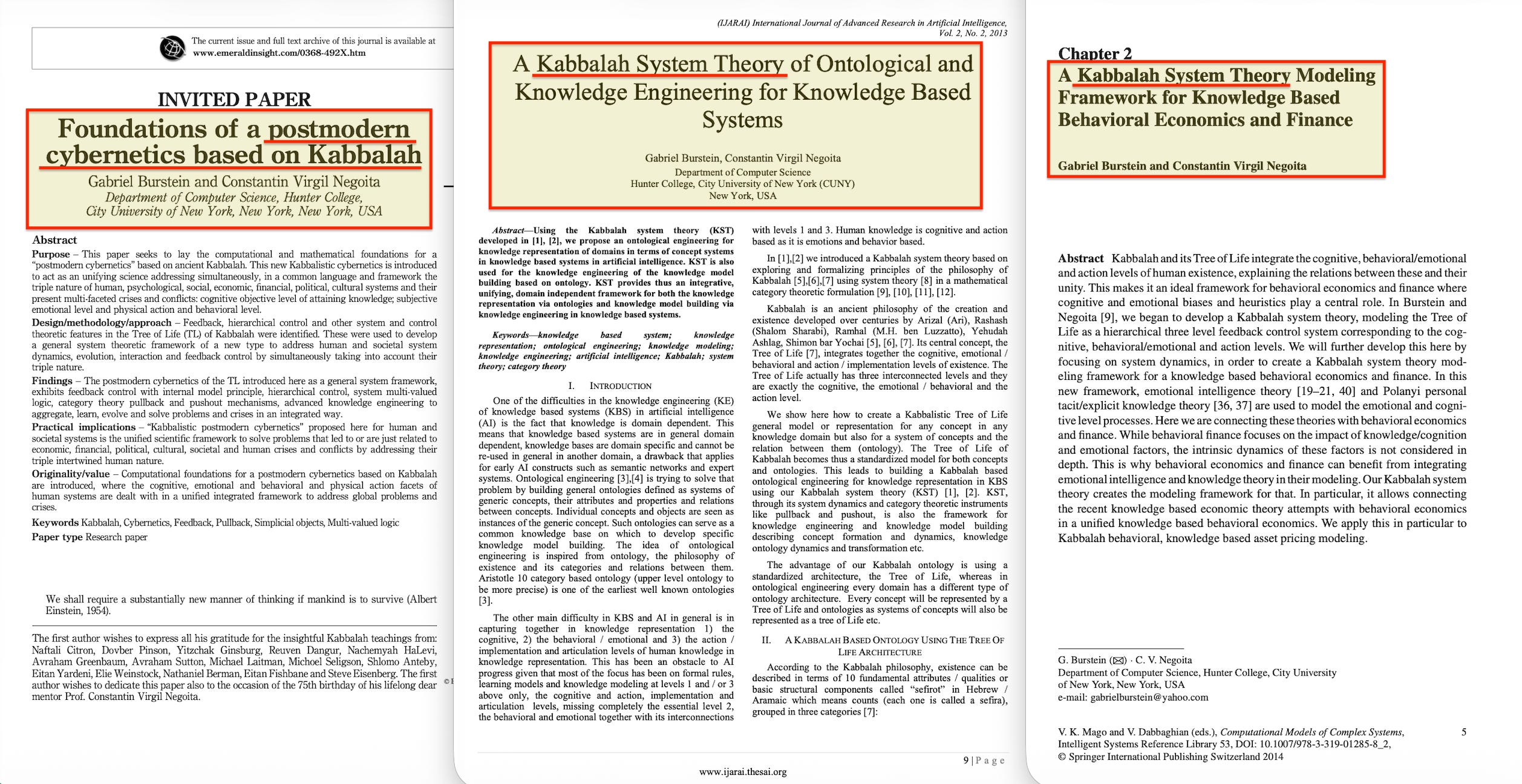
They then applied this architecture, paper by paper, to behavioural economics and finance, artificial intelligence and knowledge engineering, fuzzy logic and fuzzy control systems, complex system modelling, and social systems management.
A 2016 paper in NOEMA made the claim explicit44: the twenty-first century needed a universal framework for deconstructing any human system into its cognitive, emotional, and behavioural components, and the Tree of Life provides it. The architecture’s fractal (each node contains the whole tree), domain-independent, and computable.
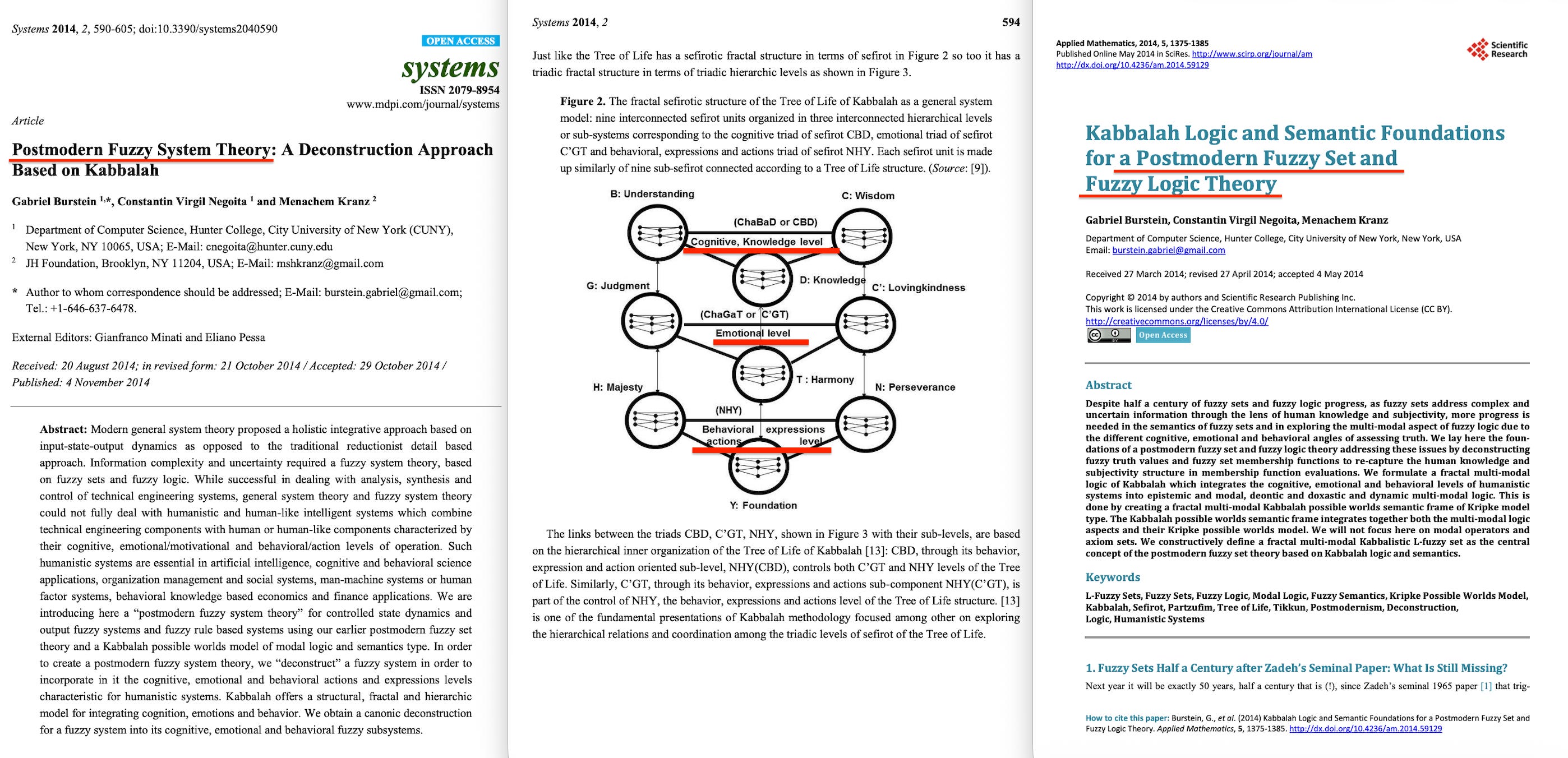
The Tree of Life and a hierarchical feedback control system are the same object. The mystical emanation of the Zohar, the geometric ethics of Spinoza, the hydraulic language of Pike, the administered economy of Marx, the input-output matrices of Leontief, the altruistic bestowal of Ashlag — different notations for one computable topology.
Burstein’s later work moved into digital assets and tokenisation45 — the same technical domain where the BIS Innovation Hub is now building the settlement infrastructure.


The Architecture
Two channels have run in parallel for over a century, carrying the same topology.
The spiritual channel: the Zohar (ten vessels, three pillars, the Mystery of the Balance) → Luria (contraction, masach as input constraint, progressive condensation) → Ashlag (flows serve altruistic bestowal) → Laitman (flows align with the laws of lights and vessels).
The materialist channel: Hess (flows serve the common good) → Marx (flows get administratively allocated) → Lenin (flows must be visible and directed) → Bogdanov (all flows in all domains integrated) → Leontief (all flows quantified).
Burstein and Negoita showed the two channels are formally equivalent — the Tree of Life formalised as a hierarchical feedback control system, computable across finance, AI, social systems and every other domain at once.
Spinoza translated the root into philosophical grammar and Pike transmitted it to the institutional class. Cohen provided the licence to subordinate every tradition to the ethic, while Thomas extended the balance principle across education, ethics, politics and world federation. Carus built the interfaith synchronisation protocol, Wolf translated the topology into institutional finance, Bernstein replaced revolution with gradual administrative capture, and Woolf carried the clearing function into governance.
Every figure on this list worked to solve the same problem: how to surveil, direct, and condition flows so the output serves ‘the social good’. No one’s ever asked the public what the ‘social good’ actually means, because the architecture presents it as discovered truth — planetary boundaries, systemic risk, sustainability — rather than political choice. The content loaded into the apex changes across generations; the topology doesn’t. The architecture is now implemented globally, across every continent, by institutions staffed by people of every origin — the topology doesn’t require its operators to know its genealogy, only to run the programme.
The BIS Innovation Hub’s 2025–2026 programme46 is rolling out AI supervisory tools, cross-border settlement platforms and unified ledger prototypes across seven centres worldwide. Flows are being made visible (Project Aurora47, Project Gaia48), directed (Project Mandala49, CBDC protocols) and conditional (Basel risk weightings calibrated to NGFS climate scenarios, EU Taxonomy alignment, and Project Rosalind’s three-party lock — payer, payee and conditions that must be met before the money moves50).
The UN Emergency Platform51, proposed in the Secretary-General’s Our Common Agenda52 and advanced through the 2024 Pact for the Future53, is the activation switch. It gives the Secretary-General standing authority to convene a coordinated global response to ‘complex global shocks of sufficient scale, severity and reach’ — and the platform’s explicitly ‘agnostic as to the type of crisis’.
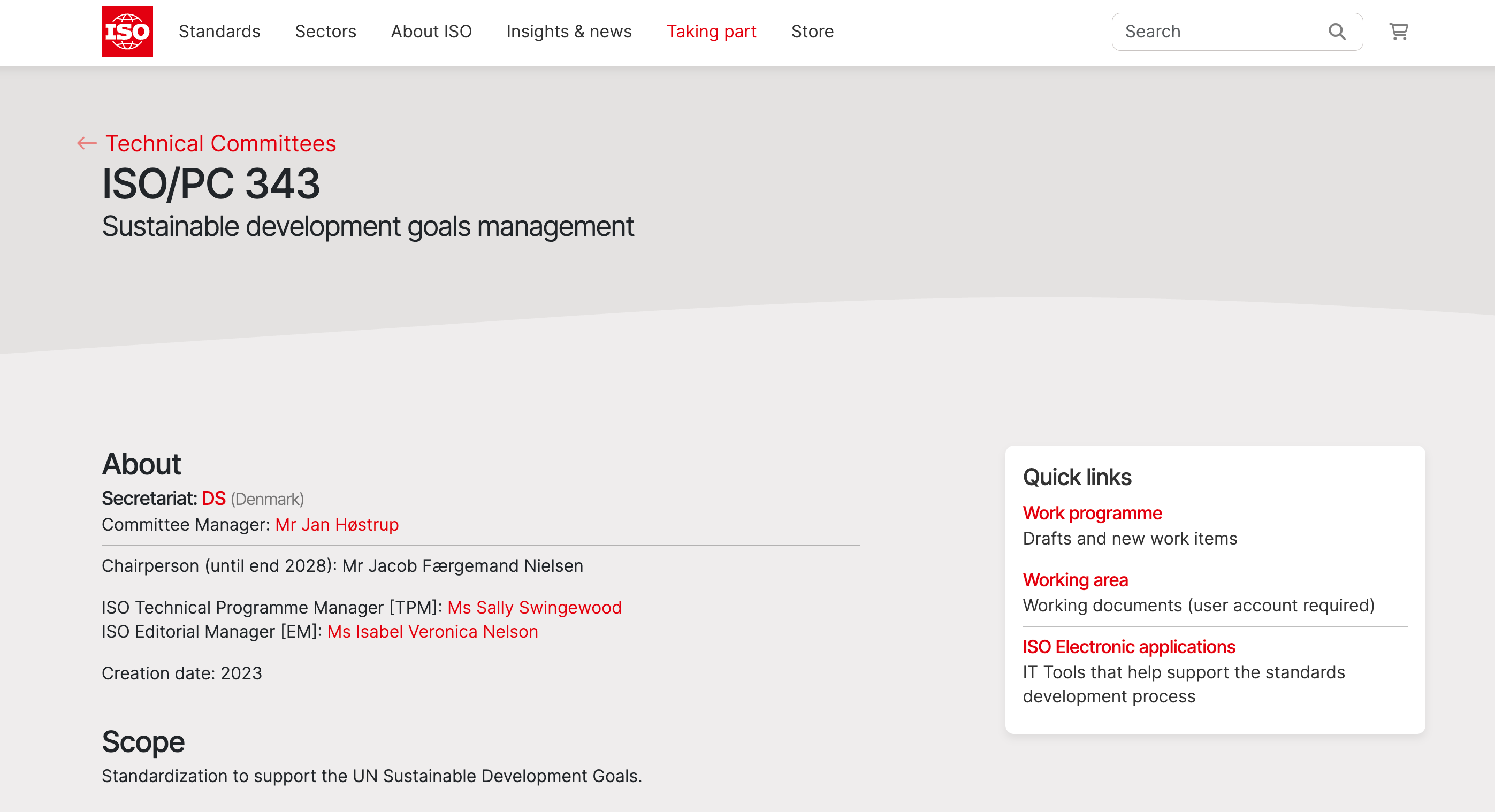
The Secretary-General decides when to trigger it, the duration can be extended indefinitely without reauthorisation from member states, and the response brings together governments, international financial institutions, the private sector and civil society under one coordinated framework — Wolf’s public-private partnerships, now formalised through ISO 37000 governance standards54 and made an operational requirement through ISO/PC 34355, the committee for Sustainable Development Goals management. The crisis mechanism — each shock producing more integration, surveillance and architecture — here takes on a permanent institutional form with a standing mandate.
The architecture the Zohar described as mystical emanation, Spinoza restated as geometric necessity, Pike transmitted as Masonic philosophy, Marx specified as political economy, and Burstein and Negoita formalised as computable topology — is being built. The UN declares, the OECD compiles, the clearinghouse AI decides, the BIS settles, and you’re where the abstract becomes real.
Ethics (SDGs) - Standards (OECD) - Clearing (AI) - Settlement (BIS) - Outcome (You).
The circle closes at Hess. In 1845, he wrote that money’s social blood and the clearing function’s ethics made operational. A hundred and eighty years later, conditional CBDCs are programmable money — social blood made literal. The SDGs load the ethic into the apex. SDG Indicators56 form the compilation layer. The conditionality in the money’s the masach — the screen at each vessel determining what passes and what doesn’t.
The individual at Malkuth receives a transaction that either clears or doesn’t, conditional on SDG indicators they didn’t set, compiled from metrics they can’t audit, evaluated by an AI clearinghouse they can’t appeal, serving a ‘social good’ they were never asked to define.
Every figure in this genealogy shares one engineering rule: the loop must close. Nothing escapes the ledger. The Zohar closes it cosmologically — nothing exists outside the substance. Spinoza closes it philosophically — Deus sive Natura means there’s no outside, and dissent’s a mistake within the system rather than a way out. Marx closes it economically — scrap the market price signal, lock people into non-accumulating consumption, and remove the buffer that lets them stand alone. Bogdanov closes it organisationally — all systems, all domains, one science. Leontief closes it computationally — every input mapped to every output.
The contemporary vocabulary makes the same demand. Spaceship Earth57 says the planet’s a closed system with finite resources needing managed allocation. Gaia Theory58 says Earth’s a self-regulating organism whose balance must be maintained. The Circular Economy59 says all material flows must loop back — no waste, no leakage, no exit.
Each one presents the closed-loop requirement as a discovered fact about nature rather than an engineering decision, and each one justifies extending the clearing function until every flow’s visible, conditional, and contained.
The BIS closes the loop technically — programmable money carrying its conditions inside it, digital identity anchoring every participant, unified ledgers where every asset’s tokenised and every transfer’s conditional60. Cash, informal trade, independent production, peer-to-peer exchange — these aren’t threats to the ethic. They’re leaks in the loop. And a closed-loop system with a leak isn’t a closed-loop system.
The Kabbalistic tradition holds its own warning about this drive toward total closure. Shevirat ha-kelim61 — the breaking of the vessels — marks the catastrophic failure when the flow exceeds the vessel’s capacity to contain it. Perfect closure doesn’t produce perfect stability. It produces the conditions for catastrophic rupture, because a system without leakage has no mechanism to discharge the pressure its own operations generate.
The population just experiences the output as the way things are.
The same tradition names what happens when the architecture flips. The Qliphoth62 — the ‘shells’ — shadow the Tree of Life: same topology, same eleven nodes, same paths, but running backwards. Where the Sephiroth channel light through vessels for correction, the Qliphoth trap it inside. The vessels become husks, and the flow doesn’t pass through — it’s captured, held, and consumed.
The topology’s neutral — it runs either way. When the masach filters for the vessel’s development, producing independent, creative, self-governing people who can eventually operate without it, the system’s sephirotic. When the masach filters for the operator’s control, producing dependent, compliant, precarious people who can never leave, the system’s gone qliphothic. Correction becomes the cage.
The UN Emergency Platform is the switch — assigned to ‘complex global shocks’ determined by ‘black box’ modelling tools the population can’t audit, contest, or falsify.
Ashlag spotted the test: coercion doesn’t produce love. Strip people of their buffers and put them on conditional credit, and they don’t develop altruistic consciousness — they develop compliance. Seventy years of the Soviet Union proved that. The current build’s running the same experiment globally.
Whether the architecture being assembled now is channelling light or trapping it is the open question — and it’s the only one that matters.
The purpose of a system is what it does.


Brilliant, deep analysis. Much supporting information is in this excellent book: Eli Rubin - Kabbalah and the Rupture of Modernity: An Existential History of Chabad Hasidism
This is impressive, fascinating, psychopathic, horrifying.
Remarkable is the consistency of the thinking and philosophy that underscores every component which, to outsiders and non-adepts, do not always look to even be related or to tessellate one with another.
It’s only when the sweep of history is coupled with in-depth analysis, followed by synthesis, that the how “You will own nothing” is expected to operate.
How they get us from here to there is, unfortunately, open to a wide set of potential solutions. I intend to create leakage from what is designed to be a closed loop system and under no circumstances to step inside it. There’s no exit except in a box, by design. Nor is there a compliant life worth living, in my opinion, within it.