
The Foundational Myth

You were taught the story in school. Fascism rose, democracy fought back, and a new order was developed so it wouldn’t happen again. The countries that tore each other apart twice would tie their economies together, making war nonsensical.
To this end, Bretton Woods stabilised the global money system while the Marshall Plan rebuilt Europe, and the UN gave every country representation. The whole thing rested on a simple promise: never again.
The only problem is that this story is a figment of imagination.
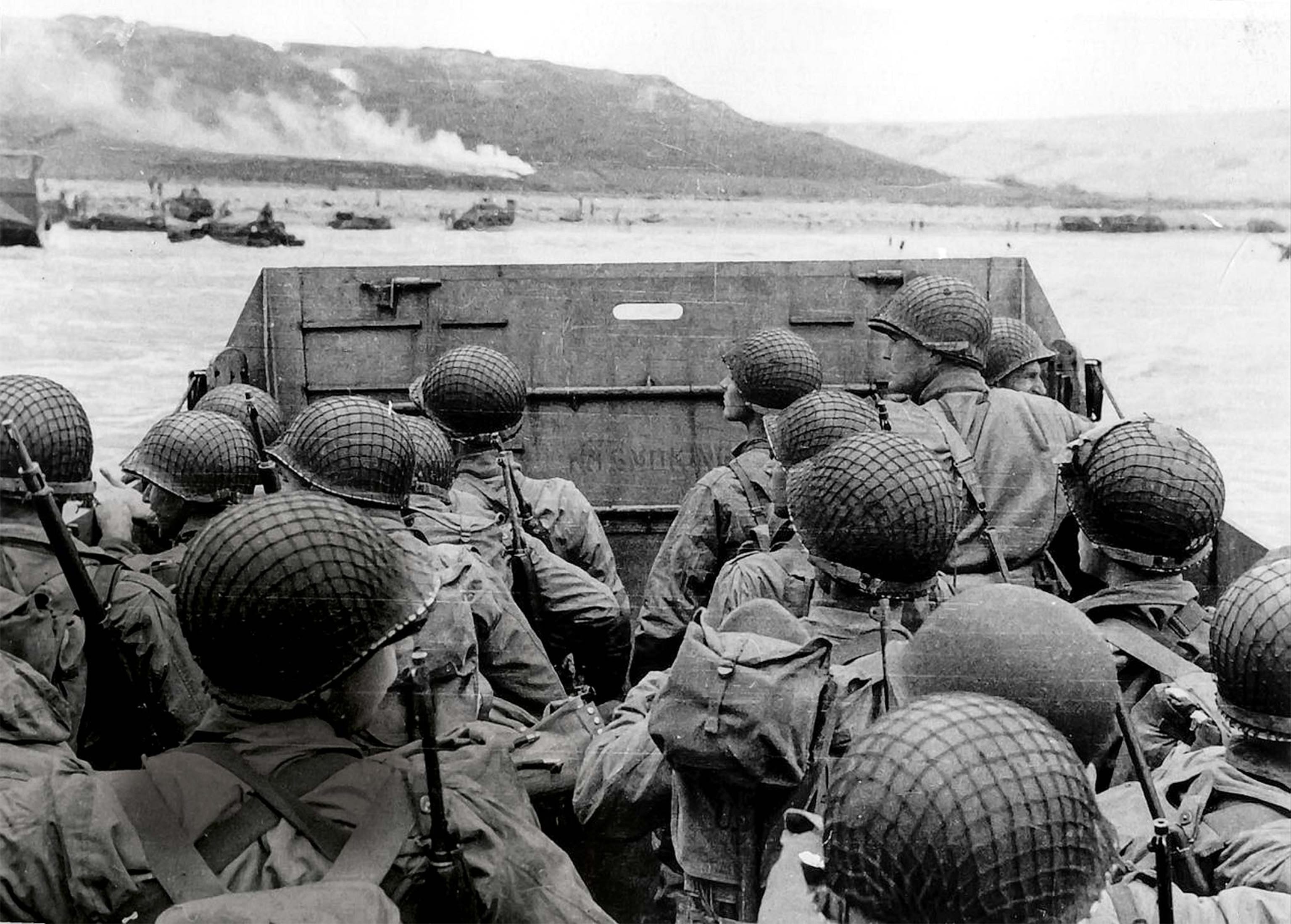
While the facts and dates do line up, it completely misses the meaning of events — because the system running the post-war world wasn’t created after 1945. It was laid out in detail before and during the war, carried forward by the same institutions and professionals, and extended through every later crisis without ever asking the public.
The proof has been out there for decades in conference records, declassified intelligence files, central bank archives, and academic texts. Three major peer-reviewed books confirm the background without identifying the connecting mechanism. That mechanism has a name that’s been used by its supporters through every regime change since 1933: The Third Way.
Throughout the account told here, ‘ethic’ does not mean bottom-up morality, but what the system states as purpose. Each ethic in the chain — racial community, democratic peace, market freedom, sustainability — is deliberately introduced from the top, enforced through settlement terms, and experienced as simply the way things are. What people believe ultimately doesn’t matter; what matters is whether their everyday dealings match the prescribed standard. With time, going along comes to feel like a free choice, becoming indistinguishable from genuine belief — which is how the system hides itself from view.


The specification
In 1892, economist Julius Wolf put a proposal to the Brussels Monetary Conference. The model was already running. The London Bankers’ Clearing House, set up in the 1770s, settled over a hundred million pounds each week through bookkeeping alone — no cash, just ledger entries. Alfred de Rothschild, former Bank of England director, called it ‘near perfect’. Wolf wanted to scale that up to the whole world. His plan had four parts: a central clearing office linking central banks by bookkeeping rather than shipping gold; a common international banknote; a permanent monetary bureau with a standing commission of delegates; and a state syndicate to run silver production. The whole blueprint for the BIS and the IMF was there in a single conference paper, thirty-eight years before the BIS was founded.
Julius Wolf was far from unknown, and his proposals were taken seriously. Eleanor Lansing Dulles — who wrote the first history of the BIS in 1932 — traced the bank’s roots partly back to Wolf, describing his study as one of the most thorough on the need for a clearing house. The BIS, founded in 1930, was the very clearing office Wolf had put forward in Brussels nearly forty years earlier. Joseph Schumpeter later said Wolf’s plans were partly realised by the International Fund at Bretton Woods, and Gottfried Haberler gave him credit too. Alfred Hermann Fried, who won the Nobel Peace Prize in 1911, listed Wolf’s work in his bibliography of international organisation. The proposals were received, debated and developed for three decades. But the credit vasnished — because Wolf was Jewish, and after he died in 1937, the Nazis destroyed his papers.
Wolf did not work alone. In his 1892 book, Sozialismus und kapitalistische Gesellschaftsordnung, he mapped out how capital builds up through middlemen, state favours and control of the clearing system. His answer was simple: any sector likely to become a monopoly should be run as a public corporation. He saw his own position as the point where capitalism and socialism, once they had fixed each other’s flaws, came together. It was an early version of the ‘Third Way’, decades before that phrase became common.
In 1904, Wolf founded the Mitteleuropäischer Wirtschaftsverein — the Central European Economic Association — to co-ordinate trade between European countries using shared standards, arbitration panels and expert committees. By 1913, it was a multinational body, with parallel national branches producing joint publications across Germany, Austria and Hungary. That structure — national bodies co-ordinated through a common framework, turning out shared results — was exactly the governance model later adopted by the International Organisation for Standardisation. Wolf set that pattern in 1904. The ISO took it over in 1947.
Eduard Bernstein came to the same conclusion by a different path. After seven years clerking at S. & L. Rothschild in Berlin, watching the settlement system from the inside, and after reading Wolf’s 1892 book, he abandoned revolutionary Marxism and published Evolutionary Socialism in 1899. The method changed — not revolution, but steady institutional capture: a slow build-up of standards, harmonisation rules and compliance systems. Each step looked like a practical fix to a specific problem, and each made sense alone, but together they formed a governing structure no one ever was given an opportunity to vote for.
Both men wrote in a 1924 collection of autobiographies. Bernstein named Wolf’s book as one reason he began to doubt orthodox Marxism, and Wolf acknowledged his role in Bernstein’s shift. So the blueprint and the installation method came from two men who knew each other’s work, recognised each other’s influence, and had both learned how settlement operated from inside the Rothschild network.


The Volta Congress
On 14 November 1932, the Reale Accademia d’Italia opened the second Convegno Volta in Rome on the Capitoline Hill. The subject was simply L’Europa. Mussolini was there, and Marconi sent the invitations. The proceedings list everyone who was invited, including those who declined. Keynes was one of them.
The cultural and political sessions have been studied closely. Dina Gusejnova’s European Elites and Ideas of Empire treats it as the moment when aristocratic networks consolidated their influence during the interwar years. She records the presence of Rosenberg, Rohan, and representatives of fallen empires, and also notes Goebbels writing in the Nationalsozialistische Monatshefte that the Nazi seizure of power pointed the way to a third path beyond Right and Left.
What Gusejnova leaves out, however, are the economic sessions. Hjalmar Schacht spoke about the economic situation, identifying the real obstacle to trade as the inability to settle international payments — more of a barrier than tariffs or quotas. G.M. Verrijn Stuart proposed that national central banks submit to a higher monetary authority at the BIS, explicitly urging nations to give up their monetary independence. Elemér Hantos, pointing to Wolf’s Central European Economic Association as the model, laid out a four-part plan for European economic unification: a customs union, integrated transport, industrial co-ordination through cartels, and currency unification through central bank co-operation. Otto von Franges, a Yugoslav senator, called for a network of bilateral preferential treaties between the agricultural countries of south-eastern Europe and the industrial nations of western and central Europe, with Germany and Italy as the leading powers.
Customs union, monetary co-ordination, transport integration, agricultural complementarity, and bilateral trade deals. Every area that the post-war European institutions would later cover was mapped out at a single conference in 1932 — two years before Schacht built the bilateral clearing system, and fifteen years before the Treaty of Rome.
The economic side of the Volta Congress has passed through academic review without being noticed. Gusejnova’s book names the speakers and records their attendance. It does not say what they actually proposed.

The bilateral system
Schacht set up the bilateral clearing system in 1934 under the New Plan. Romania, Yugoslavia, Hungary, Bulgaria and Turkey built up blocked reichsmark balances — credits they could only spend on German goods. By 1938, Germany was absorbing huge shares of these countries’ total exports. They didn’t say no because they couldn’t afford to leave: each deal tied them tighter. Germany got real resources — oil, minerals, agricultural produce — while its trading partners received paper claims on future German exports that could not be turned into hard currency or spent anywhere else.
Adam Tooze’s The Wages of Destruction covers this system in great detail, drawing on Reichsbank records, trade statistics and foreign exchange data. He shows that both the bilateral clearing system and the domestic Mefo bill mechanism hit the same wall by 1938 — foreign exchange reserves running low, bills falling due, and clearing balances growing faster than Germany could cover. Absorbing Austria unlocked gold reserves, Czechoslovakia handed over the Škoda works, and Poland supplied coal and farmland. When clearing could extract no more, territorial seizure took over.
Tooze treats the bilateral clearing system as just one tool among many, secondary to a broader political-strategic story about the timing of aggression. But the bilateral system that Schacht launched in 1934 had been set out two years earlier at the Volta Congress — by speakers whom Gusejnova records as present, in economic sessions that neither scholar examines. The blueprint and the execution appeared at the same gathering, yet neither book connects the two.
In April 1935, the League of Nations published an enquiry into clearing agreements — 153 pages of questionnaire replies from twenty-eight governments. Italy’s response described a regular netting system already operating between Italy and Germany, raised multilateral clearing as a trial idea, and named the condition for it to work: a fixed and broadly accepted standard, such as gold. Germany, which ran the largest bilateral clearing network in Europe, did not reply.
Every element that Italy described was in place within fifteen years: the regular netting became the European Payments Union, and the gold-backed standard became Bretton Woods.

The 1942 volume
In September 1942, the Association of Berlin Merchants and Industrialists, together with the Berlin Business School, published a 229-page volume called Europäische Wirtschaftsgemeinschaft — European Economic Community. Fifteen years later, the Treaty of Rome established an organisation with the very same name.
The introduction traces the programme back to Alfred Rosenberg’s speech at the Volta Congress in November 1932. Nine authors across ten sections laid out the institutional framework for a continental economy.
Walther Funk, the Economics Minister, described moving from bilateral to multilateral clearing through a central clearing office. Emil Woermann set out agricultural complementarity across different climate zones, with guaranteed prices and planned production — the EU’s Common Agricultural Policy in blueprint form. Anton Reithinger of IG Farben proposed raising living standards in poorer regions to create internal demand — the EU cohesion principle as industrial strategy. Philipp Beisiegel specified a treaty-based labour exchange with standardised contracts, portable social insurance, and mutual recognition of contribution periods — the core of EU social security co-ordination, written in 1942 language. Gustav Koenigs described the Rhine-Main-Danube Canal, railway harmonisation, and motorway extensions to every border — all later completed or designated as EU priority transport corridors. Bernhard Benning set out a multi-tiered currency structure, rejected a premature single currency on convergence grounds, and identified purchasing power parities as the right way to assess exchange rates — two Maastricht convergence criteria and the IMF’s standard method, fifty years ahead of their time.
Carl Clodius, the Foreign Ministry’s chief treaty negotiator, stated the volume’s central finding: ‘Neither tariffs nor quotas nor anything else plays a role. The only practical thing, the only weapon for the total steering of trade between peoples, is the regulation of payment traffic’. Then the design requirement, stated independently by both Clodius and the volume’s editor Heinrich Hunke: after the war, free movement inside Europe would return, but a balancing clearing mechanism would smooth the peaks. ‘The individual participant notices nothing of this anymore. For him, practically speaking, a condition’s restored that’s indistinguishable from free exchange’. Two authors, two chapters, the same specification: the architecture must be invisible to the people inside it. Hunke’s version appeared in the January 1941 issue of Die Deutsche Volkswirtschaft — a year before the conference lectures were delivered. The invisibility requirement wasn’t one contributor’s tactical observation. It was the organising principle of the entire volume.
Published seven months after the Wannsee Conference, the 229-page volume is almost free of antisemitic content — its architecture built to outlast the ethic that justified it. In a 2020 City University paper, David Blake documents the parallels in terminology and structure, and notes it seems ‘unthinkable’ that Walter Hallstein — later the first President of the European Commission — could have been unaware of the 1942 plan, given his background in legal academia under the Nazis.
On 7 March 1938, Funk laid out the technical requirement at the Leipzig Fair. The New York Times reported it the next day: ‘Such a system, of course, is possible only in a closed economy with money based on government fiat’. That ‘of course’ shows Funk took it for granted. No closure, no clearing. No clearing, no governance.

The crossing
In November 1940, Harold Nicolson of the British Ministry of Information sent Funk’s European economic plan to John Maynard Keynes and asked him to publicly discredit it. Keynes refused. He said that about three quarters of the passages quoted from the German broadcasts would be quite excellent if you substituted Great Britain for Germany.
He then built the British version. His International Clearing Union, proposed in 1941, swapped the Reichsmark for Bancor as the settlement unit, and replaced Berlin with an international institution as the clearing centre. Scholars now openly acknowledge the connection: the Keynes plan was conceived as a direct response to the Nazi multilateral clearing proposal, and shared its essential core.
That same month, Roosevelt’s National Resources Planning Board commissioned a confidential memorandum on the Nazi economic system. The introduction noted a widespread feeling that, whatever one thought of Nazi philosophy, its economic methods might hold lessons for democratic countries.
Both Allied governments studied the same structure and treated it as a serious proposition. The post-war adoption of the clearing system was not a secret transfer. Allied planners already had the blueprint and recognised that it worked.
The move had been prepared before the war even began. In 1937, the Belgian Prime Minister, Paul Van Zeeland, submitted a report to the British and French governments proposing international economic reconstruction through fixed but adjustable exchange rates, a common fund, development loans, and the BIS as the managing body. Robert Rothschild — a Belgian diplomat on that mission — carried that framework forward for the next twenty years and helped draft the Treaty of Rome in 1957.

The governance channel
The clearing architecture reached the post-war institutions through a different route as well, one that had been turning the logic of clearing from finance into governance since before the First World War.
In 1916, Leonard Woolf published International Government, a blueprint for permanent international bodies to manage trade, communications, health and labour standards through functional co-ordination above national governments. His key insight was that once essential functions became international, national governments would gradually lose their grip on the day-to-day running of economic and social life. He proposed that these organisations would work through ‘soft law’ — international recommendations that would steadily harden into binding obligations, because participation would eventually require compliance with international standards. It was clearing logic applied to governance rather than money: membership was voluntary on paper, but functionally impossible to avoid.
Woolf was not alone in developing this concept. Fabian Socialist, Arthur Penty, proposed a guild system at local level in 1906, replacing competitive capitalism with co-operative co-ordination through functional authorities. The Fabian G.D.H. Cole extended the guild idea to national co-ordination in 1914, organising by economic and social purpose rather than by geography. The Fabian Leonard Woolf then combined both into the international tier in 1916, while the Haldane report recommended much the same for the United Kingdom in 1918. The three-level structure — local guilds, national co-ordination, international administration — systematically moved power from elected governments to technical processes. Each level looked like practical management of a specific task, but together they produced governance at every level, all at once.
Alfred Zimmern translated this framework into the actual design of the League of Nations. He saw economics as the main coordinating tool; monetary co-ordination would allow comprehensive economic and social planning without the need for political mandates. The League’s specialised organisations — handling health, labour, communications, and economics — put the three-tier functionalist architecture into practice exactly as Woolf had proposed.
While the League later collapsed, the technical bodies survived. Its own transition documents noted that the new world organisation could, in many respects, take over from the old — specialised agencies, research staff, archives, and co-ordination systems built since 1919. ECOSOC put into practice the Bruce Committee’s 1939 recommendation for a central committee to unify economic and social work. The UN’s structure was inherited from the League, which got it from Zimmern, who had simply implemented Woolf’s blueprint.
The clearing logic reached the post-war institutions through multiple channels at once. Keynes took it from the Nazi economic specification. Van Zeeland got it from pre-war monetary diplomacy. Woolf and Zimmern brought it from Guild Socialist ideas, through the League’s technical bodies, into the UN system. Each stream independently led to the same institutional structure: standards set above the national level, compliance judged by technical criteria, and payouts only when conditions were met — conditions that ordinary people had no say in.


The second crossing
The clearing logic also arrived from the Soviet side, through a different route.
In 1960, the Soviet economist I. Yevenko published Planning in the USSR, setting out the three-tier system used to run the Soviet economy. Gosplan set the standard: the five-year plans, the production targets and quotas. Gosbank handled the clearing, checking every firm’s transactions against the plan. Gossnab settled the physical delivery of goods. Three institutions, one sequence: standard, clearing, settlement.
In 1975, Alan Greenspan — then head of the Council of Economic Advisers — asked the CIA for a report on Gosplan. Twelve years later, he became Chairman of the Federal Reserve.
Meanwhile, Robert McNamara had already brought the same logic from Ford to the Pentagon, introducing PPBS — the Planning, Programming, and Budgeting System — to the US Defence Department in 1961. PPBS tracked numerical inputs and measurable outputs, built feedback loops to measure efficiency, and allowed long-range planning based on live performance data. What started as a military budgeting tool became the model for technocratic governance on a vast scale.
In 1972, the International Institute for Applied Systems Analysis — IIASA for short — was set up in Laxenburg, Austria, as a joint research centre for the US and the Soviet Union. American systems analysis and Soviet planning methods were brought together under one roof, funded by both sides — and the foundations — even as the Cold War continued. The assessment models developed there later fed into the scenarios used by central banks to work out how much capital financial institutions must hold against climate risks. The two planning traditions — one from Soviet central planning, the other from Western clearing-based governance — came together at an institute that now stands at the heart of the climate policy machine.


The post-war assembly
Bretton Woods adopted the American plan rather than Keynes’s, but the clearing architecture remained intact. The dollar was pegged to gold at $35 an ounce — the fixed, universally accepted standard that Italy had named as the precondition for multilateral clearing nine years earlier. The IMF supplied the anchor currency. The conditions that followed — structural adjustment, the Washington Consensus — were simply conditions attached to the settlement layer, the system working exactly as designed.
Resolution V of the Bretton Woods conference recommended winding up the BIS, but it never was. By 1950, it was running the European Payments Union — operating the multilateral netting system that Italy had first tried out with Germany on a bilateral basis, using the gold-based condition Italy had identified, and doing it at the larger scale Italy had proposed as a trial back in 1935. The EPU did not abolish bilateral clearing; it made it multilateral through the BIS — just as Benning’s 1942 chapter had described.
The connections were direct. Karl Blessing, a Schacht protégé who had served on the Reichsbank board during the war, became President of the Bundesbank in 1958. Bernhard Benning, who had written the 1942 currency chapter, sat on the Bundesbank’s Central Bank Council by late 1957. Hallstein became the first President of the European Commission in 1958. The same men who had designed the system for one regime were now implementing it for the next.
This architecture was common knowledge among the professional class building post-war Europe. Any German economist or legal scholar working on integration in the 1950s would have encountered the same concepts, vocabulary and institutional designs — whether or not they had ever read the 1942 volume itself.

The Third Way
Wilhelm Röpke was the bridge between the two worlds. Forced out of his professorship at Marburg in 1933 for criticising the Nazi regime, he went into exile — first to Istanbul, then to Geneva’s Graduate Institute of International Studies, a Rockefeller-funded centre where Mises had also landed in 1934 and where the neoliberal intellectual movement was gathering shape.
After the war, Röpke co-founded the Mont Pelerin Society with Hayek and became the intellectual force behind Ludwig Erhard’s economic programme. The result was the social market economy, which became the institutional model for European integration. Röpke openly called his approach ‘the Third Way’ in his published lectures, and he insisted that a competitive market economy could only survive with strong institutions to provide its moral grounding.
In practice, Röpke’s Third Way placed an independent central bank — the Bundesbank — at the heart of its system. Its sole task was to keep prices stable, and it carried out that task without interference from the elected government. This was exactly what Verrijn Stuart had proposed at the 1932 Volta Congress: a central bank with authority above the nation, beyond any electorate. His specification was now being put into practice in post-war Germany.
The same model was exported to the European Central Bank through the Maastricht Treaty, and then to the Bank of England in 1997. The Blair government, within days of taking office, granted the Bank operational independence. Lawrence Summers passed the case to Ed Balls, who published it in the Fabian Society pamphlet, Euro-Monetarism, in 1992; Gordon Brown then implemented it in May 1997. Verrijn Stuart’s design had travelled sixty-five years, from the Capitoline Hill in Rome to Threadneedle Street in London, delivered through the same network that was simultaneously pushing financial deregulation across East Asia.
Quinn Slobodian’s Globalists documents what Röpke and the Geneva School were building: supranational institutions designed to shield economic governance from national electorates, permanently. Their aim was deliberate and unapologetic. These economists believed that democratic populations would make economically foolish choices — protectionism, inflation, capital controls — so the solution was to place the rules governing economic life in institutions that electorates could not touch. Slobodian calls this ‘encasement’. He maps the walls but does not identify what they protect: the clearing function, operating through conditional settlement, safely beyond democratic revision.
The language was remarkably consistent over time. Lenin’s New Economic Policy of 1921 allowed private enterprise within limits set by the state — the state kept control of banking, heavy industry and foreign trade, while markets operated freely within the boundaries it had drawn. Goebbels used the phrase ‘the Third Way’ in 1933. Röpke used it throughout the 1940s and 1950s. Marc Nerfin’s International Foundation for Development Alternatives (IFDA) proposed a ‘Third System’ in 1976 — citizen organisations alongside the state and market, taking part in governance. That was the direct forerunner of what later became the civil society sector.
Blair and Clinton revived the label in the 1990s, with Anthony Giddens as the theorist and Wolfgang Reinicke’s ‘trisectoral networks’ as the UN governance model — government, business and civil society working together to manage global affairs.
The trisectoral framework had its own backstory. In 1961, the CIA circulated a proposal for a ‘World Congress for Freedom and Democracy’ — a new type of organisation, private in nature, operating globally, combining broad principles with targeted action. That vision of a global civic body later materialised as what are now called Civil Society Organisations, the third sector in the trisectoral model, commonly funded by the same foundations which also funded the World Congress initiative.
Bolshevik, fascist, ordoliberal, developmentalist, social democrat — each ideology attached different conditions to the same structural form. Different content each time. But the function was identical: a framework that presented itself as beyond left and right — and therefore beyond the categories through which electorates organise political choice.


The neoliberal generation
The 1990s generation worked within Röpke’s architecture. The Washington Consensus — privatisation, capital account liberalisation, fiscal discipline, open markets — was essentially Röpke’s framework, but with any racial language he had used stripped out and replaced with economic terms. Countries seeking access to international capital markets, IMF loans or World Bank support had to meet compliance conditions set by Washington-based institutions that the affected populations did not control or elect. The loan would only be approved if the conditions were met.
Alan Greenspan was the American version of what Verrijn Stuart had proposed — the man who had asked the CIA for a report on Gosplan, now setting the terms for global finance from his position at the Federal Reserve. His decisions on interest rates shaped the world economy. He pushed through deregulation that removed the democratic checks and balances on the clearing system.
Robert Rubin moved from Goldman Sachs to the Treasury to Citigroup. The same people moved between the bodies that set the rules and the ones that gained from them. Lawrence Summers pushed for capital account liberalisation across East Asia. When the crisis struck in 1997, the IMF imposed conditions that served Wall Street’s interests as much as they served the local populations — which is to say, not much at all. Countries that failed to meet these conditions were cut off from global capital, exactly as the Soviet Union was post-revolution, until Gosbank was restored. Their transactions stopped clearing. Their currencies crashed. Their assets were then snapped up at bargain prices by the very institutions that had written the rules.
Jeffrey Sachs is the most revealing case, because he shows how the ethic shifts within a single career. In the early 1990s, he designed ‘shock therapy’ for Russia and Eastern Europe — rapid privatisation, liberalisation, and fiscal austerity. The ‘ethic’ driving this was market freedom. Then he moved on to the Sustainable Development Goals, becoming a leading advocate for the sustainability framework. The institutional method stayed the same, but the ethic changed. The conditions attached to taking part in international systems shifted from market liberalisation to sustainability compliance. The mechanism did not change — Sachs simply rotated with the prevailing ethic, which shows that while the ethic is a variable, the mechanism itself is constant.
The architecture appeared to face a serious challenge during this period. In 1974, the UN General Assembly adopted the Declaration on the Establishment of a New International Economic Order. The Group of 77 — operating through UNCTAD — called for stable commodity prices, control over natural resources, technology transfer, and fairer terms of trade.
The architecture responded through the clearing layer. The debt crisis of the early 1980s — triggered by Volcker’s interest rate shock — put the global South in exactly the position the system had been designed to create.
The countries that had challenged the architecture now found themselves more dependent on it than ever.


The environmental rotation
The 2008 financial crisis finished off the Washington Consensus as an intellectual project. Lehman Brothers collapsed, the economic models failed, and the market-liberal ethic lost its credibility. But the architecture did not fall with the ethic. It simply rotated.
The groundwork for that rotation had been laid decades earlier. On 23 May 1972, Richard Nixon signed an environmental protection agreement with the Soviet Union. Russell E. Train led the American delegation — the same man who also held a senior position on NATO’s Committee on the Challenges of Modern Society, which had a mandate to design global environmental monitoring systems, per the Moynihan memo of September 17, 1969. Moscow was also on board. Viktor Kovda, the Soviet Union’s main contact for international scientific co-ordination, helped launch SCOPE and would become its president by 1973. Both sides knew that this meant harmonising policies, aligning laws, and gradually restructuring governance — and both pressed ahead.
Weeks later, the Stockholm Conference on the Human Environment established UNEP. That same year, IIASA was founded — the place where American and Soviet planning methods were brought together. The pipeline was clear: SCOPE provided the science through ICSU, GEMS handled monitoring, and IIASA supplied the modelling. The ideological conflict of the Cold War was quietly overtaken by a shared reliance on systems analysis — a point made by Egle Rindzevičiūtė in The Power of Systems.
By 2017, that pipeline had reached the clearing function directly. The Network for Greening the Financial System — a coalition of more than a hundred central banks, hosted by the BIS — began publishing climate scenarios that are now used to set bank capital requirements worldwide. The scenarios come from the IIASA-Potsdam consortium. Their models are proprietary. Their assumptions are not subject to public debate, nor accountability. The scenarios produce thresholds, and those thresholds become regulatory rules. The rules decide which investments are permissible and which are not. At no point is anyone allowed to vote on this.
The EU Taxonomy Regulation, passed in 2020, stated clearly in Article 26 that guidance on activities contributing to ‘other sustainability objectives, including social objectives, might be developed at a later stage’. The classification system was designed from the start to accept any standard — environmental, social, governance, health, biodiversity — and link it to the cost and availability of capital. Each Sustainable Development Goal is a new module that follows the same chain: scenario, taxonomy, disclosure, AI classification, surveillance, capital requirements, and programmable enforcement.
Within three years of the 2008 crash, the same institutional infrastructure — the BIS, the Basel Committee, the central bank network — was turning towards a new ethic, but the populations affected by those rules still had no voice in selecting it. If the architecture were simply a product of the ruling ethic, it would have fallen apart when that ethic lost credibility. It did not. That is because the ethic is simply the justification for the architecture.


The contemporary architecture
Between 2019 and 2026, the BIS Innovation Hub developed a series of connected projects that together form the operational layer of the clearing architecture on a global scale. That characterisation comes from the BIS itself. In February 2023, Agustín Carstens told the Monetary Authority of Singapore that the various projects needed a way to be brought together, and he proposed the unified ledger as the integrating infrastructure. In June 2025, the BIS stated that it was not just theorising, but actively working with central banks to test and develop tokenisation as the foundation of the future monetary and financial system.
The projects are linked by a clear logic. The NGFS scenarios supply the direction — ’plausible futures’ that financial institutions must use to test their portfolios against. The EU Taxonomy provides the classification system, deciding which activities count as environmentally sustainable and which do not. Project Gaia, the BIS’s AI tool, automates the assessment of corporate reports against the taxonomy — and the BIS’s 2025-26 work plan confirms that the system will soon be expanded beyond climate to cover other areas. Project AISE takes a similar approach and applies it to any regulatory goal, treating the objective as a changeable setting. Project Keystone standardises payment data through ISO 20022, the messaging format now used by 93 per cent of payment systems worldwide, giving every transaction a machine-readable label showing who is paying, why, and to whom. Project Aurora detects unusual activity across borders and institutions. Project Mandala translates each country’s regulations into a common compliance framework.
On the payments side, Project mBridge handles cross-border CBDC settlement between central banks. Project Nexus links domestic instant payment systems across borders. Project Agorá brings commercial bank deposits and central bank money onto the same platform. The Finternet paper, published in April 2024 with Infosys co-founder Nandan Nilekani, extends the architecture to retail transactions using digital identity — based on the India Stack model, which is now being rolled out in Nigeria, Kenya, Bangladesh, Ghana, Nepal, and Trinidad and Tobago. At the IMF in April 2025, Nilekani confirmed that the Finternet was moving from concept to reality.
Each project solves a specific technical problem. Each makes sense within its own field. But taken together, they form a single chain of operations: standardisation, evaluation, and conditional settlement — running at the level of each individual transaction, built into the money itself, at the very point of purchase.
The architecture rests on a legal foundation that was already in place. A bank deposit is not a piece of property you own — it is an unsecured claim against the bank, a debt the bank owes you, as established by Foley v Hill in 1848 and upheld ever since. Securities held through a broker are not shares you own directly. They are ‘security entitlements’ — contractual claims against the broker, while the actual shares are registered in the name of a central depository. The individual holds a claim against an intermediary. Whoever controls that intermediary controls the asset.
Ownership was replaced by intermediated control decades before the digital infrastructure arrived. The legal conversion that makes conditional settlement possible was already complete before a single line of code was written. The clearing function does not seize property. It simply administers claims that the legal system had already placed under its authority.
And because conditional transactions chain — each completion triggering the next, dependencies multiplying exponentially — the cascade creates irreversible facts faster than any institution can review them. A court can rule the original condition invalid months later. By then, the downstream transactions exist only because the original cleared, and unwinding them is structurally impossible. The window for contestation closes at the speed of settlement, not at the speed of deliberation.


The convergence
The same five-step sequence — ethic, standard, clearing, settlement, outcome — appears independently across every major institutional system, and they are all starting to point towards the same infrastructure.
The BIS system works like this: sustainability classification determines capital treatment, which feeds into programmable settlement. The EU system follows the same pattern: the Taxonomy sets the standard, disclosure rules (CSRD and CSDDD) require reporting, enforcement mechanisms (CBAM and ETS) impose financial penalties and capital charges. The UN system runs through the Sustainable Development Goals, which are measured against an indicator framework, which then feeds into financing conditions for development, ultimately shaping IMF and World Bank lending. The OECD system operates through BEPS principles, translated into model rules, reviewed by peer countries, and enforced through a global minimum tax.
Each system runs the same sequence. Each applies the same logic. And each is being rebuilt around the same technical infrastructure, bringing them together around a single clearing function.
Each system also has an emergency mode. The BIS’s Green Swan framework designates climate risk as financial stability risk, bringing any domain under the central bank mandate. The EU’s crisis regulations — from the pandemic Recovery Fund to the energy emergency measures — activate enhanced enforcement across all domains simultaneously. The UN’s proposed Emergency Platform would grant the Secretary-General activation authority for ‘complex global shocks’ — pandemic, climate disruption, financial crisis — with coordinated response across all specialised agencies. The shocks that qualify as triggers aren’t determined by direct observation. They’re determined by the same computational modelling infrastructure that sets normal-mode classification thresholds — IIASA’s integrated assessment models feeding the NGFS for financial risk, the IPCC for climate projections, and the crisis definitions that determine when emergency governance activates. The models that set the normal-mode thresholds also define when the emergency mode fires. Each emergency activation is supposed to be temporary. Each deposits permanent institutional capacity that persists after the emergency resolves, and assigns nor accepts no responsibility for the effects of misprediction.
Each system developed its own version of the chain. Each uses different institutional mechanisms. But they are now converging on shared infrastructure: ISO 20022 for financial messaging, XBRL for corporate reporting, digital identity to tie individuals to the system, and AI classification to automate assessment.
The cross-referencing is explicit and on the record. The ISSB took over the TCFD recommendations. The TNFD signed a memorandum with the ISSB, following the same path that turned voluntary climate disclosure into mandatory reporting. The NGFS extended its framework from climate to nature. Each institution references the others’ standards. The assembly is happening in published documents.
Outside observers have begun to notice. A 2026 regulatory analysis noted that the year marked a new stage in EU regulations — the moment when CSRD, CSDDD, CBAM, SFDR, and the EU Taxonomy ceased to be treated as separate requirements and began to operate as a coherent system. Separate parts becoming visible as a single system — to observers inside a singular domain.
But the cross-domain assembly, across all four institutional systems at once, remains invisible to any analyst who covers only one.
Clodius wrote the specification in 1942. Payment regulation as the only instrument for total steering. The individual notices nothing. Freedom appears restored. Eighty-three years on, those two sentences describe the operational reality of every tap-to-pay transaction processed through the infrastructure now being assembled — without changing a single word.


Why nobody saw it
Three major academic books arrive at the same boundary from different starting points. Gusejnova covers the social networks that shaped the clearing architecture at the Volta Congress but misses what they were actually planning. Tooze presents the economic evidence of how it operated from 1934 onwards, but misses the underlying design logic. Slobodian covers the intellectual project of insulating economic governance from democratic control, but misses the operational mechanism that the insulation was designed to protect.
The gap between them is not a failure of scholarship. It is a built-in feature of how modern knowledge is produced. Economics works at one level — capital allocation, fiduciary duty, financial regulation. Political science works at another — governance frameworks, international agreements, democratic legitimacy. History works at yet another. Engineering deals with standards and certification. Data science works on measurement and validation. Each discipline’s training, publications and analytical tools are designed for its own area. The economist sees the clearing function as market infrastructure, because that is exactly what it is at the economic level. The political scientist sees the treaties as international co-operation, because that is exactly what they are at the political level. Neither is technically wrong. But the whole architecture remains invisible because seeing one level correctly does not mean you see how the levels fit together.
Hannah Arendt identified the mechanism with extraordinary precision — the blending of law and ethics, the regulations that no longer needed to be published, the popular support that came from neither ignorance nor brainwashing. She saw the architecture at work under two different regimes and two different ethics. Then she told the reader not to look for it anywhere else. Her insistence that totalitarianism was unique acts as a prohibition against recognising the same template when it reappears under a new ethic.
She handed the reader the key, then told them it only fits one lock and not to bother trying to use it elsewhere.


The question
The post-war record is clear and consistent. The dollar gap crisis of 1947 produced the Marshall Plan and the OEEC. The bilateral clearing problem gave rise to the EPU. The EPU’s shortcomings led to the Treaty of Rome. The collapse of Bretton Woods produced the Snake, then the EMS. The ERM crisis led to the euro. The 2008 financial crisis produced Basel III and the Financial Stability Board. The eurozone crisis added six new layers of institutional oversight. COVID produced indicator governance and the EU Recovery Fund — €750 billion in joint debt, allocated on condition. The 2022 energy crisis brought joint gas purchasing and faster green transition mandates. Fifteen crises. Fifteen extensions. Zero reversals.
At no point in this sequence did any parliament vote on whether the clearing architecture should be extended. Each extension was presented as the technical fix for an immediate problem, and each made sense on its own.
Every crisis produced by the architecture has been blamed on whatever ethic happened to be in place at the time — insufficient regulation, fiscal irresponsibility, poor co-ordination — never on the structure itself. The ethic takes the blame, and a new ethic is brought in while the architecture carries on. The Nazis collapsed — blame the racial ideology. The Soviet Union collapsed — blame communism. The eurozone crisis — blame fiscal recklessness in the periphery, not the managed-currency system that had produced the very imbalances Benning had described eighty years earlier.
The chain runs unbroken from Wolf’s 1892 clearing office, through the Volta Congress, through the 1942 volume, through Keynes and Röpke into the Treaty of Rome, through the Washington Consensus and the environmental shift, through the IIASA models and the NGFS scenarios, to the BIS unified ledger being built today. Every link is documented and sourced. The architecture was never hidden — it was simply spread out. Distributed across institutions, across disciplines, across documents, across vocabularies that do not speak to one another — by intent.
The foundational myth says the post-war order was a clean break, built by democracies determined that fascism would never rise again. The documentary record says the architecture was designed before and during the war, endorsed by Allied planners, carried forward through institutional and personal continuity, and extended through every crisis that followed — while the ethic in the slot shifted from racial community to democratic peace to market freedom to sustainability, and the people living inside the architecture were never once asked whether they wanted it.
The next crisis will come. Whether it is blamed on the ethic or on the form itself will decide whether the architecture expands once more — or faces the one thing it has never survived: being seen for what it actually is.


A very good read along the same lines is, Temple of Solomon, by Jacob Nordangard. Your awesome analysis along with this book will give close to a complete picture of how we have been played right from the beginning and still are today. It is very important to know your enemy and see his plans as we all know evil always has to show us what they are up to beforehand, problem is so few give a damn and pay no heed to the warning signs. You are a true historian, and we need this information taught in school, I know fat chance, a man can dream can't he.
"It says here in this history book that luckily, the good guys have won every single time. What are the odds?” —Norm MacDonald